
Exponential Bill Jump
Gradual increases are drips; sudden explosions are breaks. A bill that multiplied was caused by a major failure still running.
Emergency Line — Open Now
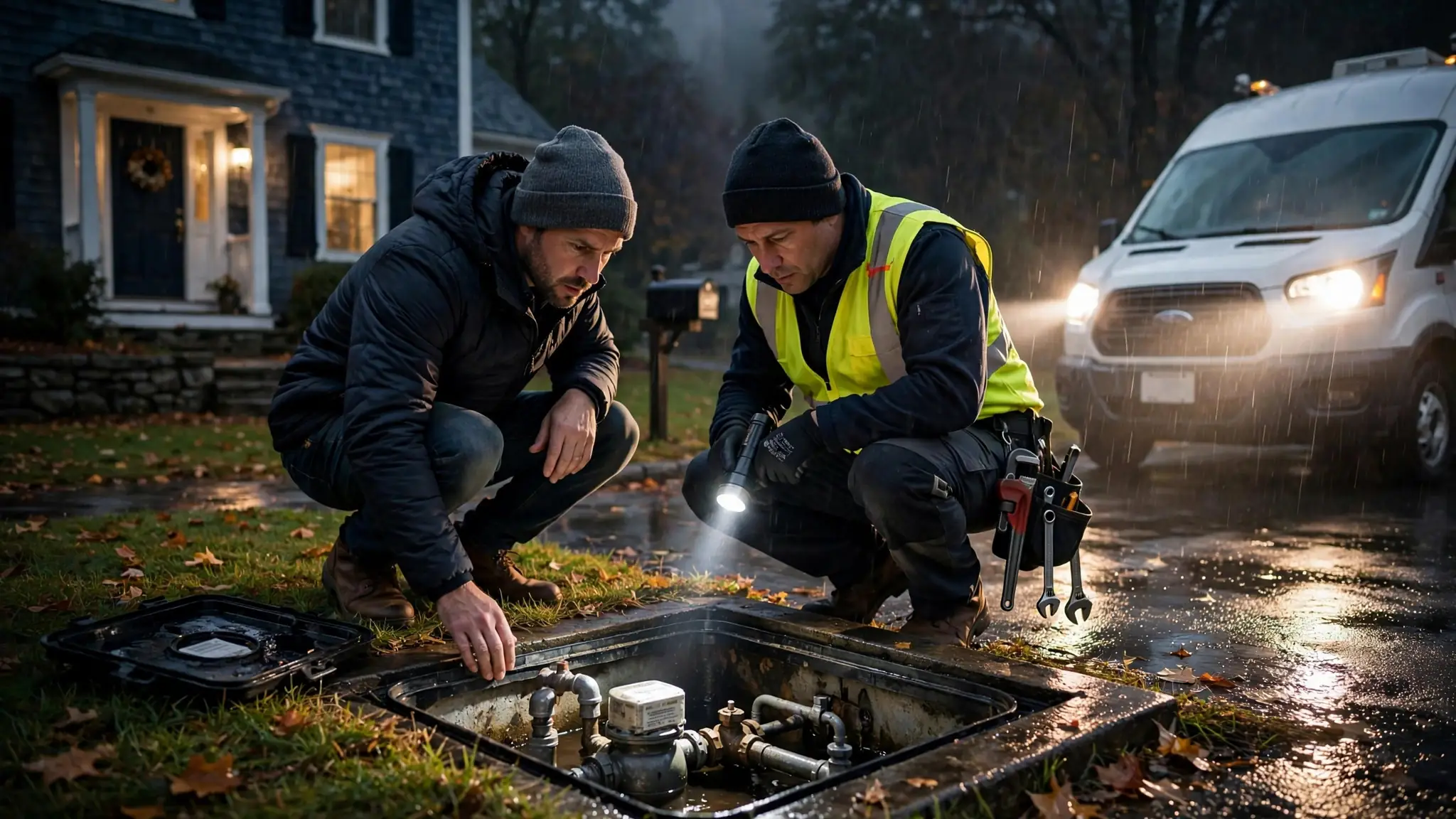
A bill is never itself the emergency — but a bill that doubled or tripled overnight means a major break is running right now, wasting water by the thousand-gallon. Standard bill investigations handle gradual increases; a sudden explosion needs tonight's response. Call — 24/7, 30–45 minute arrival.
24/7 Emergency Service
If your bill exploded suddenly, the break behind it is still running. Every day of delay is another thousand gallons — call now.
Call (617) 380-4912 NowWhen To Call Now
A high bill becomes an emergency when the increase is sudden and large — that pattern means a major break, not a dripping faucet. Not sure it qualifies? See our emergency overview for the full list.
Warning Signs
The bill is the symptom; the break is the emergency. Sudden, large increases always deserve urgent investigation.
Gradual increases are drips; sudden explosions are breaks. A bill that multiplied was caused by a major failure still running.
Watch the meter for 60 seconds. Visible rapid spinning means hundreds of gallons per day — emergency volume.
A spike plus soggy yard, warm floors, or damp walls is a diagnosed emergency — the bill found the leak your eyes missed.
When every toilet, faucet, and appliance checks out but the meter disagrees, the loss is hidden — and large.
Before We Arrive
Document the loss, then stop it — in that order, tonight.
Turn off everything water-using and watch the meter for two minutes. Note how fast it moves — that rate tells us the break's scale.
Date-stamped photos of the meter reading document the loss rate. This evidence matters for both diagnosis and billing disputes.
Walk the property: soggy ground, warm floors, damp walls, sounds of running water. The bill plus a symptom locates the zone.
Every billing day with an active break adds to an already shocking bill. Stopping it tonight limits the financial damage.
Safety Guidance
Big breaks create big secondary risks — and a paper trail worth building.
Major hidden breaks can reach wiring. Tripping breakers or warm outlets near damp areas mean keep clear and call.
Large underground breaks erode soil. Keep people and vehicles off soggy or sinking ground until assessed.
For catastrophic bills, notify the utility about the suspected break — many have leak-adjustment processes, and our report supports your case.
A high-bill emergency is a financial emergency with a plumbing cause. When a bill multiplies suddenly, the underlying break is high-volume — a split service line, a burst slab line, a failed irrigation main — discharging at a rate that shows up as thousands of gallons. The cruel part: these breaks are often completely hidden, with no indoor symptom at all, so the bill is the first sign. Our emergency investigation reverses the usual order — instead of symptom-to-cause, we go from meter to break: quantify the loss rate, zone the property, and apply acoustic and tracer gas detection until the break is found. Stopping a major break tonight can save the next billing cycle from repeating the disaster. Utilities bill on metered volume regardless of where the water went — into your walls, under your slab, or across your yard — so the financial case for tonight's response is airtight.
Our Process
From bill shock to break located — with documentation your utility will take seriously. Our has handled Chelsea emergencies for thirteen years.
Tell us the bill history and what the meter is doing now. We estimate the break's scale from your numbers and dispatch immediately.
On arrival we meter-test precisely: gallons per hour of hidden loss. That number tells us whether we are hunting a pinhole or a split main.
We isolate zones — house vs. service line vs. irrigation — then apply acoustic or tracer gas detection to pinpoint the break.
The break is stopped or isolated, and you get a written report with loss-rate documentation — built for both repair and billing disputes.
Once the break is found and stopped, two tracks begin: repair and recovery. The repair is usually straightforward once located — our report gives the plumber or excavator an exact mark. The recovery means contacting your water utility about the catastrophic bill: many utilities offer leak adjustments for documented breaks, and our report provides the documentation. For the future, our standard bill investigation service can set up a monitoring routine so no break ever bills you blind again.
Standard Service
For gradual, unexplained bill increases — the slow kind — our standard high-bill investigation provides the same thorough meter-to-fixture analysis.
Water bill suddenly high with no visible leak? We check the meter, the service line, and your home to find the hidden loss — then show you exactly where it is.
Related Services
Bill explosions usually trace to one of these — each has its own emergency page.
A spinning meter with everything off confirms water is escaping somewhere. Our meter checks isolate the loss fast, then pinpoint the exact source.
Water pooling in the meter box or a soggy strip near the street means a leak between the meter and your home. We find it without digging up the yard.
Low pressure, soggy ground between the street and your home, or a spinning meter can signal a service line leak. We locate it precisely with no blind digging.
Service Areas
Emergency high-bill investigation across all eight Chelsea neighborhoods — 24/7, 30–45 minute arrival, ZIP 02150. See all emergency services on the overview hub.
FAQs
Urgent answers when the bill is the alarm. For non-urgent questions, see our standard service page.
If the increase was sudden, yes — it indicates a high-volume break still running. Gradual increases can wait for a standard visit; sudden explosions need tonight's response.
Our report documents the break location, the measured loss rate, and the repair recommendation — exactly what utilities ask for in leak-adjustment claims.
A split service line can waste thousands of gallons per day. Our meter test quantifies your exact loss rate on arrival — the number is often shocking.
Contact your utility about the suspected break first — many will pause collection or offer adjustments for documented leaks. Finding and documenting the break strengthens your position enormously.
Then the bill may be a meter or billing error rather than a leak — and we will tell you so honestly. Our investigation distinguishes real loss from administrative error.
Often yes — contact your water utility immediately about the suspected break, even if you have paid. Many utilities reopen billing periods when presented with documented leak evidence. Our report provides the break location, measured loss rate, and repair documentation that disputes are built on, regardless of payment status.
A sudden bill spike means a major break running now. We arrive in 30–45 minutes, 24/7 — call (617) 380-4912.