
Water Meter
A spinning meter with everything off confirms water is escaping somewhere. Our meter checks isolate the loss fast, then pinpoint the exact source.
Fast · Reliable · Non-Invasive
The meter box is where your water story starts — and standing water inside it, or a soggy yard around it, means the story has a leak. We specialize in the meter-to-house zone: reading what the box reveals, testing the service line it feeds, and pinpointing yard leaks with acoustic and tracer gas methods that keep your landscaping intact.
Related Services
The meter box connects to the service line, the meter, and your bill. These services cover each link.
A spinning meter with everything off confirms water is escaping somewhere. Our meter checks isolate the loss fast, then pinpoint the exact source.
Low pressure, soggy ground between the street and your home, or a spinning meter can signal a service line leak. We locate it precisely with no blind digging.
Water bill suddenly high with no visible leak? We check the meter, the service line, and your home to find the hidden loss — then show you exactly where it is.
Soggy lawn, sinking soil, or water surfacing where it should not can mean a buried pipe leak. Ground microphones and tracer gas locate it without tearing up your yard.
Warning Signs
The first few feet of your property tell the truth about the buried line. Read them.
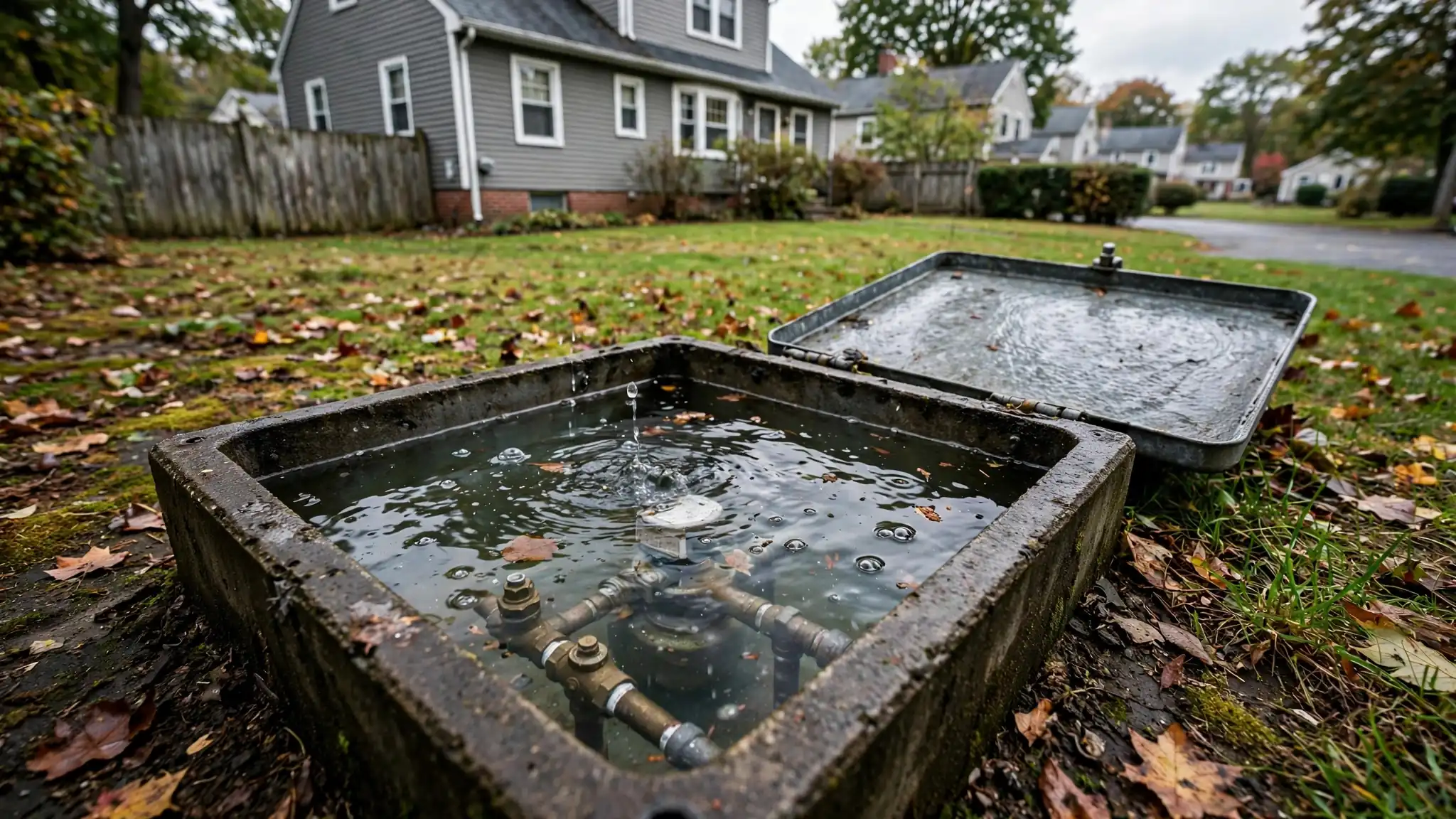
Water pooling in the meter pit — especially on the house side — signals a leak at the meter connections, the setter, or the service line entry. The box is the closest witness.
Persistently wet soil radiating from the meter box means water is escaping nearby and surfacing. The wet zone's shape often points along the line's path.
With all fixtures off and the house valve open, a moving meter means loss somewhere in the system — and the meter box zone is the first place we test.
Depressions or soft spots between the street and the box indicate soil washing away around a leaking line — erosion mapping the failure from the surface.
A faint hiss audible at the open meter box, with water running nowhere, is pressurized water escaping nearby. Put your ear close on a quiet morning — then call.
Grass or weeds thriving suspiciously around the meter box are drinking leaked water. Vegetation patterns are surprisingly honest leak indicators.
Our Process
Start at the box — the evidence is freshest there.
We open the meter box and read the scene: water level, which side it favors, connection condition, and sounds. The box often reveals whether the leak is at the meter or further along the line. Mud patterns in the box often indicate flow direction.
We verify the reading against your bill and watch the leak indicator with the house isolated in stages. This proves the loss and aims the search — meter-side or house-side. We compare the reading to your latest bill on the spot.
From the box outward, we trace the service line's yard path with locators and listen with ground microphones. Tracer gas confirms the exact break point for marking. The trace follows the box outward along the service route.
You get the marked location, depth estimate, and photos — plus a clear statement of which section failed. One hole, planned excavation, preserved yard. The responsibility statement cites the observed evidence.
Why Choose Us
The meter box is small, but the questions around it are big: is it the meter, the connection, or the line? Yours or the city's? For 13 years we have answered those questions for Chelsea homeowners — reading meter boxes like case files, testing service lines with meter isolation, and tracing yard paths without disturbing landscaping. Our reports settle the responsibility question with evidence, and our marks keep every repair to a single planned hole. The meter box may be small, but it concentrates the entire service-line question into one readable scene — water level, wet side, sounds, and the meter's own testimony. Our box-first method extracts every clue before moving outward, which is why our yard investigations resolve faster than line-searches that start blindly. Thirteen years of Chelsea meter boxes has taught us their local habits: which eras used which setters, how frost affects each connection type, and where the responsibility boundary actually falls in practice. That literacy turns a confusing wet box into a clear action plan.
Meter-box diagnostics across Chelsea.
From 30 verified customer reviews.
We answer around the clock, every day.
Yard preserved — one marked hole.
Customer Feedback
Helpful Tips
Small box, big intelligence — keep it working for you.
Lift the meter box lid each season and look: standing water, mud, or damage. Thirty seconds, four times a year, catches box-zone leaks in their first season. Seasonal peeks catch slow box leaks before they become yard leaks.
Never bury, pave, or plant over the box. Inaccessible meters delay testing, repairs, and emergency shutoffs — accessibility is free insurance. Emergency shutoffs fail when the box cannot be found quickly.
Water on the street side suggests the utility's line; water on the house side suggests yours. This single observation frames the entire responsibility question. Street-side wetness is the utility's problem — document it and call them.
Open the box when the neighborhood is quiet and listen. Hissing with no water running anywhere is a leak's voice — and it carries surprisingly well in the box. The box amplifies leak sounds remarkably well — use it.
Date-stamped dial photos before and after any suspected leak period document the loss for billing disputes and our investigation alike. Photo the dial before disputing any bill — evidence first, argument second.
Ensure the box lid seats properly and insulation (if present) is intact. Freeze damage at the meter connections is preventable with a sound box. A sound lid and intact insulation prevent the most avoidable freeze failures.
24/7 Emergency Service
A major break at or near the meter box — gushing water, flooding, or a wildly spinning meter — is an emergency. Our 24/7 line covers all of Chelsea with 30–45 minute arrival.
We assess the box, shut the right valve to stop the loss, determine responsibility, and mark the repair point for immediate action. See our full emergency meter-box leak service.
Call (617) 380-4912 NowService Areas
Every Chelsea property has a meter box — we investigate them in all neighborhoods within the 02150 ZIP.
FAQs
What the box is telling you — translated.
Some condensation is normal, but standing water — especially persistent or muddy — usually means a leak at the meter connections, the setter, or the service line entering the box. We inspect which side the water favors to determine the source.
If the box is full, overflowing, or the meter is spinning rapidly, treat it as urgent — significant water is escaping. If it is minor dampness, schedule an inspection promptly but without panic.
It depends on where the failure is: the utility typically owns the meter itself and the street-side line, while the homeowner owns the house-side service line. Our inspection and testing document exactly which section is leaking.
Yes — that is the core of our meter-box process. By isolating valves and watching the meter, we prove whether the loss is on the utility side or your side before any digging is discussed.
No — not by us, and not blindly by anyone. We mark one dig point with a depth estimate, so any excavation is a single planned hole, not a trenched yard.
It is usually a rectangular ground-level lid near the curb or property line, often marked 'water' or 'meter.' If you cannot find it, we will locate it during our visit — and show you for next time.
Pressurized water escaping nearby — a leak's audible signature carried through the box. With all water off in the home, hissing at the box deserves prompt professional investigation.
Yes — our emergency line is answered around the clock with 30–45 minute arrival anywhere in Chelsea. Call (617) 380-4912 any time.
Very little: keep the lid seated and intact, keep the box clear of soil and plantings, ensure drainage so it does not hold water, and check connections visually each season. A sound, accessible box makes every future test and repair faster and cheaper.
Rarely directly — but a flooded, damaged box can allow surface water and contaminants to reach the meter connections, and chronic leaks undermine the soil supporting nearby walkways and driveways. Keeping the box sound, drained, and accessible protects both the infrastructure and the property around it.
From The Blog
Read the box, read the meter, know your responsibility.
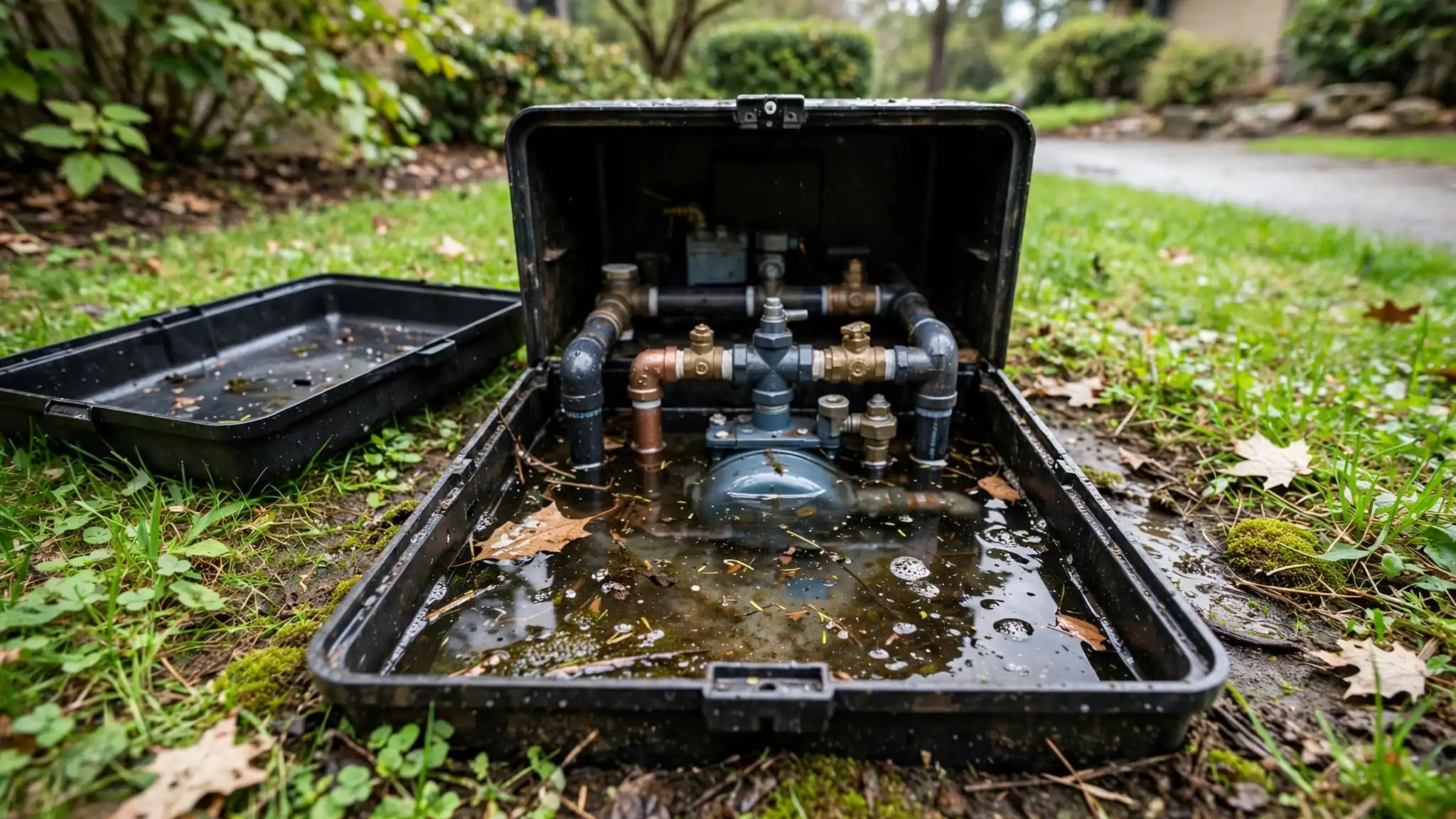
Standing water in the meter box is a clue, not the whole story. Learn what meter-box signs mean for your service line.
Read Article
Your water meter tells the truth about hidden leaks. Learn to read the dial and the leak indicator in minutes.
Read Article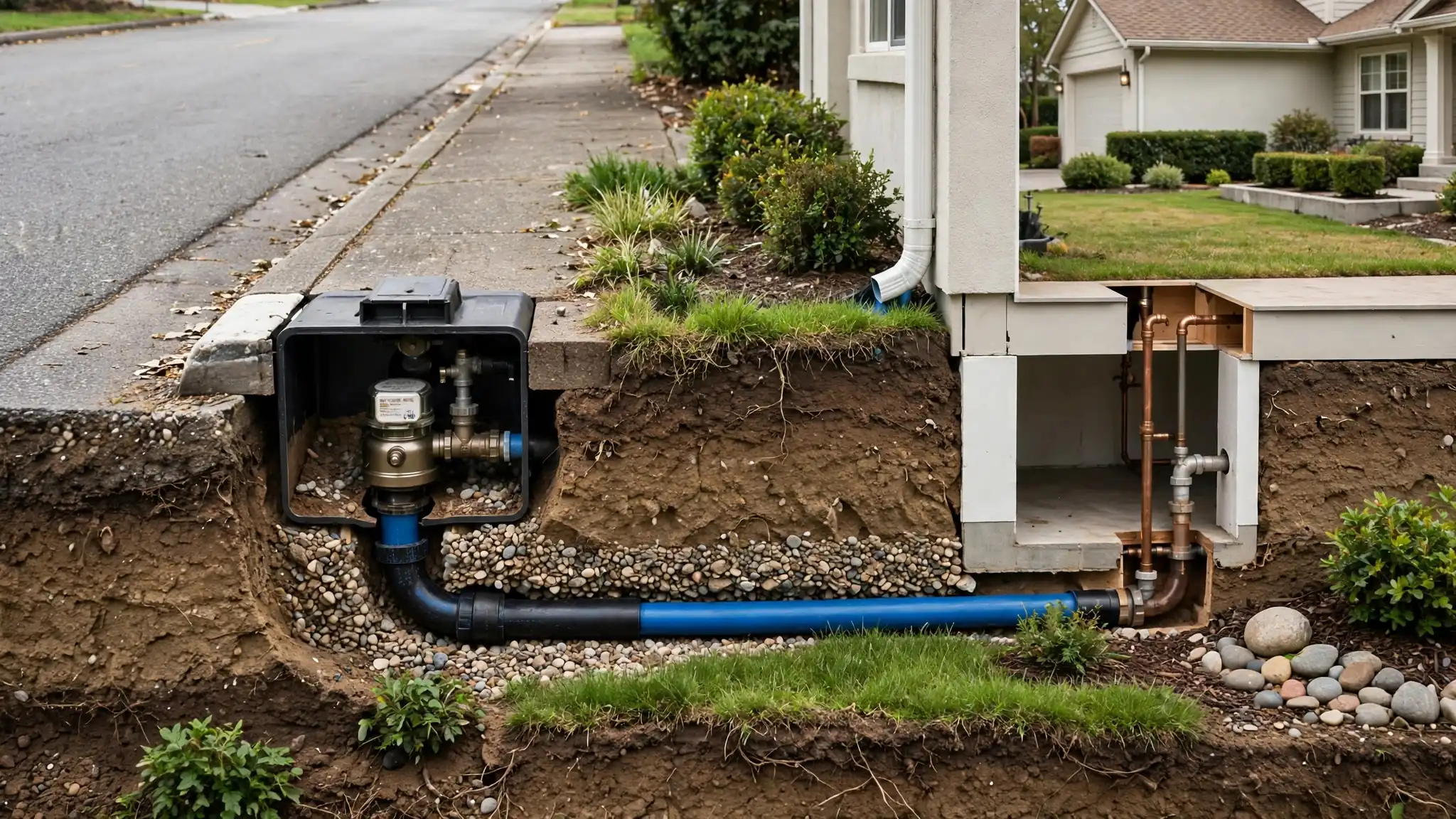
Homeowner or city? The answer decides who pays for a service line leak repair. Learn where responsibility splits.
Read ArticleFind out before the yard tells everyone. Call now for meter-box leak detection anywhere in Chelsea — 24/7.
Learn More
Helpful guides about this service — signs, methods, and what to expect.
Standing water in the meter box, soggy strips of yard, and the main-shutoff test — diagnosing service-line leaks.
Read Article
Where homeowner responsibility for the water service line typically starts and ends.
Read Article
Corrosion, freeze-thaw, roots, and age — the complete guide to service-line failure and professional detection.
Read Article