
Attic Leak Detection
Freeze bursts and roof-line leaks in exposed attics found before ceilings collapse.
Fast · Reliable · Non-Invasive
Mill Hill's 2–3 story wood-frame homes along Eastern Avenue face a specific seasonal enemy: freeze-exposed attics and crawlspaces near Mill Creek. We know where these houses leak and how to find it without tearing them apart — serving all of Chelsea 24/7, arriving in 30–45 minutes.

Services
The services Mill Hill homeowners call for most — especially after cold snaps. Every visit uses non-invasive methods, and burst-pipe emergencies go straight to our Mill Hill emergency page.
Freeze bursts and roof-line leaks in exposed attics found before ceilings collapse.
Damp subfloors and musty crawlspaces investigated without guesswork.
Moisture traveling through wood-frame walls traced to its true source.
Stains from upper baths and roof lines pinpointed with thermal imaging.
Frozen or shifted service lines from street to house located precisely.
Winter bill spikes traced to freeze damage or running hidden fixtures.
Warning Signs
Wood-frame homes and cold exposure create a distinct leak profile. If any of these sound familiar, call us at (617) 380-4912 — freeze damage gets worse, never better.
Exposed attic plumbing in wood-frame homes freezes and splits in deep cold. We find every split — bursts rarely happen alone.
Unconditioned crawlspaces collect moisture from plumbing seeps and groundwater alike. We determine which one you are dealing with.
In 2–3 story homes, a second-floor bath leak stains the first-floor ceiling. Thermal imaging traces the drip path upward to the source.
Wood-frame walls hide supply line pinholes for months. Acoustic listening hears what eyes cannot see inside the cavity.
Shallow or exposed service runs freeze, then split on thaw. We locate the break without digging up the whole yard.
A single freeze-split line can run thousands of gallons before spring. Meter testing quantifies the loss fast.
Our Process
Four steps, weighted toward the freeze-exposed areas Mill Hill homes are known for. Our team has worked these streets for thirteen years.
Tell us what you see and when it started — freeze timing matters. We ask about attics, crawlspaces, and upper floors, then reach Mill Hill in 30–45 minutes.
We inspect the freeze-exposed areas first: attics, crawlspaces, exterior walls, and service line entries — where Mill Hill leaks start.
Thermal cameras find cold-water anomalies in walls and ceilings; acoustic listening confirms pressurized leaks; moisture meters map the spread.
Every leak marked on site, photographed, and documented in a written report — everything your plumber or insurer needs to act.
Why Choose Us
Mill Hill homes leak in predictable places — attics, crawlspaces, exterior walls — but finding the exact split still takes the right tools and the judgment to use them. We bring thermal imaging that sees through ceilings, acoustic gear that hears through walls, and thirteen years of knowing where attic leaks and crawlspace leaks hide in wood-frame houses.
Attic and crawlspace burst pipes found fast, every split located.
Detection tuned for 2–3 story wood-frame construction.
We know Mill Hill's housing stock and its seasonal patterns.
Burst pipes do not wait for business hours — neither do we.
Local Considerations
Mill Hill is Chelsea's classic residential neighborhood — 2–3 story wood-frame homes lining streets like Eastern Avenue, many with unfinished attics and vented crawlspaces. That construction is comfortable and characterful, but it leaves plumbing exposed to New England cold in exactly the places homeowners never look. Our surveys start in those cold zones, because that is where Mill Hill leaks begin.
Proximity to Mill Creek keeps parts of the neighborhood damp at ground level, which means crawlspace moisture needs careful diagnosis — groundwater wicking versus an actual pipe leak. We test rather than assume: moisture mapping plus pressure checks separate the two, so you fix the right problem. When water is actively spreading, our Mill Hill emergency page covers the urgent-response steps.
Stacked bathrooms in multi-story homes create the neighborhood's other signature pattern: a second-floor supply leak that stains the first-floor ceiling, sometimes rooms away from the source. Thermal imaging follows the temperature trail upward through floors, finding the failed fitting without opening ceilings at random.
Customer Feedback
Helpful Tips
Seasonal habits that prevent the neighborhood's signature freeze leaks. More on our blog.
Foam sleeves on exposed attic plumbing cost little and prevent the neighborhood's most common emergency. Check them each fall before the first deep freeze.
Blocked vents trap moisture; wide-open vents invite freezing. Aim for controlled ventilation and check for standing water each season.
A slow drip on the farthest faucet keeps water moving through exposed runs during extreme cold snaps — cheap insurance against bursts.
Find it now, label it, and make sure everyone in the house knows. A burst pipe wastes hundreds of gallons while you search.
Freeze splits often reveal themselves at thaw, not during the freeze. Walk every ceiling within a day of a major thaw and look for new stains.
Winter leaks hide behind heating bills. A monthly meter photo creates a water-use record that makes hidden flow obvious.
24/7 Emergency Service
Burst attic pipe, flooding crawlspace, or water pouring through a ceiling? Our Mill Hill emergency page covers urgent response — 24/7, 30–45 minute arrival.
Call (617) 380-4912 NowNearby Areas
Mill Hill sits near Admirals Hill, MA and Downtown, MA along the Eastern Avenue corridor. We also serve Addison-Orange, MA, Prattville, MA, and every other Chelsea neighborhood from the same 24/7 dispatch.
FAQs
Local answers — coverage, timing, and what to expect.
Yes — 02150 covers Mill Hill and all of Chelsea. Every address along Eastern Avenue and throughout the neighborhood gets the same 24/7 response and 30–45 minute arrival.
Yes. Thermal imaging detects the cold-water signature of a split pipe through insulation and drywall, and acoustic listening confirms pressurized leaks. We locate every split — freeze bursts often happen in more than one spot.
Not necessarily. Crawlspace dampness can be groundwater, condensation, or a plumbing seep. Our moisture mapping plus pressure testing determines which one, so you fix the actual cause.
Yes — we are open 24/7, including Sundays and holidays, at (617) 380-4912. Mill Hill arrival is 30–45 minutes any day of the week.
Acoustic listening devices hear pressurized water escaping inside wall cavities, and thermal cameras show the cooling pattern moisture creates. Together they pinpoint the source without opening the wall first.
Place a container under any drip, move valuables, and avoid the sagging area. Note which fixtures are above the stain — that helps us. Then call (617) 380-4912; if water is active, our emergency line is open 24/7.
Yes. Acoustic profiling traces the pressurized line from the street to your house and identifies the break point. Digging happens only at the marked spot.
Yes. Every investigation includes marked on-site locations and a written report with photos — documentation insurers expect for freeze-damage claims.
From The Blog
Leak knowledge for wood-frame homes — each guide links to the matching service.

Acoustic listening, thermal imaging, and tracer gas — how each method finds slab leaks without breaking concrete.
Read Article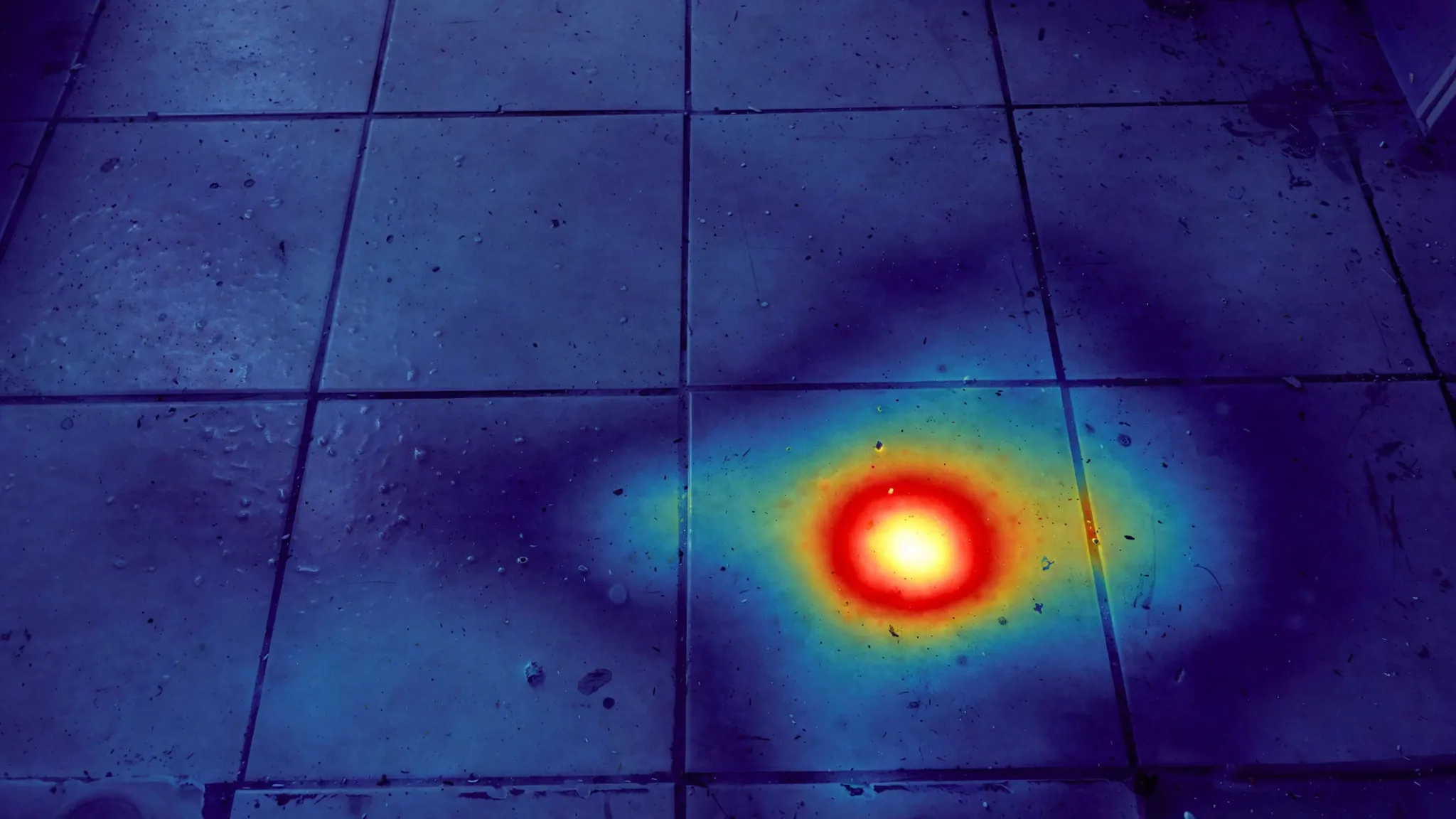
Warm floors, unexplained bill spikes, and the sound of running water under concrete — learn the early warnings of a slab leak.
Read Article
Before you blame the water company, check these hidden leak sources that silently drive bills up month after month.
Read ArticleAttics, crawlspaces, wood-frame walls — found fast, 24/7 with 30–45 minute arrival anywhere in Mill Hill.