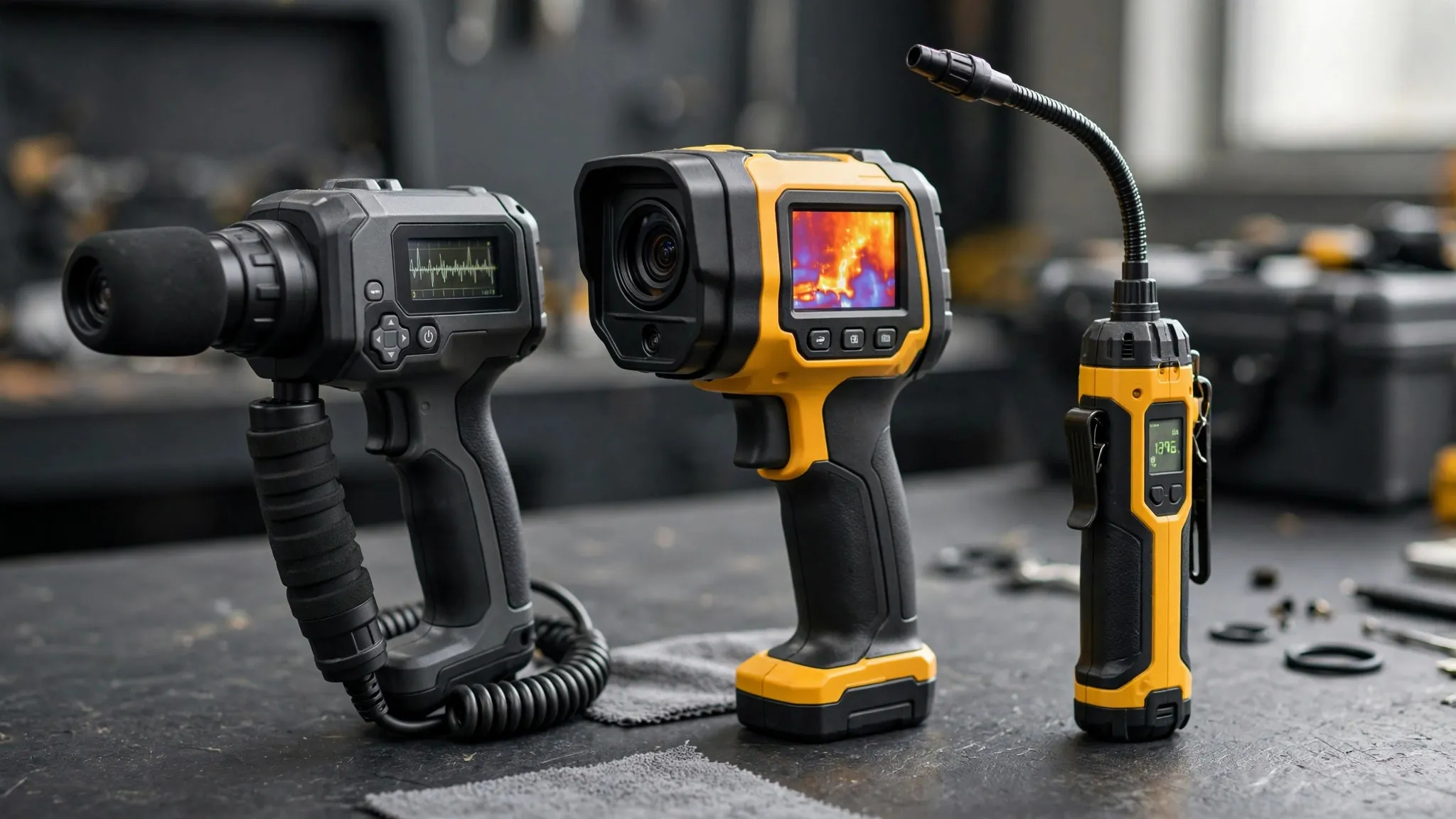
Slab leak detection locates pressurized pipe breaks beneath concrete foundations using three complementary technologies. Acoustic listening detects the sound signature of water escaping under pressure; thermal imaging reveals the heat pattern of hot-water leaks through the slab surface; and tracer gas pinpoints the exact breach by tracking a safe gas that escapes only at the break. Used together, they triangulate the leak to within inches — without exploratory demolition.
Quick Answer
Professionals find slab leaks by listening for the break (acoustic sensors detect pressurized water escaping), seeing its heat signature (thermal cameras reveal hot-water anomalies through flooring), and confirming with tracer gas (a safe hydrogen-nitrogen mix that surfaces only at the breach). The three methods cross-verify each other, typically locating the break within inches during a single visit.
Acoustic Detection: Listening For The Break
Acoustic leak detection is the primary method for pressurized slab leaks. When water escapes through a split or pinhole at mains pressure, it creates turbulence — a distinctive hissing or whooshing sound with a frequency signature that differs from normal plumbing noise. Highly sensitive ground microphones and contact sensors, placed on the slab surface, pick up that signature through concrete.
The technician systematically surveys the slab, comparing sound intensity at multiple points. The break is where the signal peaks. Experienced operators distinguish leak sounds from background noise (appliances, traffic, HVAC) by their persistence and frequency profile — a leak sounds the same at 2 AM as at 2 PM; background noise does not.
Acoustic methods work on any pressurized line, hot or cold, and through most flooring types. Their main limitation: very small seeps may be too quiet to isolate precisely, which is where the other methods contribute.
Why Pressure Matters
Acoustic detection requires a pressurized leak — the sound comes from water escaping under pressure. That is one reason technicians may ask you not to shut off the main before the visit: a depressurized line goes silent.
Thermal Imaging: Seeing Heat Through The Slab
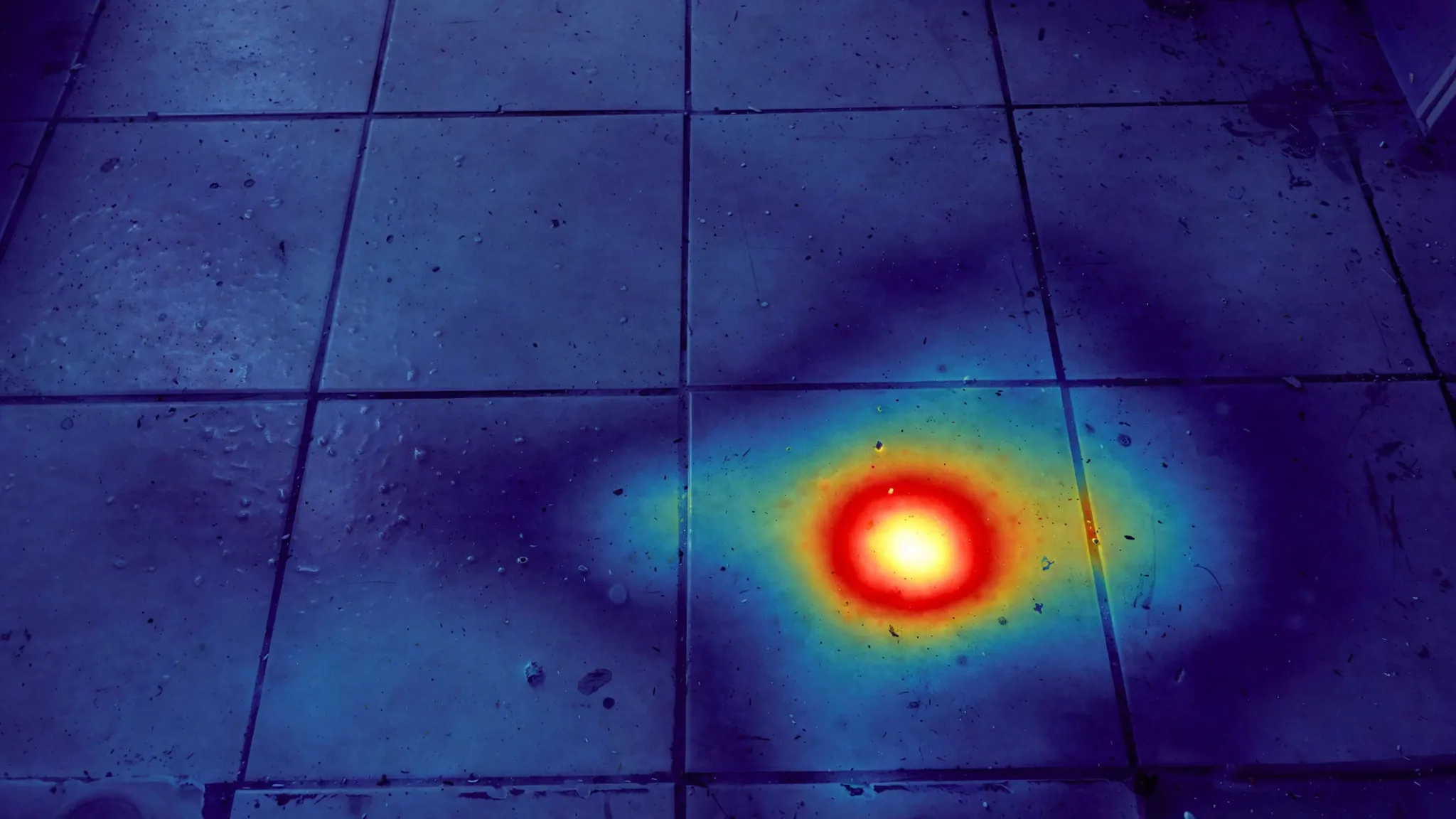
Thermal imaging cameras detect infrared radiation — heat — from the slab surface. A hot-water line break discharges heated water into the surrounding concrete and soil, creating a thermal anomaly: a warm region, often with a characteristic shape that experienced thermographers read like a map. The anomaly's hottest point typically sits nearest the break.
Thermal imaging is fast — a whole-room scan takes minutes — and it reveals the leak's extent, not just a point: the full warm zone shows how far hot water has migrated. It works through tile, stone, laminate, and carpet (with reduced contrast through thick insulation-backed flooring). Its limitation: it only sees hot-water leaks; cold-water breaks produce no thermal signature.
Tracer Gas: Pinpoint Confirmation
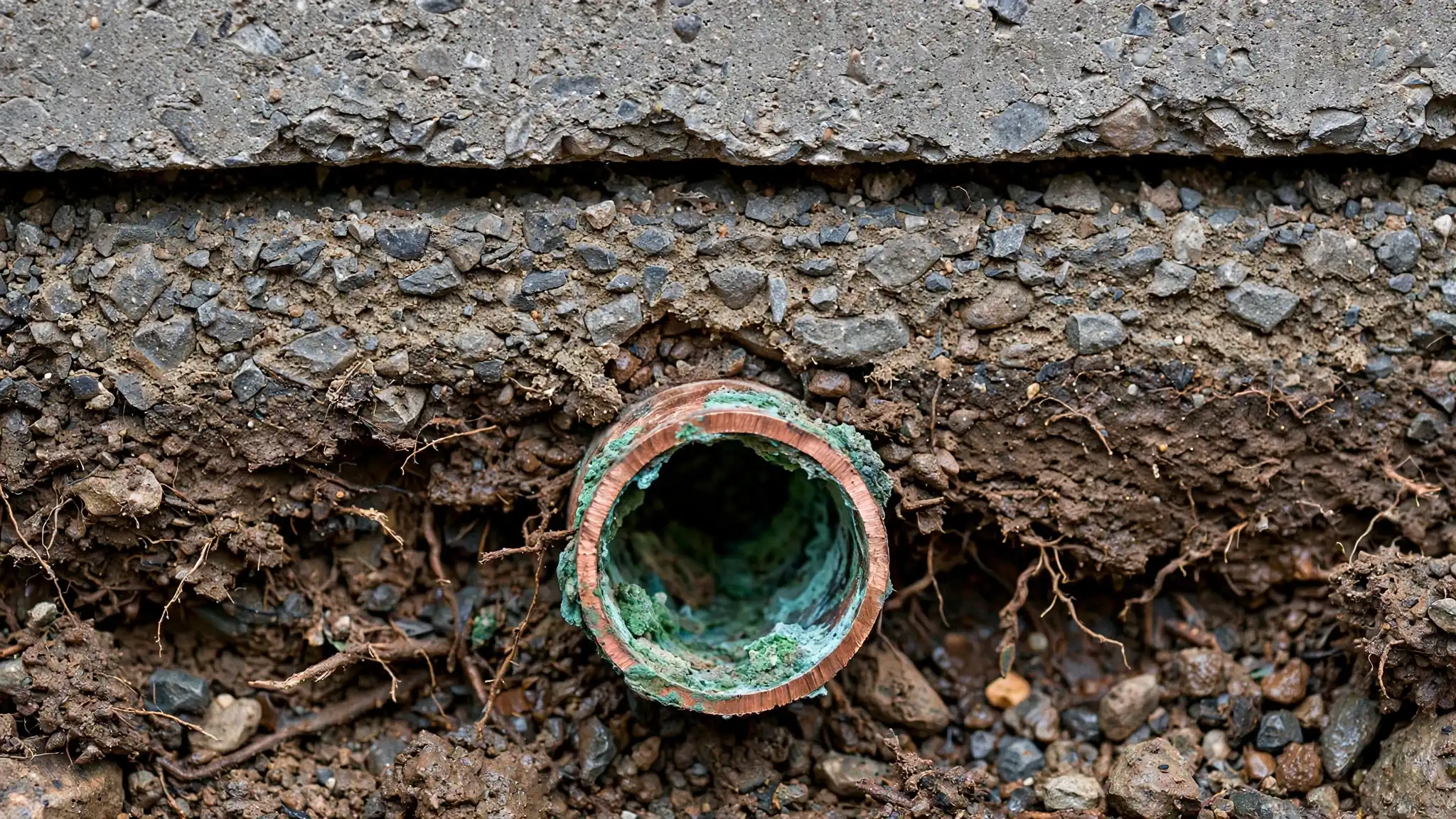
Tracer gas detection uses a safe mixture of hydrogen and nitrogen (typically 95/5) introduced into the isolated pipe. The tiny hydrogen molecules escape through the breach — and only through the breach — then rise through concrete porosity and flooring. A sensitive gas detector at the surface sniffs out the highest concentration, marking the break often within inches.
Tracer gas is the confirmation method: when acoustic and thermal suggest a location, tracer gas proves it. It works on hot and cold lines, finds multiple breaks in one survey, and is completely safe — the gas is non-toxic, non-flammable at these concentrations, and dissipates harmlessly.
How The Three Methods Work Together
| Method | What It Detects | Best For | Limitation |
|---|---|---|---|
| Acoustic listening | Sound of pressurized water escaping | Any pressurized break, hot or cold | Very small seeps may be too quiet |
| Thermal imaging | Heat anomaly from hot-water discharge | Hot-water breaks; fast whole-area scans | Cannot see cold-water leaks |
| Tracer gas | Gas escaping only at the breach | Pinpoint confirmation; multiple breaks | Requires isolating the pipe section |
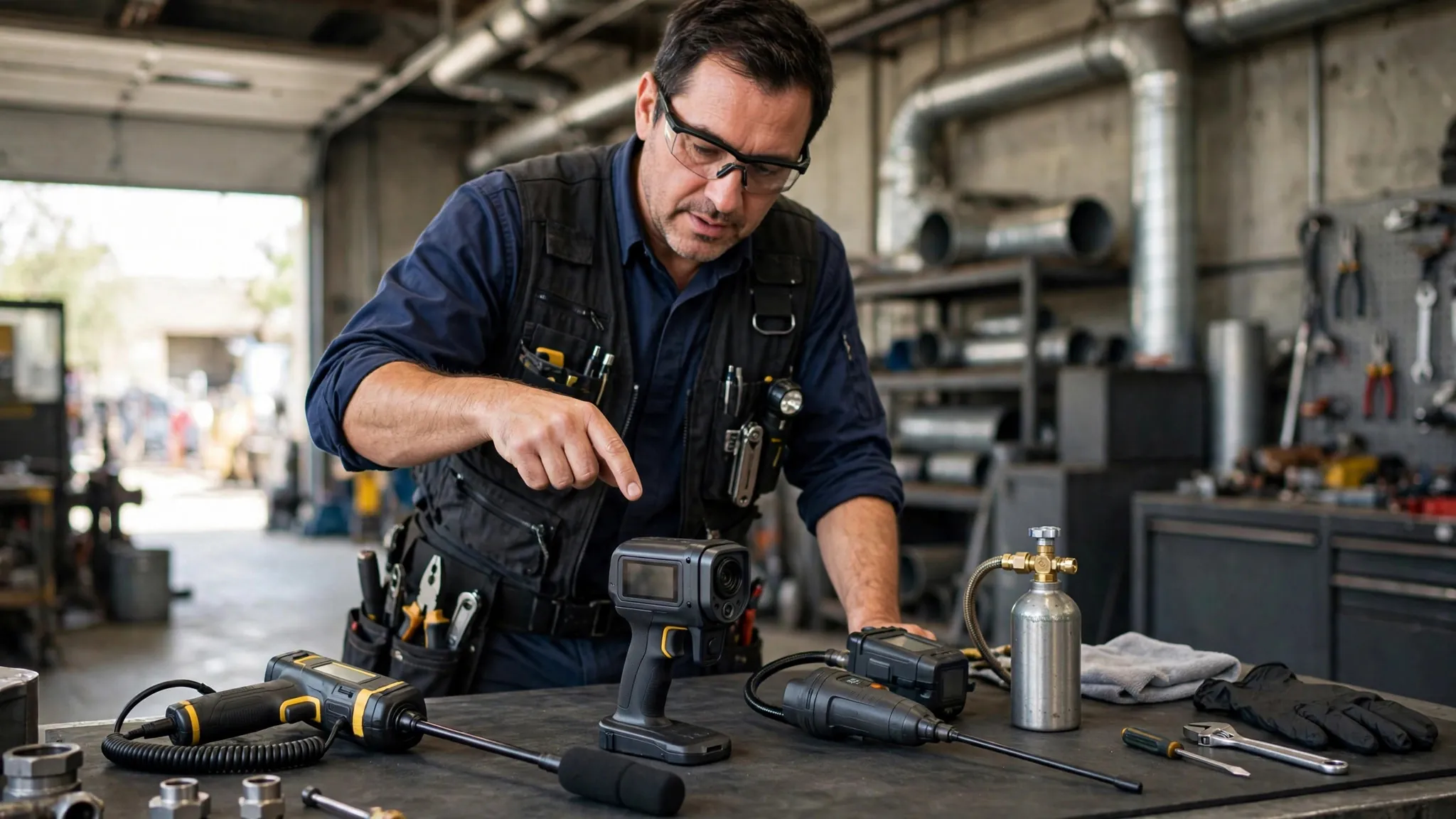
In practice, the workflow is: thermal scan for a fast overview (if a hot line is suspected), acoustic survey to isolate the break's sound signature, then tracer gas to confirm the exact point before anyone marks concrete. Each method cross-checks the others — when all three agree, the location is certain.
What A Detection Visit Looks Like
- Interview and meter check. The technician confirms symptoms, checks the meter for hidden flow, and determines whether the suspect line is hot or cold.
- Thermal sweep. Infrared scanning maps any heat anomalies across suspect areas — minutes per room.
- Acoustic survey. Contact microphones survey the slab systematically, zeroing in on the loudest point.
- Tracer gas confirmation (when needed). The line is isolated, gas introduced, and the surface scanned for the concentration peak.
- Marking and reporting. The break is marked on the floor, isolation options identified, and a written report documents everything for your plumber and insurer.
Accuracy And Limitations
Combined methods typically locate slab breaks within inches — accurate enough for a surgical spot repair. Honest limitations: extremely small seeps in noisy environments can be harder to isolate; multiple simultaneous breaks require systematic elimination; and detection locates the break — it does not repair it. What detection reliably prevents is exploratory demolition: the expensive, destructive practice of breaking concrete to search. Professional slab leak detection replaces guessing with measurement — and when the break is active, our emergency service brings the same equipment 24/7.
Which Method For Which Situation
Professionals do not pick a favorite method — they match the method to the symptoms:
- Warm floor + high bill: thermal imaging first (fast confirmation), acoustic to isolate, tracer gas to pinpoint.
- High bill + sounds, no warmth: acoustic primary (cold-water break suspected), tracer gas confirmation.
- Meter flow, no other symptoms: full acoustic survey to find the sound, thermal to rule hot/cold, tracer gas to confirm.
- Multiple suspected breaks: tracer gas excels — each breach vents gas independently.
- Through thick flooring: acoustic and tracer gas unaffected; thermal contrast reduced but still useful.
When a contractor proposes detection with only one method and no cross-verification, ask why — the three-method standard exists because each covers the others' blind spots.
What Detection Cannot Do
Honest boundaries of the technology:
- It cannot assess pipe wall thickness. Detection finds the breach; it does not measure remaining pipe life elsewhere. That assessment is separate (and informs repair-vs-repipe decisions).
- It cannot find non-pressurized leaks. Drainage and sewer leaks make no pressure sound and vent no tracer gas — those need camera inspection.
- It cannot see through every condition. Extreme background noise, deeply buried lines, or multiple simultaneous breaks complicate — but rarely defeat — systematic detection.
- It does not include repair. Detection and repair are separate scopes; the detection report is what makes the repair surgical.
Detection Is Diagnosis, Not Treatment
Think of detection like medical imaging: it shows exactly what is wrong and where, so the treatment (repair) is precise. Skipping detection to 'save money' is like skipping the X-ray before surgery — the savings are illusory.
What Detection Typically Involves (Process, Not Price)
A standard detection visit follows the interview → meter verification → thermal sweep → acoustic survey → tracer confirmation → marking and report sequence. Most single-break cases complete within one visit. You should receive: marked break location(s) on the floor, a written report with methods used and findings, and repair option guidance (not a hard sell for one method). Keep the report — it documents the leak for insurance and guides any contractor you hire for repair.
If the situation is urgent — active break, spreading damage — emergency detection brings the same equipment and sequence on an urgent timeline, 24/7.
How Detection Technology Evolved
Slab leak location was once exploratory demolition — breaking concrete at the most likely spot and hoping. The acoustic revolution (sensitive ground microphones replacing stethoscopes), thermal imaging (affordable infrared cameras), and tracer gas (safe hydrogen-nitrogen mixes) transformed it into a measurement science. Each generation reduced the concrete opened, the time required, and the uncertainty — modern three-method detection typically marks the break within inches on the first visit.
What has not changed: the operator's skill. Equipment reports signals; experienced technicians interpret them — distinguishing leak turbulence from background noise, reading thermal gradients, and knowing when a signal warrants gas confirmation. When choosing detection, the technician's specialization matters as much as the toolkit.
Reading Your Detection Report
A professional report should contain:
- Methods used — which technologies, and what each found.
- Marked location(s) — described and preferably photographed.
- Confidence level — single-method indication vs. triple-confirmed.
- Pipe condition notes — observations relevant to repair choice.
- Recommended next steps — repair options suited to the findings.
If your report lacks these, ask for them — the report is the deliverable that guides repair and supports insurance.
Preparing For Your Detection Appointment
Maximize the visit's value with simple preparation:
- Document symptoms — when each started, how each has changed, with photos.
- Run the meter test beforehand — the 2-hour test quantifies the leak for the technician.
- Clear access to suspect areas — move furniture and rugs from warm zones.
- Keep water on — acoustic methods need pressure; do not shut the main unless there is active damage.
- List prior work — any plumbing repairs, repiping, or previous leaks inform the diagnosis.
- Know your likely causes — age, material, and pressure context help the technician prioritize methods.
An informed, prepared customer gets a faster, more accurate detection — and the slab leak service can move directly to repair planning.