
Commercial Leak Detection
Hidden leaks in offices, retail, and mixed-use buildings found fast with minimal disruption.
Fast · Reliable · Non-Invasive
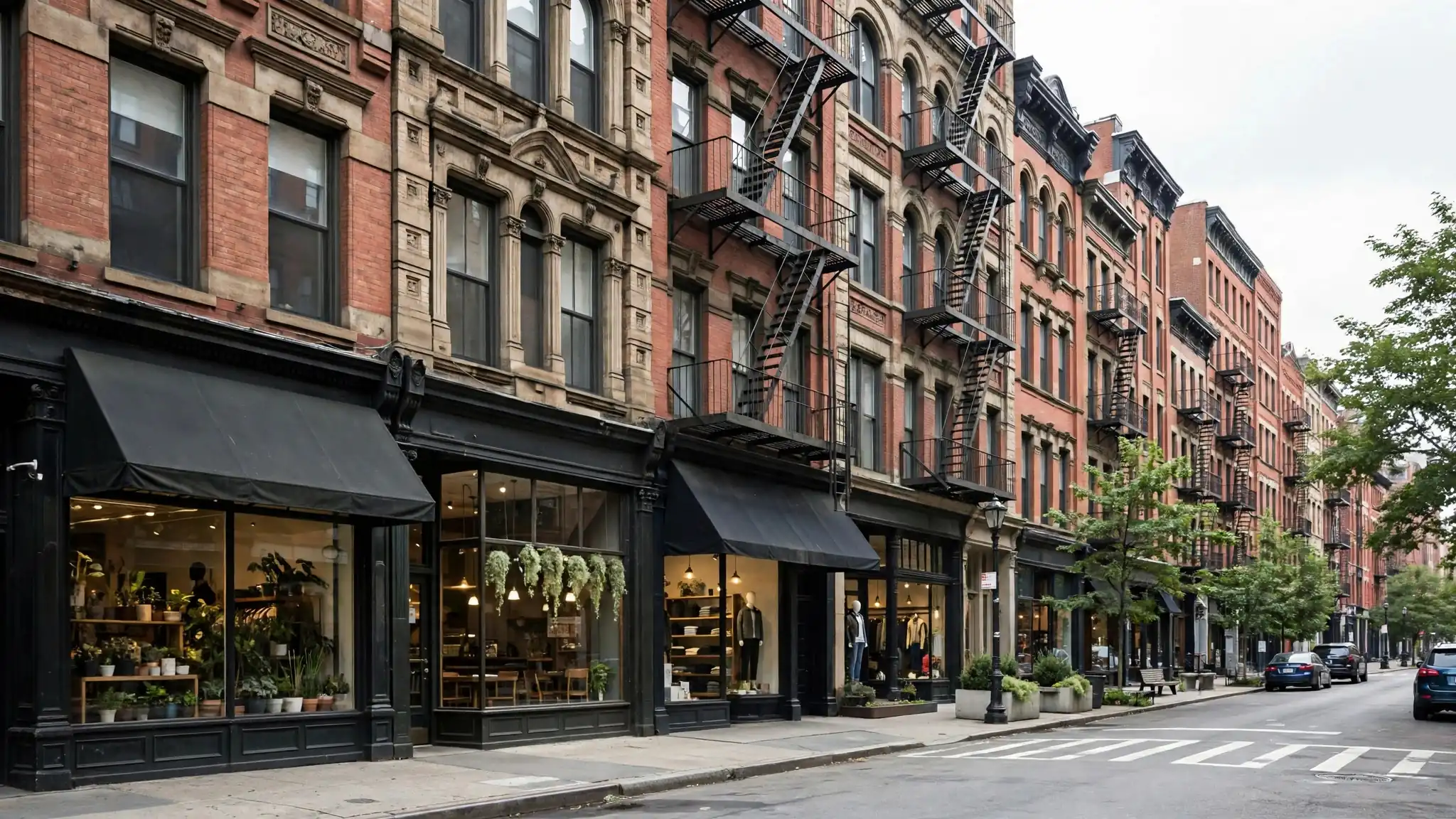
Downtown Chelsea's dense mixed-use blocks — older commercial-residential buildings, shared walls, and flat roofs around Chelsea Square and Bellingham Square — hide leaks in places single-family methods miss. Our acoustic and thermal equipment is built for exactly this building stock, and we serve all of Chelsea 24/7 with 30–45 minute arrival.
Services
The services Downtown property owners call for most — each with its own detailed page. Every visit uses the same non-invasive detection methods, and urgent situations go straight to our Downtown emergency page.
Hidden leaks in offices, retail, and mixed-use buildings found fast with minimal disruption.
Moisture traveling through shared walls traced to its true source with thermal imaging.
Stains under flat roofs and upper units pinpointed before damage spreads.
The definitive meter test that proves a hidden leak exists in multi-unit buildings.
Sudden bill spikes in commercial or multi-unit properties investigated end to end.
Warm spots and damp ground-floor slabs in older buildings diagnosed precisely.
Warning Signs
Dense blocks and older buildings create leak patterns you will not see in the suburbs. If any of these sound familiar, call us at (617) 380-4912 before the damage spreads to neighboring units.
Party walls between units wick water sideways for weeks before anyone sees a stain. Thermal imaging reads through the wall to find the true source.
Flat and low-slope roofs pond water that finds the smallest membrane failure. Ceiling stains below often start far from the actual breach.
High-use restrooms in offices and restaurants develop supply and drain leaks behind tile. Acoustic listening isolates them without demolition.
Multi-unit and commercial bills jump when a single hidden leak runs 24/7. Meter testing plus zone isolation finds which line is responsible.
Older downtown buildings on slab foundations show damp edges and warm spots. We map the hot-water line path before marking anything.
Below-grade spaces in older blocks take on water through walls and floor joints. Detection separates groundwater intrusion from pipe leaks.
Our Process
Four steps, tuned for mixed-use buildings and shared infrastructure. Our team has run this process across Chelsea for thirteen years.
Describe what you see — stains, bills, sounds. We ask targeted questions that narrow the search before we arrive, and we reach Downtown in 30–45 minutes.
We survey the affected unit plus adjacent spaces, because downtown leaks routinely travel through shared walls and stacked plumbing.
Acoustic listening, thermal imaging, and moisture mapping converge on the exact source — a joint, a line, a membrane breach — not a general area.
You get the leak location marked on site plus a written report with photos, suitable for landlords, property managers, and insurance documentation.
Why Choose Us
Downtown leaks are rarely simple — water crosses unit lines, travels through old masonry, and shows up far from its source. That is exactly the environment our detection methods were chosen for: find the truth first, open walls second. Property managers across the downtown blocks call us because one accurate visit beats three exploratory ones.
Commercial and residential systems in the same building, surveyed together.
Thermal and acoustic tools that protect finishes and tenant spaces.
We know downtown's building stock and its typical failure points.
Emergencies answered around the clock, 30–45 minute arrival.
Local Considerations
Downtown Chelsea packs commercial and residential life into tight blocks around Broadway and the two squares. Buildings here are older, walls are shared, and plumbing stacks serve multiple units — so a leak on the third floor can stain a ceiling on the first. Our surveys always include adjacent units and common areas, because the symptom and the source are rarely in the same space.
Flat and low-slope roofs are common across downtown's commercial buildings. When ponding water finds a membrane weakness, the resulting ceiling damage can mimic a plumbing leak — and vice versa. Our moisture mapping distinguishes roof intrusion from pipe failure before anyone commits to the wrong repair, saving building owners from fixing the wrong system.
Foot traffic and business hours matter here. We schedule commercial investigations to minimize disruption — early mornings, off-peak hours — and our non-invasive methods mean most surveys complete without closing a business or displacing tenants. For after-hours emergencies, our Downtown emergency page covers the urgent-response process.
Customer Feedback
Helpful Tips
Small habits that catch downtown leaks early — when they are cheapest to fix. More practical guidance lives on our blog.
In multi-unit downtown buildings, find the main meter now — not during an emergency. A quick meter check is the fastest way to confirm a hidden leak anywhere in the building.
Wind-driven rain exploits old mortar and flashing. Walk party walls and window lines after heavy weather and note any new dampness early.
Clogged roof drains turn every storm into a ponding test. Keep them clear and watch ceilings below after rain — stains that appear within a day point to the roof.
Commercial and multi-unit bills hide gradual leaks in the noise. A simple monthly log makes sudden jumps obvious and gives us a timeline to work from.
If you share walls, share information. A stain on your side and a damp patch on theirs is one leak with two witnesses — tell us both sides when you call.
Date-stamped photos of stains, dampness, and meter readings help landlords, insurers, and our technicians. Start the record the day you notice something.
24/7 Emergency Service
Burst pipe, flooding unit, or water spreading through shared walls right now? Our Downtown emergency page covers urgent response — 24/7, 30–45 minute arrival anywhere downtown.
Call (617) 380-4912 NowNearby Areas
Downtown sits adjacent to Chelsea Square, MA and Bellingham Square, MA — the three form Chelsea's connected core. We also serve Admirals Hill, MA, Mill Hill, MA, and every other Chelsea neighborhood from the same 24/7 dispatch.
FAQs
Local answers — coverage, timing, and what to expect.
Yes — 02150 covers all of Downtown Chelsea and the entire city. Every downtown address, from Broadway to the squares, is inside our service area with the same 24/7 response and 30–45 minute arrival.
Yes. Thermal imaging reads temperature differences through drywall and plaster, and acoustic listening picks up pressurized leaks inside wall cavities. We trace the moisture path back to the true source rather than guessing at the stain.
Yes. Our commercial leak detection covers offices, restaurants, retail, and mixed-use buildings across Downtown — scheduled to minimize disruption to your business and tenants.
If you are in Downtown Chelsea, yes. We answer 24/7 at (617) 380-4912 and arrive in 30–45 minutes, including nights, weekends, and holidays.
Move valuables, place a container under the drip, and avoid touching sagging drywall or nearby electrics. Then call us — if it is active and spreading, our emergency line at (617) 380-4912 is open 24/7.
We use acoustic listening devices that hear pressurized leaks, thermal cameras that see temperature differences from moisture, and moisture meters that map dampness — all non-invasive. Openings are only made once the source is confirmed.
Very possibly. A single running toilet or pinhole leak can add hundreds to a commercial or multi-unit bill. Our meter test proves whether water is flowing when everything is off, then we isolate the responsible line.
Yes. Every investigation includes marked on-site findings and a written report with photos — suitable for landlords, property managers, and insurance documentation.
From The Blog
Leak knowledge tailored to dense, older buildings — each guide links to the matching service.
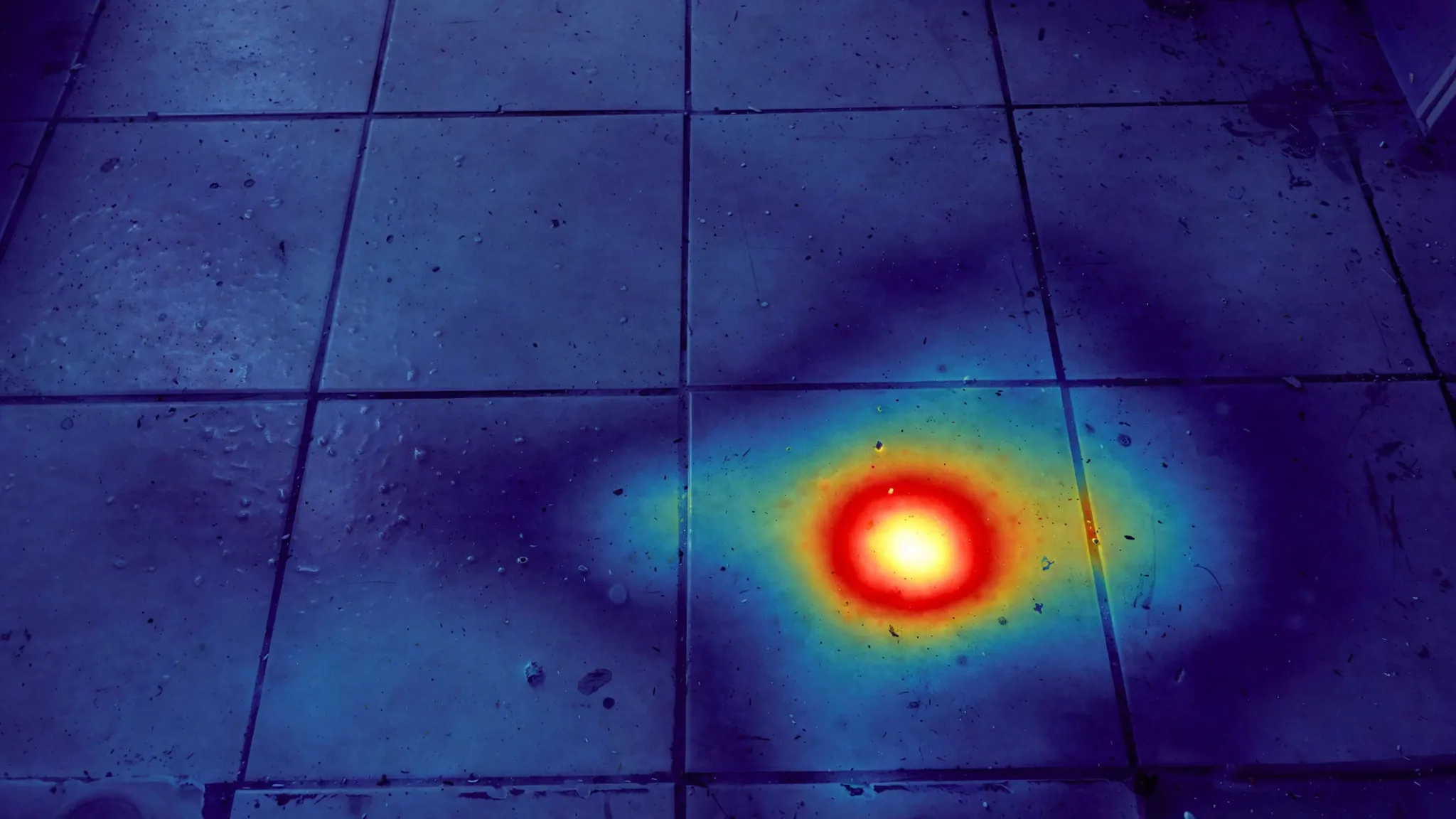
Warm floors, unexplained bill spikes, and the sound of running water under concrete — learn the early warnings of a slab leak.
Read Article
Before you blame the water company, check these hidden leak sources that silently drive bills up month after month.
Read Article
Acoustic listening, thermal imaging, and tracer gas — how each method finds slab leaks without breaking concrete.
Read ArticleServing all of Downtown Chelsea — Broadway, the squares, and every block between — 24/7 with 30–45 minute arrival.