A slab leak is a pressurized water line break beneath your home's concrete foundation. The most reliable early signs are a warm spot on the floor (for hot-water lines), an unexplained spike in your water bill, the sound of running water when everything is off, and damp flooring or new cracks. If you notice one or more of these, professional slab leak detection can confirm the break without breaking concrete.
Quick Answer
A slab leak usually announces itself through a warm floor patch, a suddenly high water bill, running-water sounds under the slab, or damp spots on flooring. Hot-water line breaks create warm spots; cold-water breaks typically show up first on the water bill. Any single strong sign warrants professional acoustic and thermal detection — waiting risks foundation damage.
The 7 Warning Signs Of A Slab Leak
Slab leaks rarely announce themselves with a visible flood. Instead, they produce a pattern of subtle symptoms that, taken together, point beneath the concrete. Here is what to watch for, roughly in order of how commonly each appears.
1. A Warm Spot On The Floor
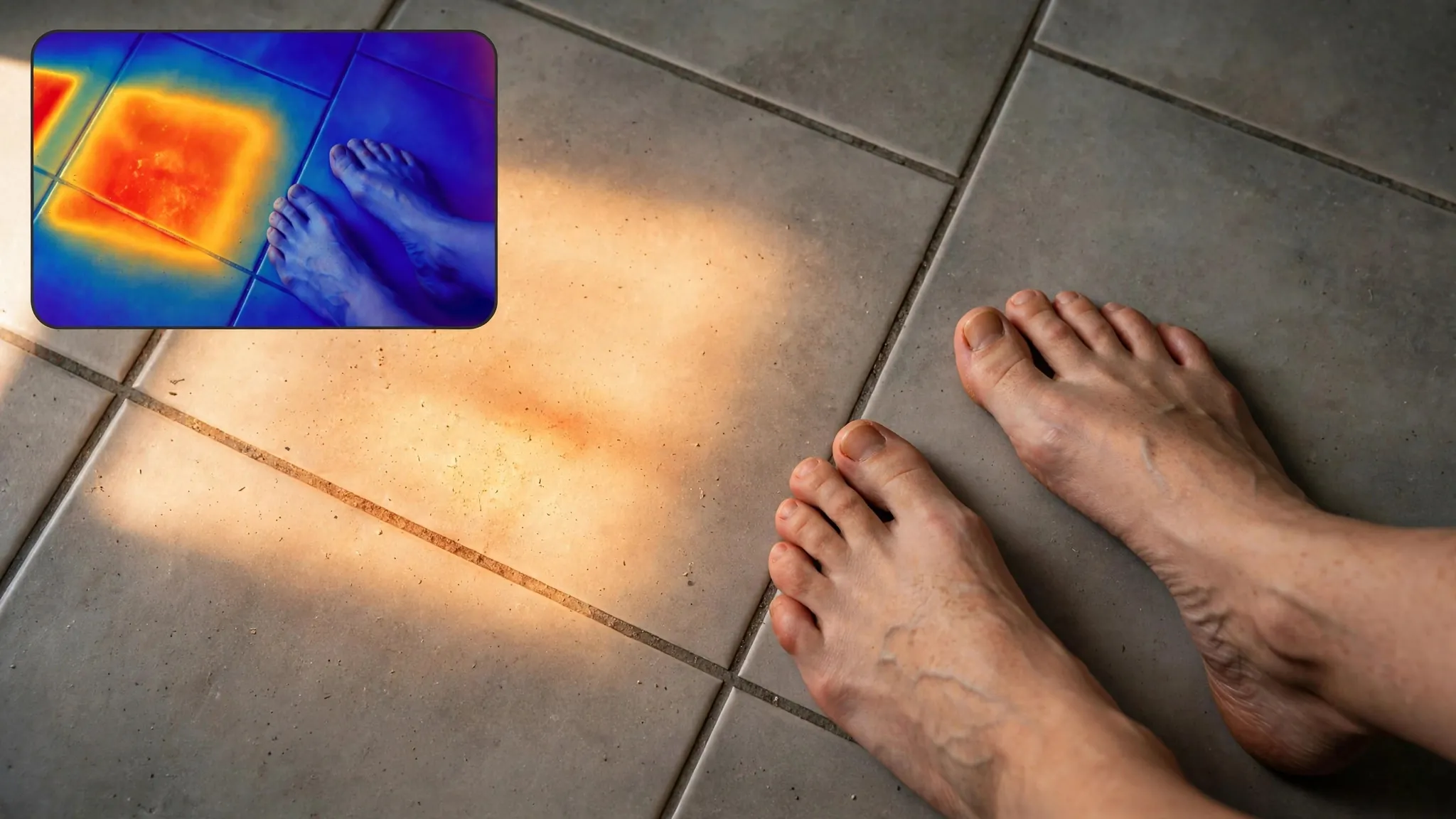
The classic slab-leak signature. A hot-water line break beneath the slab heats the concrete above it, creating a patch of floor that feels noticeably warmer than its surroundings — most obvious on tile, stone, or bare concrete, and detectable barefoot on any flooring. A warm spot on the floor deserves immediate attention, because hot water erodes soil faster than cold water, accelerating foundation risk.
2. An Unexplained Water Bill Spike
When a pressurized line breaks under the slab, water flows continuously — and your meter records every gallon. A bill that jumps without any change in household usage is one of the most objective slab-leak indicators. Learn what a high water bill can mean before assuming it is a billing error.
3. The Sound Of Running Water
Hearing water move beneath your floors when every tap, toilet, and appliance is off is a pressurized break announcing itself. The sound often concentrates in one area — bathrooms, kitchens, and laundry rooms sit above the densest under-slab plumbing. Phantom running-water sounds always deserve investigation.
4. Damp Or Warped Flooring
Moisture wicking up through the slab saturates flooring from below: laminate buckles, wood warps, carpet develops damp patches, and tile grout darkens. By the time flooring shows damage, the leak has typically been active for weeks.
5. Low Water Pressure
A significant under-slab break diverts pressure away from your fixtures. If pressure drops noticeably — especially at fixtures nearest the suspected break — while the water bill climbs, the two symptoms corroborate each other.
6. New Cracks In Floors Or Walls
Water eroding soil beneath the slab creates voids; voids allow settlement; settlement cracks concrete and stresses walls. New or widening cracks near damp areas are a structural warning, not just a cosmetic one.
7. A Water Heater That Never Rests
A hot-water slab break forces the water heater to run constantly, replacing the hot water pouring into the ground. If your heater cycles far more than usual with no change in hot-water use, suspect the slab.
One Strong Sign Is Enough
You do not need all seven signs. A single clear symptom — a growing warm spot, a doubled water bill, audible running water — justifies professional detection. Slab leaks worsen with time; early detection is dramatically cheaper than late discovery.
What To Do Right Now
If you suspect a slab leak, these safe first steps protect your home while you arrange professional help:
- Confirm the symptoms. Walk barefoot to map warm areas; check your water meter with everything off to confirm hidden flow.
- Photograph everything. Warm spots (an infrared thermometer photo helps), damp areas, cracks, and meter readings — timestamped.
- Do not break concrete. Exploratory demolition destroys evidence, rarely finds the break, and always adds repair cost.
- Call a slab leak specialist. Professional slab leak detection locates the break with acoustic and thermal equipment — usually within a single visit.
Need Help Right Now?
Warm spots spreading, running water sounds, or new cracks? That is an active break — call now for 24/7 emergency response.
Call (617) 380-4912What Causes These Signs
Each symptom traces to a physical cause beneath the slab. Understanding the mechanism helps you interpret what you are seeing:
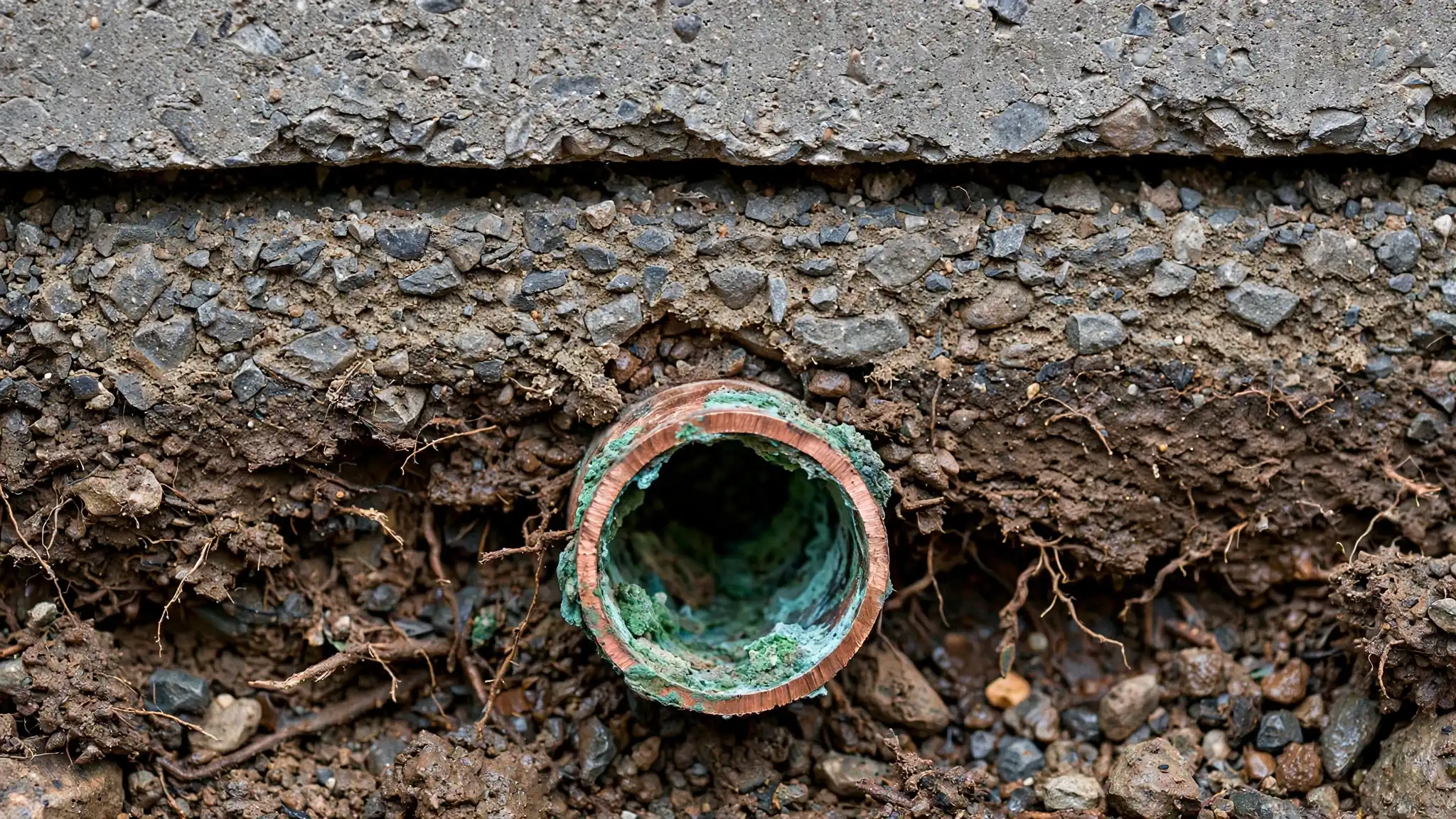
- Warm spots — a hot-water copper line has split or pinhole-corroded, discharging heated water directly into the soil and concrete.
- Bill spikes — any pressurized break, hot or cold, flows continuously at mains pressure until stopped.
- Running-water sounds — pressurized water escaping through a split creates turbulence and vibration that transmits through concrete.
- Damp flooring — water migrates upward through concrete porosity and along the pipe trench, saturating everything above.
- Cracks — soil erosion beneath the slab removes support; the slab settles into the void.
Learn what causes slab leaks — and what actually prevents them — in our companion guide.
What Happens If You Wait
Slab leaks are progressive. Here is the honest timeline of inaction:
- Water damage spreads. Flooring, baseboards, and wall bottoms absorb migrating moisture; mold colonizes damp materials within days.
- The water bill compounds. A moderate break wastes thousands of gallons monthly — every billing cycle adds to the loss.
- Foundation soil erodes. Moving water carries soil away, forming voids beneath the slab that lead to settlement and structural cracking.
- Repair scope grows. A single pinhole found early is a spot repair; months of erosion can turn it into a reroute or foundation project.
Safe Checks Vs When To Call A Professional
| Situation | Safe DIY Check | Call A Professional When |
|---|---|---|
| Warm floor patch | Map it barefoot; note whether it grows over days | The warm area spreads or you confirm hidden flow at the meter |
| High water bill | Run the 2-hour meter test to confirm a leak exists | The meter confirms continuous flow you cannot explain |
| Running-water sounds | Verify every fixture and appliance is truly off | Sounds persist with everything off |
| Damp flooring | Photograph and monitor the extent | Dampness spreads or appears in multiple rooms |
| New cracks | Photograph and measure for comparison | Cracks widen or accompany any moisture symptom |
How Professionals Fix Slab Leaks
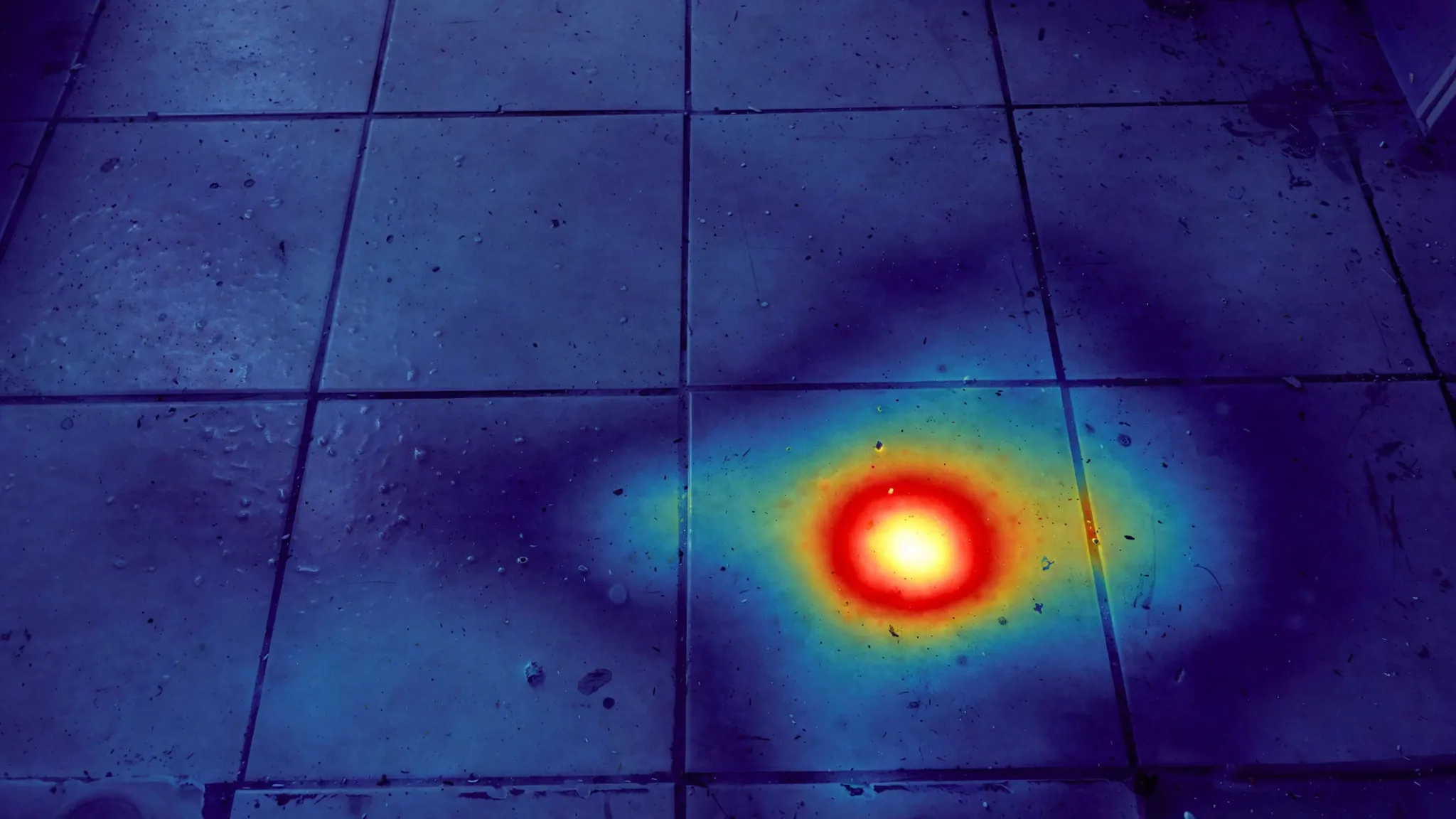
Professional slab leak detection works in two phases: location and repair. Location uses acoustic listening to hear the break's signature through concrete, thermal imaging to map hot-water anomalies, and sometimes tracer gas for confirmation — all non-invasive. Once marked, repair options include spot repair, pipe rerouting, or epoxy lining, chosen based on the break's position, the pipe's condition, and cost. If the situation is urgent — spreading warmth, audible flow, structural symptoms — our emergency slab leak service responds 24/7.
Slab Leaks In Chelsea Homes: Local Context
Chelsea's housing stock shapes its slab-leak profile. Many homes sit on concrete slabs with copper water lines run beneath — the exact configuration where slab leaks occur. The city's older building stock means many under-slab copper systems are decades into their service life, operating in soil conditions and with water chemistry that may accelerate corrosion.
Local factors worth knowing: urban soil conditions (fill, varied compaction, and old infrastructure corridors) create uneven support and chemistry beneath slabs. Freeze-thaw cycles move soil seasonally, stressing rigid copper at joints. And dense lot patterns mean service lines and under-slab runs are often shorter but harder to access — detection precision matters more, not less, when working room is tight.
None of this means slab leaks are inevitable — it means Chelsea homeowners benefit disproportionately from knowing the signs early. A warm floor in a 1960s slab home deserves faster action than the same symptom in new construction, because the underlying pipe's age raises the probability.
Age Is A Risk Factor, Not A Verdict
Older under-slab copper is more leak-prone, but age alone does not diagnose a leak — symptoms do. Use the home's age to calibrate your urgency, not to conclude a leak exists without evidence.
How To Discuss Symptoms With Your Plumber
When you call, the quality of your symptom report directly affects diagnostic speed. Prepare this information:
- Which symptoms, and since when. ("Warm patch in the kitchen, noticed three weeks ago, growing.")
- Meter test results. ("2-hour test showed 8 gallons of hidden flow.")
- What you have ruled out. ("Toilets dye-tested clear; no irrigation running.")
- Photos. Warm-zone outlines, damp areas, meter readings — timestamped.
- Home facts. Approximate age, slab vs. basement/crawlspace, any prior plumbing work.
This briefing lets the technician arrive with the right equipment priority and often shortens the visit. It also demonstrates that you are an informed customer — which tends to produce more thorough work.
Common Myths About Slab Leak Signs
- "The floor would be visibly wet." — No. Most slab leaks never produce surface water; concrete and soil absorb the discharge. Warmth, sound, and bills are the real signals.
- "Newer homes do not get slab leaks." — Installation defects, high pressure, and aggressive water affect new construction too.
- "If it were serious, I would hear it." — Small seeps are inaudible without equipment; by the time you hear it unaided, it is significant.
- "The water bill proves/disproves it." — Bills lag by weeks and blend with seasonal usage; the meter test is the real instrument.