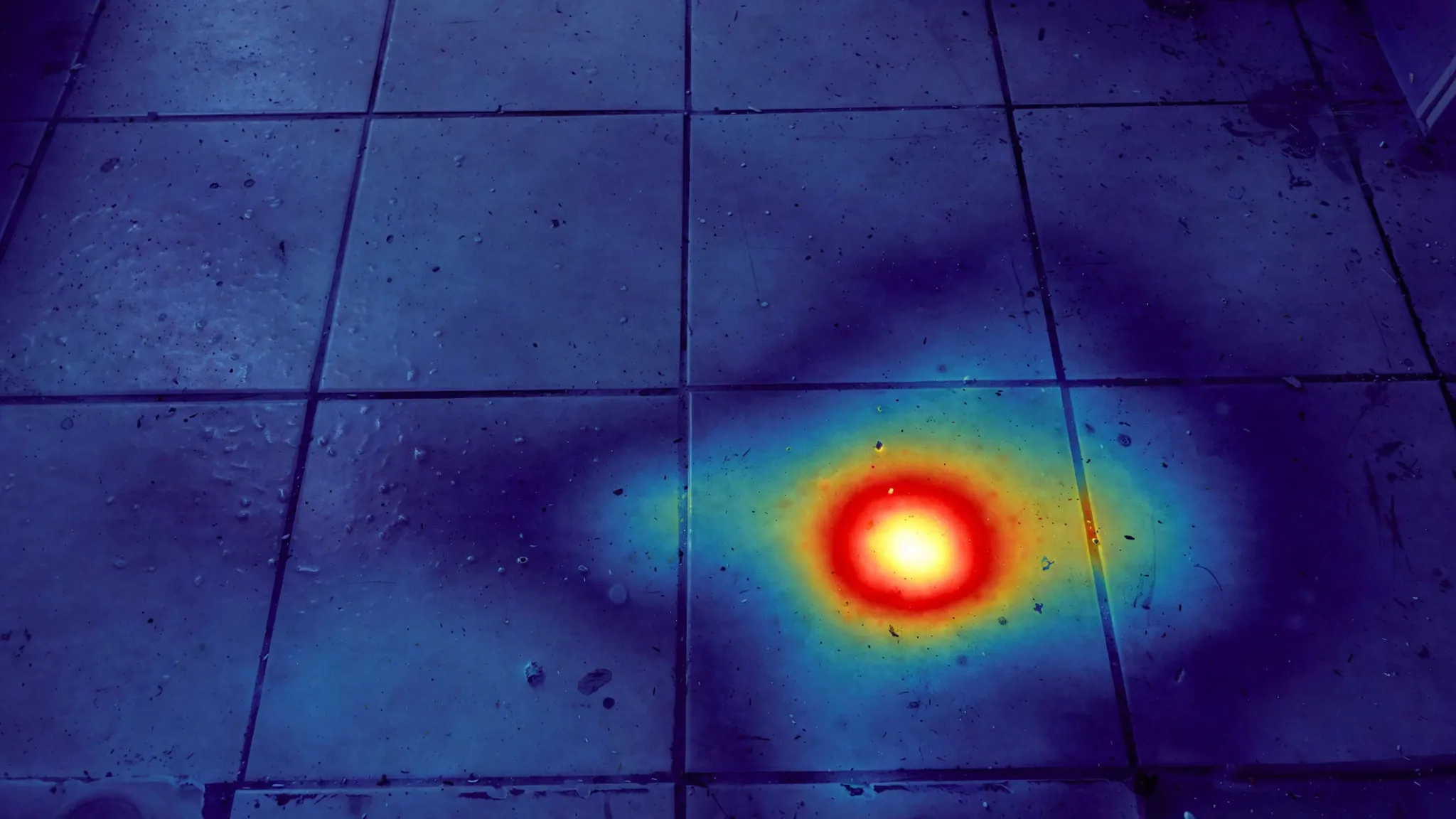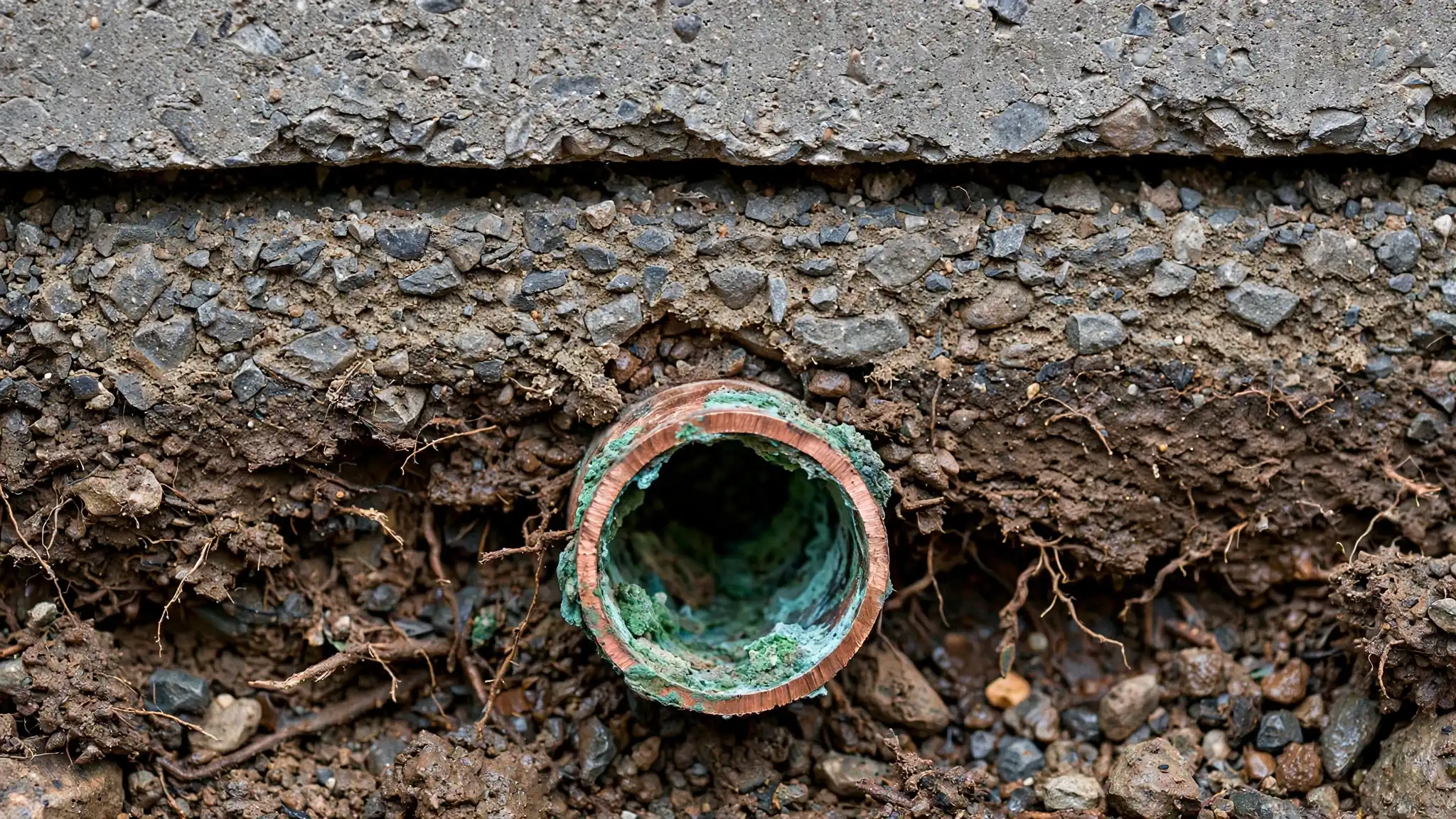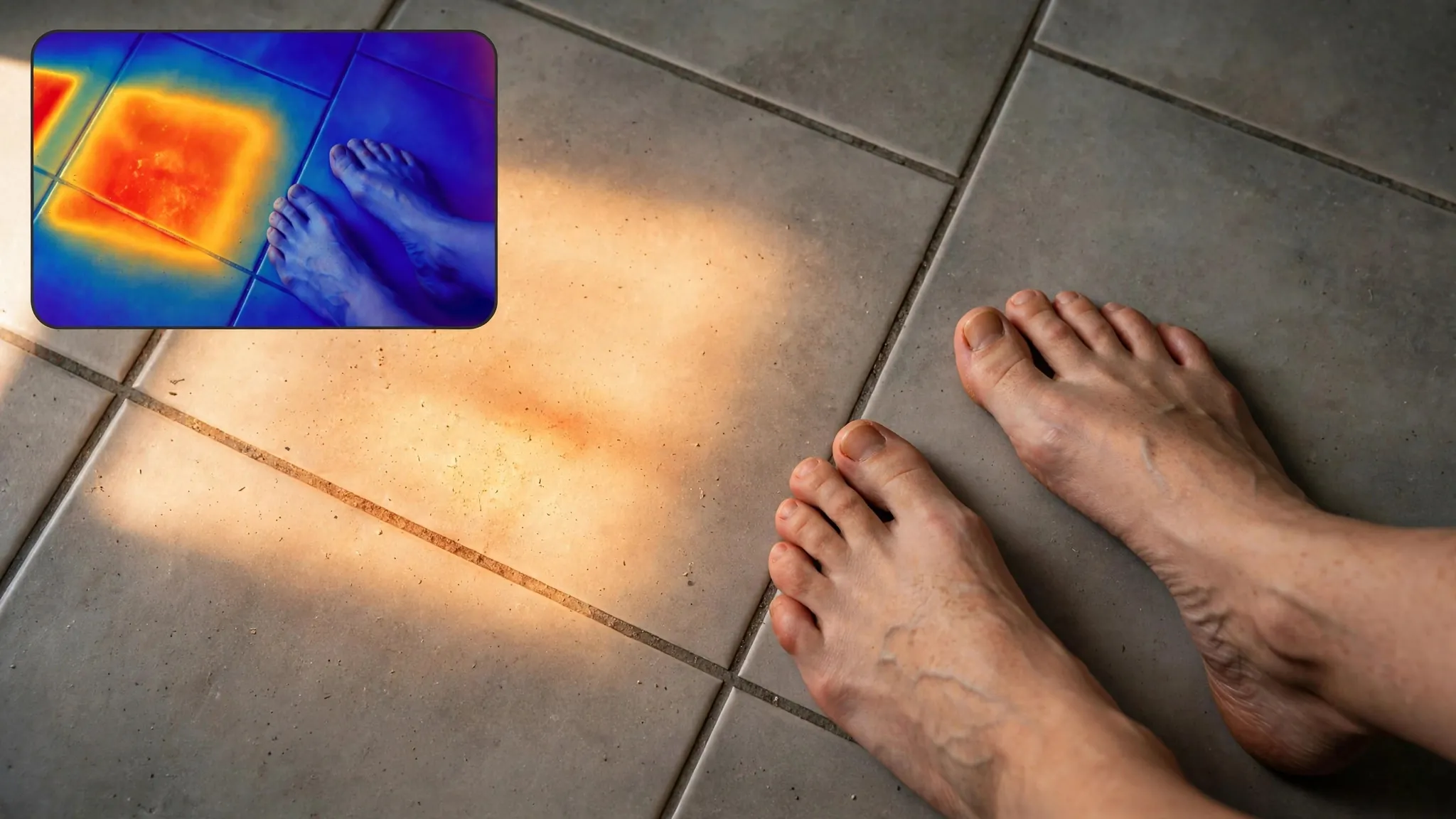
A warm spot on the floor — a patch noticeably warmer than the surrounding flooring, with no heating source beneath it — most commonly means a hot-water line is leaking beneath your concrete slab. The escaping hot water heats the concrete and soil, and that heat conducts upward to the floor surface. Confirm it by checking whether the spot grows over days and whether your water meter shows hidden flow with everything off. If both check out, professional slab leak detection will pinpoint the break.
Quick Answer
A persistent warm floor patch with no heating underneath almost always indicates a hot-water slab leak. Map it barefoot over several days — growth confirms an active break. Then run a water meter test with everything off: hidden flow plus a warm spot is a near-certain diagnosis. Call a slab leak specialist for acoustic and thermal confirmation; do not ignore it, because hot water erodes foundation soil fastest.
What A Warm Spot On The Floor Means
Flooring sits at roughly room temperature — except where something heats it from below. The usual suspects are radiant floor heating (if you have it), sun exposure through windows, and hot-water pipes — either intact lines radiating normal warmth or a broken line discharging hot water into the slab.
The distinction matters: an intact hot-water line creates a faint, linear warmth along its route — subtle and stable. A break creates a distinct, often growing patch — warmer, less linear, and expanding as hot water saturates more soil and concrete. If the warm area has an irregular shape, is noticeably warmer than any other floor area, or grows over days, suspect a break.
The Barefoot Test
Walk the floor barefoot slowly, morning and evening. Your feet detect temperature differences of a degree or two — enough to map a slab-leak warm zone. Mark the edges with painter's tape and re-check daily; growth is the key diagnostic.
What To Do Right Now
- Map the warm area. Barefoot-walk the floor, mark the warm zone's edges with tape, and photograph the outline.
- Rule out heating sources. Confirm no radiant heating, no sun exposure pattern, no appliance (like a water heater) warming that floor section.
- Run a water meter test. With everything off, check for hidden flow — the single most informative DIY step.
- Monitor for growth. Re-check the taped outline in 2–3 days. Expansion confirms an active break.
- Call for detection. Warm spot plus meter flow means professional slab leak detection — thermal imaging will map it in minutes.
Need Help Right Now?
Warm spot growing daily, or accompanied by running-water sounds? That is an active hot-water break — call now.
Call (617) 380-4912How To Check It Yourself
Beyond the barefoot test, two accessible tools sharpen the diagnosis:
- Infrared thermometer (inexpensive, widely available): scan the floor in a grid pattern, recording temperatures. A slab-leak warm zone typically reads several degrees above surrounding floor — and the gradient points toward the break.
- Water meter test: turn off every water-using fixture and appliance, note the meter reading, wait two hours without using water, and re-read. Any movement confirms hidden flow. Learn to read your meter if you have never done it.
What Else Could A Warm Spot Be?
Honest differential diagnosis — not every warm floor is a leak:
- Radiant floor heating — check whether the system is on; its warmth follows the tubing layout evenly.
- Solar gain — sun through windows warms floors in daylight patterns that fade overnight; leak warmth persists 24/7.
- Normal pipe radiation — intact hot-water lines create faint linear warmth, stable over time, not growing patches.
- Appliance heat — water heaters, furnaces, and even refrigerators warm adjacent flooring.
The leak signature is persistent, irregular, and growing — present at 3 AM as at 3 PM, shaped like a blob rather than a line, expanding over days.
What Happens If You Wait
Hot-water slab leaks are the most destructive kind, because heat accelerates soil erosion. The escaping hot water continuously washes supporting soil from beneath the slab while you deliberate. Consequences of waiting include higher water and energy bills (the heater runs constantly), spreading floor damage, mold in saturated materials, and — over months — foundation settlement requiring structural repair. A warm spot is an early warning; it is also a countdown.
DIY Checks Vs Professional Detection
| Check | What You Can Do | What Requires A Professional |
|---|---|---|
| Mapping the warm zone | Barefoot test, tape outline, infrared thermometer grid | — |
| Confirming hidden flow | 2-hour meter test | — |
| Ruling out heating sources | Check radiant system, sun patterns, appliances | — |
| Locating the exact break | — | Acoustic + thermal detection pinpoints within inches |
| Assessing pipe condition | — | Professional evaluation of whether spot repair or rerouting fits |
How The Fix Works
Once professional detection marks the break, repair options are spot repair, rerouting, or epoxy lining — chosen by break location, pipe condition, and cost. The warm spot itself resolves once the break is repaired and the slab dries. If the spot is growing, audible, or accompanied by structural symptoms, our emergency slab leak service responds 24/7.
Tracking Changes Over Time: Your Warm-Spot Log
A warm spot's behavior over time is more diagnostic than any single measurement. Keep a simple log:
- Day 1: outline the warm zone with painter's tape; photograph; note the date.
- Days 3, 7, 14: re-walk barefoot; mark any expansion; photograph from the same angle.
- Note correlations: does warmth intensify after hot-water use? (Suggests supply-side break.) Is it constant regardless? (Consistent with a continuous break.)
- Record meter readings alongside — growth plus meter flow is the complete picture.
Bring this log to your detection appointment. A two-week growth record tells the technician the break is active and roughly how fast it is progressing — genuinely useful diagnostic context.
When Warm Spots Are Normal
Not every warm floor is pathology. Normal warm zones include:
- Above heating ducts or radiant systems — follows the system's layout, stable over time, explainable.
- Sun-exposed areas — daylight pattern, fading overnight; moves with seasons.
- Near the water heater or furnace — appliance heat radiating into adjacent slab.
- Above intact hot-water lines — faint, linear, stable warmth along the pipe route.
The leak signature differs on every axis: irregular shape, persistent day and night, growing over days, warmer than any normal zone. When in doubt, the meter test breaks the tie — normal warmth does not spin the meter.
Normal Has An Explanation
For every warm zone, ask: 'What heats this?' If you can name the source (sun, duct, appliance, known pipe run) and the warmth is stable, it is normal. Unexplained, growing warmth is the signal.
What To Tell Neighbors (And What It Means For Them)
Slab leaks are not contagious — but shared risk factors are. If your home has a slab leak from aggressive water chemistry or high municipal pressure, neighboring homes on the same water share those factors. Mentioning it neighbor-to-neighbor is genuine community helpfulness: the same $15 pressure gauge and meter test protect every house on the street. In developments built simultaneously with the same materials and installer, one home's slab leak is a reasonable prompt for others to check — not panic, just the meter test.
For Renters: Warm Spots And Landlord Obligations
Renters who find warm spots should document and notify in writing — timestamped photos of the taped outline, meter readings if accessible, and a dated written notice to the landlord or property manager. Slab leaks affect the building's structure and the water bill (which the owner typically pays) — owners have strong incentives to act once informed in writing. Keep copies of all correspondence; if the situation involves active damage, the urgency is the owner's regardless of lease terms.
New Construction Warranty Considerations
Warm spots in new construction fall under builder warranties in many jurisdictions — but warranties have claim windows and notification requirements. Document early, notify in writing within the warranty period, and do not let "normal settling" explanations delay a professional assessment. A builder's warranty claim supported by a professional detection report is far stronger than a verbal complaint about a warm floor.
Write It Down
Whether renter or owner, new build or old: written, dated, photographed documentation transforms every subsequent conversation — with landlords, builders, insurers, and contractors. Memory fades; paper persists.
Affordable Tools That Help
Beyond bare feet, two inexpensive tools sharpen warm-spot diagnosis:
- Infrared thermometer (under $30) — point-and-read surface temperatures; grid-scan the floor to map the warm zone precisely and track growth numerically.
- Moisture meter (under $50) — pin-type meters detect elevated moisture in flooring and baseboards around the warm zone, corroborating the leak hypothesis.
Neither replaces professional detection, but both convert vague worry into measured data — and measured data makes every subsequent conversation (with plumbers, insurers, landlords) more productive. Pair with the full signs guide for complete context.