Slab leaks are caused by pipe corrosion (especially copper pitting from water chemistry), excessive water pressure, soil movement beneath the foundation, abrasion where pipes rub against concrete, and installation defects like kinked lines or poor soldering. Hot-water lines fail most often because heat accelerates corrosion. Prevention centers on pressure regulation, water chemistry awareness, and early detection — there is no maintenance that makes under-slab pipes immortal, but informed homeowners catch failures years earlier.
Quick Answer
The leading causes of slab leaks are copper pipe corrosion (pitting from aggressive water chemistry), high water pressure stressing joints and weak points, soil expansion/contraction moving the slab against pipes, abrasion where pipes contact concrete, and original installation defects. Hot-water lines corrode fastest. Prevention means keeping pressure in a safe range, knowing your water chemistry, and responding to early warning signs immediately.
Corrosion: The Leading Cause Of Slab Leaks
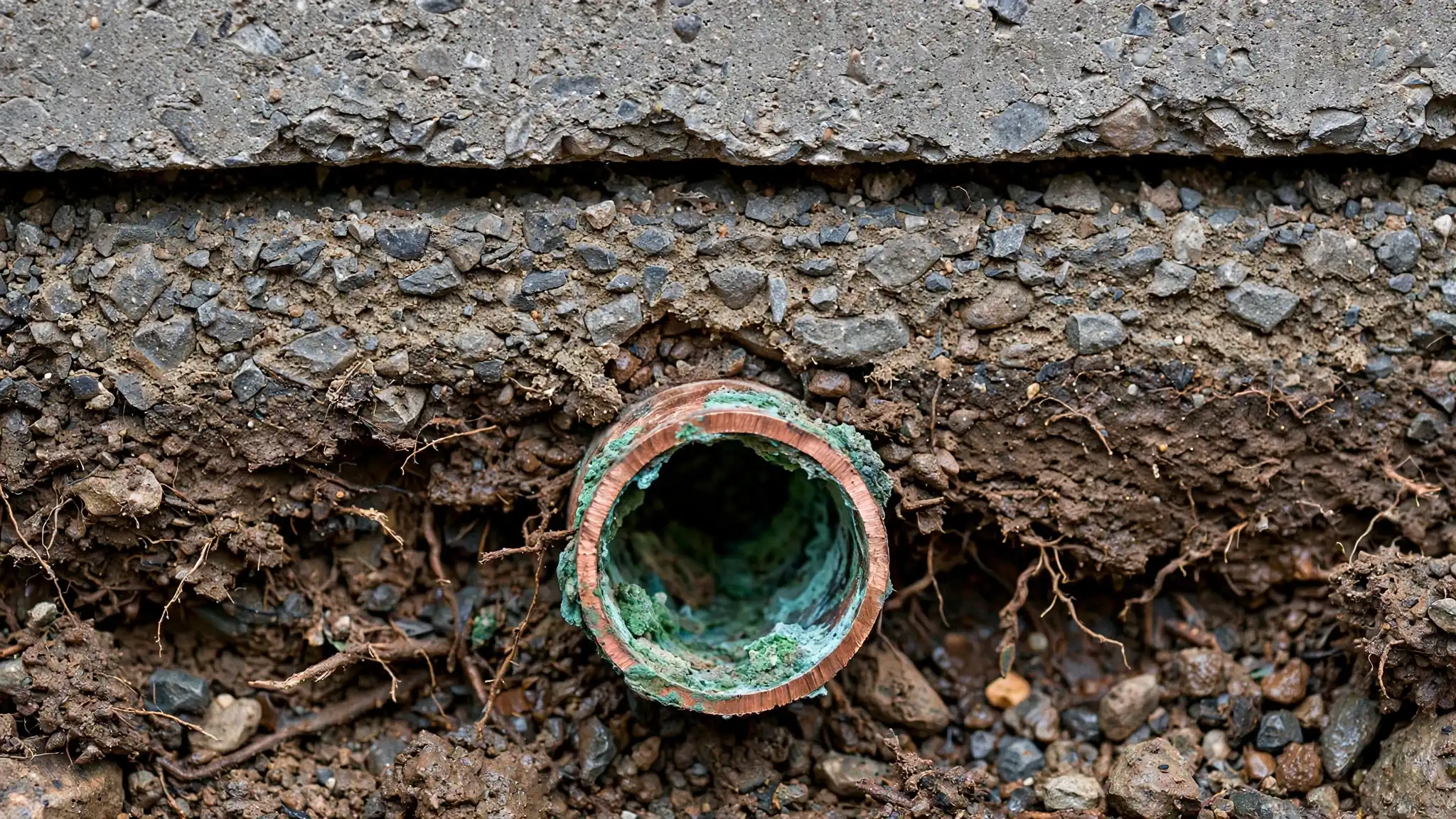
Copper pipe corrosion causes the majority of slab leaks in homes with copper under-slab plumbing. It takes two main forms. Pitting corrosion — tiny pits that bore through the pipe wall from the inside — is driven by water chemistry: aggressive (low-pH or high-chlorine) water attacks copper, and the pits concentrate at microscopic weak points until one breaches. Erosion corrosion wears pipe walls thin where water velocity is highest, typically at elbows and tees.
What accelerates it: hot water (heat speeds every chemical reaction), high velocity from excessive pressure, and certain water chemistries. What does not cause it: normal aging alone — well-protected copper in benign water lasts many decades. If your home has had one pinhole leak, the water chemistry affecting that pipe affects every under-slab line.
Know Your Water
Municipal water quality reports (published annually) reveal pH and chlorine levels. Aggressive water does not just threaten under-slab lines — it affects every copper pipe in the home. A water treatment professional can advise on conditioning options.
Excessive Water Pressure
Municipal water often arrives at pressures far above what residential plumbing is designed for. High static pressure stresses every joint, fitting, and weak point in the system — including under-slab lines you cannot inspect. Pressure spikes from thermal expansion (water heaters heating a closed system) add cyclic stress that fatigues copper over years.
The fix is simple and inexpensive: a pressure-reducing valve (PRV) at the main, set to a safe residential range, plus a thermal expansion tank at the water heater. Homes without a PRV are measurably more leak-prone across every pipe, not just under-slab runs.
Soil Movement Beneath The Slab
Expansive clay soils swell when wet and shrink when dry, moving the slab — and the pipes embedded in or beneath it — by fractions of an inch. That movement stresses rigid copper at joints and bends. Soil erosion from poor drainage or minor pre-existing leaks removes support, letting pipe sections flex under pressure cycling until they crack.
Good grading and drainage around the foundation are not just basement protection — they stabilize the soil your under-slab plumbing depends on.
Abrasion And Installation Defects
Where copper pipe passes through or rests against concrete without proper sleeving, thermal expansion rubs the pipe against the concrete — microscopically, thousands of times — until the wall thins and breaches. Original installation defects compound the risk: kinked lines from rough handling, overheated solder joints, pipes laid directly on aggregate without bedding, or lines stressed by concrete pour settlement.
These defects are invisible and unfixable without excavation — which is why rerouting or lining is often recommended when one defect-driven leak appears: the same installer laid every line.
Why Hot-Water Lines Fail First
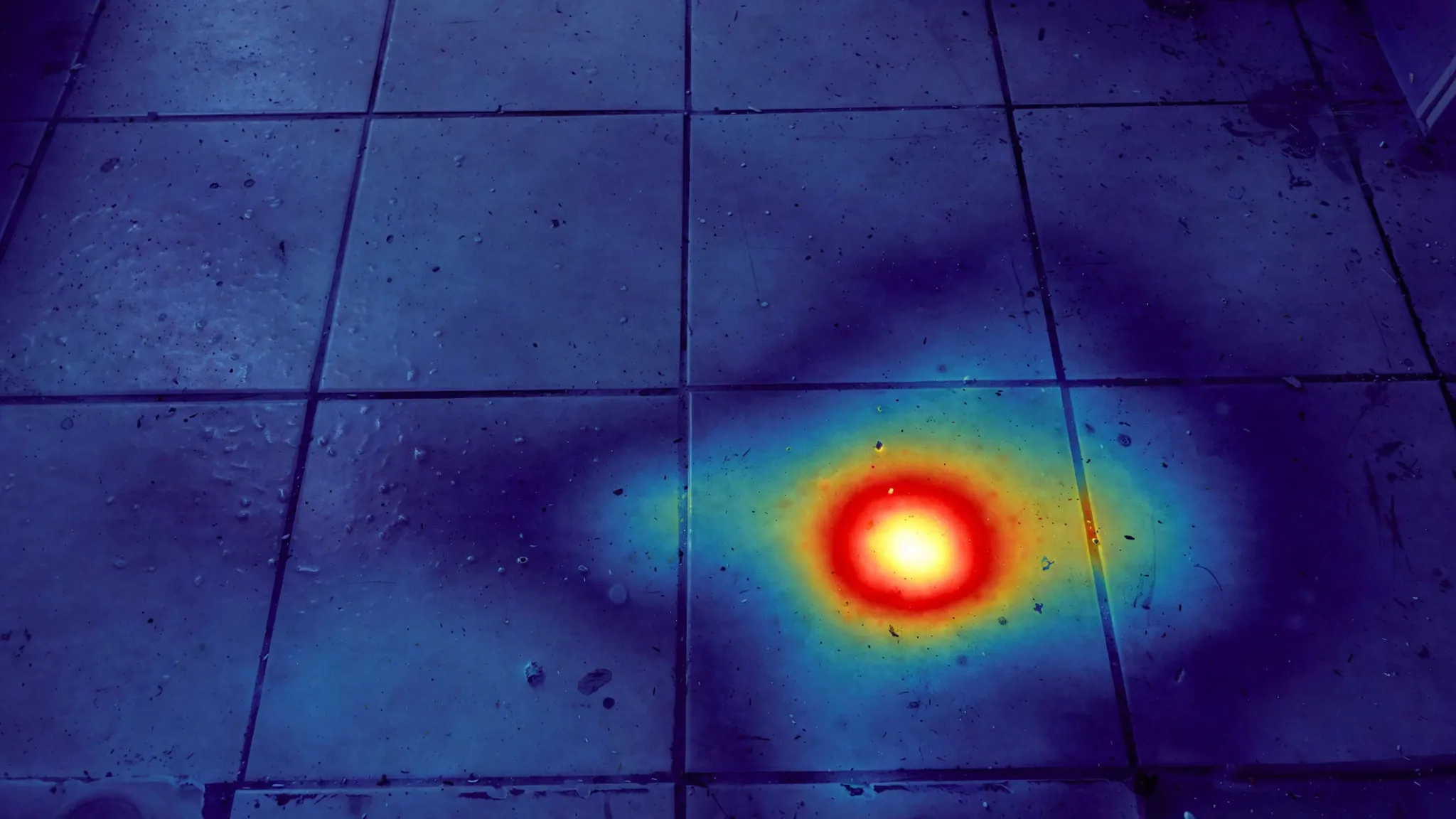
Heat accelerates corrosion chemistry, increases pressure through thermal expansion, and drives more expansion-contraction cycling at every joint. The result: hot-water under-slab lines fail several times more often than cold-water lines in the same home. That is also why the classic slab-leak symptom is a warm floor spot — the most common break is a hot line.
The Hot-Water Tell
If you suspect a slab leak, check whether the warm floor area aligns with hot-water usage patterns. A water heater that runs excessively with normal household use corroborates a hot-line break — useful information to share when you call for detection.
Prevention That Actually Works
No maintenance makes under-slab pipes immortal. Honest prevention has three pillars:
- Control pressure. Install (or verify) a PRV and expansion tank. This single step reduces stress on every pipe in the home.
- Know your water. Review the annual water quality report; address aggressive chemistry if present.
- Detect early. Learn the signs of a slab leak and respond to the first symptom — early detection converts a foundation-threatening emergency into a routine spot repair.
- Consider proactive options for aging systems. Homes with multiple pinhole leaks are candidates for whole-house repiping (often overhead rerouting) or epoxy lining — solving the systemic cause rather than chasing individual breaks.
When prevention was not enough, professional slab leak detection locates the break precisely — and our emergency service responds 24/7 when the break is active.
Understanding Your Water Chemistry
Water chemistry is the variable most homeowners never check — and the one most predictive of copper pipe longevity. The key parameters:
- pH: water below neutral (acidic) attacks copper aggressively; the lower the pH, the faster the pitting.
- Chlorine/chloramine: disinfectants essential for safety, but higher residuals accelerate copper corrosion.
- Total dissolved solids (TDS): very low TDS (soft, pure water) can be more corrosive to copper than moderately mineralized water.
- Temperature: hot water amplifies every chemical attack — the hot-water loop is always the canary.
Your municipal annual water quality report (Consumer Confidence Report) publishes these numbers. If pH runs low or disinfectant residuals run high, discuss conditioning with a water treatment professional — not as a slab-leak guarantee, but as a system-longevity investment affecting every copper pipe in the home.
Pressure Regulation: The Practical Guide
Measure first: a $15 pressure gauge on a hose bib reads static pressure. Check it at different times — municipal pressure fluctuates, often peaking overnight. If readings consistently exceed the safe residential range, a pressure-reducing valve (PRV) at the main is indicated.
PRV essentials: installed where the service line enters, set to a safe range, with a thermal expansion tank at the water heater (a PRV creates a closed system; heated water needs expansion room). PRVs last roughly a decade — test pressure annually, because a failed PRV silently returns the system to full municipal pressure.
The $15 Test
A hose-bib pressure gauge is the cheapest diagnostic in plumbing. Check static pressure yearly; it takes two minutes and reveals the single most controllable slab-leak risk factor.
Long-Term Monitoring Habits
Prevention is not a one-time fix — it is a monitoring habit:
- Quarterly meter checks — a 60-second flow-indicator glance with everything off.
- Annual pressure test — verify the PRV still holds.
- Bill trend review — compare same-period usage year over year; slow creeps reveal slow leaks.
- Barefoot floor walks — seasonal; know your floor's normal temperature map.
- Water quality report review — annually, when published.
These five habits cost nothing and catch most slab leaks in their cheapest phase. The homeowners who pay the most for slab leaks are not the unlucky ones — they are the ones who never looked.
Case Pattern: The Two-Leak Home
A common real-world pattern: a homeowner repairs one slab leak (spot repair), then a second pinhole appears eighteen months later a few feet away. This is not bad luck — it is systemic pipe condition expressing itself sequentially. The first leak was the weakest point failing first; the pipe's overall corrosion means the second-weakest was always close behind.
The lesson: treat the first leak as a system assessment trigger, not just a repair event. Ask the plumber to evaluate overall pipe condition (age, material, water chemistry, pressure) and discuss whether spot repair, rerouting, or lining addresses the pattern — not just the point. Homeowners who repipe or reroute after the second leak consistently report wishing they had evaluated systemically after the first.
Prevention Myths
- "Pipe additives prevent corrosion." — No pour-in product protects buried copper from electrochemical corrosion. Real prevention is pressure control, chemistry awareness, and monitoring.
- "Newer pipe is immune." — Better, not immune. Installation defects and extreme chemistry defeat new pipe too.
- "Insurance covers repiping." — Insurance covers sudden damage, not systemic renewal. Budget repiping as maintenance, not as a claim.
- "A softener solves everything." — Softeners address hardness specifically; they do not fix low pH, high chlorine, or pressure problems.
Prevention Is Risk Reduction
No strategy eliminates slab-leak risk entirely — buried pipe is inherently uninspectable. Honest prevention reduces probability and, crucially, ensures early detection when prevention falls short. The goal is cheapest-phase discovery, not immortality.
The Annual Slab-Leak Prevention Checklist
Once a year, work through this list — it takes under an hour and addresses every controllable risk factor:
- Pressure check — hose-bib gauge; verify the PRV holds safe pressure.
- Meter glance — 60-second flow-indicator watch with everything off.
- Bill review — same-period comparison year over year.
- Floor walk — barefoot temperature map; note any new warm zones.
- Water quality report — review the annual publication for pH and disinfectant changes.
- Visible plumbing scan — under sinks, at the water heater, hose bibs — for weeps and corrosion.
Pair this with knowledge of slab leak warning signs and how detection works, and you have a complete prevention-and-response system.