
Buried Line Leak
Soggy lawn, sinking soil, or water surfacing where it should not can mean a buried pipe leak. Ground microphones and tracer gas locate it without tearing up your yard.
Fast · Reliable · Non-Invasive
Underground pipes fail where no one can see — under lawns, driveways, walkways, and slabs — and the leak's surface symptoms rarely sit above the break. We locate underground pipe leaks with a method-first approach: acoustic sensors that hear pressurized water through any covering, and tracer gas that marks the break's exact position, whether the pipe runs under soil or concrete.
Related Services
Underground pipes run beneath structures and surfaces. These services cover the related investigations.
Soggy lawn, sinking soil, or water surfacing where it should not can mean a buried pipe leak. Ground microphones and tracer gas locate it without tearing up your yard.
Warm spots on floors, rising water bills, or the sound of running water under concrete all point to a slab leak. We trace it precisely so repairs open the smallest area.
Low pressure, soggy ground between the street and your home, or a spinning meter can signal a service line leak. We locate it precisely with no blind digging.
A failing sewer line under your slab does not have to mean excavation. Trenchless epoxy lining builds a new pipe inside the old one — no digging.
Warning Signs
The pipe is hidden; the evidence is not. These surface clues point downward.
Persistent wet spots on lawn, pavement, or slab — unrelated to rain or irrigation — mark where leaking water reaches the surface. The wet area's edge often points toward the break.
Water escaping under driveways and walkways erodes the base, causing cracking, lifting, or settlement. Pavement damage above a pipe route is the ground's distress signal.
A spinning meter with a dry house and normal yard means the leak is underground — possibly under pavement or slab where no surface symptom can form. Detection is the only way to find it.
A warm band across a slab floor or bare soil indicates a hot-water line leaking below. Thermal imaging reads these signatures through concrete and ground cover alike.
Damp foundation walls or slab edges with no interior source can mean an underground supply or drain leak saturating the surrounding soil. The building is drinking the leak.
One section of lawn or planting thriving — or dying — differently from the rest often sits over a leaking underground pipe. Roots find leaked water fast and show it.
Our Process
Under any surface — soil, concrete, asphalt — the method adapts but the precision does not.
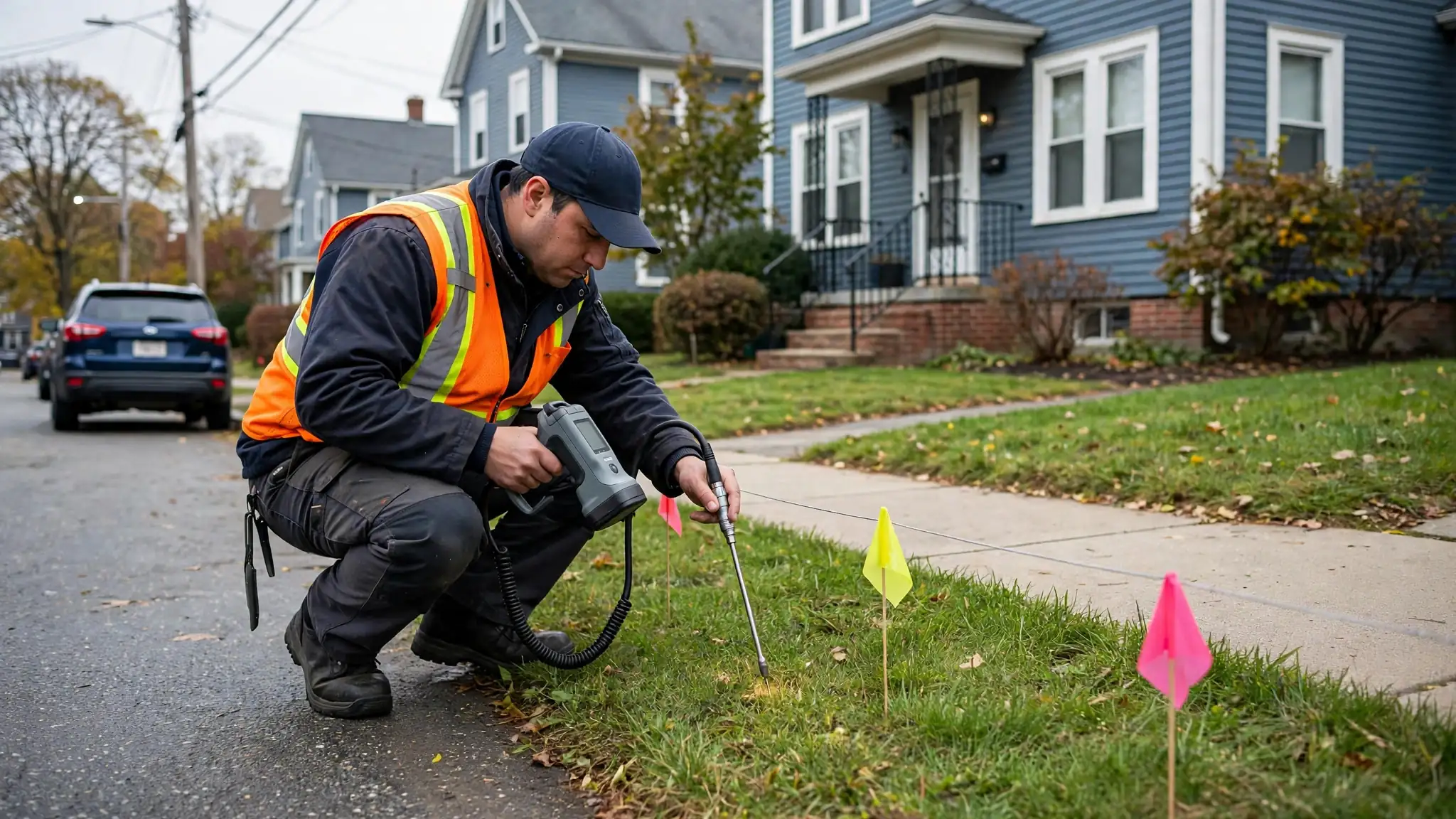
We locate the underground pipe's path first with pipe locators and available plans — under lawn, driveway, walkway, or slab. Detection follows the pipe; it never searches blindly across a property. Flags or paint mark the route so the investigation is visible and verifiable.
Ground microphones and contact sensors listen along the mapped route for the leak's distinctive hiss. Different surfaces transmit sound differently, and we calibrate for each — soil, concrete, and asphalt each have their acoustic character. We note ambient noise conditions and adjust survey timing for cleanest readings.
Safe tracer gas introduced into the line escapes only at the break and migrates to the surface, where detectors find its peak concentration. This marks the break within inches, regardless of what covers the pipe. The gas is inert, non-toxic, and dissipates completely after the survey.
You get the marked break with a depth estimate and a repair plan accounting for the surface above — saw-cutting pavement, lifting pavers, or tunneling under slabs. One planned opening, minimal restoration. Restoration contractors consistently prefer our surface-specific repair notes.
Why Choose Us
Underground pipe leaks are where detection earns its fee most dramatically — the alternative is trenching, saw-cutting, or slab-breaking on hunches across expensive surfaces. For 13 years we have found Chelsea's underground breaks under every covering: lawns, asphalt driveways, concrete walkways, patios, and slabs. Our dual-method standard — acoustic profiling plus tracer gas confirmation — means the mark is verified twice before anyone cuts a surface. Contractors get a point with depth; you get one restoration bill instead of a landscape of exploratory holes. The dual-method standard is our answer to the most expensive question in underground work: 'are you sure?' Acoustic profiling hears the leak; tracer gas confirms the exact point; and only where both agree do we mark. That discipline matters most under expensive surfaces — driveways, patios, slabs — where a wrong mark means destroyed restoration. Thirteen years under Chelsea's ground has taught us each covering's character: how clay soil muffles sound, how asphalt transmits it, how concrete slabs ring. We calibrate every survey to the ground it reads, and our marks carry depth estimates because excavation planning starts with knowing how deep to dig.
Underground tracing under every surface.
From 30 verified customer reviews.
We answer around the clock, every day.
Marked point — surfaces stay intact.
Customer Feedback
Helpful Tips
Protect the pipes you cannot see.
Before patios, driveways, or additions cover ground, locate and record pipe routes. Building over an unmapped line turns every future leak into an excavation mystery. Documented routes save every future investigation hours of searching.
Walk pipe routes each spring looking for new cracks in pavement, wet spots, or settling. Freeze-thaw damage surfaces with the thaw — catch it in its first season. Spring thaw reveals the winter's underground damage most clearly.
Properly buried lines sit below frost depth, but shallow or exposed sections freeze and crack. Know your lines' depths — shallow burial is a future leak. Shallow lines in traffic areas are failures waiting to happen.
Heavy vehicles compact soil and stress buried pipes, especially shallow ones. Keep heavy traffic off known pipe routes — crushed lines leak and are expensive to reach. Soil compaction from vehicles is a silent pipe killer — reroute traffic.
If paving over a pipe route, pressure-test the line first. Discovering a leak under fresh asphalt is the most expensive possible timing — test while the ground is open. Testing before paving is the cheapest insurance in underground work.
Never authorize excavation for an underground leak without a marked, verified break point. The mark is what separates professional repair from expensive exploration. No mark, no dig — make it your rule for every underground repair.
24/7 Emergency Service
An underground pipe break that surfaces — gushing water, collapsing pavement, or flooding — needs immediate location and control. Our 24/7 emergency line covers all of Chelsea with 30–45 minute arrival.
We trace the break under whatever surface covers it, help shut the right valve, and mark the repair point so emergency excavation is precise from the first cut. See our full emergency underground pipe leak service.
Call (617) 380-4912 NowService Areas
Under lawns, driveways, and slabs in every Chelsea neighborhood — underground pipe leak detection within the 02150 ZIP.
FAQs
What Chelsea property owners ask about hidden underground breaks.
The same methods work through hard surfaces: acoustic sensors hear the leak's hiss transmitted through concrete and asphalt, and tracer gas migrates up through joints and pores to mark the surface point. We calibrate for each surface type — they transmit sound differently.
They overlap significantly. We treat 'buried line' as outdoor yard and soil lines, while 'underground pipe' covers any hidden pipe run — including under slabs, driveways, and structures. The detection methods are the same; the distinction helps aim the investigation at the right pipe run.
Detection itself damages nothing — it is entirely non-invasive. The repair will need a planned opening at the marked point, but our depth estimate and surface-specific plan keep that opening as small as restoration allows.
Supply lines are typically 3–4 feet deep (below frost line); drainage and irrigation run shallower. We provide a depth estimate with every marked break so excavation is planned correctly.
Yes — this is core to our work. Acoustic and tracer gas methods locate under-slab breaks precisely, so only the marked section is opened. Blind slab-breaking is exactly what detection prevents.
With acoustic profiling plus tracer gas confirmation, we routinely mark breaks within inches. The dual-method standard exists because each method verifies the other — convergence is the accuracy guarantee.
Age and corrosion, freeze-thaw soil movement, root intrusion, poor bedding during installation, and mechanical damage from construction or traffic above. Our reports note the likely cause when the evidence shows it.
Yes — our emergency line is answered around the clock with 30–45 minute arrival anywhere in Chelsea. Call (617) 380-4912 any time.
A single break in a sound line warrants spot repair. Lines with widespread corrosion, repeated failures, or root intrusion throughout are usually more economical to replace or rehabilitate with trenchless lining — your contractor can advise once we document the line's condition.
Yes — water migrates through soil beyond property lines, and a significant leak can saturate neighboring ground, affect shared driveways, or undermine nearby structures. If your investigation reveals migration, documenting it promptly protects both you and your neighbors in any subsequent discussion.
From The Blog
Methods, signs, and causes of hidden underground pipe failures.
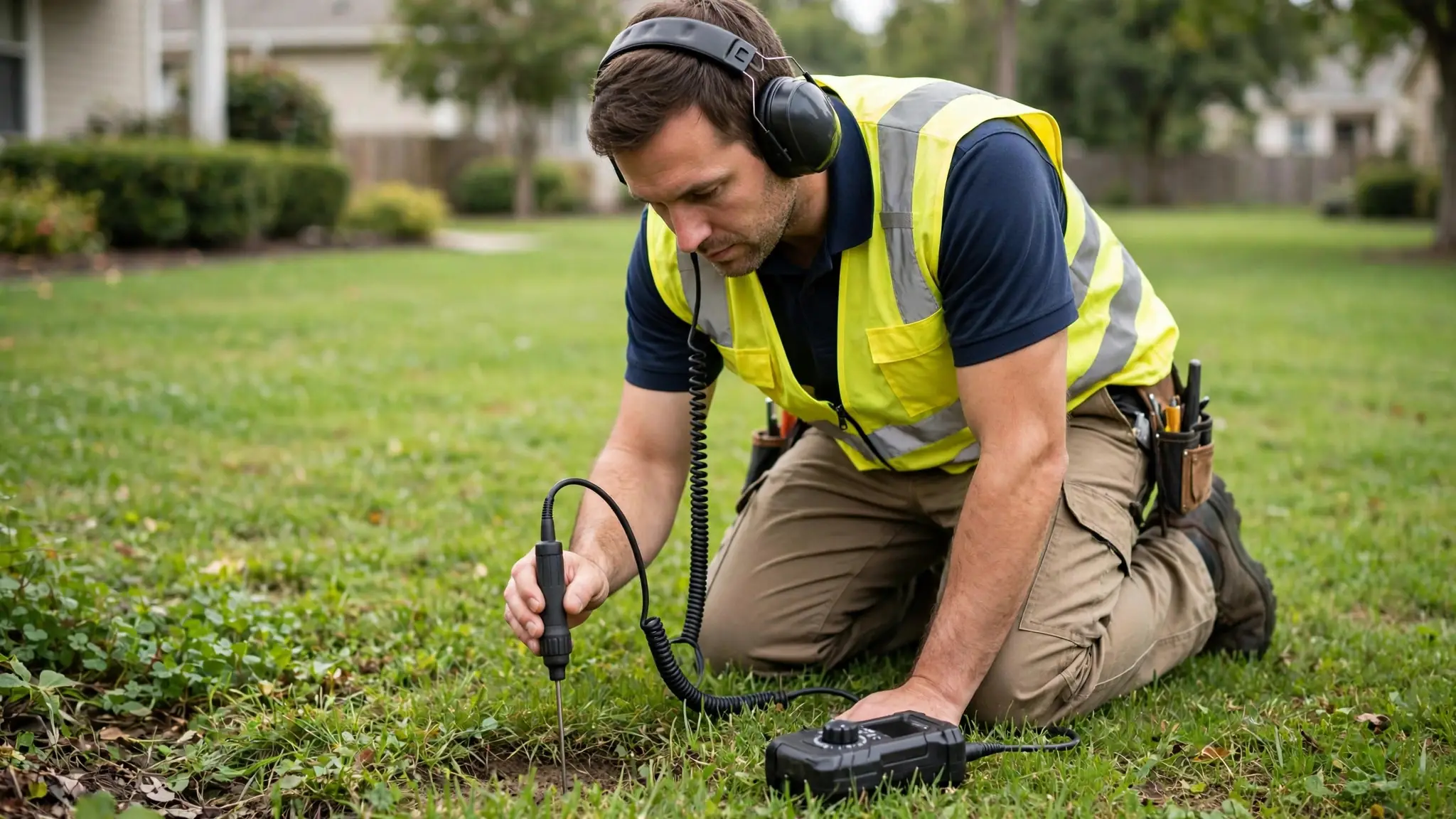
Ground microphones, tracer gas, and correlators — how technicians find buried leaks without digging up your yard.
Read Article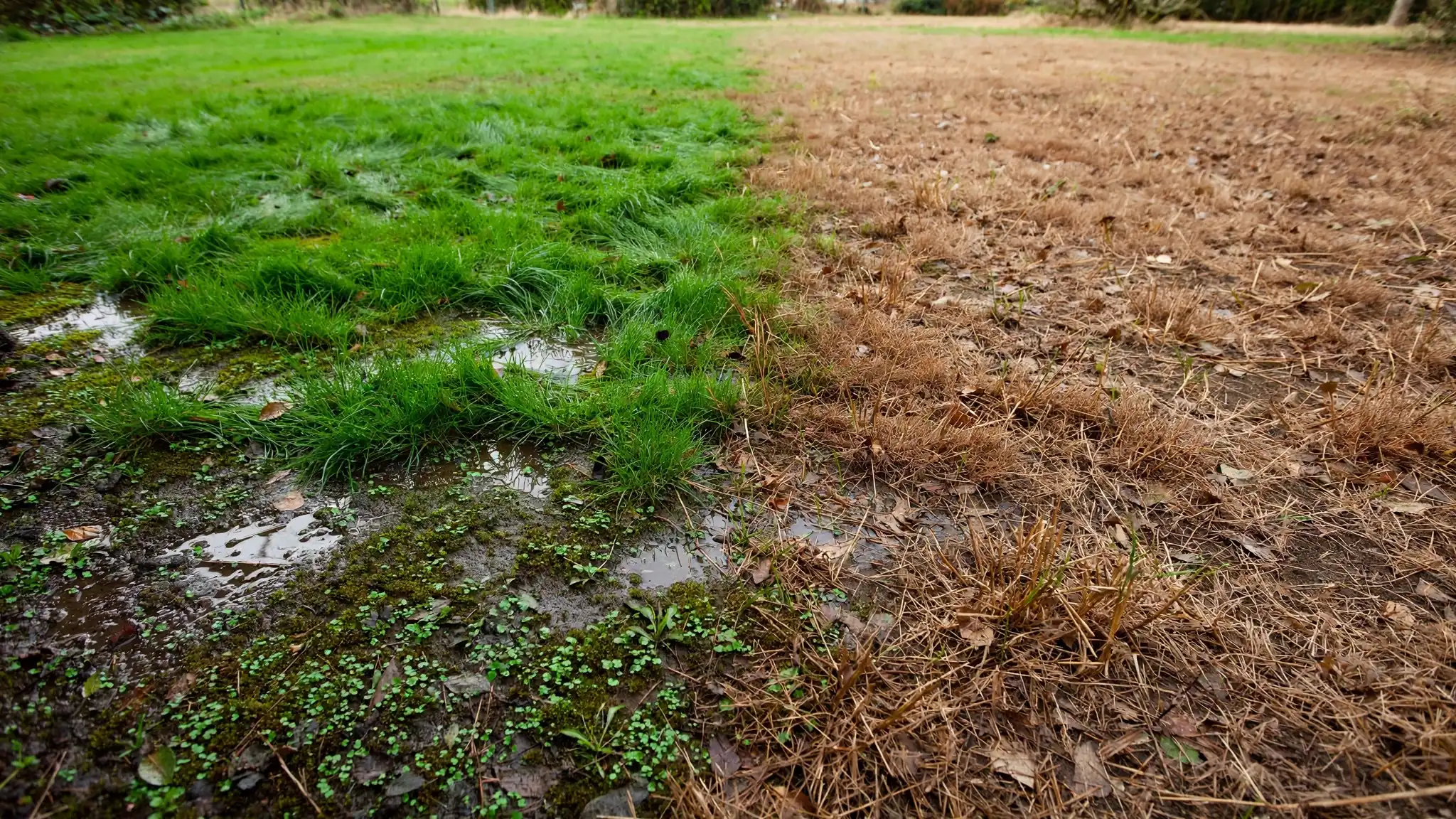
Soggy patches, lush grass stripes, and sinking soil — the surface signs of an underground water line leak.
Read Article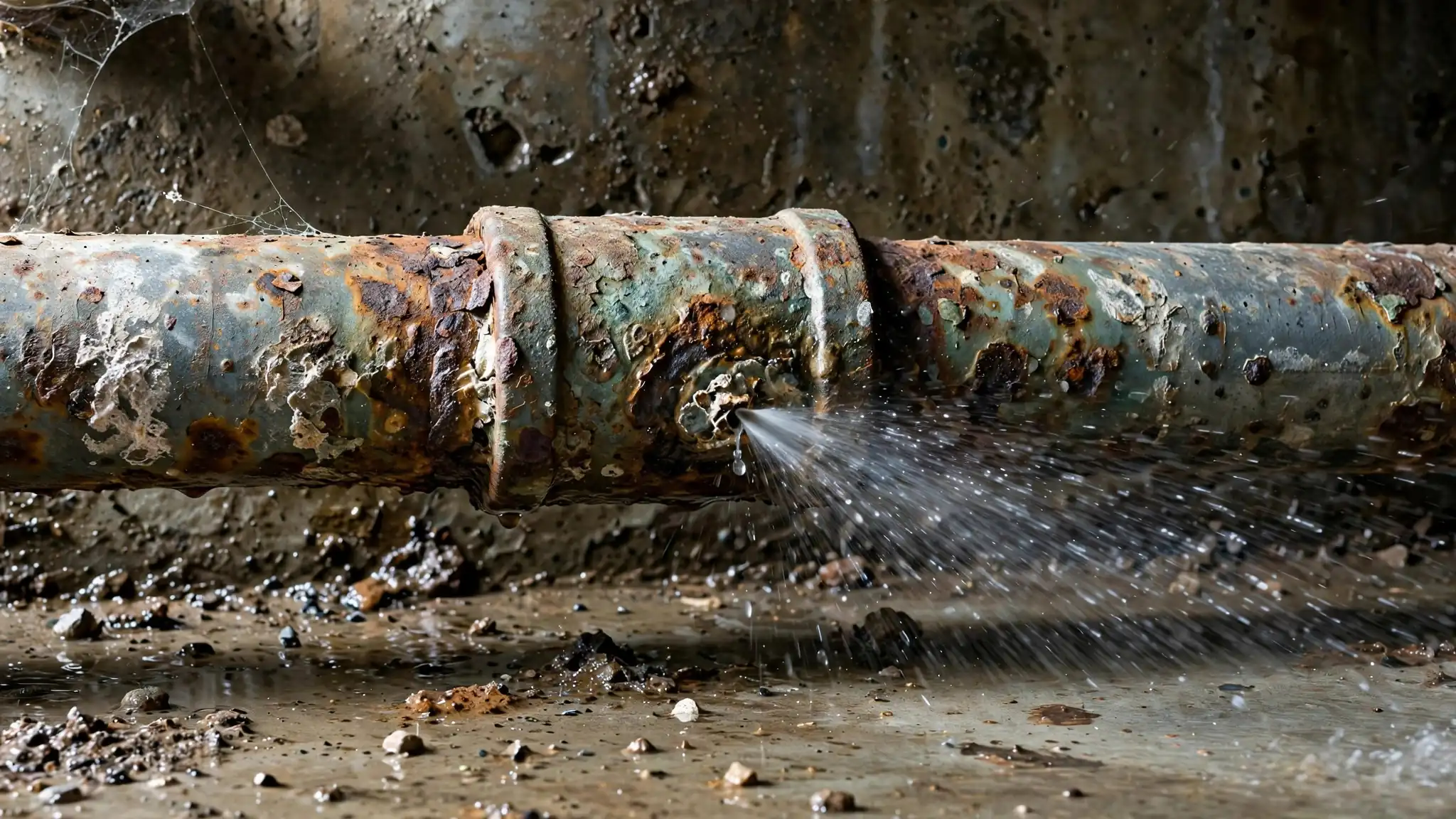
Age, soil movement, and freezing all attack service lines. Learn the causes and the early signs to watch for.
Read ArticleMarked within inches, under any surface. Call now for underground pipe leak detection anywhere in Chelsea — 24/7.
Learn More
Helpful guides about this service — signs, methods, and what to expect.
Soggy patches, sinkholes, pressure drops, and lush strips — the surface symptoms of buried pipe breaks.
Read Article
Acoustic surveying, line tracing, tracer gas, and moisture mapping — the no-dig toolkit for buried leaks.
Read Article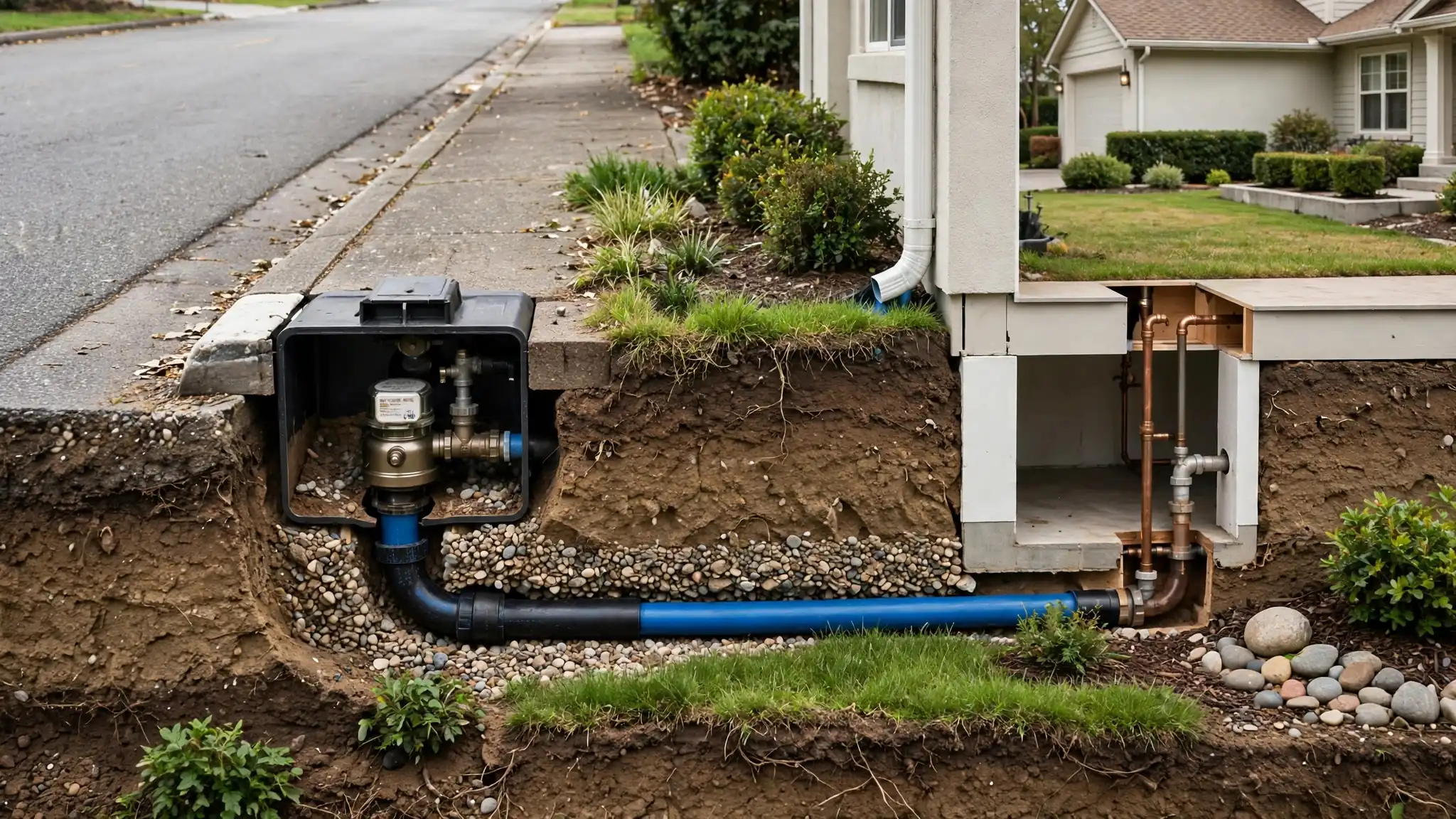
Where homeowner responsibility for the water service line typically starts and ends.
Read Article