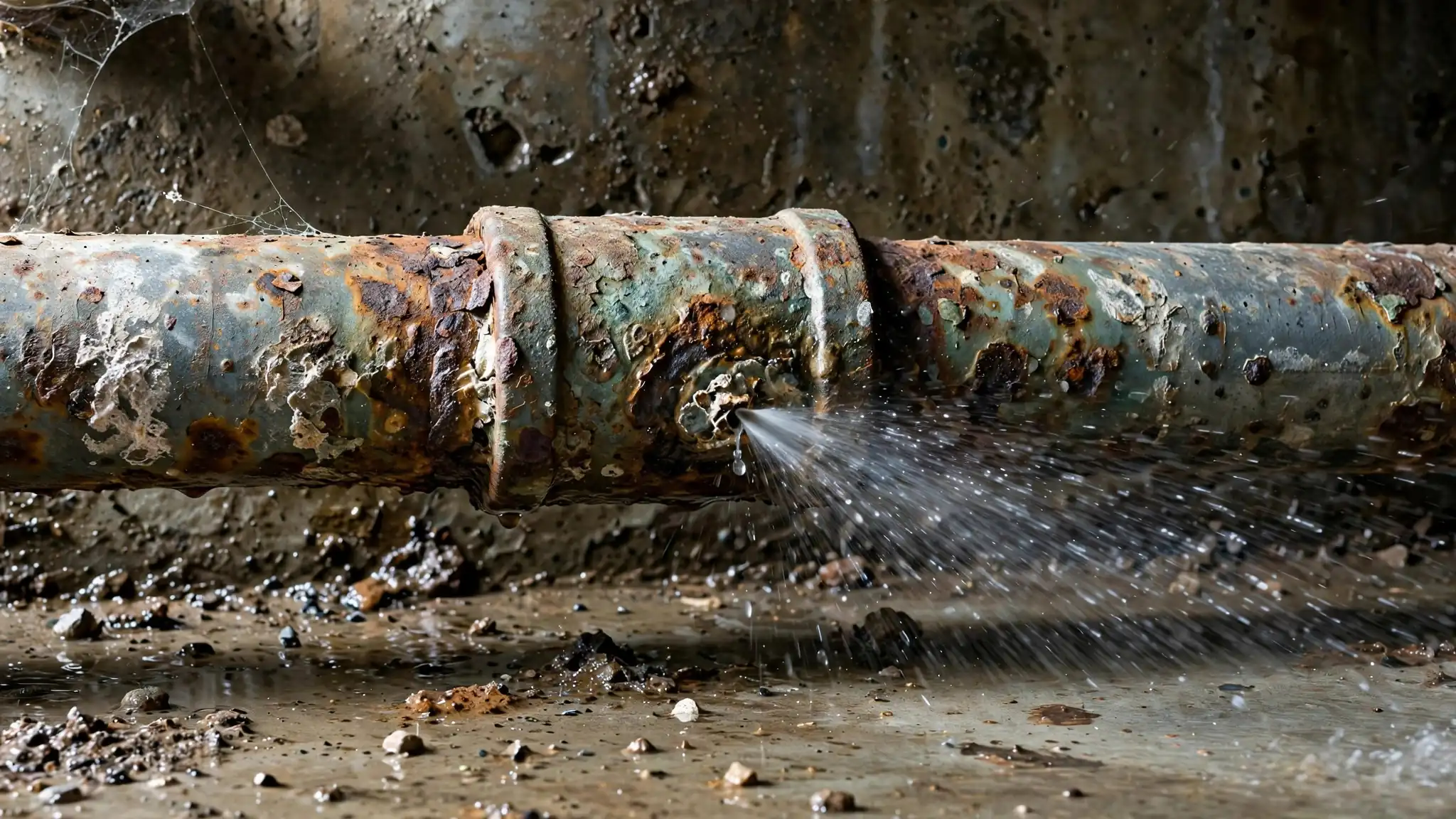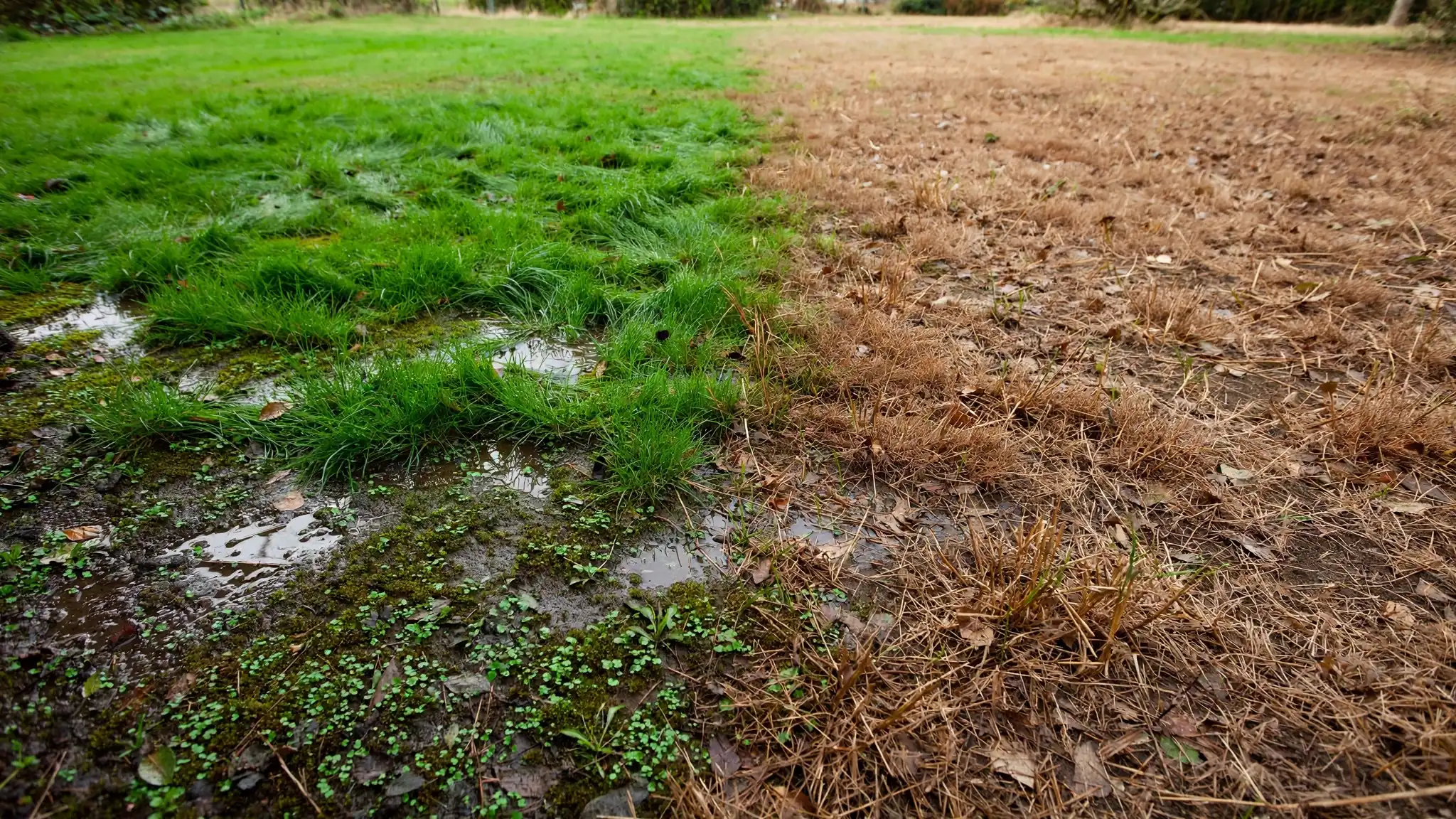
Responsibility for the water service line divides at the water meter: the utility owns the water main and the meter itself, while the homeowner owns the service line from the meter to the house — including all repairs, maintenance, and water lost to leaks on their side. This boundary is consistent across most U.S. municipalities, though exact details (curb stops, meter pits) vary locally. Knowing it before a leak happens determines who you call, who pays, and how fast the repair proceeds. When your side leaks, professional service-line detection locates the break for targeted repair.
Quick Answer
You own the service line from the water meter to your house — repairs, maintenance, and leak costs are yours. The utility owns the main and the meter. The main-shutoff test proves which side leaks: spinning with the house main closed means your service line. Check for service-line insurance endorsements before you need them, and call a professional promptly — the water loss is on your bill.
The Boundary: Where Yours Starts
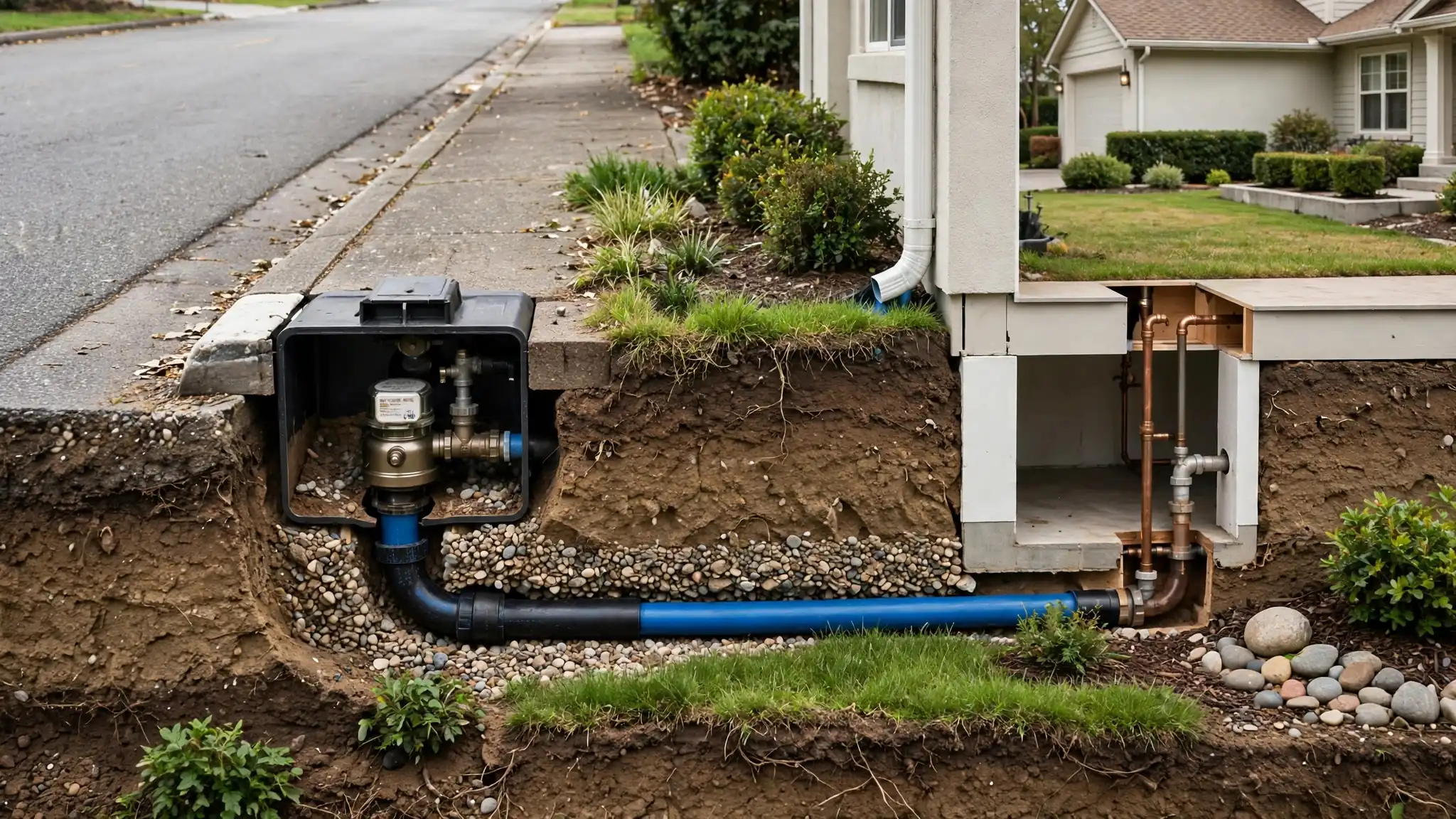
The division is physical and visible: the water meter. On the street side of the meter — the water main, the tap connection, and the meter itself — belongs to the utility. On the house side — the service line running from the meter across your property to your main shutoff — belongs to you, the property owner.
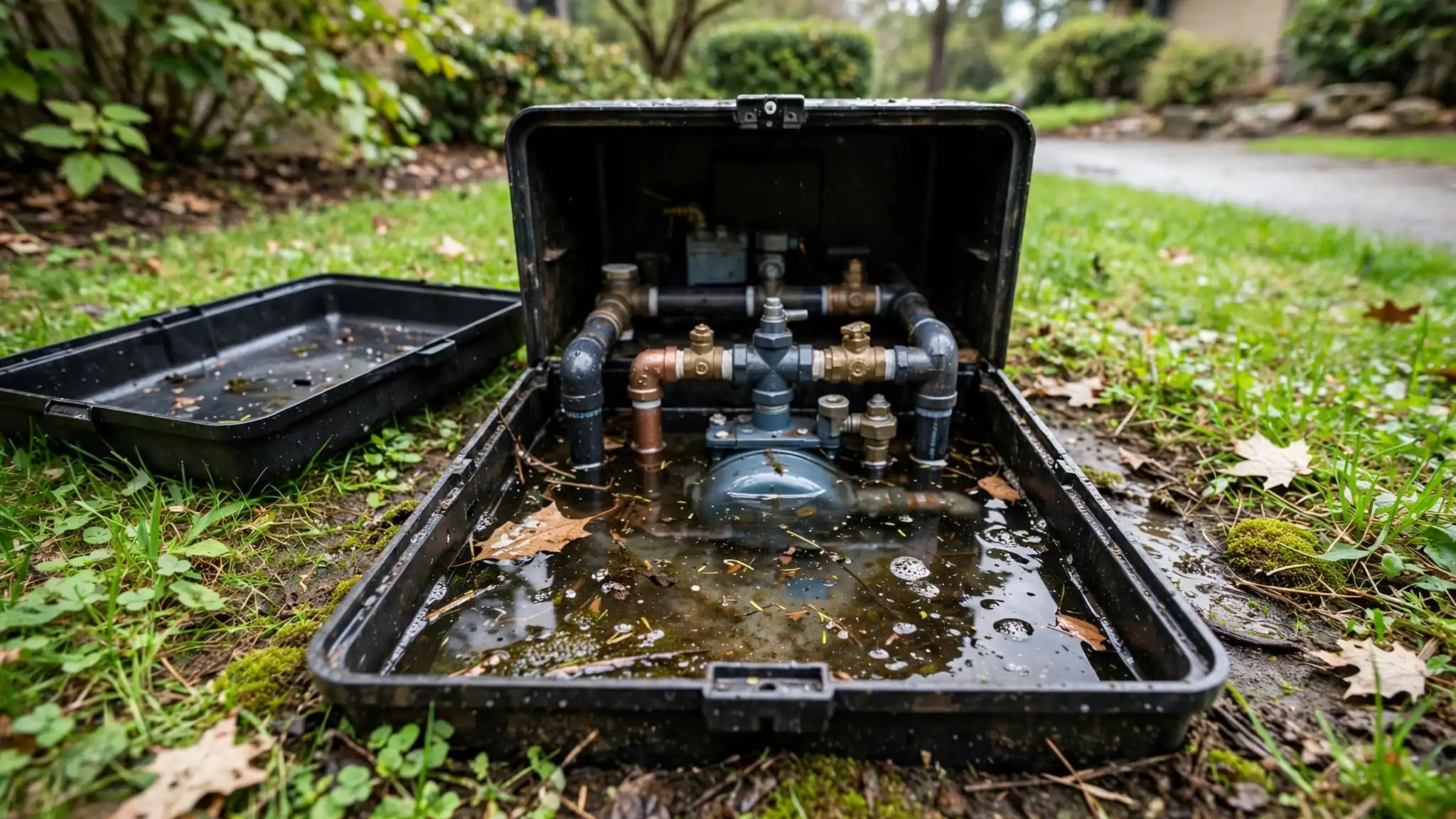
This includes everything buried between: pipe, fittings, valves, and any meter pit or box on your property (the box may be utility-maintained in some areas, but the line through it is yours). The boundary holds regardless of where the meter sits — at the curb, at the property line, or (in cold climates) inside the house.
Verify Locally
While the meter-boundary rule is the national norm, some municipalities have variations — shared lines, utility-maintained segments, or special districts. Your utility's website or a quick call confirms your area's exact division. Do this now, not during a leak.
What The Utility Covers
- Water mains — the large distribution pipes under streets.
- Service taps — the connection from main to your service line (up to the meter).
- The meter itself — if the meter leaks or malfunctions, that is the utility's repair.
- Shutoff assistance — most utilities will shut water at the meter (curb stop) on request during your repair, often at no charge.
What the utility does not do: locate your private leak, repair your service line, or adjust your bill automatically (adjustments require your documented request).
What The Homeowner Covers
- The service line pipe — all repairs, replacement, and maintenance from meter to house.
- Leak detection — hiring and paying for professional location of the break.
- Water lost — every gallon through the break appears on your bill until repaired.
- Resulting damage — erosion, landscape damage, and foundation effects (subject to insurance).
- Permits and restoration — excavation permits, inspections, and yard restoration.
Proving Which Side Leaks
When water appears or the bill spikes, determine the side before calling:
- Main-shutoff test: close the house main valve. Meter still spinning → your service line (house side of meter). Meter stops → inside the house.
- Meter-box inspection: water in the box near the house-side connection points to your line; water at the meter body itself may be the utility's.
- Call the utility if evidence points to their side — they verify and repair at their cost.
- Call a professional if it is yours — service-line detection pinpoints the break.
Do not guess the side — the test is definitive and takes minutes. Calling the wrong party wastes the time the leak uses to grow.
Costs And Who Pays: The Honest Breakdown
| Cost Element | Who Pays | Notes |
|---|---|---|
| Leak detection/location | Homeowner | Acoustic + tracer gas survey of your line |
| Excavation and pipe repair | Homeowner | Targeted dig at the marked break |
| Full line replacement | Homeowner | When pipe condition warrants it |
| Water lost to the leak | Homeowner | Billed normally; adjustments possible with documentation |
| Permits and inspections | Homeowner | Usually handled by the contractor |
| Yard/hardscape restoration | Homeowner | Confirm scope in the repair quote |
| Meter repair/replacement | Utility | Their equipment, their cost |
| Main breaks | Utility | Street-side infrastructure |
Insurance And Coverage Options
- Standard homeowners policies typically exclude the underground service line itself, but often cover resulting damage (erosion, foundation effects, interior water damage).
- Service-line endorsements — inexpensive add-ons specifically covering buried utility lines (water, sewer, electric). If you do not have one, ask your agent; they cost far less than a single excavation.
- Utility programs — some municipalities offer service-line coverage plans for a monthly fee; evaluate the terms against the endorsement option.
- Documentation — professional detection reports, photos, and receipts support every claim type.
Buy The Endorsement Before The Leak
Service-line endorsements are cheapest when purchased proactively and may have waiting periods. Adding one today is a small premium against a large, inevitable-at-some-point expense — especially for older service lines.
What To Do When Your Side Leaks
- Confirm the side with the main-shutoff test.
- Document — meter photos, symptom photos, dates.
- Call for detection — precise location before any digging.
- Get repair quotes — spot repair vs. replacement, with restoration itemized.
- Coordinate the utility — meter shutoff during repair if needed.
- File for adjustments — utility leak adjustment with your documentation; insurance claim for resulting damage.
For meter-box leak signs and service-line failure causes, see our companion guides. When the break is active, our emergency service responds 24/7.
Shared Lines And Special Cases
Not every property fits the simple meter-boundary model. Shared service lines — common in older neighborhoods where one tap serves two properties — split responsibility at the branch point: each owner maintains their branch, and the shared segment's responsibility follows local rules or written agreements. When a shared line leaks, coordinate — the repair affects both properties, and cost-sharing should be agreed in writing before work begins.
Condominiums and multi-unit buildings add another layer: the service line to the building is typically a common element (association responsibility), while interior distribution follows the condominium documents. Unit owners should know their documents' utility provisions; associations should maintain service-line records and inspection schedules.
Properties with private wells have no utility boundary at all — the owner maintains everything from the wellhead to the house. Well systems have their own leak-detection considerations (pressure tank cycling, pump run times) distinct from municipal service lines.
Document Your Boundary
Photograph your meter, its location, and the visible service line route — today, while nothing is wrong. This documentation accelerates every future conversation: with the utility (which side?), with contractors (where is the line?), and with insurers (what happened?). Five minutes now saves hours during a leak.
Building Your Service Line File
Create a service line file — physical or digital — containing:
- Meter location photos and the line's visible route.
- Pipe material and age (from building records or a plumber's assessment).
- Prior repair records — dates, locations, methods, contractors.
- Insurance endorsements — policy numbers and coverage terms.
- Utility contact information — emergency line and the leak-adjustment process.
- Preferred detection contractor — who you will call, decided in advance.
This file transforms a leak from a crisis into a procedure — the difference is preparation, and preparation is cheap.
Proactive Steps By Line Age
| Line Condition | Recommended Action | Timing |
|---|---|---|
| Original galvanized/steel, 40+ years | Plan replacement proactively | Within 1-2 years |
| Copper or plastic, 20-40 years | Professional condition assessment | This year |
| Modern polyethylene, <20 years | Monitor; no action needed | Routine |
| Prior leak repaired | Assess remaining line condition | After any repair |
| Unknown material/age | Professional identification | Soon — unknowns are risks |
For service-line failure causes and meter-box symptoms, see our companion guides. When your side leaks, professional detection locates it precisely.
Negotiating Shared-Line Repairs
When a shared service line leaks, the repair conversation involves multiple owners. Approach it systematically:
- Establish the facts first — professional detection identifying the break's location determines whose segment (or the shared segment) failed.
- Review any existing agreements — prior written arrangements govern; in their absence, local custom and reasonableness apply.
- Get a single professional assessment — one detection report both parties trust prevents dueling diagnoses.
- Agree cost-sharing in writing before work begins — the time to negotiate is before the excavation, not during.
- Consider separation — if the shared line is aging, separate taps (each property independent) may cost more now but eliminate future coordination.
The Repair Timeline: What To Expect
| Phase | Typical Duration | Your Role |
|---|---|---|
| Detection and location | Single visit | Provide access; share your service-line file |
| Quotes and contractor selection | Days | Compare scope, not just price |
| Permits | Days to weeks (varies) | Usually handled by contractor |
| Utility coordination (shutoff) | Scheduled | Confirm timing with contractor |
| Excavation and repair | 1-3 days | Minimize water use; plan accordingly |
| Inspection | Scheduled | Contractor coordinates |
| Restoration | Days | Confirm scope matches quote |
For underground leak signs and detection methods, see our companion guides.