Underground leak detection locates buried pipe breaks without exploratory digging using four complementary technologies. Pipe and line location traces the buried pipe's exact route first; acoustic sensors (ground microphones) survey that route listening for the break's turbulence signature; tracer gas confirms the pinpoint location; and moisture mapping assesses soil saturation extent. Together they mark the break within feet — so repair is a single surgical excavation, not a trenched yard. Professional underground detection replaces guesswork with measurement.
Quick Answer
Professionals first trace the buried pipe's exact route with location equipment, then survey it with acoustic ground microphones — the leak's sound signature peaks at the breach. Tracer gas (safe hydrogen-nitrogen) confirms the pinpoint spot, and moisture mapping shows saturation extent. The marked location guides one precise dig. No blind trenching, no destroyed landscaping.
Step 1: Tracing The Pipe Route
Before listening for a leak, the technician must know where the pipe actually runs — assumed routes are often wrong by feet. Electromagnetic pipe locators trace metallic pipe by inducing a signal; for non-metallic pipe, techniques include tracer wire signals (if installed), ground-penetrating radar in some cases, and as-built reasoning from meter, entry point, and visible landmarks. The traced route is marked on the surface — the survey path for everything that follows.
Route Before Sound
Amateur efforts fail here: listening in the wrong place finds nothing, and the leak is declared 'unfindable.' Professional detection succeeds because it surveys the actual pipe — traced, not assumed.
Step 2: Acoustic Surveying
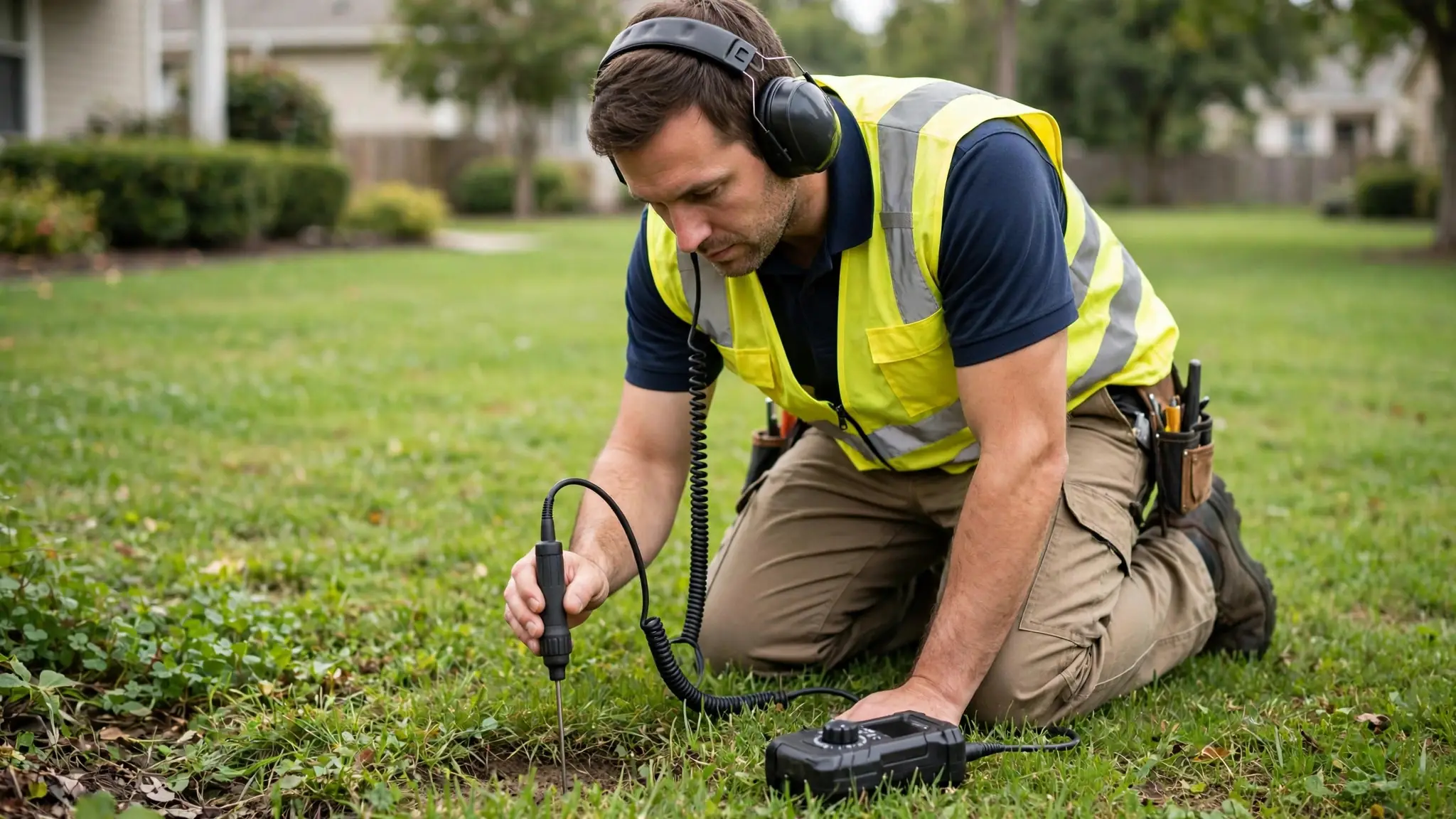
Ground microphones — highly sensitive contact sensors — are placed at intervals along the traced route. A pressurized break creates turbulence with a distinctive frequency signature: part hiss, part rumble, utterly unlike background soil silence. The technician compares intensity point by point; the break is where the signal peaks.
Soil type affects propagation — sandy soils transmit sound well; heavy clays muffle it — so survey spacing and interpretation adapt to conditions. Correlators (paired sensors computing the time-difference of the sound's arrival) can calculate the break's position between two points mathematically. This is the same physics behind slab leak acoustics, adapted for soil.
Step 3: Tracer Gas Confirmation
Where acoustic surveying narrows the break to a zone, tracer gas pinpoints it. A safe hydrogen-nitrogen mixture is introduced into the isolated pipe; the tiny hydrogen molecules escape only at the breach, percolate upward through soil, and a sensitive surface detector finds the concentration peak — often within feet, sometimes inches.
Tracer gas is the confirmation standard because it cannot false-positive: gas surfaces where pipe is breached, nowhere else. It is non-toxic, dissipates harmlessly, and works in any soil type.
Step 4: Moisture Mapping
Soil moisture meters and thermal imaging map the saturation plume around the break — not to find the leak (acoustics and gas do that) but to assess extent: how far water has migrated, whether it threatens foundations or hardscapes, and how large the repair excavation's dewatering needs are. Moisture maps also document conditions for insurance.
What The Visit Looks Like
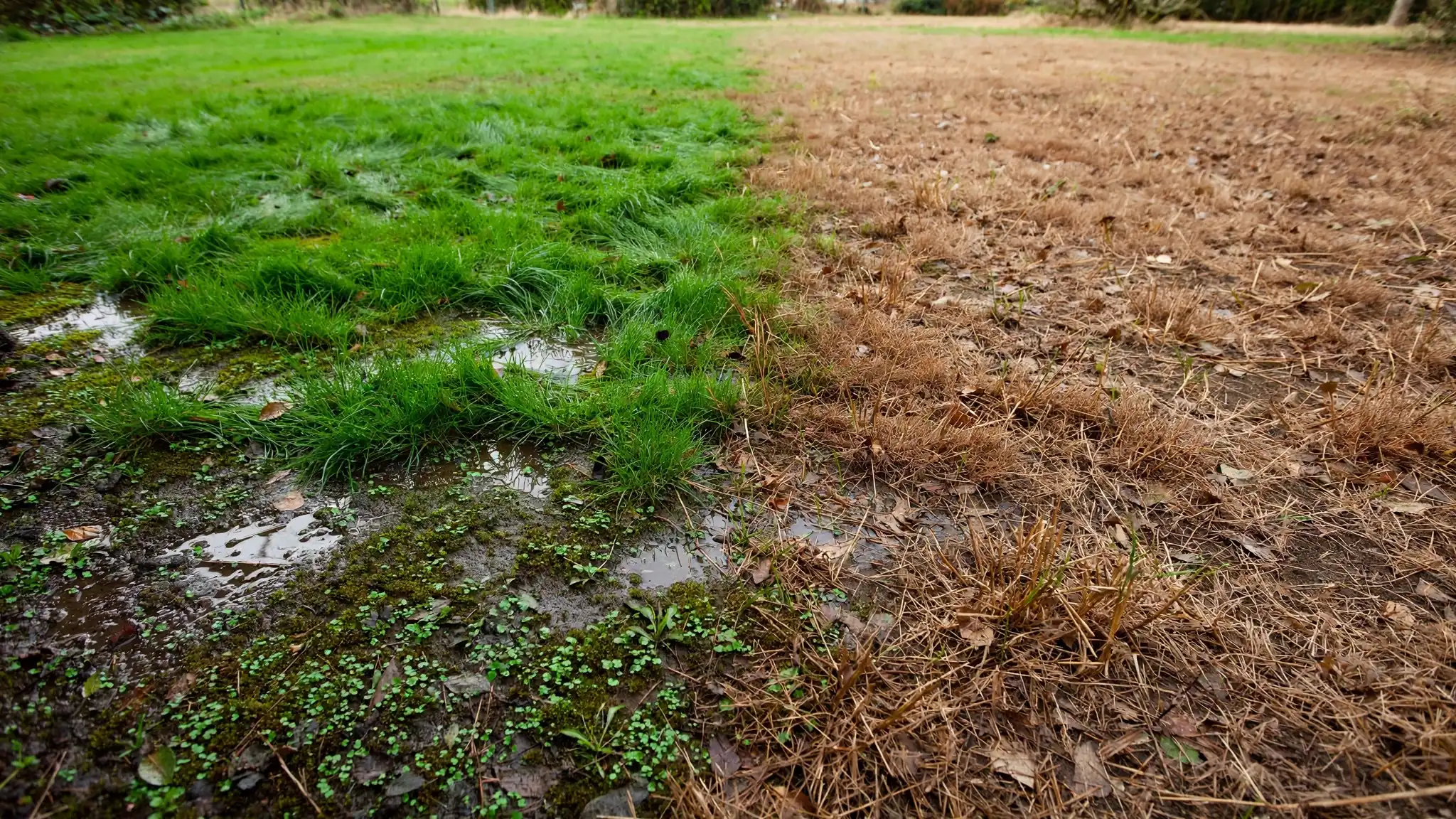
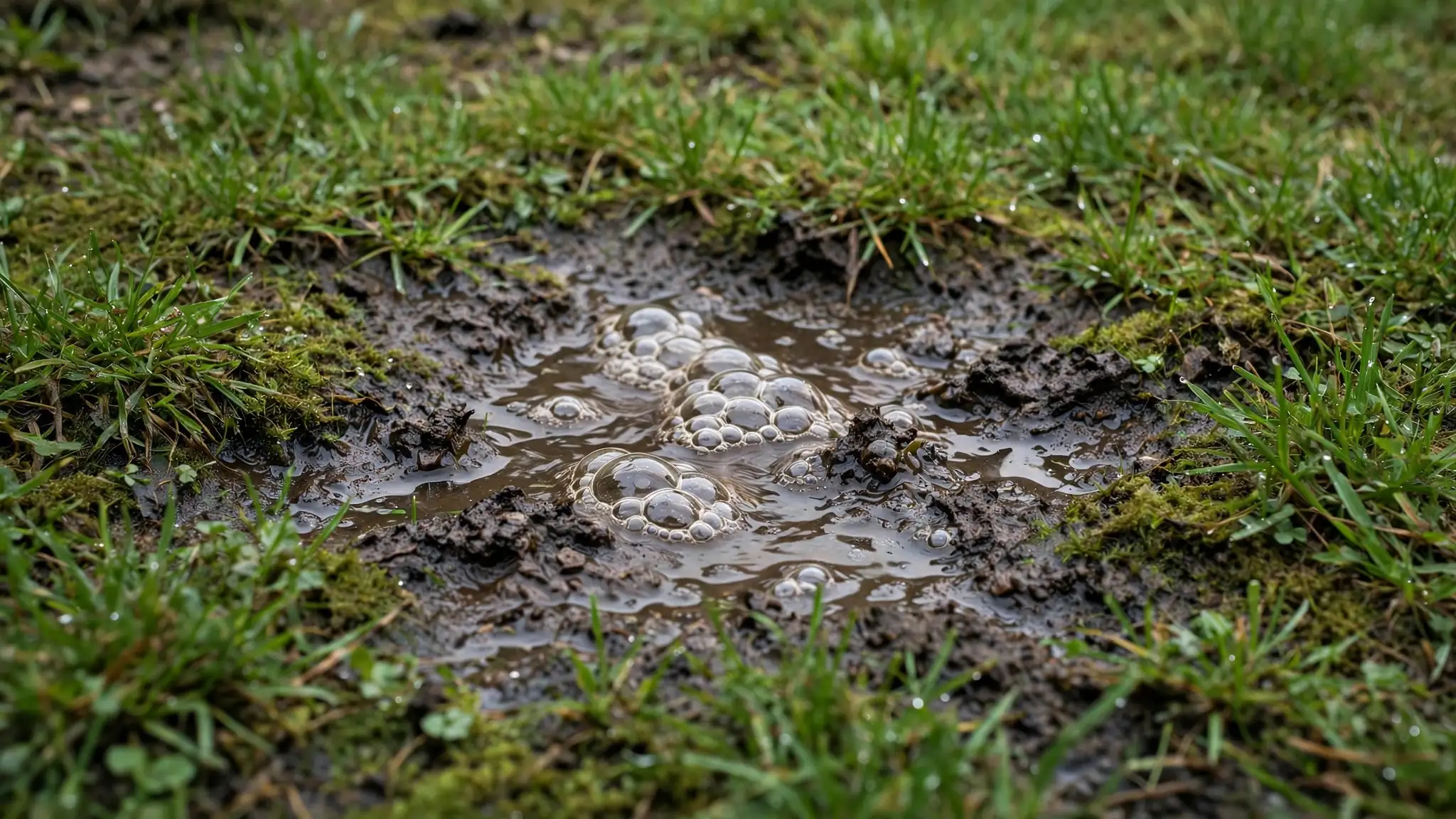
- Interview and symptom review — your soggy patches, bill data, and meter-test results focus the search.
- Pipe route tracing — the line's actual path marked on the surface.
- Acoustic survey — systematic listening along the route, zeroing in on the peak.
- Tracer gas confirmation — pinpoint marking of the breach.
- Moisture assessment — saturation extent documented.
- Report — marked location, pipe condition notes, and repair recommendations for your plumber.
Limitations, Honestly
- Very small seeps in noisy or highly attenuating soil can be harder to isolate acoustically — tracer gas usually resolves these.
- Non-pressurized leaks (drainage, sewer) make no turbulence sound — different methods (camera inspection) apply.
- Multiple breaks require systematic elimination — each is found and marked in turn.
- Detection locates; it does not repair. The marked point still needs excavation and pipe work — but exactly one dig, in exactly the right place.
The alternative to this technology is exploratory trenching — digging up the yard hoping to intersect the pipe near the break. Professional detection exists precisely to make that obsolete. When the break is active and damaging, our emergency service brings the full toolkit 24/7.
How To Prepare For A Detection Visit
- Clear access to the meter box, the suspected area, and the house entry — technicians need to walk the route.
- Note automatic systems — irrigation schedules, softener cycles — so the technician can distinguish them.
- Gather your evidence — meter-test results, photos of symptoms, bill history. The briefing focuses the visit.
- Keep the system pressurized — do not shut the main before the visit unless there is active damage; acoustic methods need pressure.
- Mark known utilities — 811 marks public lines; note any private lines (gas grill, lighting) you know about.
Emerging And Complementary Technologies
- Acoustic correlators: paired sensors computing leak position mathematically from sound arrival times — precision between two points.
- Ground-penetrating radar: maps buried objects and voids — useful for route tracing and void assessment, less direct for leak pinpointing.
- Helium tracing: an alternative tracer gas for specific situations.
- Smart meter analytics: continuous flow data flagging anomalies automatically — the future of early detection, available now where utilities have deployed it.
The core remains acoustic + tracer gas — proven, precise, and sufficient for the vast majority of buried leaks. Newer tools complement rather than replace.
Choosing A Detection Professional
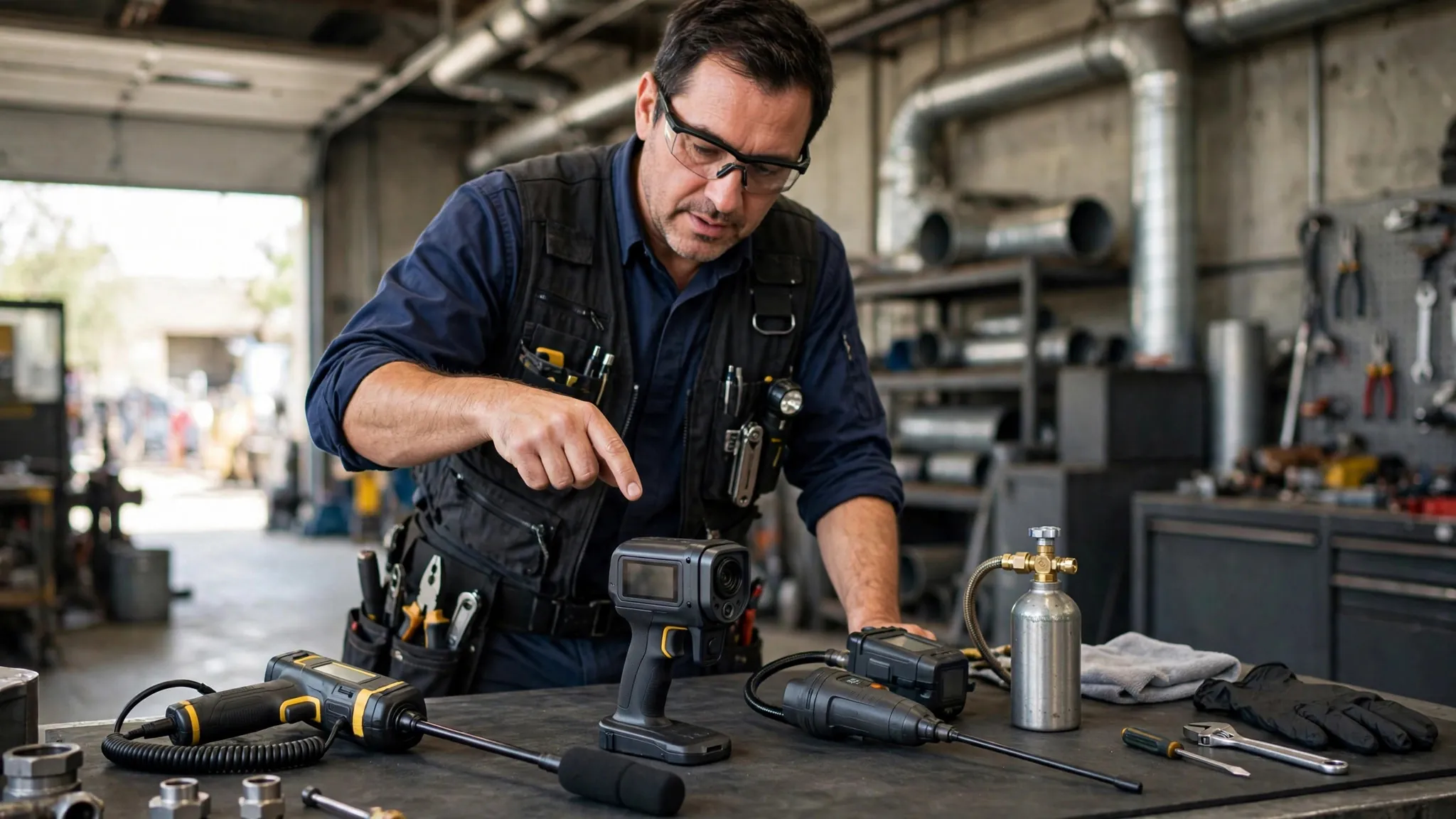
- Equipment: do they carry acoustic, tracer gas, and location tools — or just a stethoscope and confidence?
- Method: can they explain their process (route tracing → acoustic → gas confirmation)?
- Deliverable: will you receive a marked location and written report?
- Specialization: leak detection as a specialty beats a general plumber with a borrowed microphone.
- Repair separation: a detector who does not also sell the repair has no incentive to exaggerate — though many reputable firms do both transparently.
The Report Is The Product
You are buying certainty and documentation, not just a visit. Insist on the marked location and written report — it is what makes the repair surgical and the insurance claim supported.
Detection Myths
- "They just listen with a stethoscope." — Modern acoustic equipment is orders of magnitude more sensitive than improvised listening, with frequency analysis distinguishing leak signatures from noise.
- "Ground-penetrating radar finds leaks." — GPR maps buried objects and voids; it does not directly detect water flow. Useful for route tracing, not leak pinpointing.
- "Thermal cameras see through soil." — Thermal detects surface temperature anomalies; for buried leaks its role is limited compared to slab applications. Acoustic and tracer gas lead underground.
- "Any plumber can do it." — Detection is a specialty requiring dedicated equipment and interpretive skill. General plumbers excel at repair; specialists excel at location.
The Future: Continuous Monitoring
The direction of leak detection is continuous rather than episodic: smart meters with flow analytics, acoustic loggers on municipal mains, and in-home monitors that learn normal patterns and alert on anomalies. These technologies shift detection from "called after symptoms" to "alerted before damage" — the same transition medicine made from symptomatic treatment to screening. For now, the homeowner's meter and the specialist's equipment remain the practical state of the art — but the trend is toward leaks that announce themselves before humans notice.
Be The Monitor Until Technology Is
Until continuous monitoring is universal, the homeowner is the monitoring system: quarterly meter glances, annual tests, and symptom awareness. The technology assists; the habit detects.
What Homeowners Can Do Before The Visit
Meaningful preparation that improves detection outcomes:
- Complete the meter test — quantified flow rate focuses the search.
- Map symptoms — photographed soggy areas, pressure observations, bill history.
- Locate your documents — any as-builts, prior plumbing work records, or utility markings.
- Ensure access — gates unlocked, meter box clear, pets secured.
- List the suspects — which pipes run where, to your best knowledge; the technician verifies.
Preparation does not replace equipment, but it focuses it — and focused detection is faster, more accurate detection. Understand what the symptoms mean to brief the technician effectively.
Underground detection exists for one reason: digging blindly is destructive, expensive, and often wrong. The technologies — route tracing, acoustic surveying, tracer gas confirmation — convert a yard-wide search into a single marked point. When you need it, choose the specialist with the full toolkit and the written report, prepare with your meter data and symptom map, and let measurement replace guesswork. Your yard will thank you.
A final practical note: detection quality varies more than most homeowners expect. The difference between a specialist with acoustic correlators, tracer gas, and route-tracing equipment — and a generalist with a single ground microphone — is the difference between a marked point and a marked zone. When comparing providers, ask specifically which technologies they deploy and what deliverable you receive. The cheapest detection is the one that locates the break correctly the first time.