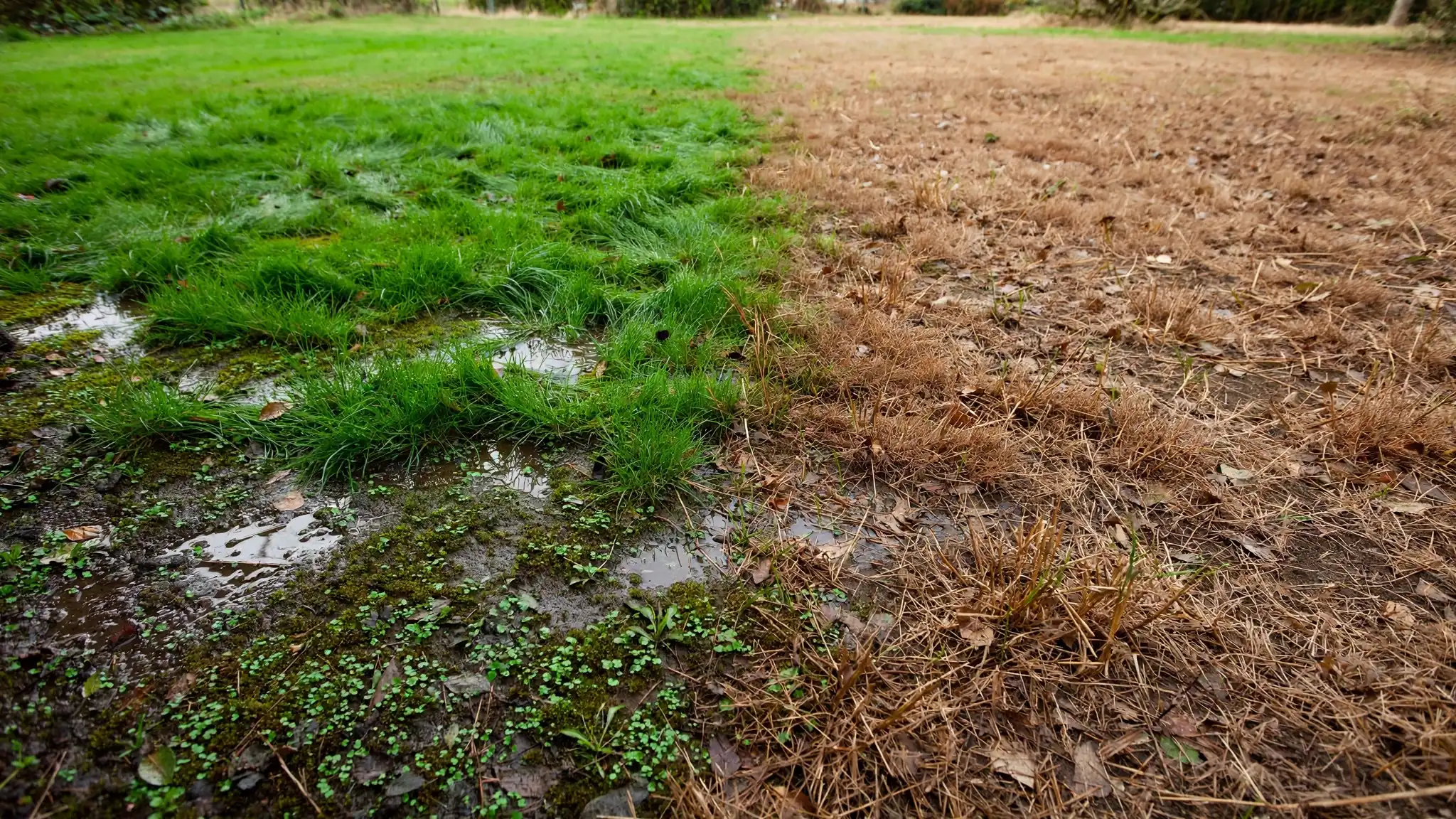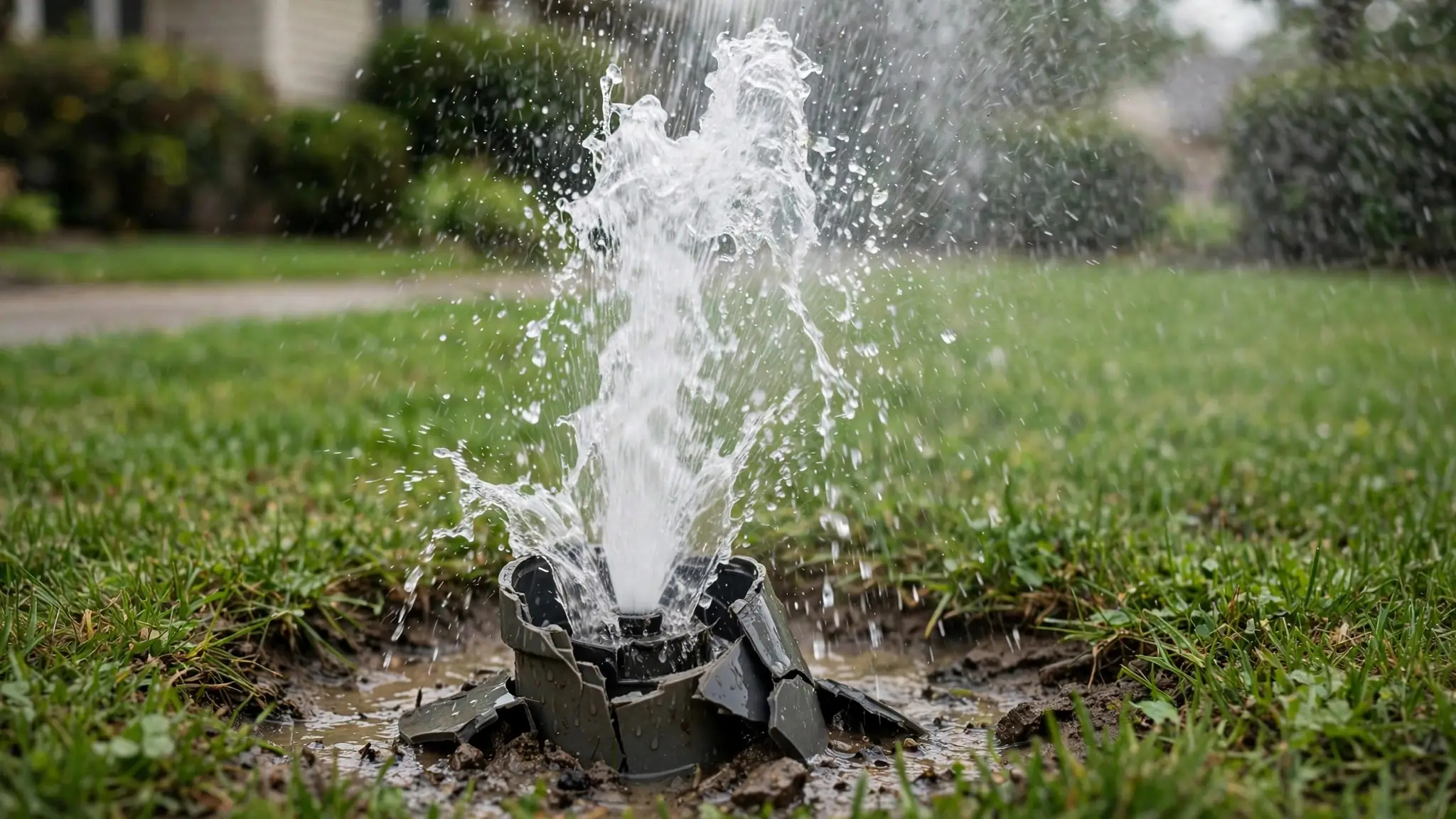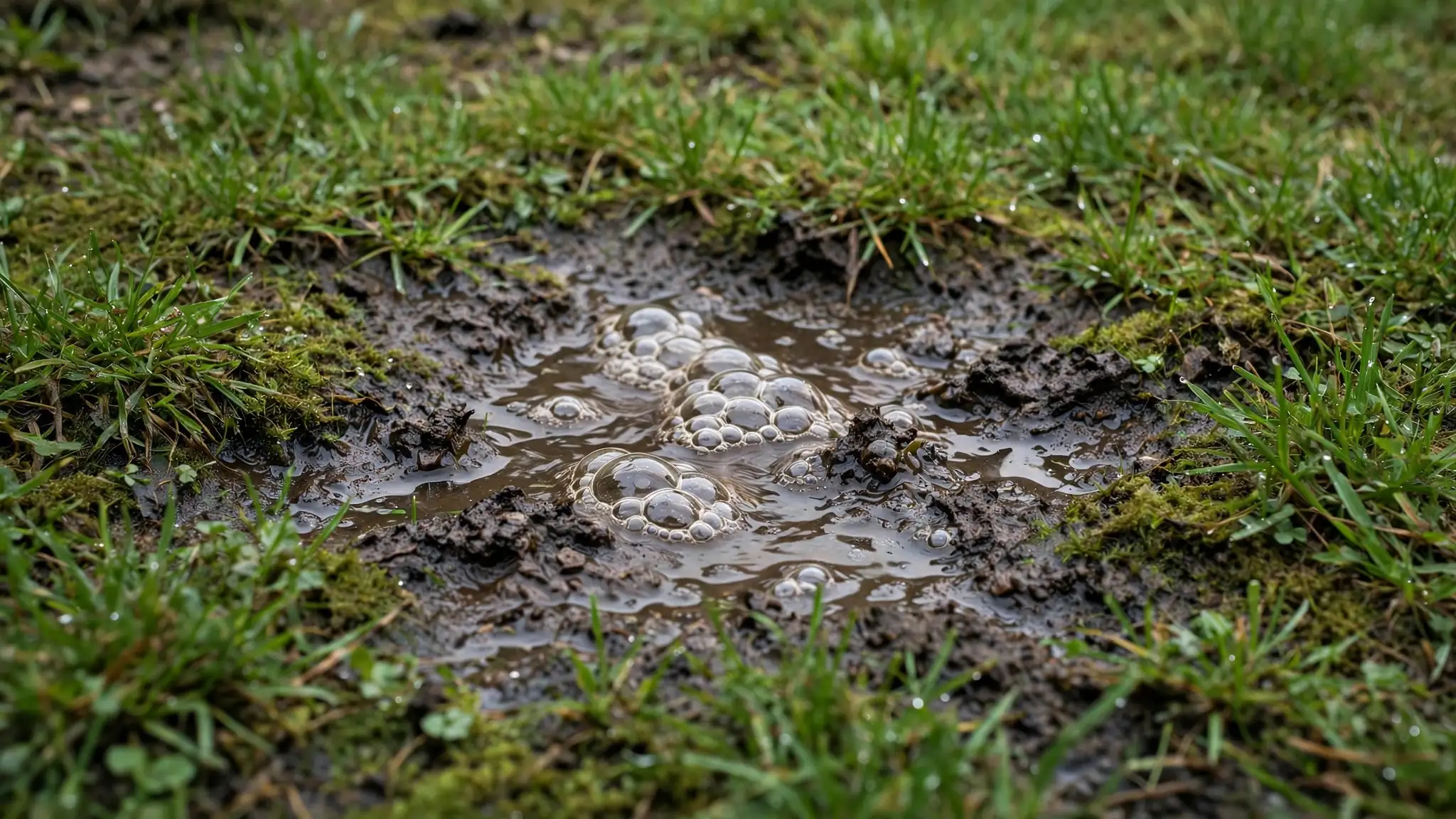
A single soggy patch of lawn while everything around it stays dry is one of the most specific leak symptoms in plumbing: it usually means a buried pipe is discharging water directly beneath that spot. The patch persists regardless of weather or irrigation schedules, may feel spongy underfoot, and often grows slowly over weeks. Confirm it by shutting off irrigation entirely for several days (a leak patch stays wet; an irrigation patch dries) and checking your water meter for hidden flow. If the patch outlasts the irrigation shutdown, professional underground detection will confirm the break beneath it.
Quick Answer
A lone soggy patch in a dry yard typically marks a buried pipe break discharging below. Rule out irrigation by shutting the system off for several days — leak patches stay wet, irrigation patches dry. Check the meter for hidden flow, photograph the patch's extent, and do not dig into it. Professional acoustic detection confirms the break location for a surgical repair dig.
What A Lone Soggy Patch Means
Lawns dry uniformly — except where something waters them from below. A persistent wet patch, spongy underfoot, in ground that should be dry, means water is arriving continuously from beneath: a pressurized buried pipe discharging into the soil. The patch's location is diagnostic — the break is typically directly beneath or slightly uphill of the wettest point (water migrates with gravity and soil gradients).
The key qualifier is persistence: leak patches ignore weather and irrigation schedules. They are wet in dry spells, wet when the sprinklers are off, and they grow slowly over weeks as the discharge saturates more soil.
The Irrigation Shutdown Test
Shut your entire irrigation system off for 3–5 dry days. An irrigation-caused wet patch dries; a leak-caused patch stays wet or grows. This single test eliminates the most common false positive — and it costs nothing.
What To Do Right Now
- Shut off irrigation for several days (the shutdown test above).
- Photograph the patch — extent, timestamped, from the same angle every few days to track growth.
- Check the meter for hidden flow (how to read it).
- Probe gently — a thin rod pushed into the soggy center meets saturated soil; note the depth of saturation.
- Mark and protect the area — keep vehicles and heavy equipment off saturated, potentially voided ground.
- Do not dig. Exploratory digging collapses the evidence, risks utility strikes, and rarely finds the pipe.
- Call for detection if the patch persists — underground leak detection.
Need Help Right Now?
Patch growing visibly, ground sinking, or water surfacing? That is an active break eroding soil — call now.
Call (617) 380-4912Ruling Out Irrigation (The Main False Positive)
Before concluding "buried pipe leak," eliminate the irrigation system rigorously:
- Full shutdown test — entire system off, 3–5 dry days, patch monitored.
- Zone inspection — run each zone and watch: broken heads and laterals create wet patches too, but they stop when the zone stops.
- Valve check — a stuck zone valve runs one zone continuously; the patch aligns with that zone's coverage.
- Timing — irrigation patches follow watering schedules; leak patches do not.
If the patch survives the shutdown, irrigation is cleared — the water comes from a pressurized line that never shuts off: service line, buried supply, or (less commonly) a leaking drainage system. Irrigation leak signs in detail.
What Pipe Is Leaking Under There
- Water service line — meter-to-house route; check meter-box signs and run the main-shutoff test.
- Buried supply branches — lines to hose bibs, outbuildings, or pool equipment.
- Irrigation mainline — the pressurized line feeding zone valves (pressurized 24/7, unlike zone laterals).
- Less commonly: sewer or drainage leaks (different symptoms — odor, not clean-water sogginess).
The meter test distinguishes pressurized supply leaks (meter moves) from drainage issues (meter still) — run it before theorizing further.
What Happens If You Wait
- The patch grows. Saturation spreads; the spongy area expands week by week.
- Soil voids form. Discharging water excavates underground — surface sinking and sinkholes follow.
- The bill climbs. Full-pressure continuous flow, metered and billed.
- Water migrates. Toward foundations, under hardscapes, into basements — the damage outgrows the patch.
DIY Checks Vs Professional Detection
| Step | DIY | Professional |
|---|---|---|
| Irrigation elimination | Shutdown test; zone inspection | — |
| Leak confirmation | Meter test for hidden flow | — |
| Break location | — | Acoustic survey pinpoints beneath the patch |
| Pipe identification | — | Line tracing identifies which pipe failed |
| Repair | — | Surgical excavation at the marked point |
How The Break Gets Found And Fixed
Professional detection starts at your soggy patch — the best possible lead. Acoustic sensors survey the area, the break's turbulence signature peaking at the breach; line tracing identifies which pipe runs beneath; tracer gas confirms the exact point. Repair is a targeted excavation at the mark — often a single neat dig that your lawn forgives within a season. When the patch is growing or the ground sinking, our emergency service responds 24/7.
Soil Types And Leak Expression
How a buried leak shows itself depends on soil:
- Sandy soil: water drains quickly downward — surface symptoms may be subtle (slight lushness) while subsurface voids grow large. Dangerous because the surface understates the problem.
- Clay soil: water spreads laterally near the surface — dramatic soggy patches, but shallower voids. The surface overstates relative to depth.
- Loam: balanced expression — the textbook soggy patch.
Know your soil (the county soil survey is public) to calibrate what the surface tells you about the subsurface.
Wildlife And Vegetation Clues
- Concentrated animal activity — birds, insects, and mammals drawn to persistent moisture.
- Mushroom flushes — fungi fruiting in one area signal chronic dampness.
- Weed patterns — water-loving weeds colonizing one patch.
- Tree stress or vigor — a tree thriving suspiciously well (or drowning) near a buried line.
These are corroborating clues, not diagnostics — but they strengthen the case for the meter test.
After The Repair: Lawn Recovery
- Surgical excavation disturbs a small area — proper backfill, compaction, and topsoil restoration matter as much as the pipe work.
- Reseeding vs. sod: sod for instant restoration, seed for economy — either needs consistent watering to establish.
- Monitor the repair area through one full season — settling or renewed sogginess warrants a callback.
- Keep the detection report — it documents the pipe's condition for future reference.
Restoration Is Part Of The Job
A reputable repair includes proper backfill and surface restoration — not just a patched pipe in a sunken hole. Confirm restoration scope in the quote, not after the backfill.
Drainage Vs. Supply: Telling Them Apart
Not every soggy patch is a pressurized supply leak — drainage failures create similar surface symptoms:
- Supply leak: meter moves; patch persists regardless of rain; water is clean; patch may grow steadily.
- Drainage failure: meter still; patch follows rain events; water may be discolored; patch comes and goes with weather.
- Spring/seep: meter still; patch constant year-round regardless of weather; natural groundwater — not a leak at all.
The meter test is the arbiter — it distinguishes pressurized supply from everything else in two hours. Run it before theorizing.
Grading And Drainage Context
Yard grading shapes every wet patch's meaning: negative grading (sloping toward the house) creates wet zones near foundations that mimic leaks; low spots collect water from broad areas, concentrating it where no pipe exists. Before concluding "buried leak," assess whether the patch sits in a natural collection point — regrading or drainage may be the actual fix. A leak professional distinguishes these routinely; a worried homeowner with a shovel does not.
Safety Around Soggy Ground
- Keep children and pets off saturated, potentially voided ground — sinkholes can open without warning.
- No vehicles or heavy equipment on suspect areas — weight collapses voids.
- Mark the perimeter visibly until professional assessment.
- Watch for utility exposure — erosion can uncover electric or gas lines; if you see exposed utilities, call 911 and the utility.
A soggy patch is a geotechnical event, not just a plumbing symptom — treat the ground with appropriate caution while detection is arranged. Review all underground leak signs to ensure nothing is missed.
A soggy patch is information — the ground telling you exactly where to look. Homeowners who read it promptly get surgical repairs and quick recoveries; those who wait get erosion, sinkholes, and landscape reconstructions. The patch will not resolve itself, the meter will not stop on its own, and the break will not heal. But the response is straightforward: confirm, document, detect, repair. Start today.
Consider the seasonal calendar: spring thaws and fall rains can mask leak symptoms, while summer drought reveals them starkly. If you first noticed the patch during wet weather, re-evaluate during a dry spell — persistence through dryness is the strongest confirmation short of the meter test. And remember that patches evolve: photograph monthly from a fixed vantage point to distinguish stable drainage quirks from growing leak signatures.