
Gushing Yard Water
Water visibly surfacing means a pressurized break, not a seep. The flow is eroding soil every minute it continues.
Emergency Line — Open Now
A burst buried line does not just waste water — it erodes the soil under your yard, driveway, or walkways, and the ground can give way without warning. Standard underground surveys handle slow seeps; gushing or collapsing ground needs tonight. Call — 24/7, 30–45 minute arrival.
24/7 Emergency Service
Water surfacing where it should not, ground going soft underfoot — a buried break is eroding soil right now. Keep clear and call.
Call (617) 380-4912 NowWhen To Call Now
Buried-line failures become emergencies when water volume is high or the ground itself is compromised. Not sure it qualifies? See our emergency overview for the full list.
Warning Signs
Buried breaks attack from below — the surface symptoms are the late warnings.
Water visibly surfacing means a pressurized break, not a seep. The flow is eroding soil every minute it continues.
Depressions or soft spots signal voids forming below. Keep people, pets, and vehicles off — collapses happen suddenly.
Driveway or walkway sections lifting or cracking indicate water undermining the base. The repair grows with every day of delay.
Indoor pressure falling while the yard gets wetter is a diagnosed major break. Shut the main and call now.
Before We Arrive
Protect people first, stop the water second, document third.
Mark or rope off sinking areas. Erosion voids can collapse under weight without warning — this is the top safety priority.
Stopping pressurized flow halts the erosion immediately. The break cannot wash out more soil with the water off.
Document pooling, sinking, and buckling with timestamps. Surface progression photos help us and your insurer understand the scale.
Where does surfacing water come from and where does it go? The flow path points back toward the break — tell us on arrival.
Safety Guidance
The ground is the hazard here — respect it until the break is found and the soil assessed.
Any ground depression near a suspected break can hide a void. No standing, driving, or placing ladders on suspect ground.
Buried water lines share ground with gas and electric. Never dig to investigate — our non-invasive location comes first, always.
Surfacing water near sewer laterals may be contaminated. Keep children and pets away from pooling water of unknown source.
An underground line emergency is a geotechnical event as much as a plumbing one. A pressurized break discharges directly into soil, and moving water carries soil with it — first as saturation, then as erosion, finally as voids. The surface tells the story late: by the time ground sinks or pavement buckles, significant soil has already washed away. That is why emergency underground detection prioritizes speed and certainty together — acoustic profiling finds the break's sound signature through soil, tracer gas confirms the exact point, and excavation happens once, at the mark, before the void grows into a structural problem. Night work actually favors acoustic detection: ambient noise drops after dark, making the break's underground signature easier to isolate.
Our Process
Find it fast, mark it once, dig it once — the buried-line emergency protocol. Our has handled Chelsea emergencies for thirteen years.
Describe the surface symptoms — pooling, sinking, buckling. We assess the safety situation first, then dispatch with 30–45 minute arrival.
On arrival we trace the pressurized line through soil with ground microphones, listening for the break's distinctive signature.
Tracer gas pinpoints the exact break; the mark goes down with a depth estimate. No exploratory trenches — one surgical excavation point.
Water stopped, hazard assessed, findings documented with photos and depth — everything the repair crew needs.
With the break located and marked, the emergency phase ends and repair begins — typically a single excavation at the marked point with our depth estimate guiding the crew. If the erosion created significant voids, the repair may include soil compaction or base restoration; our documentation helps your contractor scope it. For aging buried infrastructure, ask about our standard underground survey — finding the next weak point before it becomes the next emergency.
Standard Service
For slow yard seeps and suspected (not gushing) buried leaks, our standard underground line service provides the same precise location without the emergency framing.
Soggy lawn, sinking soil, or water surfacing where it should not can mean a buried pipe leak. Ground microphones and tracer gas locate it without tearing up your yard.
Related Services
Buried emergencies come in several forms — these are the closest relatives.
Any pipe run hidden under soil, driveways, or slabs can leak silently. Acoustic and tracer gas detection finds the exact break with no excavation.
Low pressure, soggy ground between the street and your home, or a spinning meter can signal a service line leak. We locate it precisely with no blind digging.
Weak sprinkler zones, geysers, or a soggy lawn waste water and money. We pinpoint irrigation line and valve leaks so repairs target the exact spot.
Service Areas
Emergency underground line response across all eight Chelsea neighborhoods — 24/7, 30–45 minute arrival, ZIP 02150. See all emergency services on the overview hub.
FAQs
Urgent answers when the ground itself is failing. For non-urgent questions, see our standard service page.
Very. Sinking ground means soil is washing away below — voids can collapse suddenly. Keep everyone off the area and call (617) 380-4912 now, 24/7.
No. We locate the exact break with acoustic and tracer gas methods first. Excavation happens once, at the marked point — not as a search method.
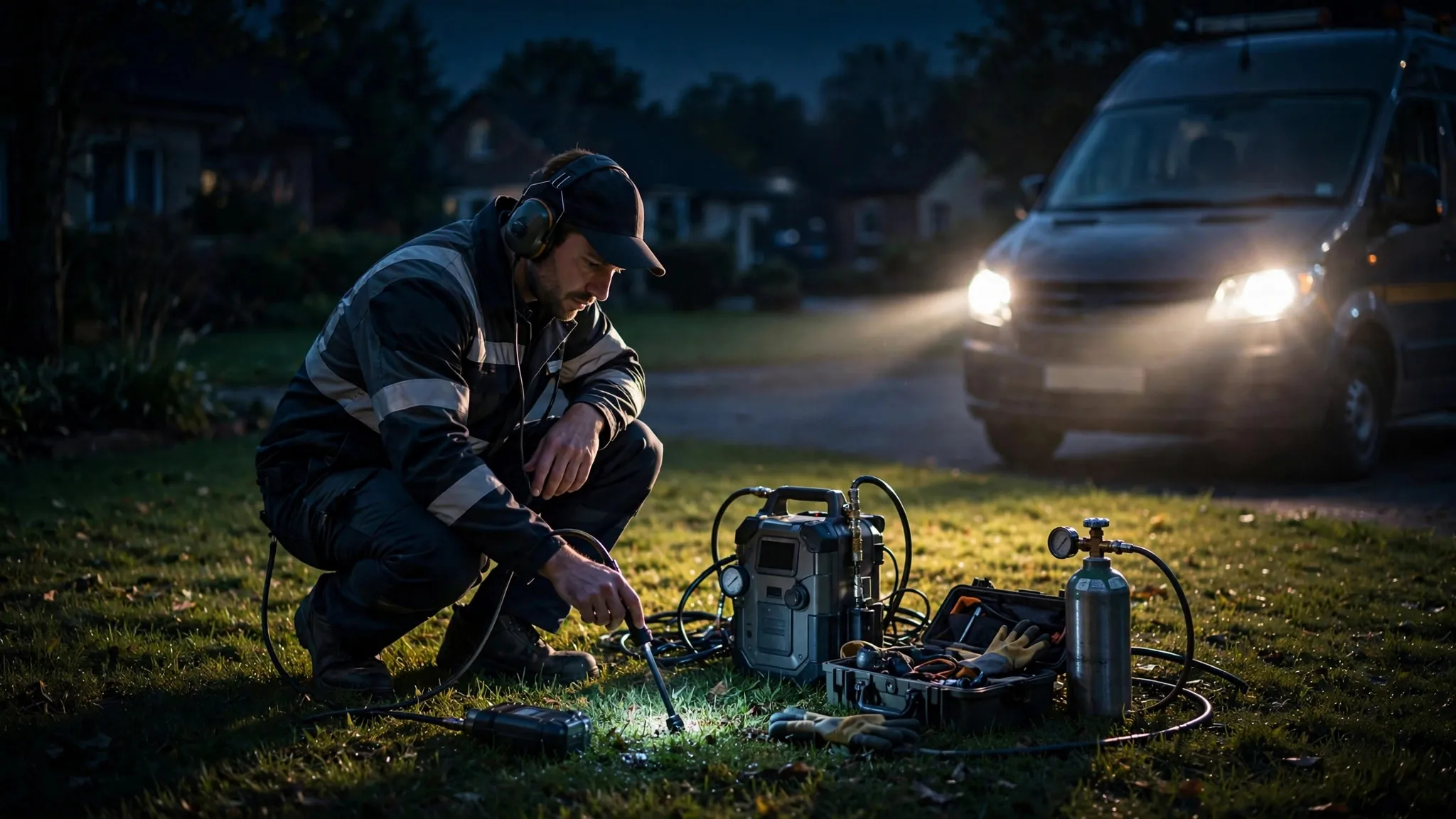
Yes. Our acoustic and tracer gas equipment works regardless of light — emergencies do not wait for daylight, and neither do we.
We mark it with a depth estimate regardless of surface. Driveway breaks are common; the repair is a surgical cut at the mark, not a full replacement.
Groundwater does not gush, erode, or drop your water pressure. Our pressure testing and acoustic survey distinguish a pressurized break from groundwater conclusively.
It varies by line type, soil, and frost depth — which is exactly why our mark includes a depth estimate rather than leaving the crew to discover it. Knowing the depth before excavation determines the equipment needed, the shoring required, and the repair cost. One accurate number prevents a morning of exploratory digging.
Buried breaks erode soil by the hour. We arrive in 30–45 minutes, 24/7 — call (617) 380-4912.