
Gushing Heads Or Geysers
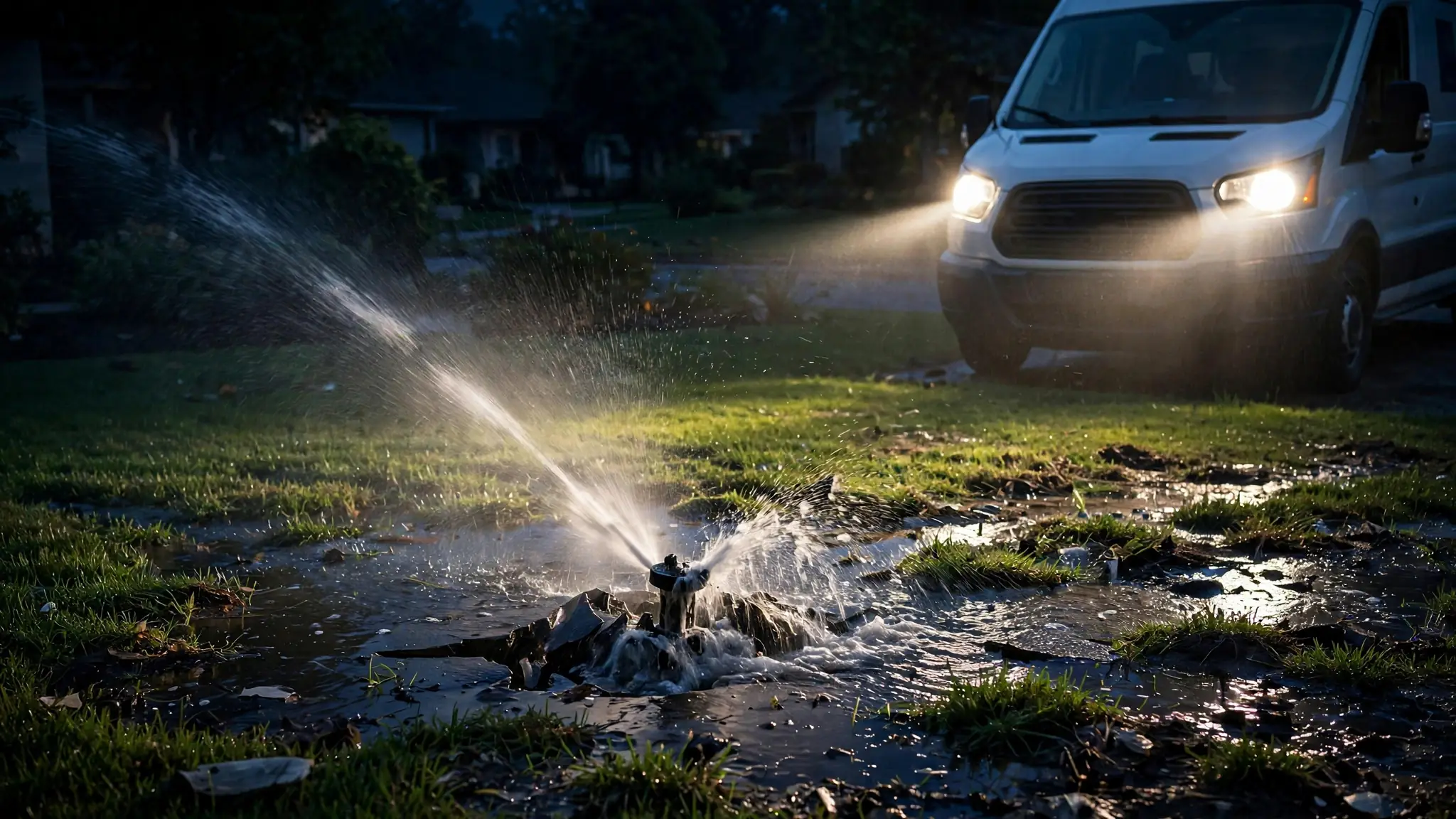
A head shooting water skyward or a pipe geyser means a mainline break at full pressure. The irrigation shutoff stops it instantly.
Emergency Line — Open Now
A burst irrigation mainline can discharge thousands of gallons overnight — flooding the yard, eroding soil against the foundation, and running up a shocking bill. Standard irrigation diagnosis handles weak zones; a gushing break needs tonight. Call — 24/7, 30–45 minute arrival.
24/7 Emergency Service
A burst irrigation line wastes water by the thousand-gallon while you sleep. Shut the irrigation valve and call now.
Call (617) 380-4912 NowWhen To Call Now
Irrigation failures become emergencies when water volume is high or the property is at risk. Not sure it qualifies? See our emergency overview for the full list.
Warning Signs
Irrigation emergencies are volume emergencies — the system is designed to move a lot of water.
A head shooting water skyward or a pipe geyser means a mainline break at full pressure. The irrigation shutoff stops it instantly.
Irrigation water against the foundation is a basement-flood risk. Divert what you can and shut the system down.
A stuck valve or failed controller running zones endlessly wastes thousands of gallons. The main irrigation shutoff overrides everything.
Water carving channels through soil undermines walkways, patios, and grade. Stop the flow before the landscape needs rebuilding.
Before We Arrive
Valve off, controller off, water diverted — the irrigation triage takes two minutes.
Find the irrigation shutoff — usually near the backflow preventer or main — and close it. This stops all zone flow immediately.
Switch the controller to OFF or unplug it. A malfunctioning controller can reopen valves even after manual shutoff.
Use sandbags, soil berms, or even towels to steer pooling water away from the foundation until the flow stops.
If one zone caused the flood, note its number and location. Zone identification speeds our diagnosis enormously.
Safety Guidance
High-volume water plus electrics plus erosion — respect all three.
Valve boxes with solenoids carry low-voltage wiring; controllers are line-voltage. Keep clear of electrified components in standing water.
Broken irrigation lines can draw contaminants into the system. Do not drink from hose bibs on the irrigation side until checked.
Keep off visibly eroded or undermined areas — irrigation washouts can collapse underfoot like any erosion void.
An irrigation emergency is almost always a mainline break — the pressurized pipe feeding the zone valves — because only the mainline carries enough pressure and volume to flood. Lateral breaks (after the valves) only flow when their zone runs; mainline breaks flow continuously, day and night, until the irrigation shutoff closes. A single 1-inch mainline split can discharge over ten thousand gallons overnight. Our emergency response starts with the fastest win: confirming the irrigation shutoff holds, then zone-by-zone pressure testing to isolate the broken section, and acoustic location of the exact break for a surgical repair. The water stops tonight; the lawn recovers on its own schedule. Winterization failures cause a large share of spring irrigation emergencies — lines that were not properly blown out split at the first freeze.
Our Process
Secure the system, isolate the zone, mark the break — usually within the visit. Our has handled Chelsea emergencies for thirteen years.
Describe the flooding: location, volume, which zone if known. We talk you through the irrigation shutoff and dispatch with 30–45 minute arrival.
On arrival we verify the irrigation water is fully off and the controller cannot restart it — the emergency ends here.
Zone-by-zone pressure testing identifies the broken section — mainline vs. lateral, and exactly which run failed.
The break is marked for a surgical repair, and we document the system condition — valve health, pressure, controller status — for your records.
With the break marked, repair is typically a single pipe section replacement — straightforward once located. If the failure revealed systemic issues (brittle pipe throughout, failing valves, excessive pressure), our report flags them before they become the next emergency. Consider a standard irrigation survey each spring: a pressurized zone-by-zone check catches weakening pipe in the off-season, when repairs are cheap and unhurried.
Standard Service
For weak zones, uneven coverage, and suspected (not gushing) irrigation leaks, our standard irrigation service diagnoses thoroughly.
Weak sprinkler zones, geysers, or a soggy lawn waste water and money. We pinpoint irrigation line and valve leaks so repairs target the exact spot.
Related Services
Outdoor water emergencies connect to these — each has its own emergency page.
Soggy lawn, sinking soil, or water surfacing where it should not can mean a buried pipe leak. Ground microphones and tracer gas locate it without tearing up your yard.
Stormwater pooling against your foundation or a soggy yard after rain means drains are not carrying water away. We clear and restore yard drainage.
Losing more than a quarter inch of pool water a day? We test, isolate, and pinpoint pool shell and plumbing leaks so you stop refilling and start swimming.
Service Areas
Emergency irrigation response across all eight Chelsea neighborhoods — 24/7, 30–45 minute arrival, ZIP 02150. See all emergency services on the overview hub.
FAQs
Urgent answers when the sprinklers will not stop. For non-urgent questions, see our standard service page.
Shut the irrigation valve (near the backflow preventer), turn the controller OFF, divert water from the foundation, and call (617) 380-4912. We arrive in 30–45 minutes, 24/7.
The irrigation shutoff valve overrides everything — close it. If you cannot find it, call us; we will talk you through it or handle it on arrival.
A 1-inch mainline break can waste over ten thousand gallons overnight. That is why irrigation gushers are emergencies — the volume is enormous.
No. Zone-by-zone testing isolates the broken section, and acoustic methods pinpoint the break. The repair is surgical — one spot, not the whole system.
Yes, if the pipe is aging or pressure is excessive. Our report flags systemic risks, and a spring survey each year catches the next weak point before it bursts.
No — irrigation lines share trenches with low-voltage wiring, and yard digging risks utility strikes of every kind. Our zone-by-zone pressure testing isolates the broken section without any digging, and acoustic methods pinpoint the exact break. One surgical repair beats a yard full of exploratory holes.
A burst irrigation line wastes thousands of gallons overnight. We arrive in 30–45 minutes, 24/7 — call (617) 380-4912.