
Water Against The Foundation
Pooling at the foundation wall is the direct precursor to basement flooding. Every inch of rise increases intrusion risk.
Emergency Line — Open Now
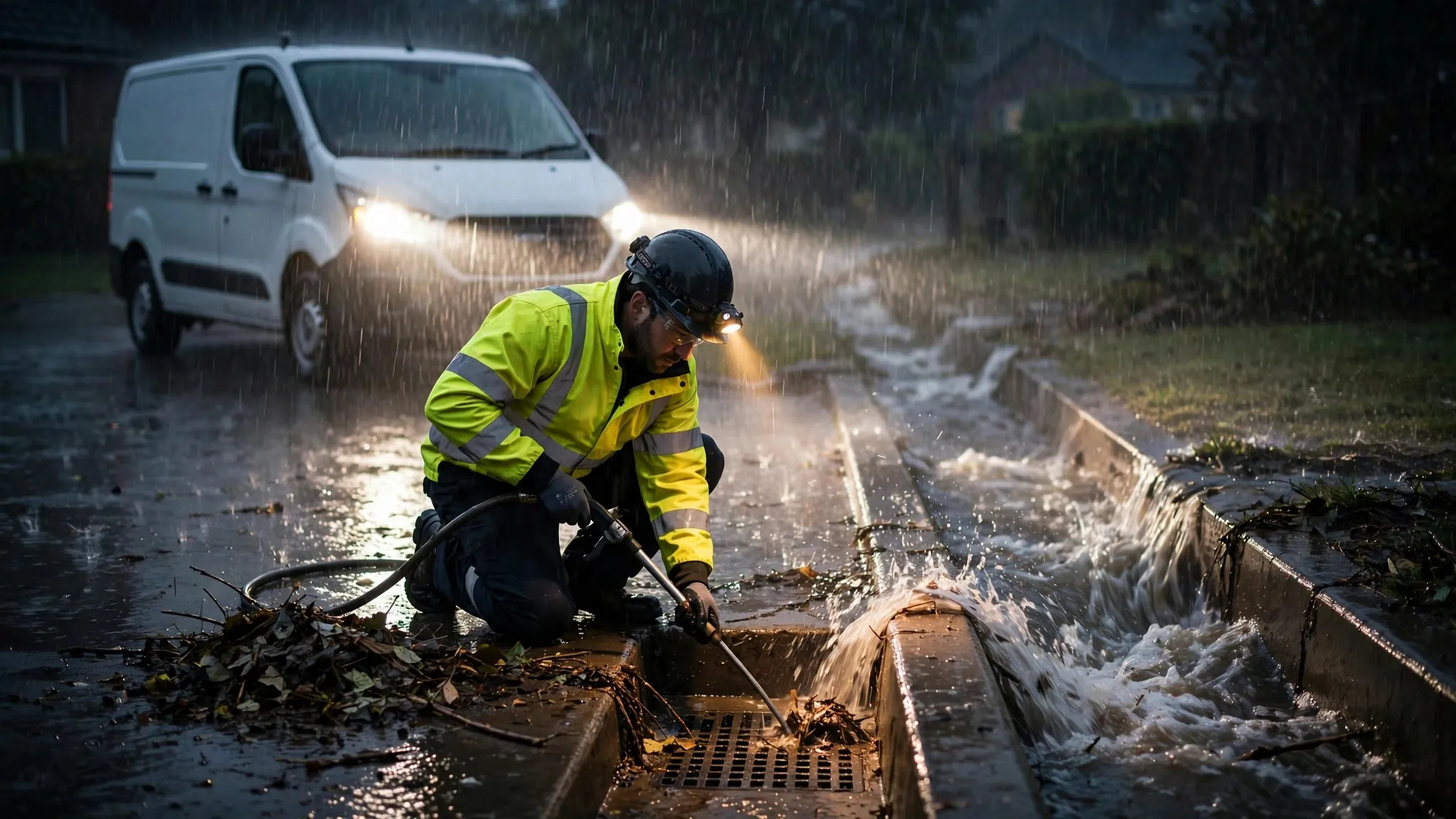
A failed yard drain during heavy rain sends water exactly where it should not go — against your foundation, into window wells, and toward the basement. Standard yard drain service handles slow drainage; active foundation flooding needs now. Call — 24/7, 30–45 minute arrival.
24/7 Emergency Service
Water pooling against your foundation is a basement-flood warning. Call now — before it finds a way in.
Call (617) 380-4912 NowWhen To Call Now
Yard drainage becomes an emergency when water threatens the building itself. Not sure it qualifies? See our emergency overview for the full list.
Warning Signs
Yard water becomes a building emergency the moment it reaches the walls.
Pooling at the foundation wall is the direct precursor to basement flooding. Every inch of rise increases intrusion risk.
Window wells are designed to drain — when they fill, the drain has failed and the window is next. Act before the glass.
Grading that normally sheds water can reverse when drains clog. Water flowing toward the house instead of away is an emergency pattern.
Uncontrolled water carves channels that permanently worsen drainage. Tonight's flood becomes next storm's certainty without intervention.
Before We Arrive
Clear the grates, divert the water, watch the walls — the storm triage.
Remove leaves and debris from yard drain grates by hand — the most common cause of sudden failure is surface blockage.
Use sandbags, soil, or boards to steer pooling water away from the foundation and window wells while help is coming.
Monitor window wells, basement doors, and the foundation wall base for the first signs of intrusion.
Timestamped photos of pooling depth and location document the emergency for insurers and our diagnosis.
Safety Guidance
Stormwater is never clean water — treat it with appropriate caution.
Outdoor outlets, lighting, and HVAC equipment in standing water are shock risks. Keep clear of electrified equipment.
Floodwater carries contaminants — avoid contact, especially for children and pets, and never drink it.
Keep off visibly eroded or undermined areas. Storm washouts collapse like any erosion void.
A yard-drain emergency is a race between rainfall and drainage capacity. Yard drains, catch basins, and French drains are sized for typical storms; when debris, root intrusion, or collapsed pipe reduces capacity, even moderate rain overwhelms the system — and the overflow goes to the lowest point, which is usually against your foundation. Our emergency response targets immediate flow restoration: clearing blockages, jetting lines, and getting water moving away from the building again. The storm will pass; the question is whether your drainage was working when it mattered. The nor'easters that rake Chelsea test every yard drain to its limit — systems that handle ordinary rain can fail catastrophically under coastal storm volume. Our emergency assessment notes the storm intensity that overwhelmed your system, which determines whether maintenance or upsizing is the real fix.
Our Process
Find the blockage, restore the flow, diagnose the cause — before the water wins. Our has handled Chelsea emergencies for thirteen years.
Describe the flooding: location, depth, trajectory, and whether the building is threatened. We prioritize by intrusion risk and dispatch with 30–45 minute arrival.
On arrival we trace the drainage path — grates, basins, lines — to find where flow stops. Surface blockages clear in minutes.
Professional clearing and jetting restore the drain's capacity, redirecting water away from the foundation.
We assess why it failed — debris, roots, collapse, or undersizing — so tonight's emergency does not repeat next storm.
With drainage restored, the immediate threat passes — but the failure cause determines the follow-up. Debris blockages need seasonal maintenance; root intrusion or collapsed pipe needs repair. Our standard yard drain service provides the full system assessment and a maintenance plan sized to your property's storm exposure. The goal: next storm, the drains just work.
Standard Service
For slow yard drainage without active flooding, our standard yard drain service cleans and assesses methodically.
Stormwater pooling against your foundation or a soggy yard after rain means drains are not carrying water away. We clear and restore yard drainage.
Related Services
Outdoor water emergencies connect to these — each has its own emergency page.
Soggy lawn, sinking soil, or water surfacing where it should not can mean a buried pipe leak. Ground microphones and tracer gas locate it without tearing up your yard.
Weak sprinkler zones, geysers, or a soggy lawn waste water and money. We pinpoint irrigation line and valve leaks so repairs target the exact spot.
Water pooling in the meter box or a soggy strip near the street means a leak between the meter and your home. We find it without digging up the yard.
Service Areas
Emergency yard drain response across all eight Chelsea neighborhoods — 24/7, 30–45 minute arrival, ZIP 02150. See all emergency services on the overview hub.
FAQs
Urgent answers when the yard is flooding. For non-urgent questions, see our standard service page.
Very — it is the direct precursor to basement flooding. Clear drain grates, divert water from walls, and call (617) 380-4912 now, 24/7.
Yes — emergency drainage work happens in the rain; that is when it matters. We clear blockages and restore flow while the storm is active.
We prioritize stopping the inflow first — clearing the failed drain — then the basement needs water extraction and drying. Call now; every minute of inflow worsens it.
The usual causes: surface debris blocking grates, root intrusion in lines, collapsed pipe sections, or a system undersized for the storm. We identify which on arrival.
Seasonal grate clearing, periodic line jetting, and addressing any structural issues we find. Our standard service builds a maintenance plan for your property.
Stormwater carries contaminants and hides electrical hazards around outdoor equipment. Keep children and pets clear, and avoid contact.
Foundation flooding cannot wait out the storm. We arrive in 30–45 minutes, 24/7 — call (617) 380-4912.