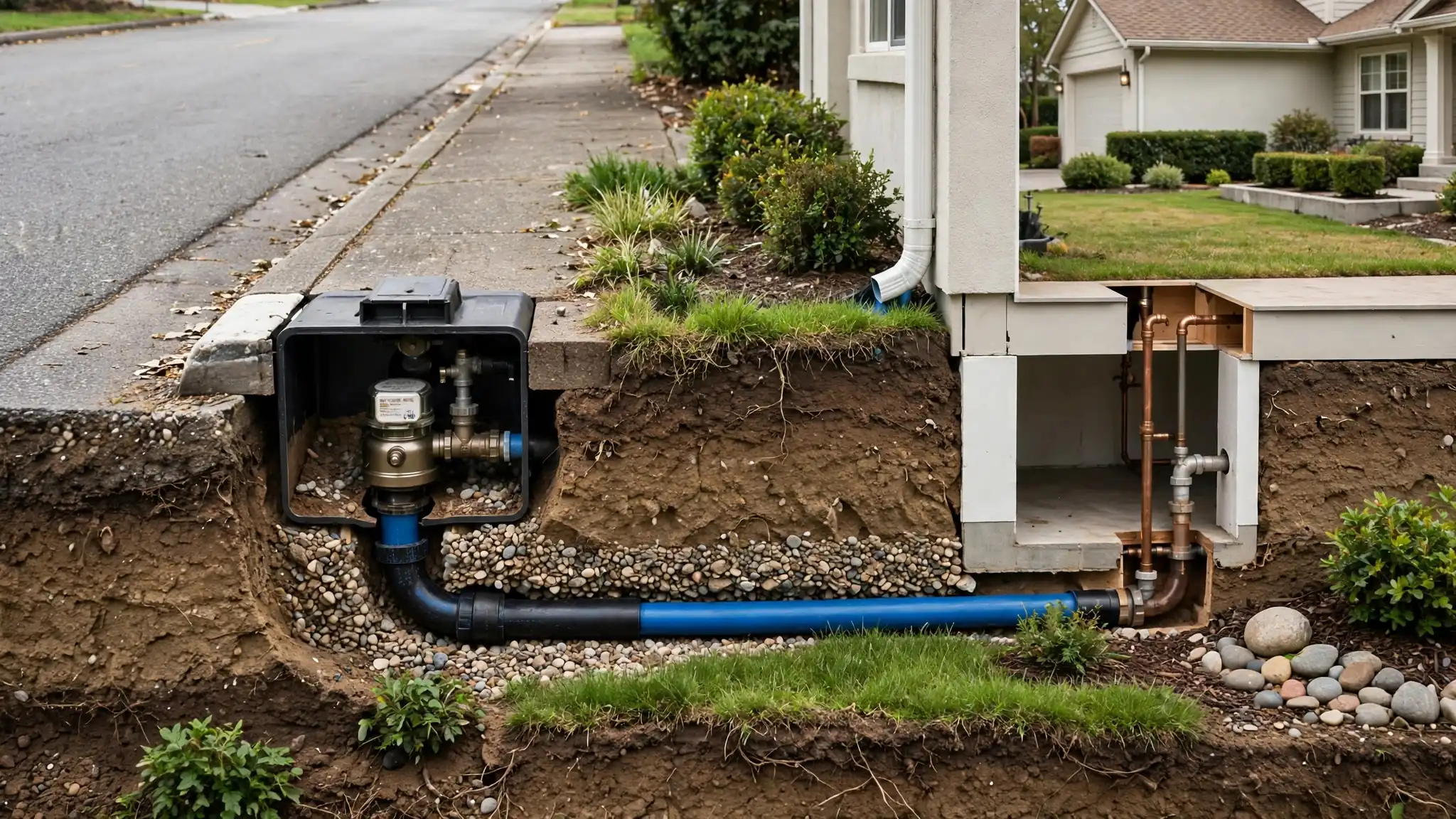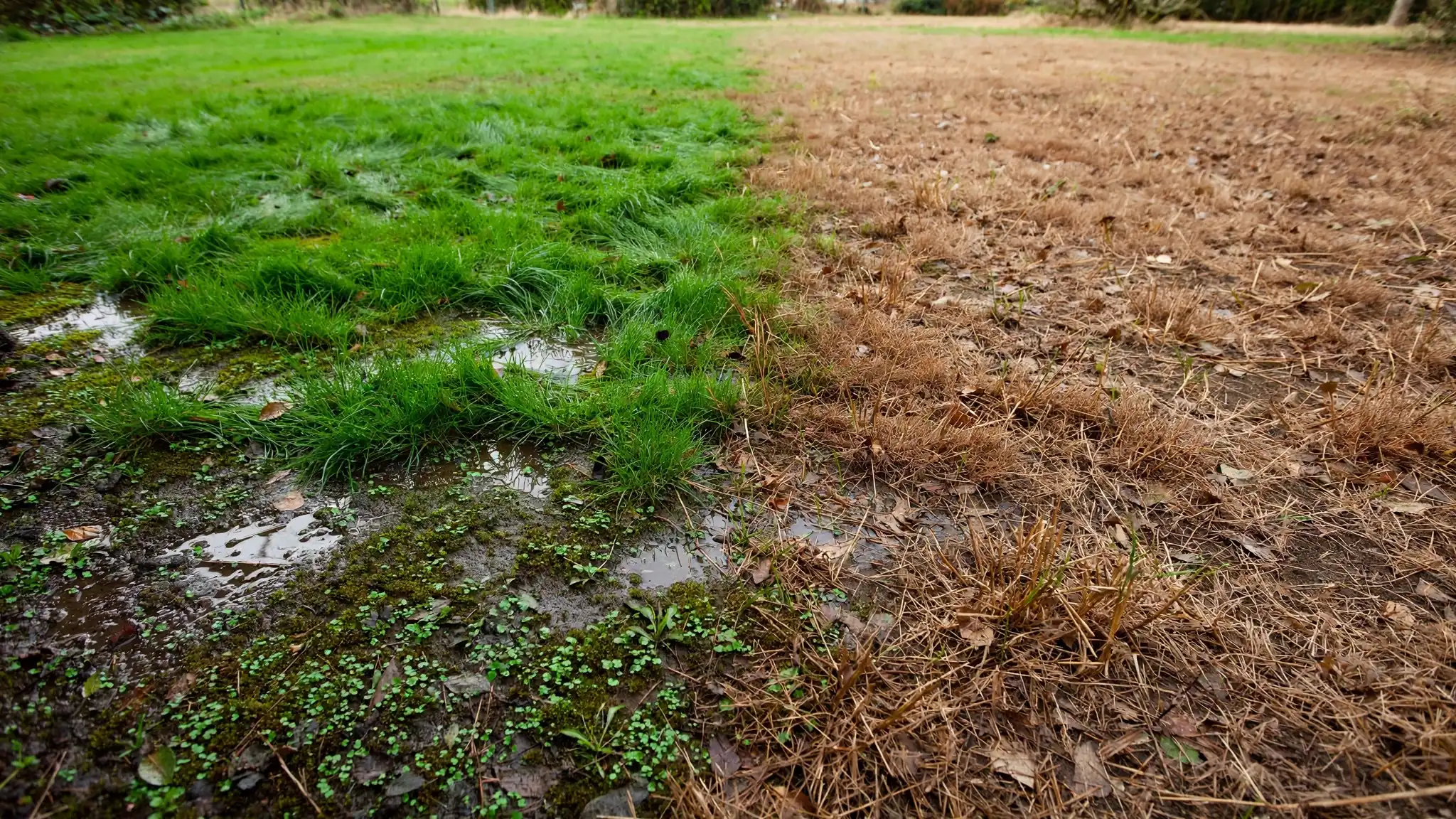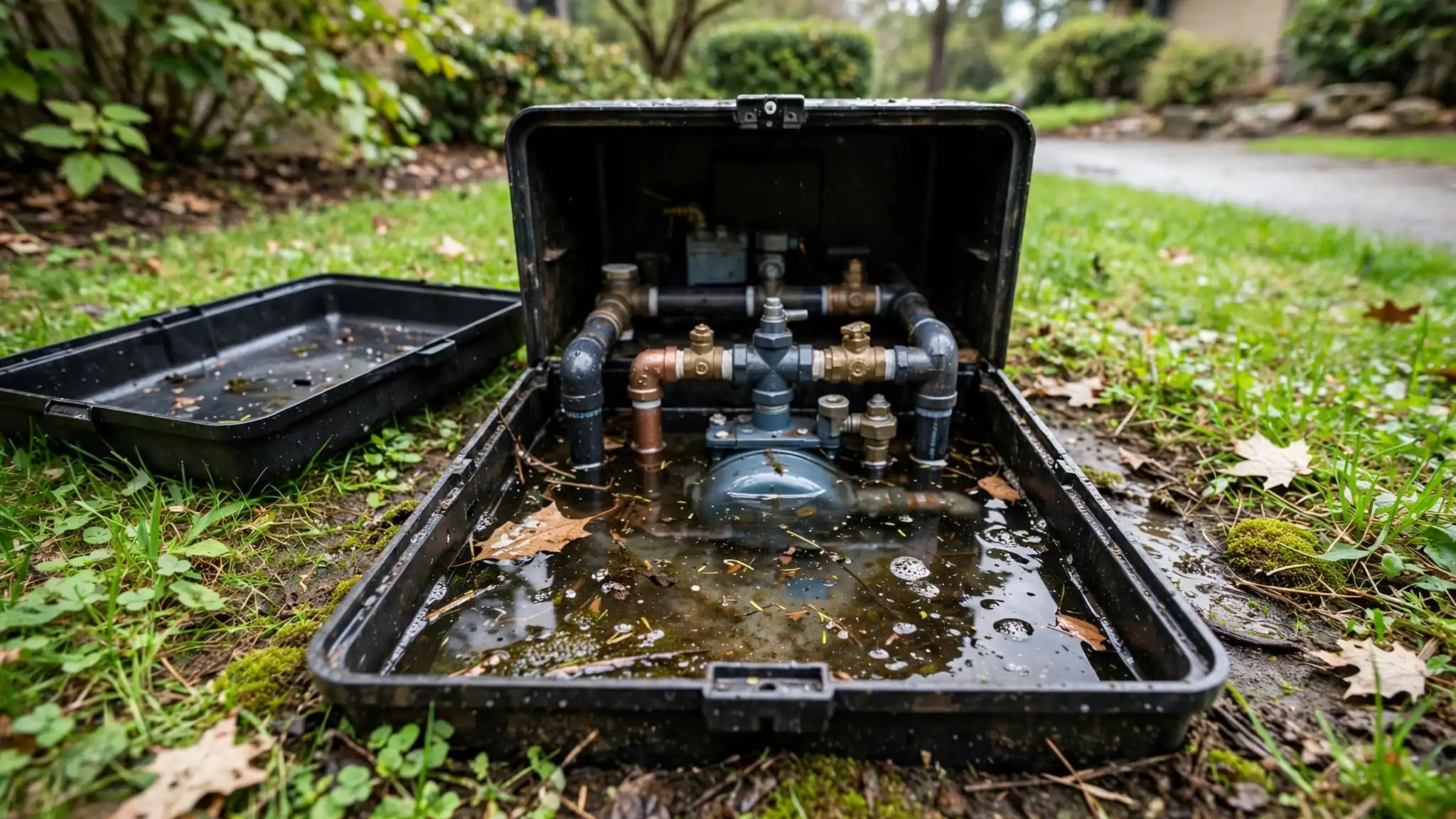
The water service line — the buried pipe running from your meter to your house — is a leak location most homeowners never consider. Signs of a meter-box or service-line leak include standing water inside the meter box, a soggy or sunken strip of yard along the pipe route, low water pressure at every fixture, and a meter that spins with the house main shut off. Because this pipe is your responsibility (not the utility's), recognizing these signs early — and knowing where responsibility lies — saves both money and yard alike. Professional service-line detection pinpoints the break without trenching your whole yard.
Quick Answer
Check the meter box first: standing water around the meter suggests a service-line break. Then walk the pipe route (meter to house) for soggy or sunken ground, note any whole-house pressure drop, and run the main-shutoff test — spinning with the house main closed proves the leak is in the service line. Service-line leaks are the homeowner's responsibility and need professional acoustic/tracer-gas location.
The Service Line: What And Where
Your water service line is the buried pipe carrying municipal water from the meter (usually at the curb) to your house. It runs underground across your yard — under lawn, walkways, sometimes driveways — at a depth below the frost line. It is pressurized 24/7, it is entirely your property and responsibility on the house side of the meter, and it is invisible — which is why its leaks go unnoticed until the bill or the yard announces them.
Yours, Not Theirs
Utilities own the main and the meter; you own the service line from the meter to your house. A break in your service line is your repair bill — and your water bill keeps running until it is fixed. Knowing this boundary before a leak happens prevents expensive confusion during one.
The 5 Key Signs Of A Service-Line Leak
1. Standing Water In The Meter Box
Open the meter box: the interior should be dry or merely damp. Standing water around the meter — especially if it returns after bailing — indicates a leak at or near the meter connection, the most common service-line failure point (fittings and connections fail before straight pipe runs).
2. A Soggy Or Sunken Strip Along The Pipe Route
Walk a straight line from meter to house — the pipe's approximate route. A persistently soggy, sunken, or unusually lush strip following that line is the classic surface signature of a service-line break discharging underground.
3. Whole-House Low Pressure
A service-line break diverts pressure before it reaches the house — so every fixture shows reduced pressure simultaneously. (Single-fixture pressure issues are fixture problems; whole-house drops point to the service line or the main.)
4. The Meter Spins With The House Main Shut Off
The definitive test (detailed below): close the house main valve; if the meter keeps spinning, the leak is between meter and house — the service line, conclusively.
5. Unexplained Bill Spikes With No Interior Symptoms
No warm floors, no sounds, no damp walls — but the bill climbs and the meter moves. When interior suspects are cleared, the buried service line is the remaining candidate.
The Main-Shutoff Test: Definitive Diagnosis
- Verify the meter is spinning with normal household setup.
- Close the main house shutoff valve (where the service line enters the house).
- Re-check the meter:
- Spinning stops → the leak is inside the house plumbing.
- Spinning continues → the leak is in the service line between meter and house. Definitive.
- Reopen the main after testing.
This single test divides the entire system in one move — learn it before you need it.
What Breaks Service Lines
- Corrosion — older galvanized or copper service lines corrode from soil chemistry and age; the most common failure in aging systems.
- Ground movement — freeze-thaw cycles, soil settlement, and root intrusion stress buried pipe.
- Connection failures — fittings at the meter and house entry work loose or corrode faster than straight runs.
- Physical damage — landscaping, fence posts, and construction strike buried lines; always know your line's route before digging.
- Age — service lines last decades, not centuries; original lines in older homes are living on borrowed time.
Why Service-Line Leaks Escalate
- Continuous billing — the break flows 24/7 at full mains pressure; the meter never rests.
- Soil erosion and sinkholes — discharging water washes away supporting soil, creating voids and surface collapse along the route.
- Foundation and hardscape damage — water migrating toward the house undermines foundations, walkways, and driveways.
- Contamination risk — pressure drops in a broken line can draw soil water in; not a drinking-water emergency in most cases, but not nothing.
Need Help Right Now?
Water pooling in the meter box, sinkholes forming, or pressure collapsing? That is an active service-line break — call now.
Call (617) 380-4912How Detection And Repair Work
Professional service-line detection uses acoustic listening along the pipe route (the break's sound signature peaks at the breach), tracer gas for pinpoint confirmation, and moisture mapping to assess soil saturation. Repair is typically a targeted excavation at the marked point — a small, surgical dig, not a trench across the yard — followed by pipe replacement or spot repair. Because the line is yours, get the location before authorizing excavation: precise detection is the difference between a small repair and a destroyed landscape. Our emergency service handles active breaks 24/7.
Service Line Materials And Their Failure Modes
| Material | Era | Typical Failure Mode | Relative Risk |
|---|---|---|---|
| Galvanized steel | Older homes | Internal rust + external corrosion; pinholes multiply | Highest — plan replacement |
| Copper | Mid-century | Pitting from soil/water chemistry; joint failures | Moderate — monitor |
| Polyethylene / PEX | Modern | Joint/fitting issues; physical strikes | Lowest — durable |
| Lead (historic) | Very old | Multiple concerns — replacement advised regardless | Replace on principle |
Identify your material at the house entry point (a plumber can confirm in minutes). The material predicts the failure mode — and the failure mode predicts whether spot repair or full replacement is the honest recommendation.
Seasonal Timing Of Service-Line Failures
- Spring thaw: the peak season — ground movement from freeze-thaw stresses joints maximally; frost-weakened pipe fails as soil shifts.
- Deep winter: frost penetration stresses shallow or poorly bedded lines; breaks often announce via pressure drops.
- Drought summers: soil shrinkage moves pipe; expansive clays at their most active.
If your meter-box check becomes a seasonal habit — spring and fall — you will catch most service-line leaks in their first weeks.
Coordinating With The Utility
- Meter shutoff: the utility can shut water at the meter for your repair — coordinate timing with your contractor.
- Marking: call 811 before any excavation — public utilities marked; your service line located separately.
- Inspection: most jurisdictions require permit and inspection for service-line work — your contractor handles this.
- Meter issues: if the meter itself leaks (utility property), report it — their repair, their cost.
Know Before The Emergency
Locate your main shutoff, identify your service-line material, and note the meter-to-house route now — while nothing is leaking. Emergency decisions made with preparation are better and cheaper than those made in panic.
Winter Meter-Box Checks
Cold weather makes meter-box inspection more valuable and more neglected:
- Frozen boxes hide symptoms — thaw and check when possible.
- Ice formations inside or around the box suggest active water in freezing conditions.
- Post-thaw inspection is the highest-value check of the year — freeze damage reveals itself as ground softens.
Add the meter box to your spring and fall home checklists — two minutes, twice a year, catches most service-line leaks early.
Landscaping Over Service Lines
- Know the route before planting — deep-rooted trees over the service line invite root intrusion.
- Keep the route accessible — avoid permanent structures (sheds, patios) directly over the line.
- Mark it — a simple sketch prevents the fence-post strike that causes sudden breaks.
- Choose shallow-rooted plantings over the line corridor.
Plant With The Pipe In Mind
The most preventable service-line leaks are the ones caused by the homeowner's own landscaping. A $0 sketch of the pipe route prevents the $0 fence post from becoming a major repair.
Keeping Service-Line Records
Document your service line the way you document your roof — it is equally expensive and equally hidden:
- Material and approximate age — from installation records or plumber identification.
- Route sketch — meter to house, with measurements to landmarks.
- Repair history — every break, spot repair, or replacement, dated.
- Meter-box photos — seasonal condition, for comparison.
- Pressure readings — annual, to catch PRV failures that stress the line.
This file transforms every future plumbing conversation from guesswork to informed discussion — and it is exactly what detection professionals and responsibility determinations work from.
The meter box is the most under-inspected part of most home water systems — out of sight, rarely opened, yet holding the boundary between utility and homeowner responsibility. A twice-yearly glance inside takes less time than reading this paragraph and catches the leaks that otherwise run for billing cycles. Make it a habit alongside your smoke-detector battery checks.