An underground water line leak — a pressurized break in buried yard piping — announces itself through surface symptoms: persistently soggy or sunken patches of ground, unusually lush vegetation in one area, whole-house low water pressure, water surfacing where it should not, and a meter that spins with the house main shut. Unlike slab leaks, buried-line leaks show their effects outside — the yard becomes the diagnostic display. Professional underground detection locates the break without digging up the yard to search.
Quick Answer
Walk your yard for the classic signs: soggy or sunken ground that never dries, one strip of grass growing conspicuously better than the rest, water surfacing or pooling, and any sinkhole-like depressions. Inside, watch for whole-house pressure drops and a climbing bill. Confirm with the main-shutoff meter test — spinning with the house isolated proves a buried break. Then call for acoustic/tracer-gas location before anyone digs.
What To Do Right Now
- Walk the yard systematically. Look for soggy ground, sunken areas, lush strips, and surfacing water — photograph everything with timestamps.
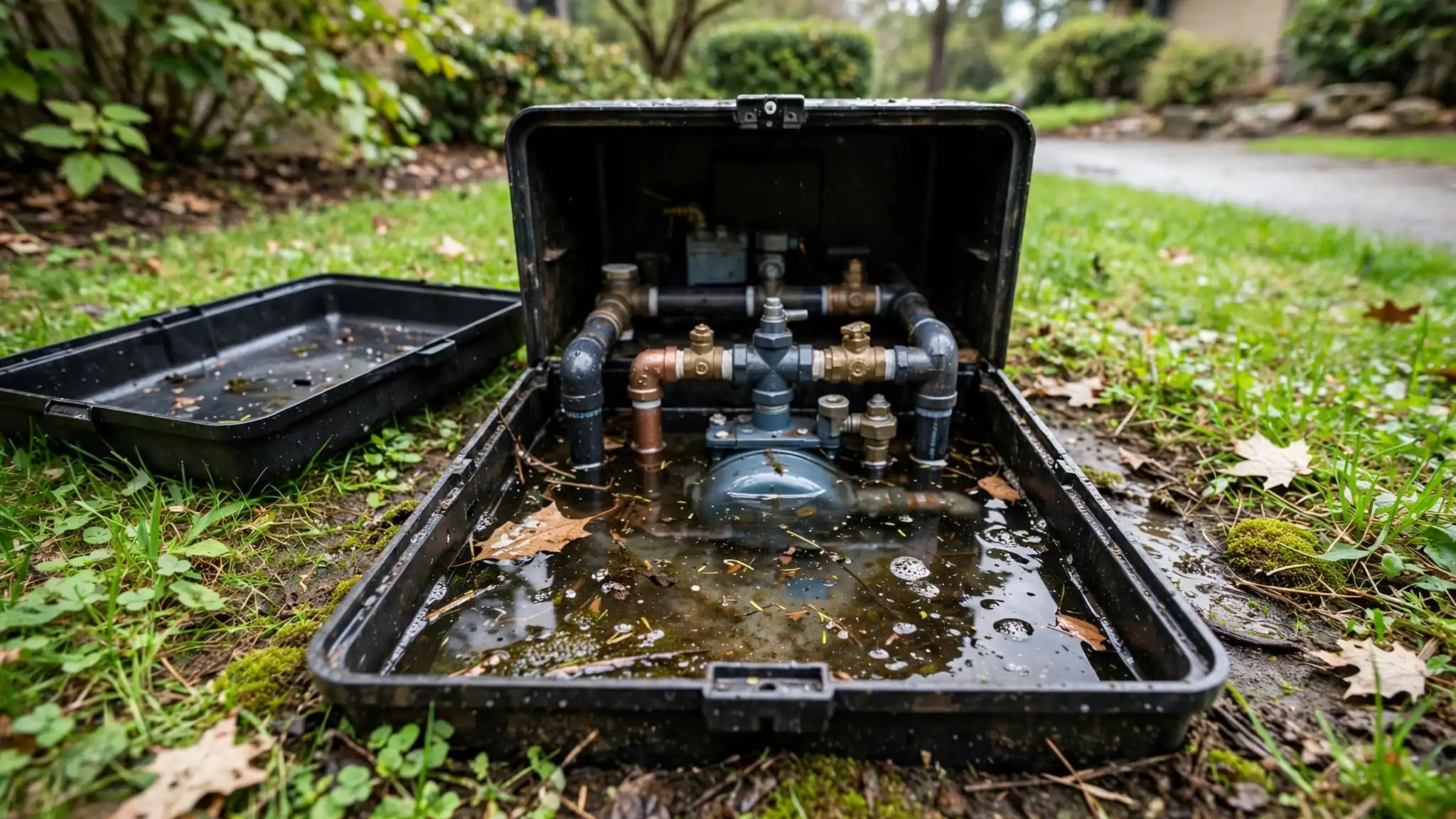
- Check the meter box. Standing water there points to the service line specifically (meter-box guide).
- Run the main-shutoff test. Spinning with the house main closed = buried break confirmed.
- Mark suspect areas. Flags or stakes at soggy spots help the detection technician — and prevent anyone from driving over weakened ground.
- Do not dig exploratory holes. Random digging rarely finds the break, destroys landscaping, and risks striking other utilities.
- Call for detection. Professional underground leak detection pinpoints the break for surgical repair.
Need Help Right Now?
Sinkholes forming, water surfacing, or pressure collapsing across the house? That is an active buried break — call now.
Call (617) 380-4912The 7 Yard Signs Of A Buried Line Leak
1. Persistently Soggy Ground
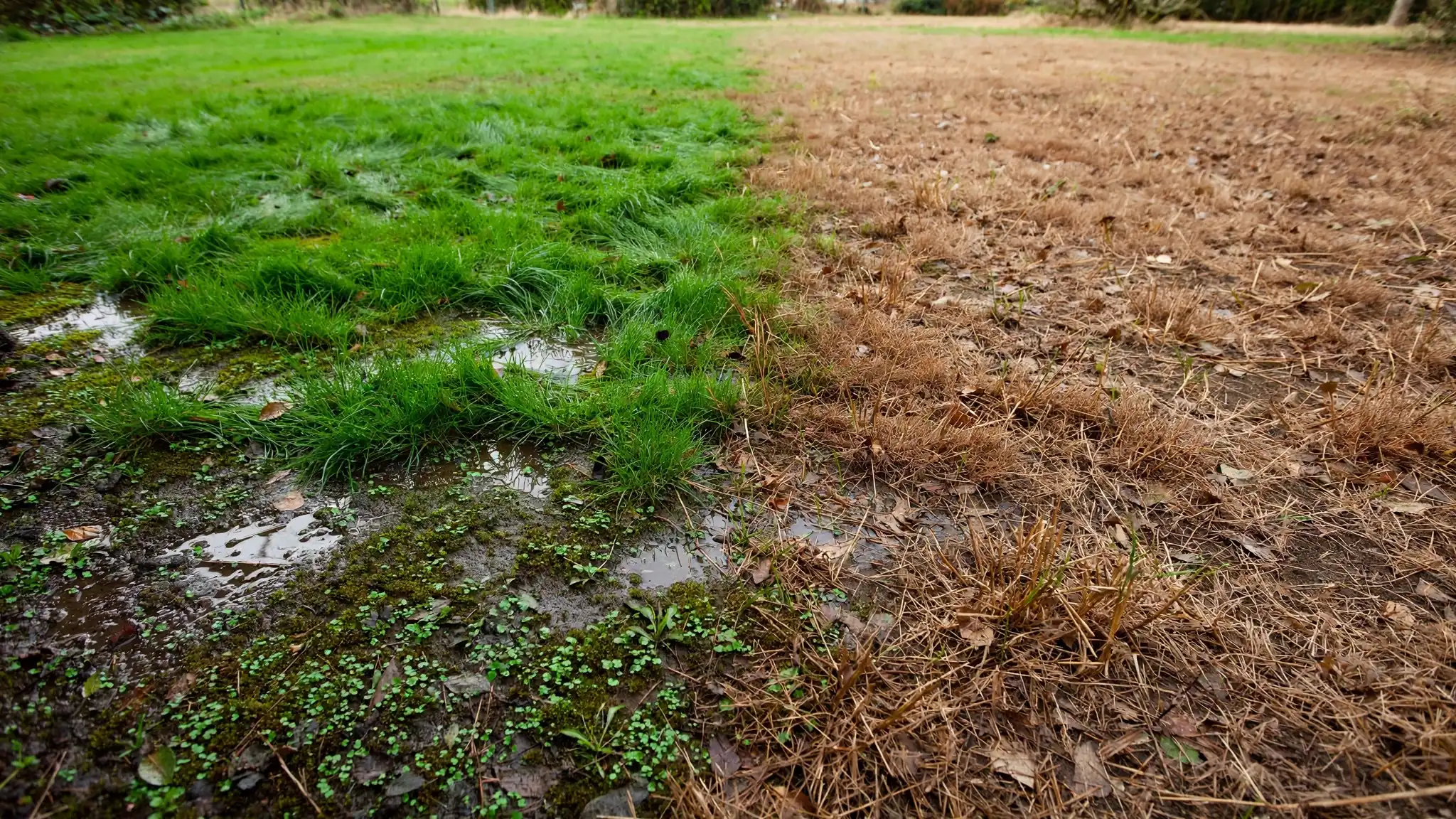
Soil that stays wet days after rain — or in dry weather entirely — above a buried line. Press the ground: spongy, saturated soil in an otherwise firm yard is the most direct surface evidence.
2. Sunken Or Depressed Areas
Discharging water erodes supporting soil, and the surface settles into the void — shallow depressions or sinkholes along a pipe route. These worsen over time and can become hazards.
3. Unusually Lush Vegetation
One strip of grass growing conspicuously greener, taller, or faster than surrounding turf — fertilized by the leak below. In dry spells, the contrast is unmistakable: a green ribbon across a brown lawn.
4. Water Surfacing
Water pooling, seeping, or bubbling up where no sprinkler runs — the break discharging faster than soil can absorb. In winter, ice patches forming over buried lines are the cold-weather equivalent.
5. Gurgling Or Hissing From The Ground
Pressurized breaks create audible turbulence — hissing or gurgling from soil, most noticeable in quiet conditions. Acoustic professionals amplify exactly this.
6. Cracks In Hardscape
Eroded soil beneath walkways, patios, or driveways lets them settle and crack — structural symptoms of the void forming below.
7. High Bill With No Interior Symptoms
The meter moves, the bill climbs, but the house shows nothing — the leak is outside the building envelope, in yard piping or the service line.
One Sign Warrants The Test
You do not need the full set. A single persistent soggy patch plus a moving meter justifies the main-shutoff test — and a positive test justifies professional detection. Buried leaks erode soil continuously; time is literally ground.
Indoor Signs That Corroborate
- Whole-house low pressure — the break diverts pressure before it reaches fixtures.
- Air sputtering from taps — air drawn into the line through the break.
- Discolored water — soil infiltration through the break (have it assessed promptly).
- Rising bill, silent house — the meter tells the story the house cannot.
What Breaks Buried Lines
- Corrosion — soil chemistry attacks older metal pipe; the leading age-related cause.
- Freeze-thaw movement — expanding ice and shifting soil stress rigid pipe at joints.
- Root intrusion — roots exploit tiny joint gaps, then wedge them open.
- Physical strikes — fence posts, landscaping, and construction hitting unmarked lines.
- Original defects — poor bedding, kinked pipe, or stressed joints from installation.
What Happens If You Wait
- Soil voids grow. Continuous discharge excavates underground — sinkholes and hardscape collapse follow.
- The bill compounds. Full-pressure flow, 24/7, at your expense.
- Water migrates. Toward foundations, into basements, under driveways — the damage spreads beyond the break.
- Repair scope grows. A pinpoint excavation becomes a landscape reconstruction.
DIY Checks Vs Professional Detection
| Check | Safe DIY | Professional Detection |
|---|---|---|
| Yard symptom mapping | Walk, photograph, flag soggy/sunken/lush areas | — |
| Meter confirmation | Main-shutoff test to prove buried break | — |
| Break location | — | Acoustic survey + tracer gas pinpoints within feet |
| Pipe condition | — | Assessment of whether spot repair or replacement fits |
| Repair | — | Targeted excavation at the marked point |
How Professionals Find Buried Leaks
Underground leak detection works without exploratory digging: acoustic sensors survey the pipe route listening for the break's turbulence signature, tracer gas confirms the exact point, and the break is marked for a surgical excavation — one precise dig, not a trench. How the technology works in detail. When the break is active and damaging, our emergency service responds 24/7.
Seasonal Variations In Yard Symptoms
Buried-leak symptoms wear seasonal disguises:
- Spring: thaw-saturated ground masks leak sogginess — the meter test distinguishes (rain stops; leaks do not).
- Summer: the green-ribbon-across-brown-lawn signature is unmistakable — peak visibility season.
- Fall: leaf cover hides surface symptoms — rely on the meter and pressure.
- Winter: ice patches over buried lines, steam or mist on cold mornings above the break — cold-weather tells.
Year-round, the meter is season-proof — it reports flow regardless of what the yard shows or hides.
Mapping Your Yard's Plumbing
Every homeowner should know what is buried where:
- Service line: meter box to house entry — roughly straight; confirm with a locator.
- Irrigation mainline: from backflow preventer to zone valves — pressurized 24/7.
- Branch lines: to hose bibs, outbuildings, pool equipment — often forgotten.
- Drainage: downspout extensions, French drains, sump discharge — non-pressurized, different symptoms.
Sketch it, photograph the sketch, keep it with house documents. When a soggy patch appears, the map names the suspect pipe immediately — and when anyone digs, the map prevents strikes.
The Map Pays For Itself
One prevented utility strike or one correctly identified suspect pipe repays the hour spent mapping. Do it once; benefit for decades.
When The Leak Is Not On Your Property
Water obeys gravity, not property lines — a neighbor's buried leak can surface in your yard, and yours in theirs. If your meter is still but the yard is wet, consider the uphill neighbor's plumbing; if your meter spins but your yard is dry, the break may surface downhill on adjacent property. Municipal mains can also leak into private yards. Diplomatic, evidence-based conversations (meter data, photos) resolve most cross-property situations; persistent disputes may need municipal or professional mediation.
Pets And Livestock As Leak Detectors
Animals notice what humans miss: dogs drawn to one yard area persistently, cats avoiding a suddenly soggy zone, livestock congregating where groundwater surfaces. These are anecdotes, not diagnostics — but a pet's sustained interest in one ground area is worth the meter test that follows. Working dogs have even been trained for leak detection in municipal systems; your pet is the untrained version.
Aerial And Seasonal Observation
- Second-story views reveal patterns invisible at ground level — lush ribbons, soggy geometry, drainage paths.
- Post-rain observation shows where water lingers vs. where it should drain — persistent puddles mark poor drainage or active discharge.
- Drought observation is the most revealing — the green that survives extreme dryness is leak-fed until proven otherwise.
- Photograph seasonally from the same vantage — time-lapse reveals slow changes the eye normalizes.
Consumer Technology That Helps
- Smart water monitors (installed on the main) — continuous flow analytics with phone alerts; the residential equivalent of utility smart-meter programs.
- Soil moisture sensors — garden-variety sensors placed in suspect areas quantify saturation trends over weeks.
- Drone or pole photography — elevated views revealing yard patterns invisible at ground level.
- Infrared phone attachments — consumer thermal cameras that, while less sensitive than professional units, can reveal major thermal anomalies.
These tools support the core diagnostics — meter reading and meter testing — they do not replace them. And when consumer tools suggest a break, professional detection provides the pinpoint certainty repair requires.
Your yard is an honest reporter — it shows what the pipes beneath are doing, if you learn its language. Soggy patches, lush ribbons, sunken ground, and surfacing water are all sentences in that language. Combined with the meter's quantitative testimony, yard symptoms give you everything needed to direct a professional to the right place. Learn to read both, and buried leaks lose their invisibility.