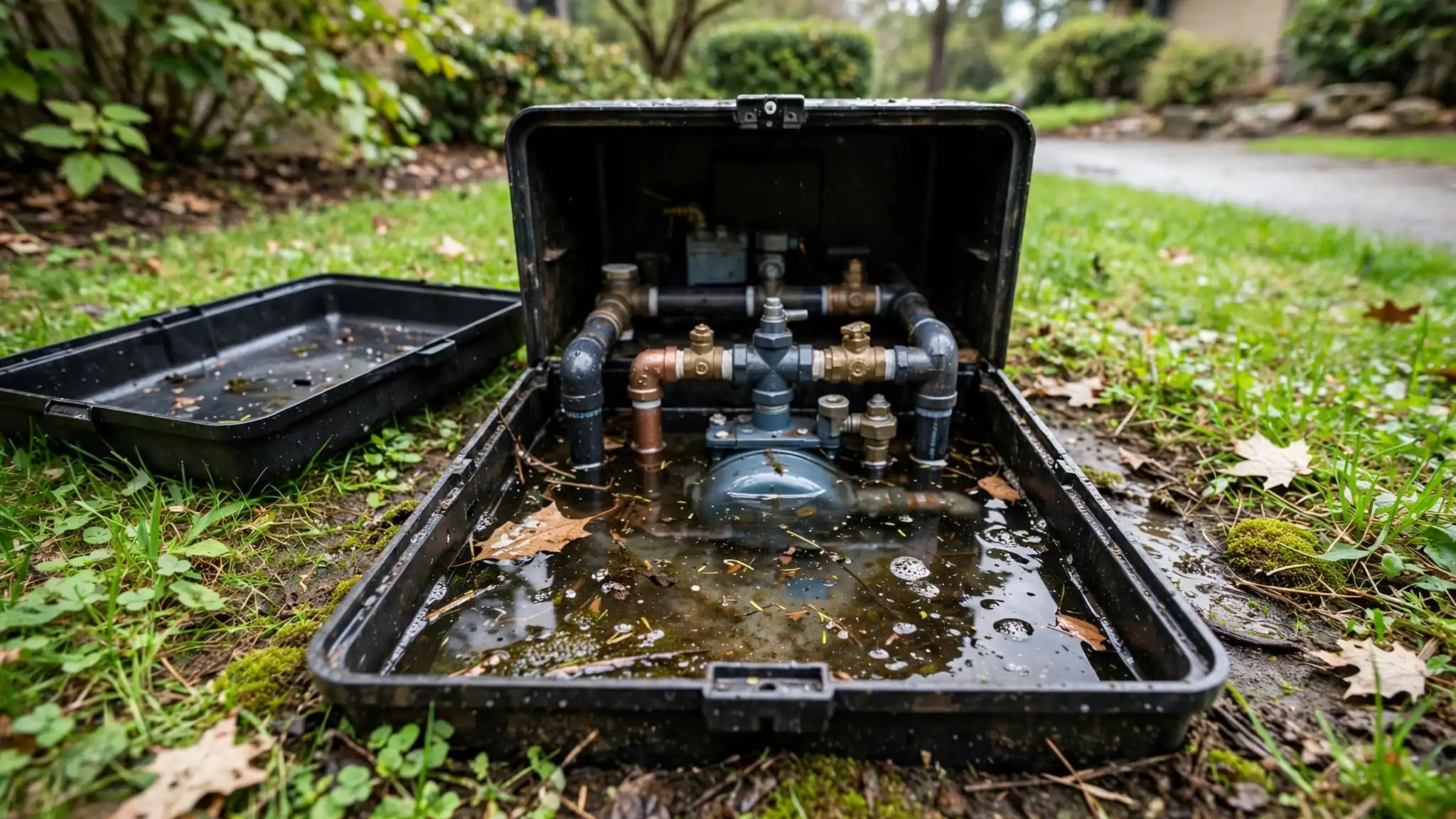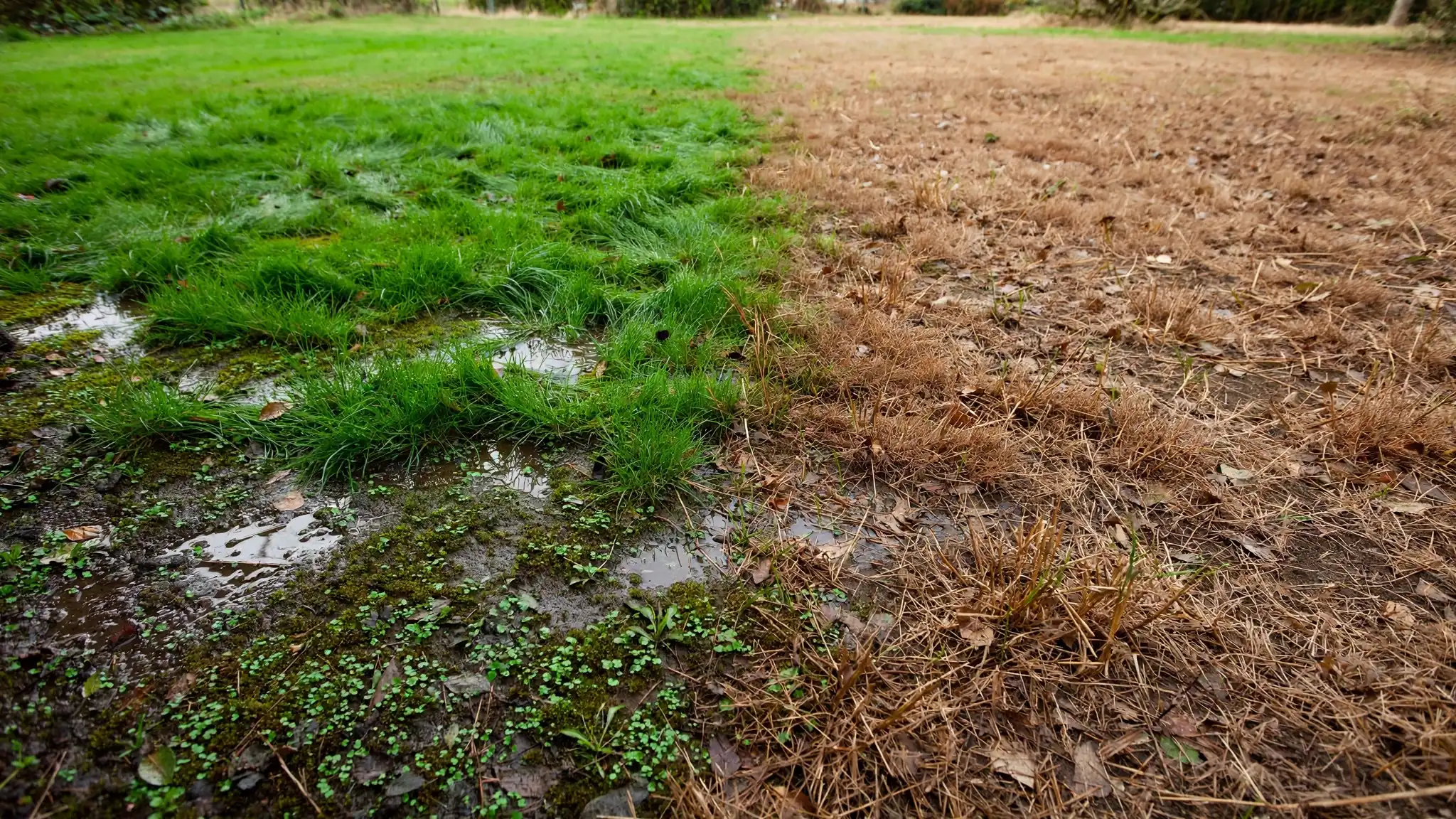
Your water service line — the buried pipe from meter to house — fails from corrosion (soil chemistry attacking older metal pipe), freeze-thaw ground movement, root intrusion at joints, physical strikes during yard work, and age. It announces failure through meter-box water, soggy strips along its route, whole-house pressure drops, and meter movement with the house main shut. Detection uses acoustic listening and tracer gas to mark the break for surgical repair — without trenching the yard to search. And remember: this line is yours, not the utility's.
Quick Answer
Service lines fail from corrosion (leading cause in older metal pipe), freeze-thaw soil movement, root intrusion, physical damage, and age. Watch for water in the meter box, soggy ground along the meter-to-house route, whole-house pressure loss, and meter spin with the house main closed. Professionals locate breaks with acoustic sensors and tracer gas; repair is a targeted dig at the marked point.
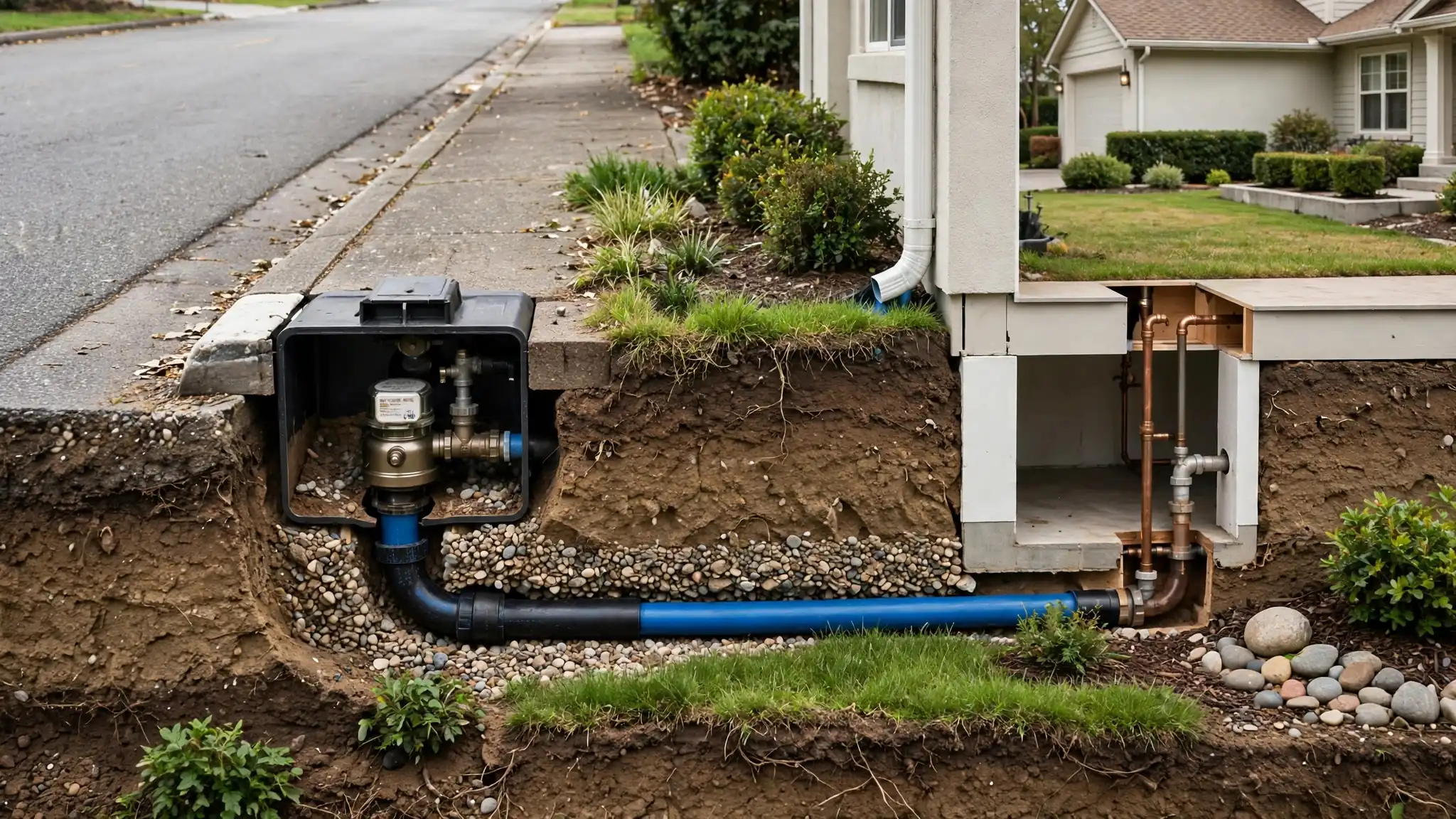
Service Line Anatomy: What You Own
The service line runs from the meter (utility property, usually at the curb) to your house entry (your main shutoff). Everything between — pipe, fittings, and any valves — is yours: your maintenance, your repair bill, your water loss until fixed. Materials vary by era: older homes often have galvanized steel or copper; modern installations use polyethylene or PEX, which resist corrosion far better. Knowing your material (a plumber can identify it at the entry point) predicts your risk profile.
Corrosion: The Leading Age-Related Cause
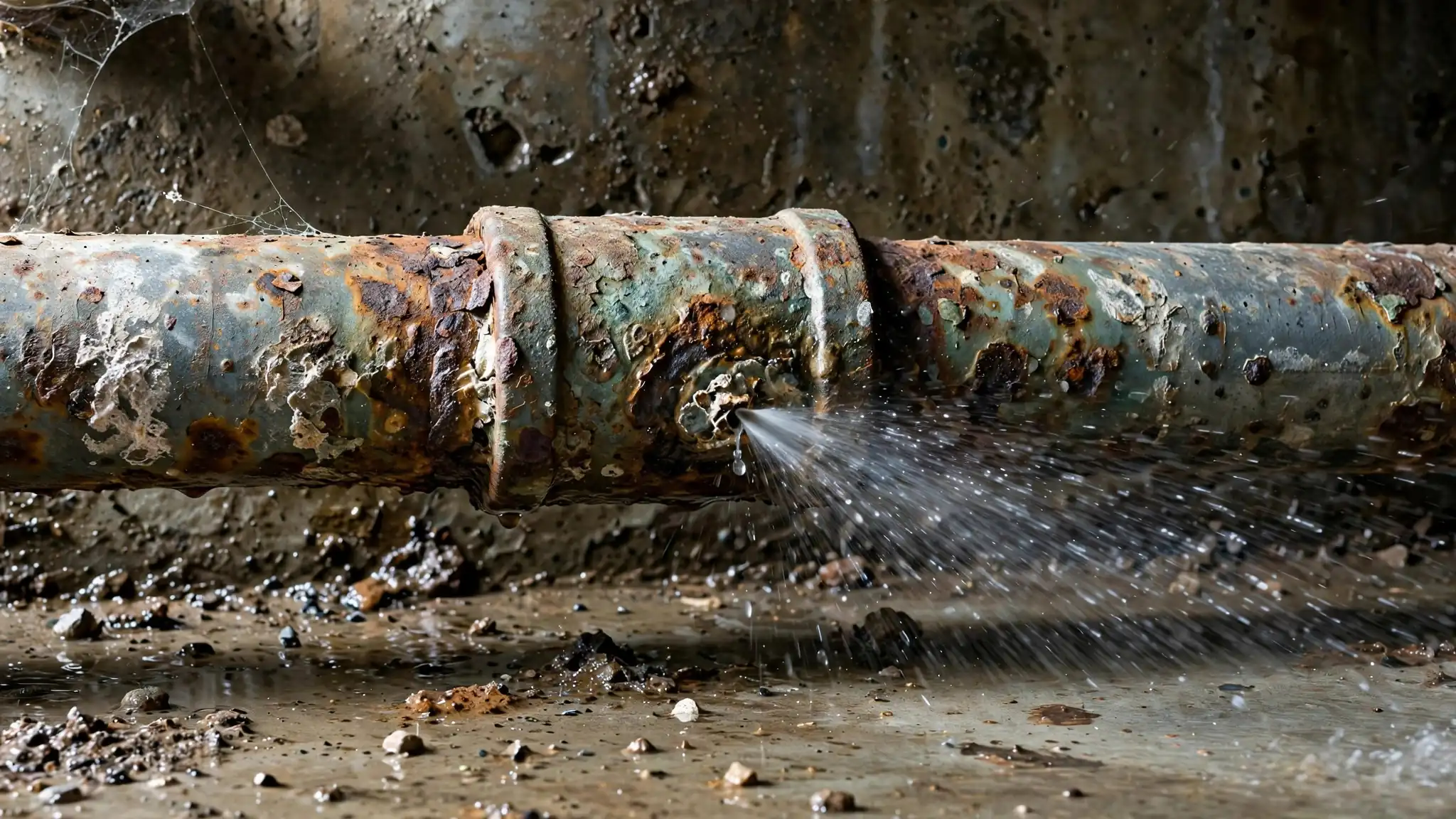
Soil-side corrosion attacks buried metal pipe from the outside — chemistry varies by soil, and some soils are aggressively corrosive. Water-side corrosion works from within, driven by water chemistry. Galvanized steel fails first (its zinc coating depletes, then the steel rusts through); copper lasts longer but still pits in aggressive conditions. The failure mode is typically pinholes multiplying into splits — which is why one service-line leak often predicts more.
Material Matters Most
If your service line is original galvanized steel in an older home, plan for replacement on your schedule rather than the leak's — emergency service-line work costs more and wrecks more landscape than a planned replacement.
Ground Movement And Frost
Freeze-thaw cycles heave and settle soil around buried pipe, stressing rigid materials at joints and bends — the classic spring-thaw leak appears when ground movement peaks. Soil settlement (poor compaction, erosion) lets pipe sections flex under pressure cycling until they crack. Expansive clays swell and shrink seasonally, working joints loose over years.
Roots And Physical Damage
Tree roots seek moisture relentlessly — they exploit microscopic joint gaps, then grow and wedge joints apart. Service lines near mature trees deserve periodic suspicion. Physical strikes from fence posts, landscaping, irrigation installation, and construction are the leading sudden cause: a single shovel or auger strike can split a line instantly. Always locate buried lines before digging — call 811 and know your service line's route.
Recognition: Signs And The Definitive Test
- Water in the meter box — the first check, always.
- Soggy/sunken/lush strip along the meter-to-house route.
- Whole-house pressure drop — every fixture, simultaneously.
- Bill climbing with no interior symptoms.
- The main-shutoff test: meter spins with house main closed = service-line leak, conclusively. (See the meter-box guide for the full procedure.)
Professional Detection: Finding It Without Trenching
Service-line detection follows the pipe's route with acoustic sensors — the break's turbulence signature peaks at the breach — then confirms with tracer gas (safe hydrogen-nitrogen mix escaping only at the break) for pinpoint marking, typically within feet. Pipe location equipment traces the line's exact route first, so the acoustic survey follows the pipe rather than guessing. No exploratory trenching, no destroyed yard.
Repair Options: Spot Fix Vs Replacement
| Situation | Recommended Approach | Why |
|---|---|---|
| Single break, modern pipe (poly/PEX/copper), otherwise sound | Targeted excavation + spot repair | Isolated failure; rest of line has decades left |
| Single break, galvanized or aged pipe | Consider full replacement | One pinhole predicts many; repeated digs cost more |
| Multiple breaks or systemic corrosion | Full service-line replacement | Repairing a failing system piecemeal is false economy |
| Break under driveway/hardscape | Trenchless options if feasible | Avoids demolishing expensive hardscape |
Replacement materials today are overwhelmingly polyethylene or PEX — corrosion-proof, flexible (fewer joints), and rated for long service. Whatever the approach, detection first: precise marking is what keeps excavation surgical. Our emergency service handles active service-line breaks 24/7.
Service Line Lifespan: Planning, Not Panicking
Service lines do not last forever — but their decline is plannable:
- Know your material and age. Original galvanized in a 60-year-old home is end-of-life; modern poly in a 15-year-old home is mid-life.
- Watch the leading indicators. Pressure trends, meter-box moisture, and the first pinhole are the early warnings — not the catastrophic break.
- Budget proactively. A planned replacement costs less than an emergency one and lets you choose timing, contractor, and method (including trenchless).
- Consider replacement triggers. First leak in galvanized pipe, multiple leaks in any material, or a major landscaping project (replace while the yard is already open).
Trenchless Replacement Options
Full replacement does not always mean an open trench across the yard:
- Pipe bursting: a new pipe is pulled through the old line's path, fracturing the old pipe outward — minimal surface disruption.
- Directional drilling: a new bore path is drilled underground — ideal for avoiding hardscapes and landscaping.
- Candidacy: soil conditions, depth, length, and the existing line's state determine feasibility — ask contractors specifically about trenchless options.
Ask About Trenchless First
Many homeowners assume replacement means a trenched yard. Trenchless methods often cost comparably while preserving landscaping, driveways, and sanity — but not every contractor offers them, so ask explicitly.
Insurance And Service Lines
- Standard policies often exclude the underground service line itself but cover resulting damage (erosion, foundation effects) — read the exclusions, not just the coverage.
- Service-line endorsements are inexpensive add-ons specifically covering buried lines — worth evaluating before a failure.
- Documentation — professional detection reports, photos, and receipts — supports both standard claims and endorsement claims.
- Utility programs: some municipalities offer service-line coverage programs — check yours.
History Of Service Line Materials
Service-line materials tell the story of plumbing's evolution: lead (durable but toxic — replacement advised wherever found), galvanized steel (mid-century standard — strong initially, corrosion-prone with age), copper (excellent longevity in benign conditions, vulnerable to aggressive chemistry), and polyethylene/PEX (modern standard — corrosion-proof, flexible, long-lived). Your home's era usually predicts its material; verification at the entry point confirms it. Each material's failure mode is well understood — which is why material identification is the first step of honest assessment.
When Replacement Beats Repair: The Math
The repair-vs-replace decision is arithmetic, not philosophy:
- One break, sound modern pipe: spot repair wins — the rest of the line has decades.
- One break, aged galvanized: replacement usually wins — the next break is a matter of when, and each excavation costs similarly.
- Two breaks, any material: replacement wins — the pattern has declared itself.
- Break under expensive hardscape: trenchless replacement may beat spot repair even for single breaks.
Get both quotes — spot repair and full replacement — and compare against the probability-weighted cost of future breaks. Honest contractors will do this math with you.
Decide By Arithmetic
Emotion favors the cheaper quote; arithmetic favors the cheaper decade. Two excavations exceed one replacement — the math is simple once the pipe's condition is honestly assessed.
Coordinating With Neighbors
Service lines sometimes share trenches, cross property lines, or connect to shared wells (in non-municipal areas). When a break's location is ambiguous:
- Compare meter data — the spinning meter identifies whose line leaks.
- Share detection costs — where a shared trench is suspected, joint professional assessment benefits both parties.
- Document boundaries — responsibility rules clarify who pays for what.
- Communicate early — water migrating across property lines creates urgency for everyone; early conversation beats later dispute.
Most service-line situations are single-property and straightforward — but the exceptions reward neighborly coordination.
Emergency Service-Line Scenarios
Certain service-line failures cannot wait for scheduled repair:
- Sinkhole formation — ground collapse is a safety hazard, not just a plumbing issue.
- Water entering the home — service-line breaks near the foundation can drive water inside.
- Complete pressure loss — a fully severed line is a no-water emergency.
- Contamination signs — discolored or odorous water after a break warrants immediate professional and utility involvement.
These are emergency service situations — 24/7 response for active, damaging breaks.
The service line is yours — the pipe you own but never see, the leak you pay for twice (in water bills and repair costs), and the component most homeowners think about only during failure. A little attention now — material identification, route knowledge, seasonal checks — converts it from a surprise liability into a managed asset. The best service-line leak is the one caught by a routine meter glance, not the one discovered by a sinkhole.