Hearing water running when everything is off — a hiss, gurgle, or flow sound from walls, floors, or ceilings with no fixture in use — means water is moving somewhere it should not be. The causes, in likelihood order: a running toilet (silent tank-to-bowl flow), a pressurized pipe leak (slab, wall, or underground break), thermal expansion/contraction (normal pipe sounds, not flow), drainage sounds (water moving through drains from another unit or fixture), and water heater or softener operation (normal cycles mistaken for leaks). The key test: check your water meter — if the flow indicator moves with everything off, the sound is a real leak; if still, it is likely normal plumbing acoustics. Professional leak detection confirms and locates the source.
Quick Answer
First verify true silence: toilets idle, ice maker off, softener not regenerating, irrigation off. Then check the meter — moving indicator means a real leak (slab, wall, or underground break); still indicator means normal pipe sounds (thermal expansion, drainage, appliance cycles). Real-leak sounds are persistent and localized; normal sounds are intermittent and explainable. Persistent sound plus meter flow needs professional acoustic detection.
What To Do Right Now
- Achieve true zero use. Verify every toilet is idle, ice maker off, softener not in regeneration, irrigation off, no taps running.
- Listen systematically. Walk room by room; note where the sound is loudest and its character (hiss, gurgle, drip, flow).
- Check the meter. Read the flow indicator — movement means a real leak.
- Time it. Constant sound suggests pressurized leak; intermittent suggests appliance cycles or thermal effects.
- Call if the meter moves. Professional detection locates the source acoustically.
Need Help Right Now?
Sound plus meter flow plus any damage symptom (warm floor, dampness, soggy ground)? That is an active pressurized break — call now.
Call (617) 380-4912Identifying What You Hear
Different sounds indicate different causes:
- Hiss or whoosh — pressurized water escaping (supply leak); the classic slab/wall break sound.
- Gurgle or bubble — drainage water moving, or air in pipes; often normal or fixture-related.
- Drip or plink — discrete drops; active leak dripping onto a surface, or condensation.
- Tick or click — thermal expansion/contraction of pipes or ducts; normal, not flow.
- Hum or vibration — water heater, softener, or pressure-related; appliance operation.
- Rush then stop — toilet refill, ice maker, or softener cycle completing; normal if the source is identified.
The 6 Causes, In Likelihood Order
1. Running Toilet
A failing flapper lets tank water flow continuously to the bowl — often silently at the toilet but audible as a faint hiss or flow in adjacent walls. The most common cause of phantom sounds. Dye-test every toilet first.
2. Pressurized Pipe Leak
A break in a supply line — under the slab, in a wall, or underground — creates turbulence audible as hissing or rushing. Persistent, localized, and meter-confirmed — the serious cause.
3. Thermal Expansion And Contraction
Pipes expand when hot water runs, then contract as they cool — producing ticks, clicks, and creaks. Normal, not flow, and intermittent (occurs after hot-water use, then stops). No meter movement.
4. Drainage Sounds
Water draining from another fixture, unit, or appliance moves through shared drain lines — audible as gurgling. Normal in multi-unit buildings; in single-family homes, trace it to a specific source.
5. Water Heater Or Softener Operation
Heaters refill, softeners regenerate (often at night), and expansion tanks adjust — all produce normal operational sounds. Learn your equipment's schedule; sounds matching it are explained.
6. Municipal Pressure Fluctuations
Pressure changes in the municipal supply can cause brief pipe sounds — usually transient and system-wide, not localized. Persistent localized sound is not this.
The Toilet Rule
Before theorizing about slab leaks, dye-test every toilet. The most dramatic phantom sounds often have the most mundane cause — and the test takes 20 minutes. Professionals check toilets first too.
The Meter Test: Leak Or Normal
The water meter is the arbiter:
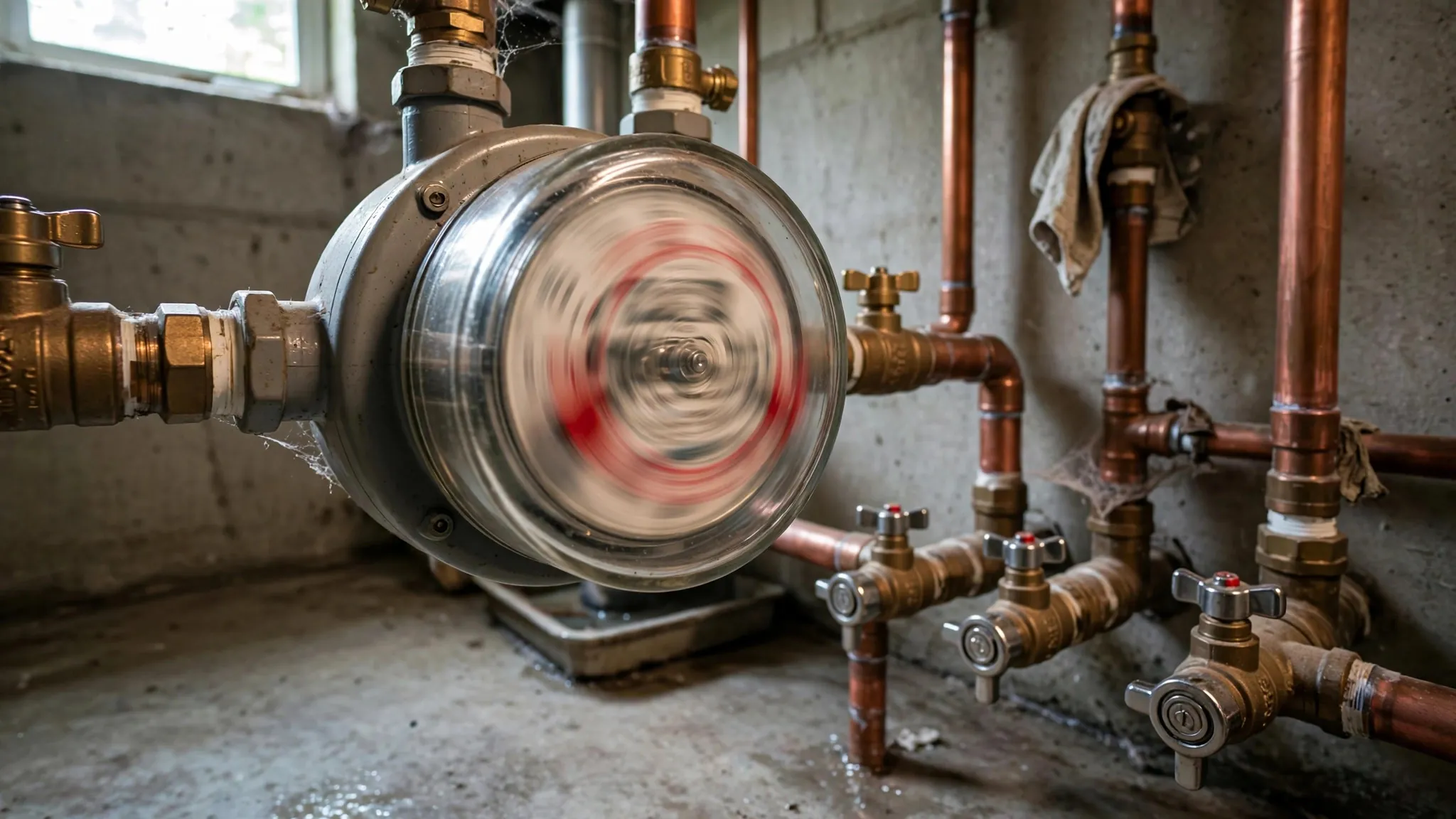
- Indicator moving with everything off → real leak. The sound is water escaping. Proceed to location and professional detection.
- Indicator still → no pressurized leak. The sound is thermal, drainage, or appliance-related. Identify the normal source; no leak detection needed.
For quantification, run the 2-hour test — the leak rate indicates severity and guides urgency.
Locating The Sound Yourself
- Room-by-room walk — note where it is loudest; the source is near the peak.
- Wall vs. floor vs. ceiling — the surface conducting the sound indicates the pipe's location.
- Fixture proximity — sounds near bathrooms/kitchens implicate those runs.
- Stethoscope method — a screwdriver pressed to the wall/floor, ear on the handle, amplifies and localizes (the DIY version of professional acoustic detection).
- Isolation — shut fixture valves one at a time; silence after a shutoff names the zone.
What Happens If You Wait On A Real Leak Sound
- Continuous water loss — the meter documents every gallon, billed to you.
- Progressive damage — the break erodes, saturates, and spreads; sounds often grow louder as breaks widen.
- Secondary failures — soil erosion, mold, structural saturation follow the water.
Normal sounds need no action beyond identification. Real-leak sounds need detection — the distinction is the meter test, and the response is proportional to the result.
DIY Vs Professional
| Situation | Safe DIY | Call A Professional |
|---|---|---|
| Sound + still meter | Identify the normal source (toilet, appliance, thermal) | If no normal source found and sound persists |
| Sound + moving meter, toilet implicated | Dye test; replace flapper/valve | If the sound persists after fixture repair |
| Sound + moving meter, no fixture cause | Localize by listening; document | Acoustic leak detection promptly |
| Loud, localized hiss + damage symptoms | Document; protect the area | Emergency service — active break |
How Professionals Handle Phantom Sounds
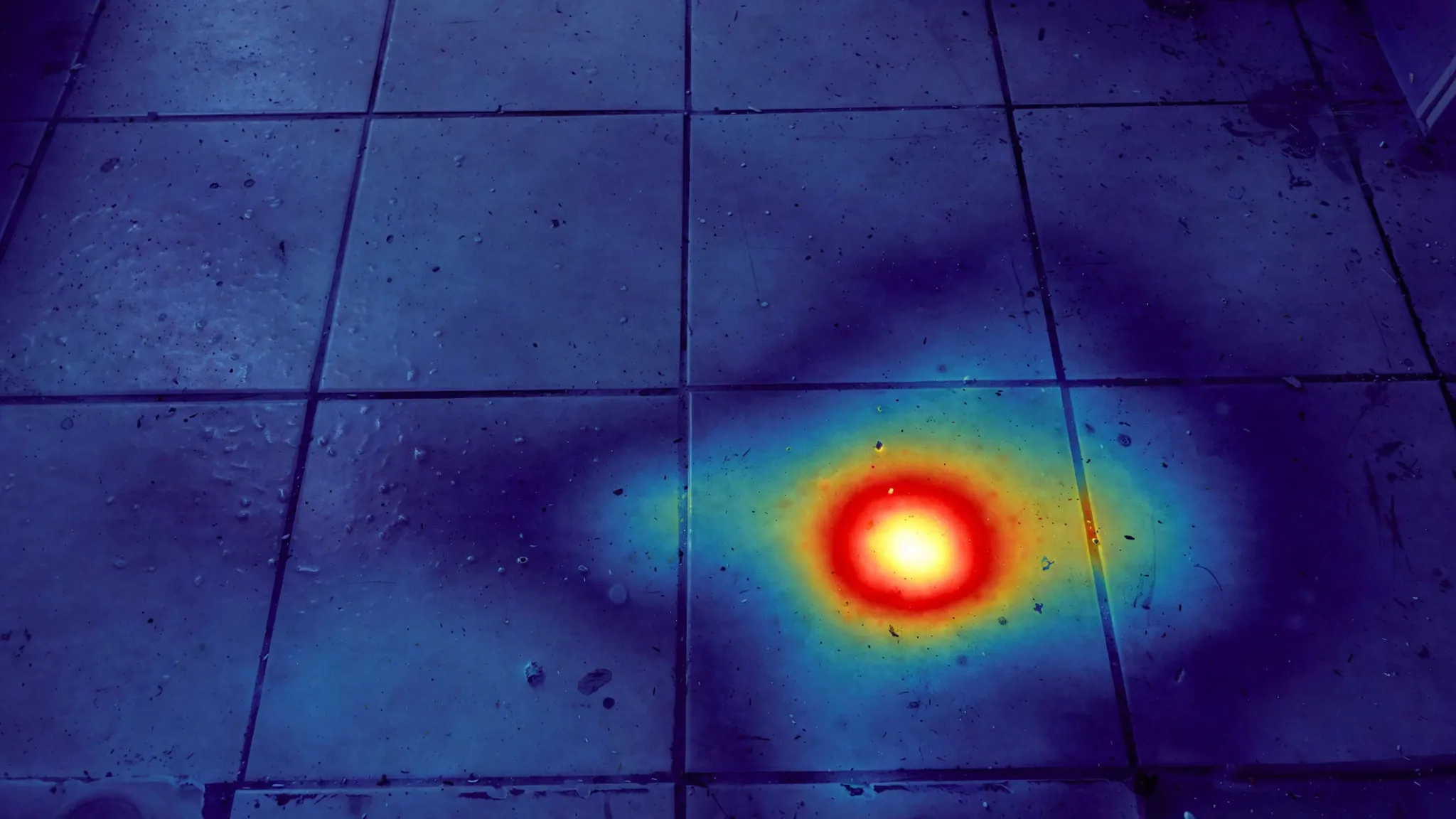
Professional leak detection starts where your listening ended: professional acoustic equipment (sensitive ground/contact microphones with frequency analysis) isolates the break's signature from background noise, thermal imaging checks for hot-water anomalies, and the source is marked for repair. Your room-by-room notes and meter-test results focus the visit. For related symptoms, see slab leak signs and warm spot diagnosis.
The Toilet Investigation: Step By Step
Since running toilets are the #1 cause, investigate them thoroughly before anything else:
- Listen at each toilet — a faint hiss or trickle at the bowl indicates tank-to-bowl flow.
- Dye-test every toilet: food coloring in the tank, 20 minutes without flushing — color in the bowl means the flapper leaks.
- Check the fill valve: water level at the overflow tube means the fill valve is not shutting off.
- Wiggle the handle: a sticking handle holds the flapper open — the simplest fix.
- Inspect the flapper: warped, mineral-coated, or deteriorated flappers seal poorly; replacement is inexpensive.
Fix confirmed toilet issues first, then re-listen — if the phantom sound persists, the investigation continues to pipes.
The Nighttime Listening Protocol
Nighttime is the best diagnostic window — the house is quietest and usage is zero:
- Wait until 1-2 AM (after all water use has stopped for hours).
- Walk the house silently — room by room, pausing at each wall, floor, and ceiling.
- Note the loudest point — the source is nearest the peak volume.
- Check the meter during the walk — the definitive leak/normal verdict.
- Record findings — location, character, and meter reading; this is your professional's briefing.
The 2 AM Walk
One systematic nighttime walk — with meter check — resolves most phantom-sound mysteries. It is the highest-value 15 minutes in leak diagnosis, and it costs nothing.
Appliance Sound Inventory
Catalog your home's normal water sounds so abnormal ones stand out:
| Appliance | Normal Sound | When |
|---|---|---|
| Water softener | Rushing/regeneration cycles | Typically 2-4 AM, scheduled |
| Ice maker | Fill hiss, ice drop clunks | Intermittent, on its cycle |
| Water heater | Refill sounds, expansion ticks | After hot-water use |
| HVAC condensate | Dripping/trickling | During heating/cooling operation |
| Irrigation | Zone valve clicks, sprinkler hiss | Scheduled watering times |
| Sump pump | Motor hum, discharge rush | During/after rain |
Learn each appliance's schedule and signature — then any sound not matching the inventory is unexplained and warrants the meter test.
Documenting For The Professional
If the sound persists and the meter moves, brief your detection professional with:
- Sound character (hiss, gurgle, drip, flow) and loudest location.
- Timing (constant vs. intermittent; nighttime findings).
- Meter readings (flow rate if measurable; 2-hour test results).
- Toilet test results (which toilets were tested, what was found and fixed).
- Appliance inventory (what was ruled out and how).
This briefing focuses the professional visit — the technician starts from your findings rather than from zero. For meter-flow response and slab leak signs, see our companion guides.
Seasonal Sound Variations
Phantom sounds change with seasons — and the changes are diagnostic:
| Season | Sound Changes | What It Means |
|---|---|---|
| Winter | New ticking/creaking | Thermal contraction; normal unless persistent |
| Spring | New hissing after thaw | Freeze-damaged pipe now leaking — investigate |
| Summer | More appliance sounds | Irrigation, increased usage — usually normal |
| Fall | Sounds after storms | Exterior intrusion or ground movement effects |
New sounds after winter deserve particular attention — freeze damage manifests as leaks when pipes thaw and pressurize. The spring acoustic check catches what winter created.
Multi-Unit Buildings: Sorting Your Sounds From Theirs
- Your meter is the arbiter — if your meter is still, the sound is not your leak (even if it is in your walls).
- Coordinate with neighbors — shared walls transmit; the loudest point may be in an adjacent unit.
- Building management — common-area plumbing (risers, mains) is the building's responsibility; report with your meter evidence.
- Document for the HOA — written reports with meter readings drive action faster than verbal complaints.
For quantifying hidden flow and meter reading, see our companion guides.