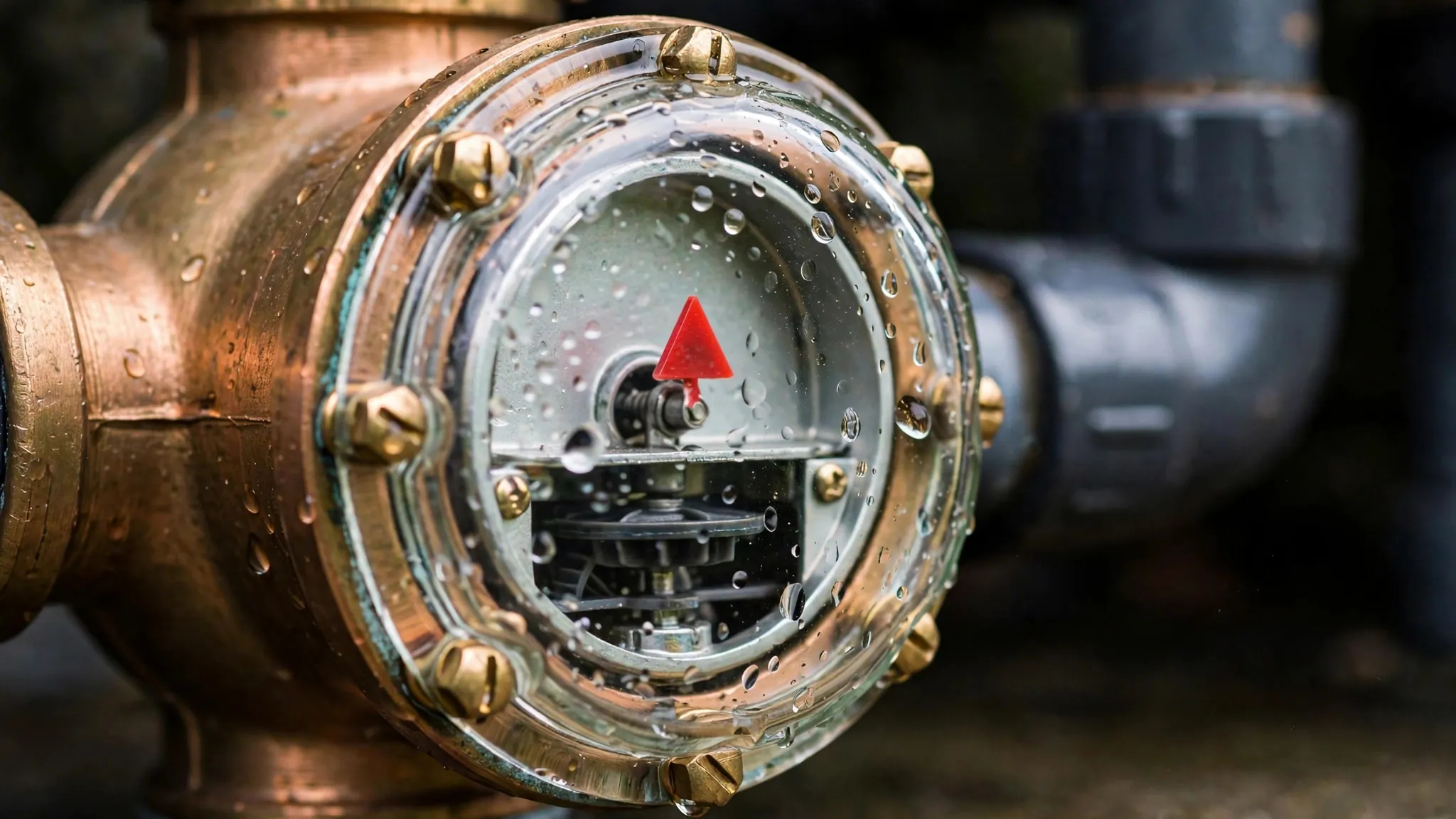
A suddenly high water bill with no change in household usage almost always means water is flowing somewhere you cannot see. The usual suspects, in order of likelihood: a running toilet (the single most common cause), a dripping faucet or leaking supply line, an irrigation system leak, a water heater pressure-relief discharge, and — most seriously — a hidden slab or underground leak. The fastest diagnostic is a 2-hour water meter test: if the meter moves with everything off, you have a leak; where you look next depends on the pattern. Professional high-bill leak investigation traces the flow to its source.
Quick Answer
Start with the meter: if it moves with everything off, water is escaping somewhere. Check toilets first (dye test the tank), then irrigation zones, then look for slab-leak signs (warm floor, sounds) and underground signs (soggy yard). A running toilet wastes the most water most often; a slab or buried-line leak wastes the most per incident. Rule out the easy causes in an hour — then call a professional for what remains.
What To Do Right Now
- Check your meter immediately. Read your water meter with everything off. Movement = active leak; stillness = investigate billing or seasonal usage.
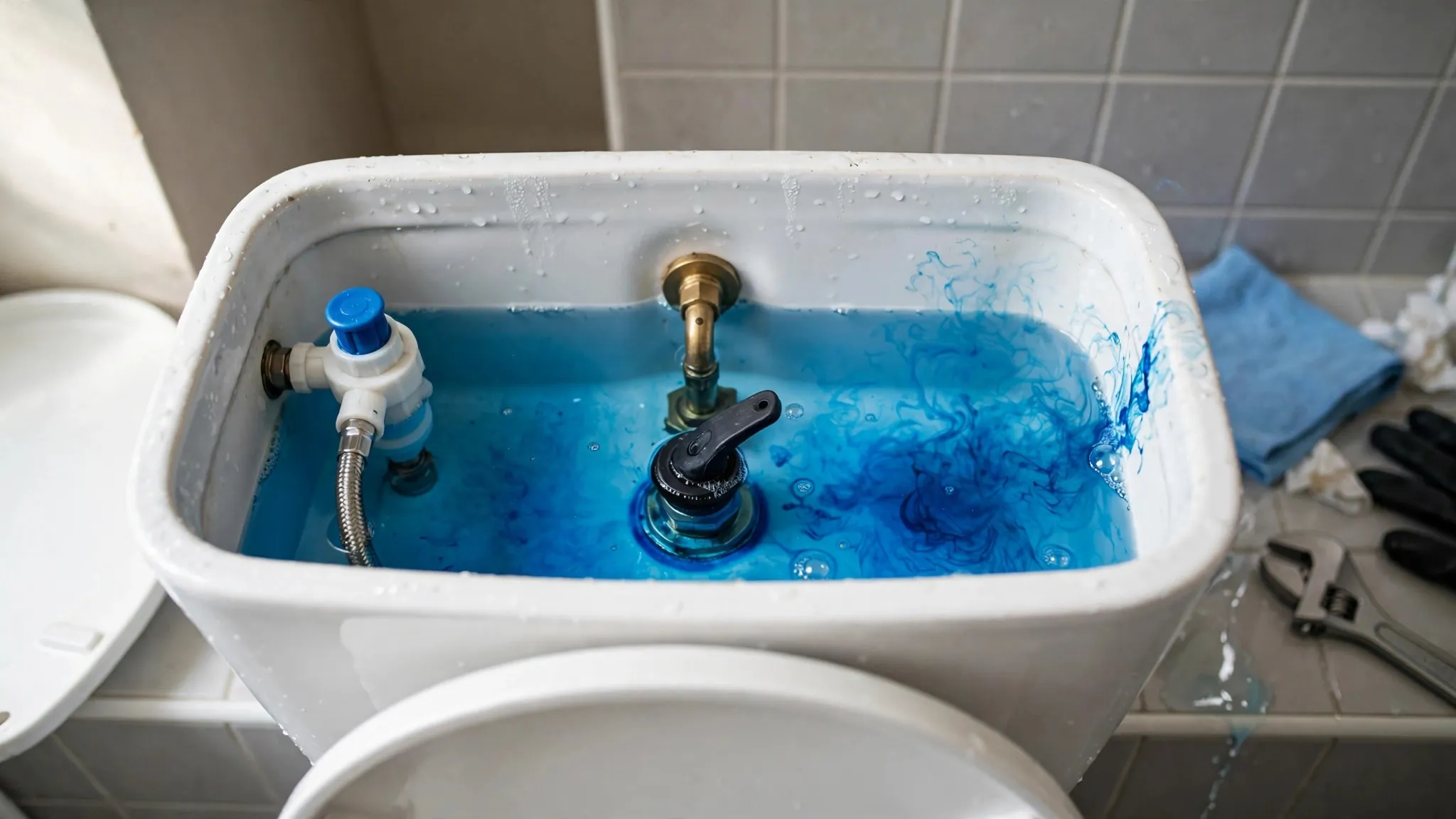
- Dye-test every toilet. Drop food coloring in each tank; color in the bowl within 20 minutes without flushing means the flapper leaks. (Details below.)
- Walk your irrigation zones. Run each zone and look for geysers, soggy patches, and heads that do not pop up.
- Scan for hidden-leak signs. Warm floor patches, running-water sounds, soggy yard strips — slab leak signs and underground leak signs.
- Call if the meter confirms flow you cannot find. Professional investigation traces hidden flow with acoustic and thermal equipment.
Need Help Right Now?
Bill tripled in one cycle, or water appearing where it should not? That is an active major leak — call now.
Call (617) 380-4912Suspect #1: The Running Toilet
A toilet with a failing flapper or fill valve runs silently, 24 hours a day — and it is the most common cause of sudden high water bills by a wide margin. A single running toilet can waste hundreds of gallons daily, dwarfing most other household leaks.
The dye test: remove the tank lid, add a few drops of food coloring (or a dye tablet), and wait 15–20 minutes without flushing. If color appears in the bowl, the flapper is not sealing — water flows continuously from tank to bowl to drain. Also listen: a fill valve that cycles on briefly every few minutes ("phantom flushing") indicates a slow tank leak.
The fix is usually a flapper or fill-valve replacement — inexpensive parts, straightforward work. But test every toilet in the house; multi-bathroom homes often have two failing simultaneously, and the bill reflects the sum.
Toilets First, Always
Before suspecting anything exotic, dye-test every toilet. It takes 20 minutes, costs nothing, and resolves the majority of mystery high bills. Only when toilets pass should you move to harder diagnostics.
Suspect #2: Irrigation System Leaks
Underground sprinkler lines break silently — cracked pipes, stuck valves, and damaged heads discharge water directly into soil, often in zones you rarely inspect closely. A single broken irrigation line can waste as much as a slab leak while remaining completely invisible from the house.
Signs: one zone with weak pressure while others are normal, geysers or misting at heads, persistently soggy patches, or a zone that seems to run longer than programmed. Learn the signs of irrigation leaks — and note that irrigation leaks often spike bills seasonally, appearing when systems activate in spring.
Suspect #3: Hidden Slab And Underground Leaks
When toilets and irrigation check out but the meter still moves, the leak is hidden — beneath the slab or buried in the yard. These are the most damaging and the hardest to find without equipment:
- Slab leaks — pressurized breaks under the foundation; look for warm spots, sounds, and damp flooring.
- Underground/buried line leaks — breaks between the house and street or in yard piping; look for soggy strips, low pressure, and lush patches.
- Meter-box leaks — the service line between meter and house; check the meter box for standing water.
Hidden leaks waste the most water per incident and cause the most property damage — which is why professional detection is the right response once easy causes are ruled out.
Other Causes To Rule Out
- Water heater T&P discharge — a failing temperature-and-pressure relief valve dribbles constantly into its drain line; check the discharge pipe for warmth or moisture.
- Water softener malfunction — a stuck regeneration cycle can run water to drain for hours; check for unexpected regeneration.
- Seasonal usage changes — houseguests, new appliances, lawn watering, and pool filling all raise bills legitimately; compare against the same billing period last year.
- Billing errors — estimated (not actual) readings, misread meters, and rate changes cause apparent spikes; your meter test distinguishes real flow from billing artifacts.
- Dripping faucets and supply lines — individually minor, but a hot-water drip also taxes the water heater; fix promptly regardless.
What Happens If You Wait
- The bill compounds. Every billing cycle adds the leak's full volume — a moderate hidden leak costs more in three months of bills than professional detection.
- Toilet leaks are pure waste. Tank-to-bowl leaks go straight to sewer — you pay for water that served no purpose at all.
- Hidden leaks damage property. Slab and underground breaks erode soil and saturate structures while the bill is the only symptom.
- Small causes become big ones. A weeping flapper becomes a failed valve; a pinhole becomes a split. Leaks do not stabilize.
DIY Checks Vs Professional Help
| Situation | Safe DIY Check | Call A Professional When |
|---|---|---|
| Suspected toilet leak | Dye test every toilet; listen for phantom refills | Flapper/valve replacement does not stop it |
| Suspected irrigation leak | Run each zone; inspect heads and soggy areas | Break is underground or valve-related |
| Meter moves, cause unknown | 2-hour meter test; isolate by fixture shutoffs | Flow persists with all fixtures isolated — hidden leak confirmed |
| Warm floor or sounds | Map warm areas; photograph | Any slab-leak symptom — detection needed |
| Soggy yard strip | Photograph; check meter box | Water in meter box or persistent sogginess — buried-line detection |
How Professionals Trace High Bills
A professional high-bill investigation works by elimination: meter testing confirms and quantifies hidden flow, fixture isolation narrows the zone (toilets, irrigation, water heater, then hidden lines), and acoustic/thermal equipment locates slab or underground breaks precisely. The deliverable is not just a found leak but a measured flow rate — useful for billing disputes and insurance. When the bill spike is sudden and severe, our emergency service responds 24/7.
How To Read Your Bill Like A Detective
Before investigating the plumbing, investigate the bill itself — it contains the leak's fingerprint:
- Gallons used, not dollars. Rate changes mimic usage spikes; the gallon count is the truth.
- Same period last year. Seasonal usage (irrigation, guests, pools) varies enormously; year-over-year comparison isolates the anomaly.
- Daily average. Divide gallons by billing days — a sudden jump in daily average with no lifestyle change is the leak signal.
- Estimated vs. actual. Bills marked "estimated" reflect guesses, not measurement; an estimate followed by an actual reading creates phantom spikes.
- Tier changes. Many utilities use increasing block rates — a leak can push you into a higher tier, multiplying the cost beyond the water itself.
Document the bill history before calling anyone — professionals and utilities both work from these numbers.
Seasonal Bill Patterns And What They Mean
| Pattern | Likely Cause | Check |
|---|---|---|
| Spike every summer | Irrigation leak or increased watering | Zone-by-zone inspection; shutdown test |
| Spike every winter | Heating-system humidifier or pipe freeze damage | Humidifier valve; pipe inspection |
| Sudden spike, any season | Toilet, hidden pressurized leak, or billing artifact | Dye test; meter test; bill audit |
| Gradual climb over months | Slowly worsening leak (flapper, pinhole, valve weep) | Meter test; fixture isolation |
| Spike after vacation | Leak ran undetected while away — or a running toilet filled the bill | Full elimination sequence |
Working With Your Water Utility
Utilities are not adversaries — they are data sources and potential allies:
- Ask for reading history. Daily or hourly data (from smart meters, where deployed) pinpoints when the spike began.
- Ask about leak adjustments. Many utilities credit a portion of leak-inflated bills with documentation (repair receipts, meter-test photos).
- Request a meter accuracy test if you genuinely suspect malfunction — rare, but testable.
- Report major leaks promptly. Some jurisdictions require it; all appreciate it.
Document Before You Dispute
Timestamped meter photos, the dye-test results, repair receipts, and the professional detection report form the evidence package for billing adjustments. Utilities respond to documentation, not complaints.