
Sewage In Tubs Or Showers
Wastewater rising in low fixtures means the main line is blocked and flow is reversing. Stop all water use immediately.
Emergency Line — Open Now
Sewage coming up through drains is not a wait-until-morning problem — it is a health hazard that worsens with every flush. Standard main-line service handles slow drains; active sewage backup needs tonight. Call — 24/7, 30–45 minute arrival.
24/7 Emergency Service
Sewage backup is a health emergency, not just a plumbing one. Stop using water, keep clear, and call now.
Call (617) 380-4912 NowWhen To Call Now
Main-line clogs become emergencies when sewage is entering living spaces or threatening to. Not sure it qualifies? See our emergency overview for the full list.
Warning Signs
Sewage does not wait — these signs mean the backup is happening or hours away.
Wastewater rising in low fixtures means the main line is blocked and flow is reversing. Stop all water use immediately.
When sinks, toilets, and showers all slow together, the blockage is in the main — not the fixtures. This escalates fast.
Gurgling is trapped air from a downstream blockage. Widespread gurgling means the main is nearly or fully obstructed.
A rapidly worsening sewage smell signals backup building pressure. The visible backup usually follows within hours.
Before We Arrive
Water off, people clear, no chemicals — the sewage-backup triage.
Every flush, shower, and faucet adds to the backup. Stop using water entirely until the line is cleared.
Sewage is a biological hazard. Keep children, pets, and vulnerable individuals away from affected areas.
Chemicals will not clear a main-line clog and create hazards for whoever works the line. Skip them entirely.
Which fixtures back up first? The pattern tells us where the blockage sits — relay it when you call.
Safety Guidance
Treat sewage backup as the biohazard it is — distance is protection.
Backup water carries pathogens. Avoid contact, wear protection if you must be near it, and treat affected areas as contaminated.
Sewage near outlets or appliances is a shock risk. De-energize affected areas or keep clear.
Sewer gases are harmful in concentration. Ventilate affected areas and limit time spent in them.
A main-line clog emergency is a sanitation emergency. The main line carries all of a property's wastewater; when it blocks, there is nowhere for water to go but back — up through the lowest fixtures first, then spreading. Every additional gallon used adds to the backup volume. Our emergency response focuses on rapid blockage location and clearing: camera inspection identifies the obstruction (roots, grease, collapsed section, foreign objects), and professional clearing equipment restores flow — usually within the visit. The emergency ends when water flows out again, not when someone theorizes about the cause. Chelsea's older neighborhoods combine mature tree root systems with aging clay and cast-iron mains — the exact conditions where root intrusion thrives. A camera inspection during the emergency visit maps every intrusion point, not just the one that blocked tonight.
Our Process
Locate the blockage, clear it professionally, verify the flow — tonight. Our has handled Chelsea emergencies for thirteen years.
Describe the backup pattern: which fixtures, how fast it is rising. We give immediate stop-use guidance and dispatch with 30–45 minute arrival.
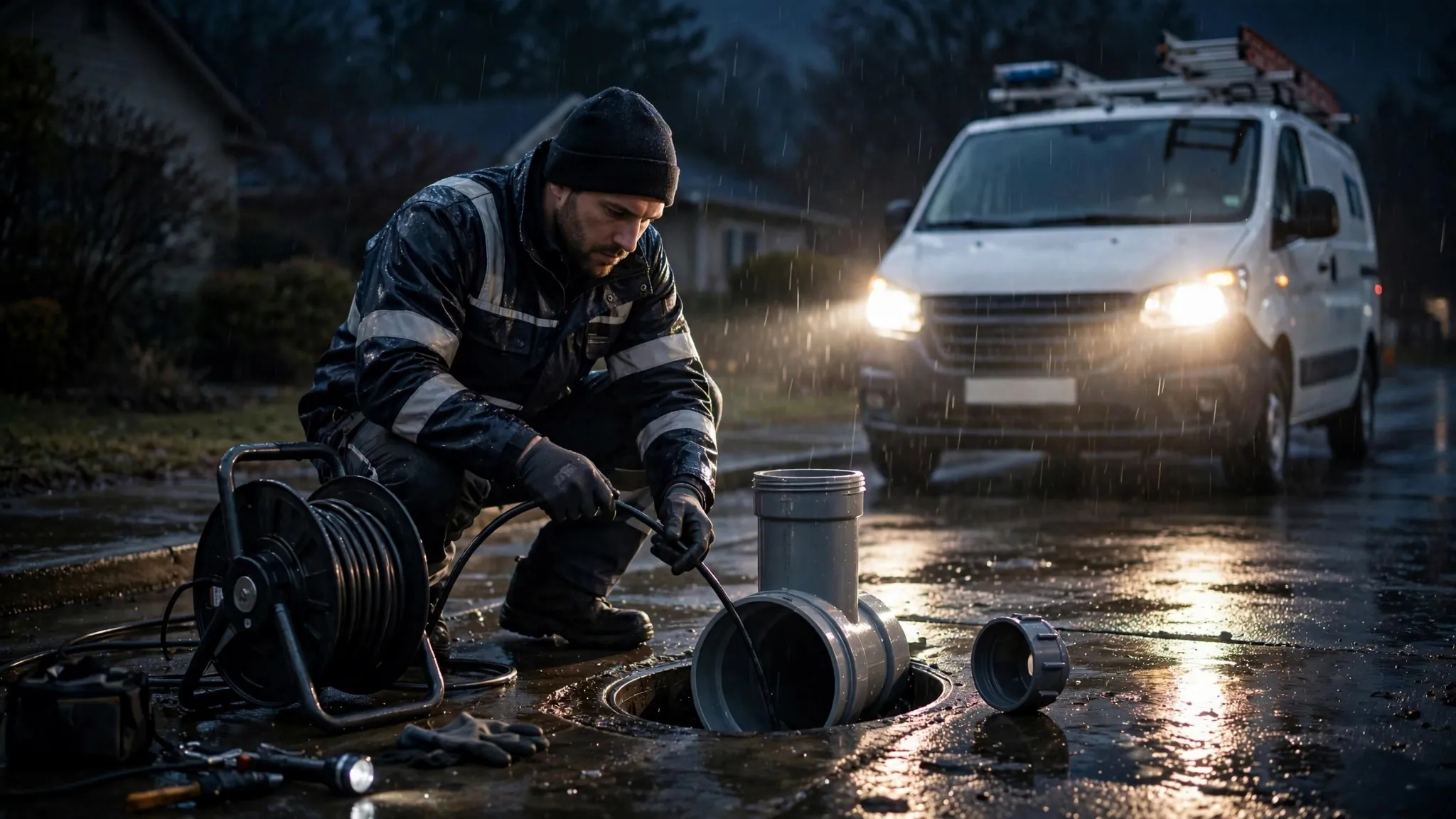
On arrival we camera-inspect the main line to find the exact blockage point and identify its nature — roots, grease, collapse, or objects.
Professional clearing equipment removes the obstruction and restores full flow. We verify with camera that the line runs clear.
Findings documented with the blockage cause identified — so you know whether this was a one-time event or a recurring risk.
With flow restored, the emergency is over — but the cause determines what comes next. Root intrusions and grease buildup recur; our report tells you honestly whether preventive maintenance or repair is warranted. If the camera revealed pipe damage, our standard main-line service covers the full assessment and repair options. Either way, tonight's clearing buys a functioning system and a clear diagnosis.
Standard Service
For slow drains and suspected (not backing-up) main-line issues, our standard main-line service diagnoses and clears methodically.
Multiple drains backing up, gurgling toilets, or sewage smells signal a main line clog. We diagnose the blockage fast and clear it safely.
Related Services
Main-line emergencies connect to these — each has its own emergency page.
Slow drains throughout the home, recurring backups, or root intrusion need professional clearing. We restore full flow and verify the line is clear.
A failing sewer line under your slab does not have to mean excavation. Trenchless epoxy lining builds a new pipe inside the old one — no digging.
A backing-up floor drain or a silent lift pump can flood a commercial space fast. We diagnose commercial drains and restore lift pumps around the clock.
Service Areas
Emergency main-line response across all eight Chelsea neighborhoods — 24/7, 30–45 minute arrival, ZIP 02150. See all emergency services on the overview hub.
FAQs
Urgent answers when sewage is backing up. For non-urgent questions, see our standard service page.
Stop using all water immediately, keep people and pets away from affected areas, do not use chemical cleaners, and call (617) 380-4912. We arrive in 30–45 minutes, 24/7.
Most emergency blockages are located and cleared within the visit — camera inspection finds it, professional equipment removes it, and we verify flow before leaving.
Yes — it is a biological hazard carrying pathogens, plus sewer gas risks. Treat affected areas as contaminated, avoid contact, and ventilate.
It depends on the cause, which our camera inspection identifies. Roots and grease recur without maintenance; one-time objects do not. Our report gives you the honest answer.
No — consumer snakes rarely reach main-line blockages and can damage pipes or push the clog deeper. Chemical cleaners create hazards without clearing mains.
The common culprits: tree root intrusion, grease accumulation, flushed non-flushables, and collapsed or bellied pipe sections. Our camera shows you exactly which one.
Sewage backup is a health emergency. We arrive in 30–45 minutes, 24/7 — call (617) 380-4912.