
Active Drain Overflow
Wastewater rising through floor drains means the system is overwhelmed or blocked. Every minute adds contamination to the space.
Emergency Line — Open Now
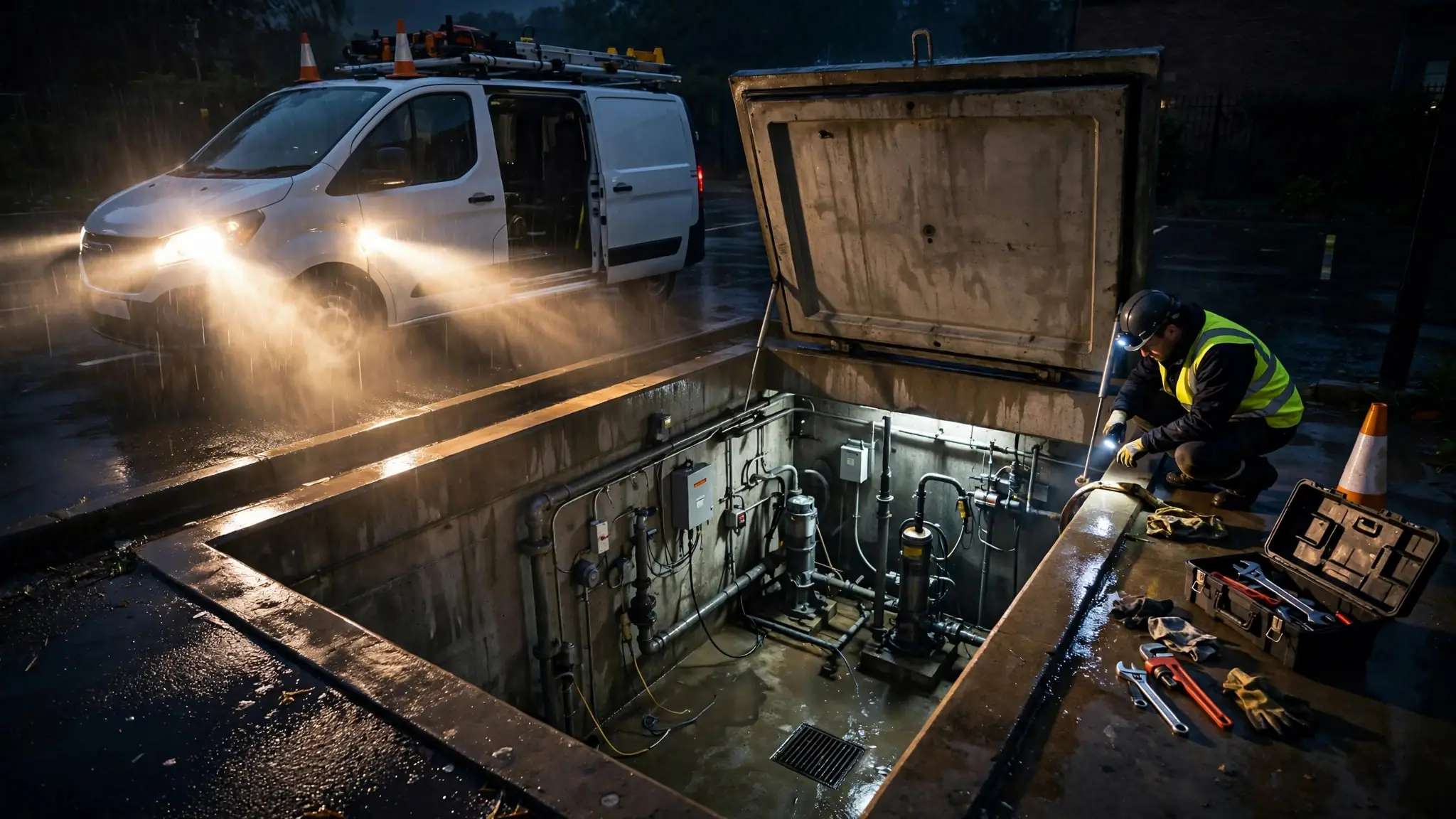
When commercial floor drains overflow or the lift pump dies, wastewater has nowhere to go but up — into kitchens, restrooms, and work areas. Standard drain and pump service handles maintenance; active commercial flooding needs now. Call — 24/7, 30–45 minute arrival.
24/7 Emergency Service
Commercial drain overflow is a closure risk by the hour. Our emergency line is answered 24/7 — call now.
Call (617) 380-4912 NowWhen To Call Now
Commercial drain and pump failures become emergencies when they threaten operations or health compliance. Not sure it qualifies? See our emergency overview for the full list.
Warning Signs
Commercial drainage failures escalate from inconvenience to closure fast.
Wastewater rising through floor drains means the system is overwhelmed or blocked. Every minute adds contamination to the space.
A lift pump that fails quietly fills its basin until overflow. If the pump is not running and water is rising, the failure is confirmed.
Health codes do not negotiate with sewage. Backup in food or restroom areas can close you until professionally resolved.
High-water alarms on lift stations are emergency signals by design. Do not silence and ignore — the condition is real.
Before We Arrive
Stop the inflow, protect assets, barricade the area — the commercial drain triage.
Minimize all water use in the affected zones — every gallon discharged adds to the overflow volume.
Move food, packaging, and inventory from the water path. Contamination losses exceed the plumbing repair.
A tripped pump reset may run briefly, but repeated resets risk motor burnout. One reset to test; then leave it and call.
Keep staff and customers from overflow areas — slip hazards and contamination create liability alongside damage.
Safety Guidance
Commercial wastewater emergencies carry regulatory weight — document everything.
Commercial drain overflow is a biohazard. Restrict access, use protection, and treat affected surfaces as contaminated.
Pumps, panels, and equipment in standing wastewater are shock hazards. De-energize or keep clear.
Document conditions thoroughly — regulators and insurers both need the timeline. Professional remediation follows the emergency.
A commercial floor-drain emergency is an operational emergency with a mechanical cause. Floor drains in commercial kitchens, restrooms, and production areas handle high volumes; when the downstream line blocks or the lift pump fails, the system reverses — and wastewater surfaces where the business operates. Lift pump failures are especially insidious because they are silent until the basin overflows. Our emergency protocol addresses both: blockage clearing and pump diagnostics in parallel, because the overflow does not care which component failed — it only stops when flow is restored. The goal is measured in reopening time, not just repaired parts. Grease is the silent killer of commercial drainage — it congeals downstream where nobody sees it until the system reverses. Our emergency camera inspection shows you exactly where the grease line sits, which determines whether jetting or a maintenance program is the answer. Pump stations serving below-grade commercial spaces are the most failure-prone drainage component we encounter — floats stick, check valves fail, and alarms go unheard overnight.
Our Process
Find the failure, restore the flow, document for recovery — on business time. Our has handled Chelsea emergencies for thirteen years.
Describe the overflow: location, volume, pump behavior, alarms. We assess the operational urgency and dispatch with 30–45 minute arrival.
On arrival we determine blockage vs. pump failure vs. both — camera for lines, electrical and mechanical checks for pumps.
Blockages cleared, pumps repaired or bypassed — the emergency ends when wastewater flows out again, not before.
Findings documented for management, insurers, and health compliance — the paperwork for recovery starts tonight.
With flow restored, the focus shifts to prevention: why did it fail, and what stops the repeat? Pump failures suggest maintenance or replacement schedules; blockages suggest line condition issues. Our standard commercial drain service builds the maintenance program — because the cheapest emergency is the one that never happens during business hours.
Standard Service
For slow commercial drains and preventive pump maintenance, our standard commercial drain service works around your schedule.
A backing-up floor drain or a silent lift pump can flood a commercial space fast. We diagnose commercial drains and restore lift pumps around the clock.
Related Services
Commercial water emergencies connect to these — each has its own emergency page.
Hidden leaks in offices, retail, and industrial buildings need minimal-downtime detection. We work around your hours and deliver insurance-ready reports.
Multiple drains backing up, gurgling toilets, or sewage smells signal a main line clog. We diagnose the blockage fast and clear it safely.
A ceiling stain that grows, drips, or darkens needs fast answers. We trace ceiling leaks to the true source — roof, pipe, or fixture — before damage spreads.
Service Areas
Emergency commercial drain response across all eight Chelsea neighborhoods — 24/7, 30–45 minute arrival, ZIP 02150. See all emergency services on the overview hub.
FAQs
Urgent answers when commercial drains fail. For non-urgent questions, see our standard service page.
Minimize water use in affected zones, protect food and inventory, barricade the area, and call (617) 380-4912. We arrive in 30–45 minutes, 24/7.
Very likely — a silent pump with rising water is a confirmed failure. Do not reset it repeatedly; one test reset, then leave it for our diagnostics.
It depends on where the overflow is and health-code implications. Our priority is the fastest path to safe reopening — we define that timeline on arrival.
Most emergency blockages clear and most pump issues diagnose within the visit. The emergency ends when wastewater flows out again.
Yes — our reports include timestamped photos and findings formatted for commercial claims and regulatory review.
Usually — pump maintenance schedules and periodic line inspections catch most failures before they flood. Our standard service builds that program.
Commercial drain failure is a closure risk. We arrive in 30–45 minutes, 24/7 — call (617) 380-4912.