Attics reveal roof and exterior failures before the living space does — damp insulation, stained decking, or drips after heavy rain or snow mean water is entering from above. In Chelsea, the usual sources are ice dams (meltwater backing up under shingles), flashing failures (around chimneys, vents, and valleys), wind-driven rain intrusion (during Nor'easters), and condensation (warm interior air meeting cold roof surfaces). Distinguishing them matters: ice dams and flashing need roofing/exterior repair; condensation needs ventilation and air-sealing; but plumbing leaks (from attic-run pipes) need leak detection. This guide covers the full differential.
Quick Answer
Check the timing and pattern: rain-correlated wetness points to roof/flashing failures; winter-only ice formations point to ice dams; uniform dampness without weather correlation points to condensation; localized wetness near pipes points to plumbing. Attic plumbing leaks (supply lines, HVAC condensate) need professional leak detection; roofing issues need a roofer; condensation needs ventilation improvements.
The 5 Attic Leak Sources
| Source | Timing | Pattern | Fixes Via |
|---|---|---|---|
| Ice dams | Winter, during/after snowmelt | Icicles, ice at eaves, wetness at exterior walls | Roofer + insulation/ventilation |
| Flashing failures | Rain (any season) | Localized wetness at chimneys, vents, valleys | Roofer |
| Wind-driven rain | Nor'easters, high wind + rain | Wetness on windward side, around penetrations | Roofer / siding contractor |
| Condensation | Cold weather, no rain needed | Uniform dampness, frost on nails/decking | Ventilation + air sealing |
| Plumbing leaks | Anytime; usage-correlated | Localized wetness near pipes/fixtures | Leak detection + plumber |
Ice Dams: Chelsea's Winter Signature
Ice dams form when heat escaping into the attic melts roof snow, which refreezes at the cold eaves — building an ice ridge that backs meltwater up under shingles and into the attic. Signs: icicles along eaves, ice ridges at the roof edge, and wetness at exterior wall tops inside the attic after thaw cycles.
Prevention addresses the cause (heat loss), not the symptom (ice): adequate attic insulation (keeping heat in the living space), proper ventilation (keeping the roof deck cold), and air sealing (blocking warm-air leaks from below). Roof raking (removing snow from eaves) helps during the event; heat cables are a band-aid, not a solution.
Do Not Chip Ice Dams
Chopping at ice dams damages shingles and risks injury. Address the immediate leak (contain water, protect below), then fix the insulation and ventilation that caused it. The ice dam is a symptom of heat loss.
Flashing Failures
Flashing — the metal sealing roof penetrations (chimneys, vents, skylights) and transitions (valleys, wall intersections) — is the most common rain-leak source. It fails through corrosion, displacement (wind, ice), sealant deterioration, and improper original installation. Attic signs: localized wetness or staining at the penetration's interior position, rain-correlated (appears with rain, dries between).
Flashing repair is roofing work — but the attic inspection tells the roofer exactly where to look, saving diagnostic time.
Wind-Driven Rain Intrusion
Nor'easters drive rain horizontally with enough force to penetrate vents, soffits, and minor envelope gaps that never leak in normal rain. Signs: wetness appearing only during high-wind storms, often on the windward side, around gable vents and soffits. This is an exterior envelope issue — wind baffles, vent covers, and envelope sealing address it.
Condensation: The Non-Leak That Looks Like One
Warm, humid interior air leaking into a cold attic condenses on the roof deck — producing uniform dampness, frost on nails in winter, and even "rain" inside the attic during thaw. It is not a leak — no water enters from outside — but it causes identical damage (mold, rot, insulation failure).
Distinguish: condensation is widespread and weather-independent (worse in cold, but not rain-correlated); leaks are localized and event-correlated. Fix condensation with air sealing (stop the warm air) and ventilation (remove what gets through) — not with roofers or plumbers.
Attic Plumbing Leaks: When It Is Our Territory
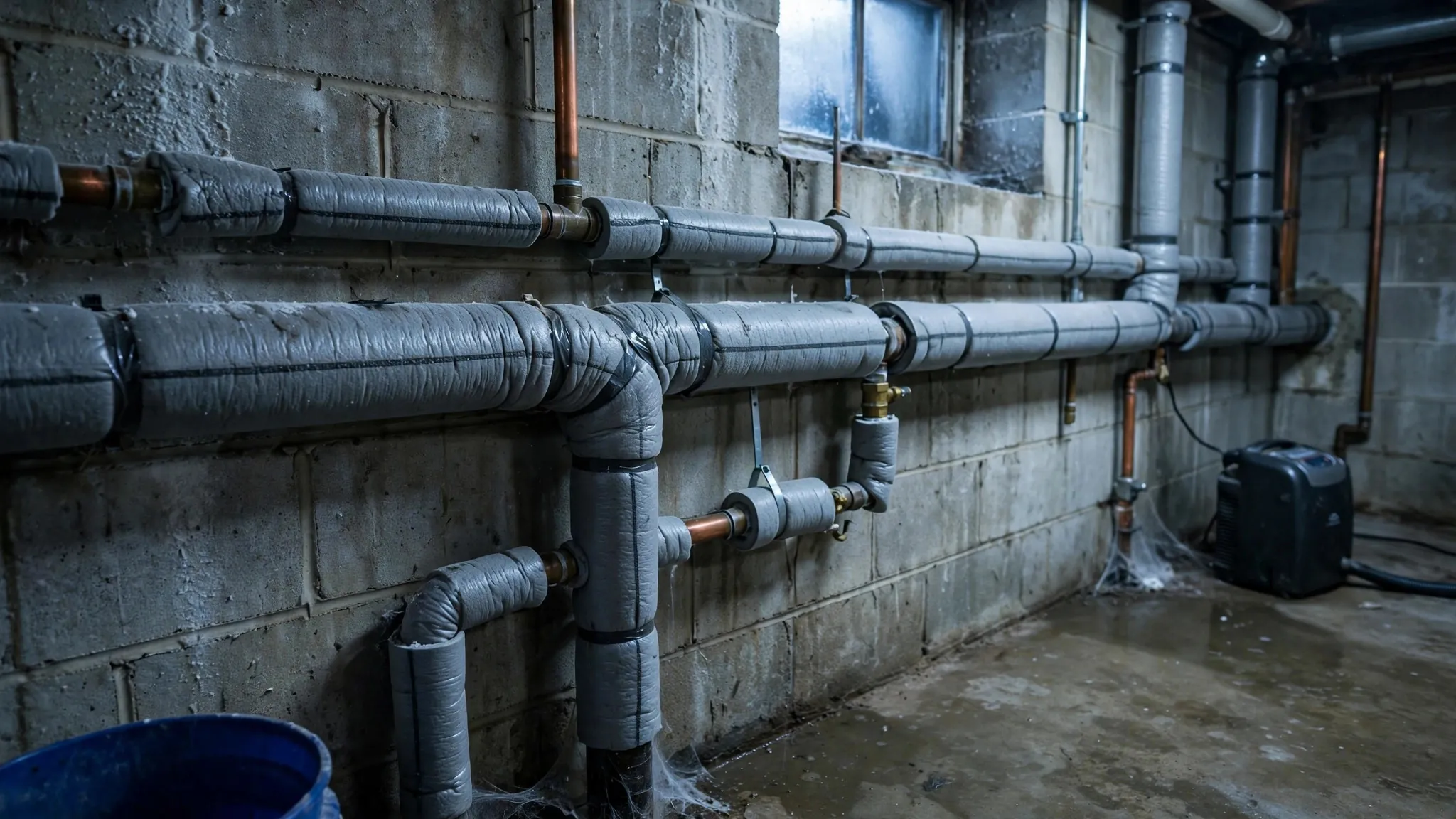
Some homes run supply lines, HVAC condensate drains, or water heaters through attics. When attic wetness is localized near pipes, usage-correlated (appears with plumbing use, not weather), or constant regardless of weather — suspect plumbing, not roofing.
- Supply line leaks — pressurized; constant wetness; acoustic/thermal detection locates.
- Condensate drain clogs — HVAC-related; overflow at the air handler; seasonal with cooling/heating.
- Water heater leaks (attic units) — localized pooling; constant.
Plumbing leaks in attics are urgent — gravity delivers attic water to every floor below. Professional attic leak detection pinpoints the source; our emergency service responds 24/7.
How To Inspect Your Attic Safely
- Go during or right after rain/snowmelt — active conditions reveal active leaks.
- Bring a bright light — phone flashlights are inadequate; bring a real flashlight.
- Walk only on joists — stepping through the ceiling is the classic attic injury.
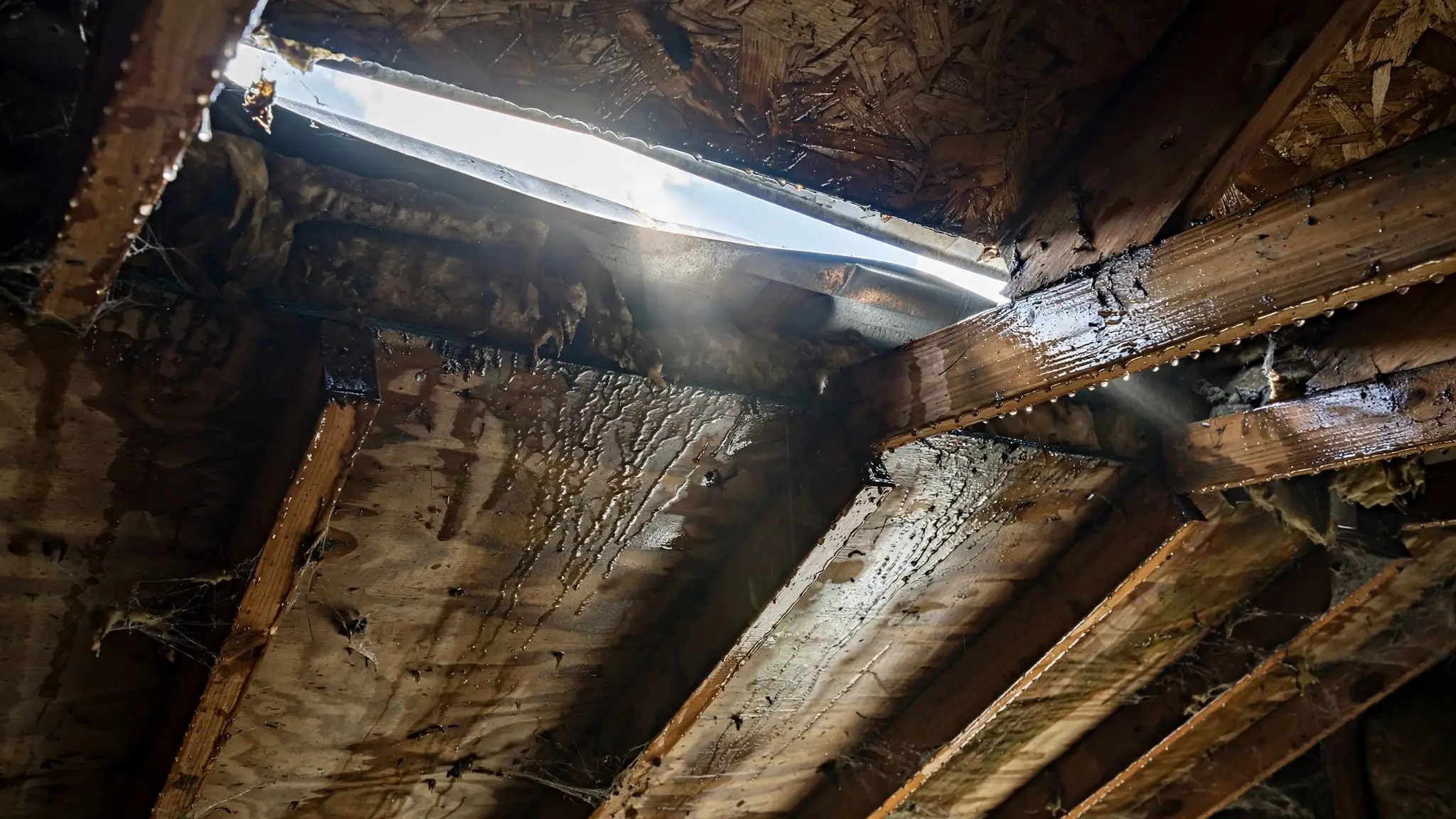
- Look for: wet insulation, stained decking, drips, daylight through the roof, frost patterns, and pipe condition.
- Photograph everything — the roofer, plumber, or insurer needs to see what you saw.
- Note the weather — rain, snowmelt, wind, temperature — with each observation.
Inspect In The Rain
Attics inspected on dry days hide their secrets. The most informative inspection happens during or immediately after the weather event — that is when active leaks are visible and traceable.
What To Do With What You Find
| Finding | Likely Cause | Call |
|---|---|---|
| Wet at chimney/vent, rain-correlated | Flashing failure | Roofer |
| Ice at eaves + wet walls | Ice dam | Roofer + insulation contractor |
| Windward wetness in storms only | Wind-driven intrusion | Roofer / envelope specialist |
| Uniform dampness, frost on nails | Condensation | Insulation/ventilation contractor |
| Localized wet near pipes | Plumbing leak | Leak detection |
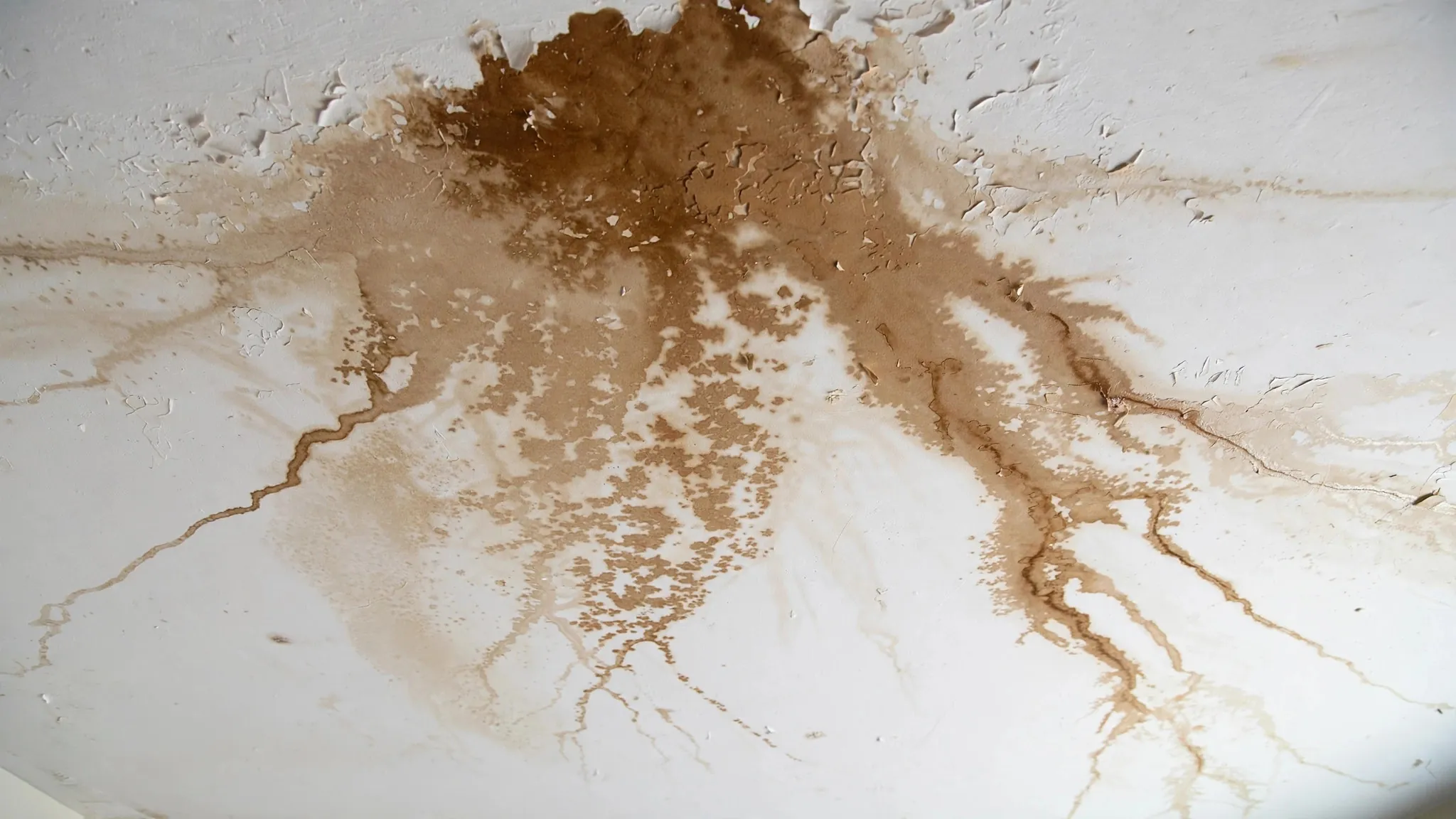
When in doubt between roofing and plumbing, the timing test decides: weather-correlated means exterior; usage-correlated or constant means plumbing. Ceiling stains below often trace to these same attic sources.
Chelsea-Specific Attic Considerations
Chelsea's housing stock and climate create specific attic leak patterns:
- Older homes with original roofs: flashing and valleys at end-of-life; prioritize professional roof assessment.
- Triple-deckers and multi-families: complex rooflines with more penetrations and valleys — more leak opportunities; coordinate with other unit owners.
- Nor'easter exposure: wind-driven rain from the east/northeast tests windward slopes disproportionately; inspect those slopes first after storms.
- Snow load cycles: heavy snow followed by thaw creates ideal ice-dam conditions; the eave-to-wall-top zone is the critical inspection area.
Attic Ventilation: The Condensation Solution
Proper attic ventilation — soffit intake + ridge exhaust — serves two leak-adjacent functions:
- Moisture removal: ventilating away the humid air that causes condensation.
- Temperature equalization: keeping the roof deck cold, preventing the melt-freeze cycles that build ice dams.
Ventilation requires balance (intake ≈ exhaust), clear airflow paths (soffit vents not blocked by insulation — baffles maintain the channel), and air sealing first (ventilation cannot overcome massive warm-air leaks from below; seal, then ventilate).
Seal Before You Ventilate
Adding ventilation without air sealing is like bailing a boat without plugging the hole — it helps, but the source continues. Air-seal the attic floor (penetrations, hatches, chases) first, then ensure ventilation is balanced and unobstructed.
Insulation's Role In Leak Prevention
| Insulation Issue | Leak-Related Consequence | Fix |
|---|---|---|
| Insufficient depth | Heat loss → ice dams | Add to recommended depth |
| Compressed or displaced | Thermal bypass → localized melt | Restore even coverage |
| Blocking soffit vents | Ventilation failure → condensation | Install baffles; clear vents |
| Wet from prior leak | Lost R-value → ongoing heat loss | Replace wet insulation after source repair |
Wet insulation must be replaced after the leak source is repaired — it does not recover its insulating value when dried, and it harbors mold. Factor insulation replacement into the total repair scope.
When Attic Issues Need Professionals
| Finding | Professional | Why |
|---|---|---|
| Flashing failure, roof damage | Roofer | Roofing systems and safety |
| Ice dam damage | Roofer + insulation contractor | Repair + prevention (two trades) |
| Condensation | Insulation/ventilation contractor | Building science assessment |
| Plumbing leak | Leak detection + plumber | Location then repair |
| Mold | Remediation professional | Containment and safe removal |
For ceiling stain diagnosis (what attic leaks look like from below) and Nor'easter preparation, see our companion guides.
Gutters And Downspouts: The Attic Connection
Gutter failures cause attic leaks indirectly but significantly:
- Overflowing gutters saturate fascia and soffits — water enters the attic at the eaves.
- Detached downspouts discharge against the foundation and walls — basement and wall leaks, not attic, but the same neglect.
- Ice-filled gutters back water under the drip edge — a gutter-ice-dam hybrid.
- Maintenance: clean gutters (spring and fall), verify downspout discharge (away from foundation), and inspect hangers and seams.
Skylights: The High-Risk Penetration
- Skylight flashing is more complex than standard penetrations — more failure points.
- Condensation on skylight frames mimics leaks — distinguish by pattern (uniform frame dampness = condensation; localized = leak).
- Age: skylight seals and flashing have finite lives; 15-20 years is typical before renewal.
- Attic signs: wetness localized at the skylight shaft, rain-correlated.
Gutters Are Roof Accessories
Attic leak investigations that ignore gutters miss a major cause category. Clean, functional gutters protect the roof edge, the fascia, the soffit, and the attic — five minutes of gutter assessment belongs in every attic leak workup.
For winter pipe protection and storm preparation, see our companion guides.