Frozen pipes — water expanding as it freezes, splitting pipes and causing catastrophic leaks on thaw — are among Chelsea winter's most preventable plumbing disasters. Prevention rests on three principles: keep pipes warm (insulation + heat), keep water moving (flow resists freezing), and eliminate cold exposure (seal drafts, protect vulnerable runs). This checklist — organized by timing (fall preparation, deep-winter vigilance, and emergency response) — covers every measure. When prevention fails, emergency service responds 24/7, including holidays.
Quick Answer
Prevent frozen pipes by: insulating vulnerable pipes (attics, crawlspaces, exterior walls, garages), maintaining heat (never below 55°F, even when away), sealing drafts (where cold air meets plumbing), letting faucets drip during extreme cold (moving water resists freezing), opening cabinet doors (warm air to under-sink pipes), and winterizing vacant properties. Know your main shutoff location before winter — if a pipe bursts, shutting off water within minutes limits damage enormously.
Know Your Vulnerable Pipes
Pipes freeze where cold reaches them. Inventory your vulnerabilities before winter:
| Location | Why Vulnerable | Priority |
|---|---|---|
| Exterior walls | Cold on one side; minimal insulation | Highest — most common freeze site |
| Attics | Unheated; cold air infiltration | High — especially supply runs |
| Crawlspaces | Cold ground + ventilation | High — exposed and cold |
| Garages | Unheated; doors open frequently | High — often overlooked |
| Under sinks on exterior walls | Cabinet traps cold air | Moderate — open doors help |
| Outdoor spigots and irrigation | Direct exposure | High — winterize annually |
Fall Preparation Checklist
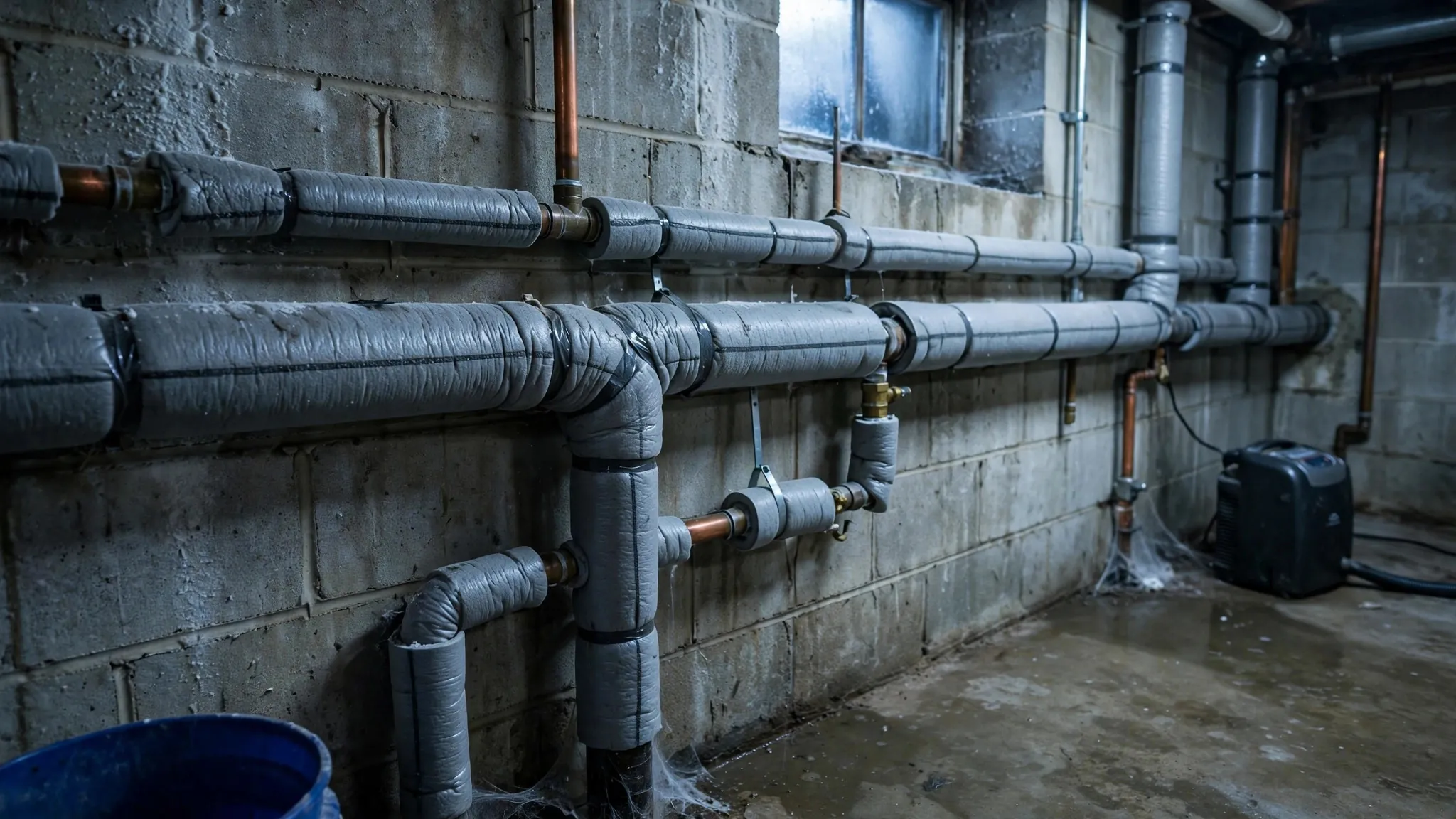
- Insulate vulnerable pipes — foam sleeves on all accessible pipes in unheated areas; the single highest-value measure.
- Seal air leaks — caulk and insulate where pipes pass through exterior walls; cold air infiltration, not just cold temperature, freezes pipes.
- Winterize outdoor plumbing — shut off and drain exterior spigots; blow out irrigation lines; drain and store hoses.
- Service the heating system — a heating failure during extreme cold is a pipe-freeze emergency; pre-winter servicing prevents it.
- Locate your main shutoff — and verify it operates (stuck valves discovered during emergencies are too late).
- Stock emergency supplies — plumber's contact, towels, buckets, and a portable heater.
- Insulate the attic properly — adequate insulation keeps heat in living spaces AND prevents ice dams (which cause their own leaks).
The $5 Fix That Prevents $5,000 Damage
Foam pipe insulation sleeves cost a few dollars per length and install in minutes — no tools, no skills. Every uninsulated pipe in an unheated area is a freeze waiting for the right cold snap. This is the highest-ROI winter preparation in existence.
Deep-Winter Vigilance: When Temperatures Plummet
- Maintain heat — never below 55°F, even in unused rooms and even when away. The heating bill is trivial against burst-pipe damage.
- Let faucets drip — a slight drip (both hot and cold) on vulnerable lines during extreme cold; moving water resists freezing.
- Open cabinet doors — under sinks on exterior walls, letting warm room air reach the pipes.
- Keep garage doors closed — water lines in garages depend on it.
- Monitor during cold snaps — check vulnerable areas; reduced flow at any tap is the early warning.
When You Are Away: Vacant Property Protocol
- Do not shut off heat — maintain 55°F minimum; have someone check periodically.
- Consider winterization — for extended absences, professional winterization (draining the system, antifreeze in traps) is the definitive protection.
- Smart monitoring — temperature and water sensors with remote alerts catch heating failures before pipes freeze.
- Trusted checker — someone with a key, checking heat and pipes during cold snaps.
Never Shut Off Heat To Save Money
The 'savings' from lowering heat below 55°F (or shutting it off) during winter absence are dwarfed by a single burst pipe — which can release hundreds of gallons per hour into the structure. This is the most expensive false economy in homeownership.
If Pipes Freeze: Safe Thawing
- Keep the faucet open — flowing water helps melt ice and reveals when flow returns.
- Apply heat gently — hair dryer, heating pad, or warm towels on the frozen section; work from the faucet toward the freeze.
- Never use open flame — torches and heat guns risk fire and pipe damage.
- Check for bursts — as the pipe thaws, watch for leaks; the freeze may have split the pipe.
- Call a plumber if you cannot locate the freeze, cannot thaw it safely, or find a burst.
If A Pipe Bursts: Emergency Response
- Shut off the main immediately — every minute is gallons; this is why you located the shutoff in fall.
- Open faucets — drain remaining water and relieve pressure.
- Shut off electricity — if water contacts electrical systems.
- Contain and remove water — towels, mops, wet vacuum; move valuables.
- Call for emergency service — 24/7 emergency response, including holidays.
- Document for insurance — photos from discovery; burst pipes are typically covered as sudden events.
For attic winter issues and Nor'easter preparation, see our companion guides.
Pipe Insulation Types Compared
| Type | Best For | Notes |
|---|---|---|
| Foam sleeves | Straight accessible runs | Easiest DIY; slit design slips on |
| Fiberglass wrap | Irregular shapes; high-heat areas | Needs vapor barrier in damp areas |
| Heat tape/cable | Extreme exposure; vulnerable sections | Thermostat-controlled; follow manufacturer safety |
| Spray foam | Enclosed cavities; new construction | Professional application |
Heat Tape: When And How
- When: pipes with extreme exposure that insulation alone cannot protect (exterior runs, unheated crawlspaces in severe climates).
- Selection: thermostat-controlled (self-regulating preferred); UL-listed; rated for the application.
- Installation: follow manufacturer instructions exactly — overlapping or improper installation creates fire hazards.
- Not a substitute: heat tape supplements insulation; it does not replace it.
Heat Tape Safety
Heat tape causes fires when misinstalled — overlapping, insulation over non-rated tape, or damaged cables. Use only UL-listed self-regulating tape, follow instructions exactly, and inspect annually. When in doubt, consult an electrician.
Well Systems: Winter Considerations
- Wellhead protection: insulate and protect the wellhead and pressure tank (often in unheated spaces).
- Pressure tank: in unheated areas, insulate and ensure the space stays above freezing.
- Power outage risk: wells need electricity; outages stop water entirely (unlike municipal systems).
Spring Verification Checklist
- Inspect all insulated pipes — insulation intact; heat tape functional.
- Check outdoor spigots — restore service gradually; watch for freeze damage.
- Recommission irrigation — inspect before pressurizing; the spring startup check.
- Review the winter — what worked, what did not; improve before next year.
For storm preparation and attic winter issues, see our companion guides.
Printable Winter Checklist Summary
- Fall: insulate pipes; seal air leaks; winterize outdoor plumbing; service heating; locate shutoff; stock supplies.
- Winter: maintain 55°F+; drip faucets in extreme cold; open cabinets; keep garage closed; monitor vulnerable areas.
- Away: maintain heat; consider winterization; smart monitoring; trusted checker.
- Emergency: shutoff location known; plumber's number saved; towels and buckets accessible.
Frozen Pipe Myths
- Myth: "Pipes only freeze in unheated homes." Reality: pipes in exterior walls and unheated areas of heated homes freeze regularly.
- Myth: "Hot water pipes do not freeze." Reality: they do — sometimes faster than cold lines.
- Myth: "A small drip wastes too much water." Reality: the drip costs pennies; a burst pipe costs thousands.
For attic winter issues, see our companion guide.
Plumbing Upgrades For Freeze Resistance
- Rerouting: moving vulnerable exterior-wall pipes to interior walls (plumber; significant but permanent).
- Insulated pipe: pre-insulated PEX for exposed runs.
- Frost-proof spigots: freeze-resistant outdoor faucets (the valve sits inside the heated space).
- Pipe material: PEX tolerates freezing better than copper (expands rather than bursting) — a factor in repiping decisions.
Community Resources
- Neighbor check-ins: during extreme cold, check on elderly neighbors — heating failures are life-safety issues.
- Municipal resources: many municipalities offer winter preparation guidance and emergency contacts.
- Insurance review: pre-winter policy review ensures burst-pipe coverage is adequate.
For storm preparation and spring moisture, see our companion guides.
The Key Takeaway
Frozen pipes are among the most preventable winter disasters — insulation, heat maintenance, and vigilance stop the vast majority. The checklist is simple; the discipline is the challenge. Start in fall (insulate, seal, winterize), stay vigilant in deep winter (heat, drip, monitor), and know your emergency response (shutoff location, plumber's number). Winter does not negotiate — but preparation wins.
For storm preparation, see our companion guide.
And remember the human element: check on vulnerable neighbors during extreme cold, keep emergency numbers accessible to all household members (not just in one phone), and practice the main shutoff so everyone knows how. Winter preparation is a household effort, not a solo task.
Winter in Chelsea is not a surprise — it comes every year, and it always tests your pipes. The difference between a routine winter and a plumbing disaster is preparation. Work through this checklist in fall, stay vigilant through the cold months, and you will join the quiet majority whose pipes survive every winter without incident.