The spring thaw — melting snow, spring rains, and saturated soil — creates the year's peak basement moisture challenge. The mechanisms: hydrostatic pressure (saturated soil pressing water through foundation walls and floors), surface water (meltwater ponding against the foundation from poor grading or clogged drains), sump system overload (pumps and discharge lines at capacity), and frost-thaw foundation movement (freeze-thaw cycles opening new cracks). This guide covers what to watch for, how to respond, and how to prepare — before the thaw, not during. When spring moisture becomes a leak, professional assessment distinguishes seepage from plumbing.
Quick Answer
Watch for: new or worsening wall/floor seepage, efflorescence (white mineral deposits indicating water migration), sump pump running constantly or failing to keep up, musty odors intensifying, and new foundation cracks. Prepare by: testing the sump pump and backup, clearing yard drains and gutters, verifying grading directs meltwater away, and moving stored items off basement floors. Distinguish seepage (weather-correlated, multiple entry points) from plumbing leaks (constant, localized) — the response differs.
The 4 Thaw Moisture Mechanisms
1. Hydrostatic Pressure
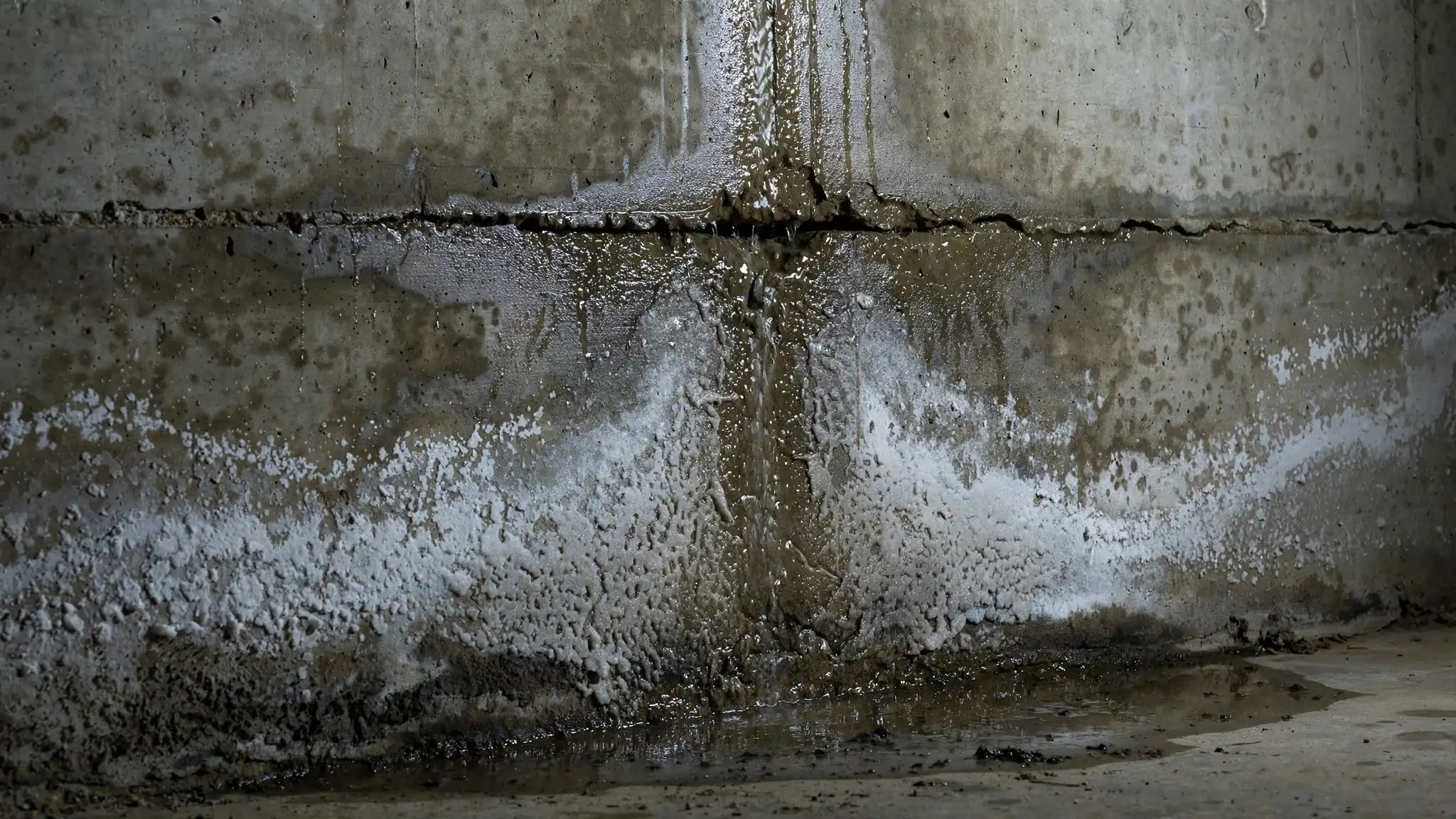
Saturated soil exerts water pressure against foundation walls and floors — forcing water through cracks, joints, and porous concrete. The year's highest groundwater levels mean the year's highest pressure. Signs: seepage at wall-floor joints (the weakest point), water through floor cracks, and damp walls without visible cracks (migration through the concrete itself).
2. Surface Water Against The Foundation
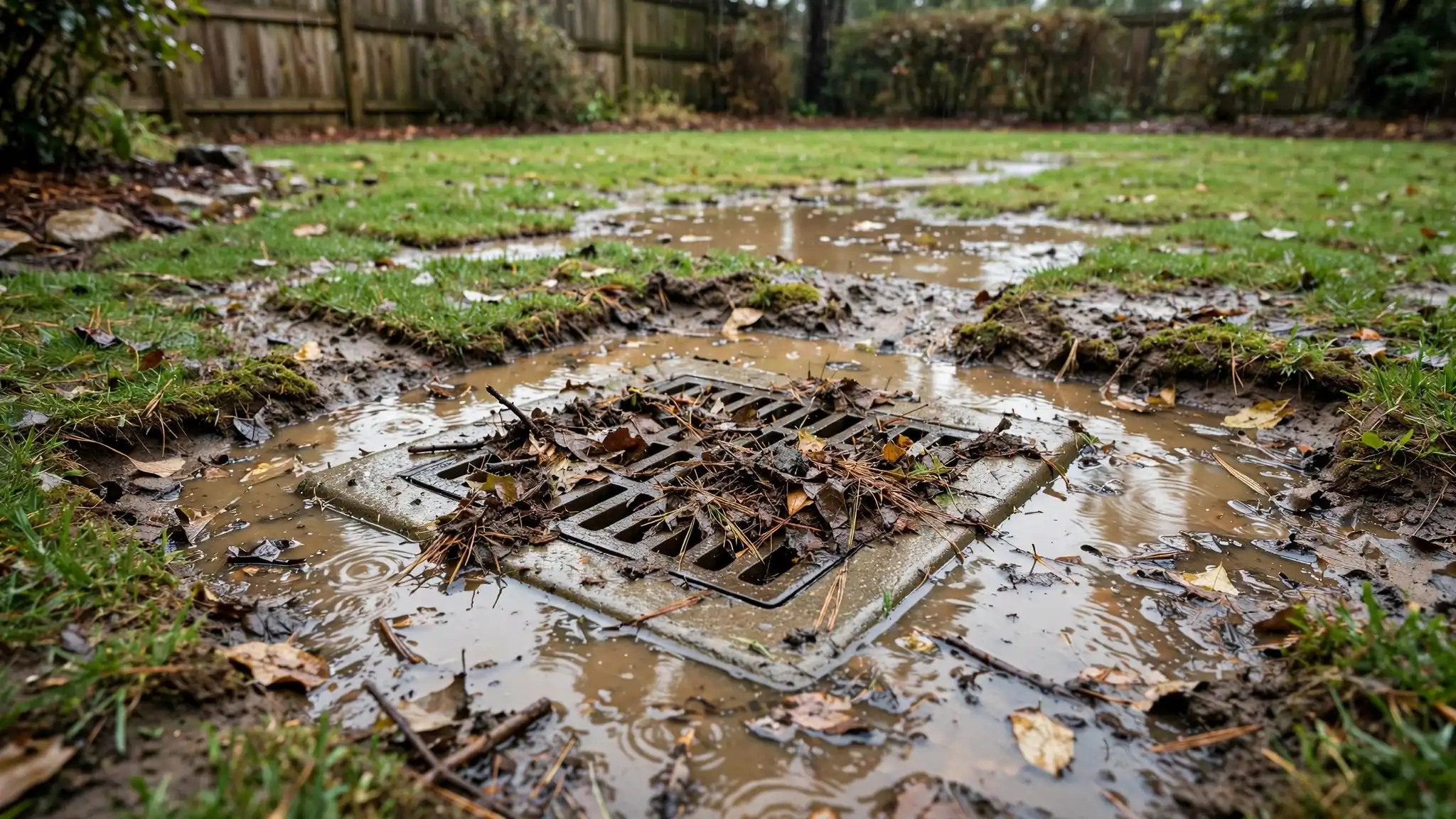
Melting snow plus poor grading or clogged drains ponds water against the foundation — which then seeps through. This is a drainage failure, not a foundation failure; fixing the surface water fixes the seepage.
3. Sump System Overload
Sump pumps at capacity — or failed — during peak inflow. Discharge lines frozen, clogged, or discharging too close to the foundation (recycling the same water). The sump system is the basement's last defense; its failure is the basement's flood.
4. Frost-Thaw Foundation Movement
Freeze-thaw cycles move foundations microscopically — opening new cracks or widening old ones. Spring reveals winter's structural work. New cracks appearing in spring warrant monitoring and possibly professional assessment.
New Cracks Deserve Attention
Foundation cracks that appear or widen during spring thaw indicate active movement — not just cosmetic aging. Monitor them (mark the ends, photograph, re-check monthly); progressive widening warrants structural assessment, not just waterproofing.
What To Watch For: The Spring Checklist
- Wall-floor joint seepage — water at the cove joint; the classic hydrostatic signature.
- Efflorescence — white crystalline deposits on walls; proof of water migrating through the concrete.
- Sump pump behavior — running constantly (high water table), cycling rapidly (check valve issue), or not running (failure).
- Musty odor intensification — rising dampness feeding microbial growth.
- New or widened cracks — frost-thaw movement made visible.
- Floor dampness — water wicking up through the slab; check with a moisture meter or the plastic-sheet test.
Pre-Thaw Preparation (Late Winter)
- Test the sump pump — full test including battery backup; the thaw is the year's peak demand.
- Clear yard drains and gutters — meltwater needs clear paths away from the foundation.
- Verify grading — snow piled against the foundation melts directly into it; move snow away.
- Check discharge lines — sump discharge must carry water away; frozen or short discharge recycles water to the foundation.
- Move stored items — off basement floors and away from walls; elevate what matters.
- Inspect foundation — note existing cracks (photograph and mark) for spring comparison.
Move The Snow
Snow piled against the foundation by plows and shoveling melts directly into the structure — it is the most preventable spring moisture source. Move snow away from the foundation before the thaw; the meltwater then drains away instead of in.
Responding To Spring Seepage
| Seepage Level | Response | Urgency |
|---|---|---|
| Minor dampness, no standing water | Monitor; improve drainage; dehumidify | Routine — address this season |
| Active seepage at joints | Verify sump function; address surface water; consider interior drainage | Prompt — do not ignore |
| Standing water | Emergency water removal; sump assessment; find the entry | Urgent — mold timeline is days |
| New structural cracks + water | Structural assessment + water management | Prompt professional — both issues |
Seepage Vs Plumbing Leak: The Distinction
| Feature | Foundation Seepage | Plumbing Leak |
|---|---|---|
| Timing | Weather-correlated (thaw, rain) | Constant or usage-correlated |
| Location | Walls, floors, joints — multiple points | Localized near pipes/fixtures |
| Water character | Clear; mineral-tasting; no chlorine | May have chlorine odor (supply) |
| Response | Drainage + waterproofing | Plumbing repair |
| Professional | Waterproofing/foundation specialist | Leak detection + plumber |
Misdiagnosis is costly — waterproofing a plumbing leak or plumbing-repairing seepage wastes the investment. The timing test (weather-correlated vs. constant) distinguishes them reliably.
Long-Term Solutions For Chronic Spring Moisture
- Exterior waterproofing — membrane and drainage board on foundation walls; the comprehensive (and most expensive) solution.
- Interior drainage systems — perimeter drains directing wall seepage to the sump; effective for hydrostatic issues.
- Sump system upgrades — larger pumps, battery backups, and secondary pumps for high-water-table properties.
- Grading and drainage — the first-line fix; many seepage problems resolve with proper surface water management.
- Crack injection — epoxy or polyurethane injection sealing specific foundation cracks.
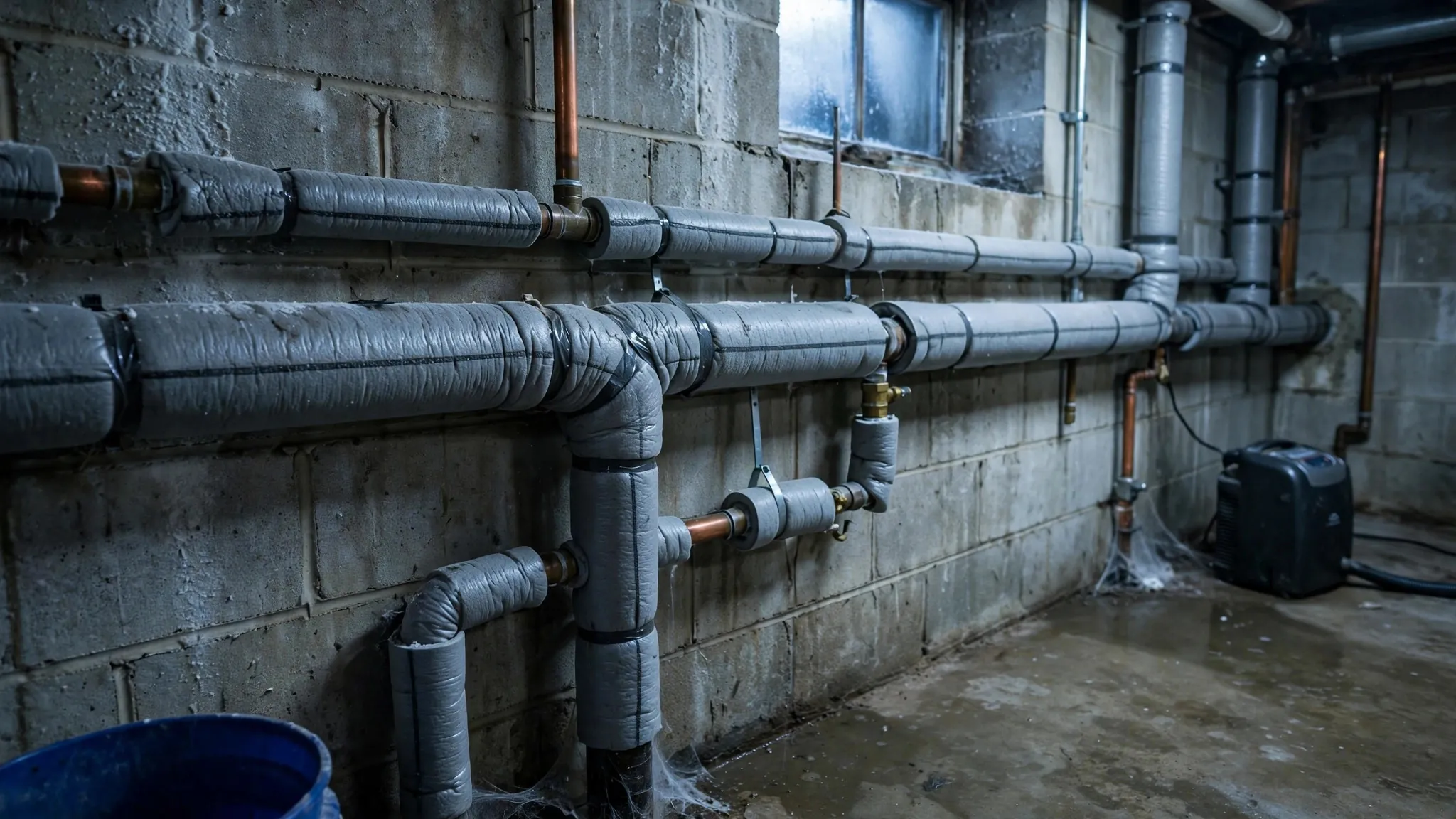
For yard drainage maintenance and winter pipe protection, see our companion guides.
Window Wells: The Overlooked Entry
- Function: basement windows below grade need wells; wells need drainage.
- Clogged wells: debris-filled window wells become bathtubs against the window — the most common window-well failure.
- Maintenance: clear debris; verify the well drain functions; consider covers keeping debris out while admitting light.
- Thaw risk: snow-filled wells melt directly against windows — clear snow from wells before the thaw.
Thaw Grading: The Meltwater Path
- Frozen ground: early thaw melts snow faster than frozen ground absorbs it — maximum surface runoff.
- The path matters: grading directs meltwater away; flat or negative grading ponds it against the foundation.
- Snow placement: where snow was piled determines where meltwater goes — pile away from the foundation.
- Temporary channels: during peak thaw, temporary diversion (sandbags, channels) protects vulnerable spots.
The Frozen-Ground Factor
Early spring's frozen ground cannot absorb meltwater — every drop becomes surface runoff. This is why spring thaw produces more basement moisture than equivalent rainfall: the ground's absorption is zero. Plan drainage for 100% runoff, not normal absorption.
Spring Dehumidification Strategy
- Target humidity: 30-50% relative humidity in basements; below 60% prevents most mold growth.
- Continuous drainage: plumb the dehumidifier to the sump or a drain — manual emptying fails during peak moisture.
- Sizing: match the unit to the space and moisture load; undersized units run constantly without achieving targets.
- Maintenance: clean filters and coils; verify drainage; the unit works hardest in spring.
Spring Monitoring Schedule
| When | Check | Why |
|---|---|---|
| Thaw onset | Sump function; grading; window wells | Peak demand beginning |
| Weekly through thaw | Seepage points; sump behavior; humidity | Catch developing issues |
| After major rain | All drainage; new seepage | Rain on saturated soil is peak stress |
| Thaw complete | Full assessment; plan summer improvements | Fix this year's issues before next year |
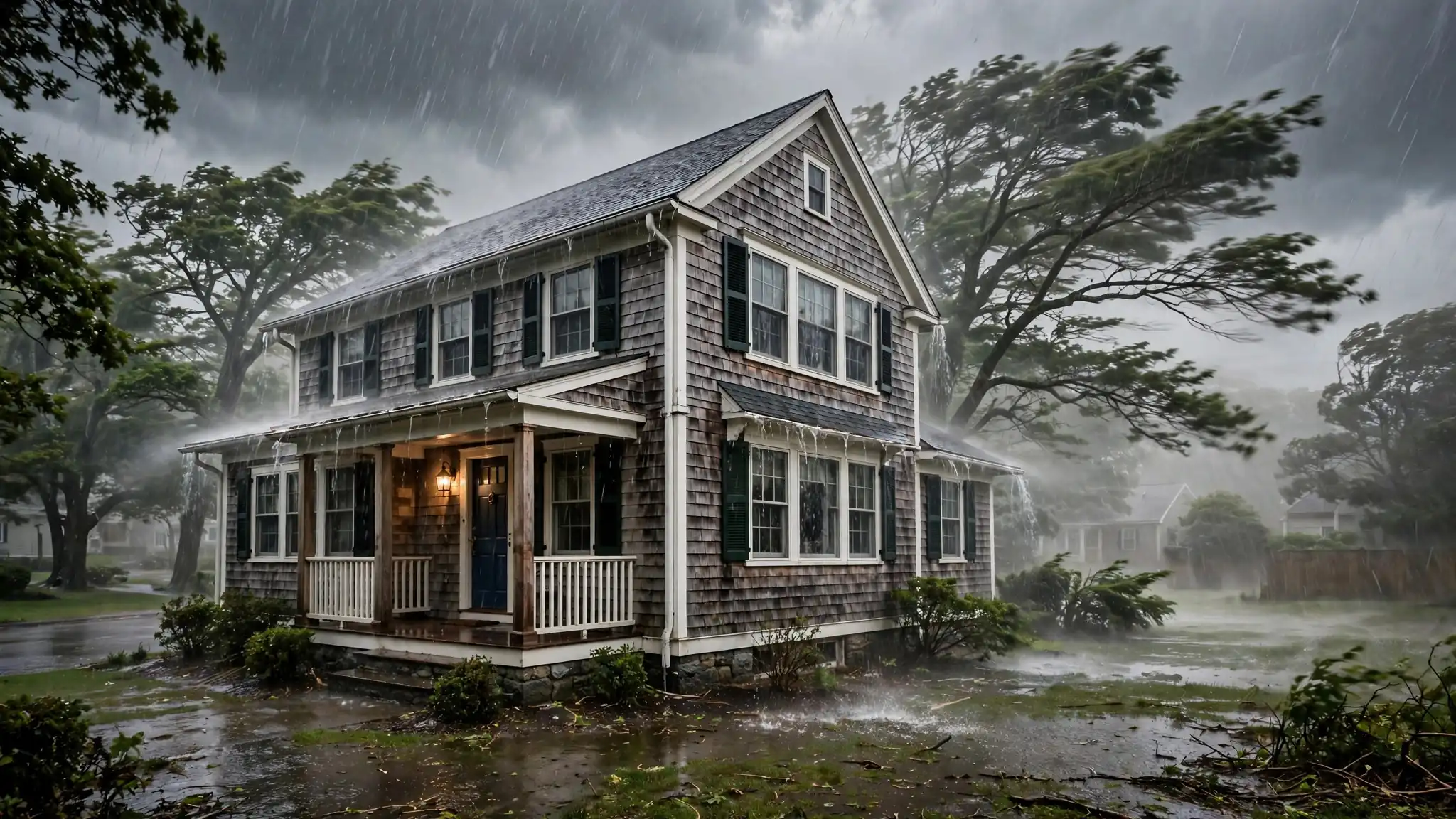
For yard drainage and storm preparation, see our companion guides.
Spring Thaw Checklist Summary
- Before thaw: test sump (with backup); clear drains; verify grading; move snow; inspect foundation.
- During thaw: monitor seepage; watch sump behavior; check humidity; clear window wells.
- After thaw: full assessment; plan summer improvements; address this year's issues.
Spring Moisture Myths
- Myth: "Basement moisture in spring is normal." Reality: common, not normal — it indicates a water management issue worth addressing.
- Myth: "Dehumidifiers fix seepage." Reality: they manage humidity; they do not stop water entry — address the source.
- Myth: "Waterproof paint stops seepage." Reality: it manages minor dampness; hydrostatic pressure defeats coatings — proper drainage is the solution.
For yard drainage, see our companion guide.
Foundation Types And Thaw Vulnerability
| Foundation Type | Thaw Vulnerability | Watch For |
|---|---|---|
| Poured concrete | Cracks from frost movement | New/widened cracks; joint seepage |
| Block/concrete masonry | Mortar joint deterioration | Step cracks; joint seepage |
| Stone | Mortar loss; water migration | Damp walls; efflorescence |
| Slab-on-grade | Edge seepage; frost heave | Perimeter dampness |
Summer: Prepare For Next Spring
- Exterior waterproofing: the dry season is the time for foundation work.
- Drainage improvements: regrading, French drains, and gutter upgrades in good weather.
- Sump upgrades: pump replacement and backup installation before the next thaw.
- Crack repair: injection and sealing during dry conditions for best adhesion.
For winter preparation, see our companion guide.
The Key Takeaway
Spring thaw is the year's peak basement moisture challenge — but it is also the most predictable. The mechanisms (hydrostatic pressure, surface water, sump load, frost movement) are known; the preparation (sump testing, drainage clearing, grading verification) is straightforward; and the monitoring (seepage watch, humidity tracking) catches what preparation misses. Prepare in late winter, monitor through thaw, improve in summer — the annual cycle that keeps basements dry.
The spring thaw will come every year — and every year it will test your basement. The homeowners who prepare in winter, monitor in spring, and improve in summer turn an annual challenge into a routine. Start this year; your basement will thank you every spring thereafter.