Yard drain cleaning — maintaining catch basins, channel drains, area drains, and downspout drainage lines — keeps stormwater flowing away from your foundation instead of toward it. Clogged yard drains cause surface ponding, foundation saturation, basement seepage, and soil erosion — problems often misattributed to plumbing leaks or groundwater. The maintenance is straightforward (debris removal, flushing, grate clearing) but frequently neglected until the first major storm reveals the neglect. Professional yard drain service handles cleaning, inspection, and repair of stormwater drainage systems.
Quick Answer
Clean yard drain grates of leaves and debris seasonally (especially fall), flush catch basins annually, verify downspout lines discharge away from the foundation, and check for ponding after heavy rain — ponding marks the problem areas. Most yard drain issues are maintenance (clogged grates, sediment-filled basins), not structural. When cleaning does not restore flow, camera inspection finds the underground cause (crushed pipe, root intrusion, bellies).
Your Yard Drainage System: The Components
| Component | Function | Clogs With |
|---|---|---|
| Catch basins | Collect surface water at low points | Leaves, sediment, trash |
| Channel/trench drains | Intercept sheet flow (driveways, patios) | Leaves, sediment, mulch |
| Area drains | Drain specific zones (window wells, low areas) | Debris, sediment, root intrusion |
| Downspout lines | Carry roof water away underground | Leaves, sediment, ice, roots |
| Dry wells | Disperse water into the ground | Sediment clogging the stone bed |
| Sump discharge lines | Carry sump water away | Ice, sediment, crushed pipe |
Signs Your Yard Drains Need Cleaning
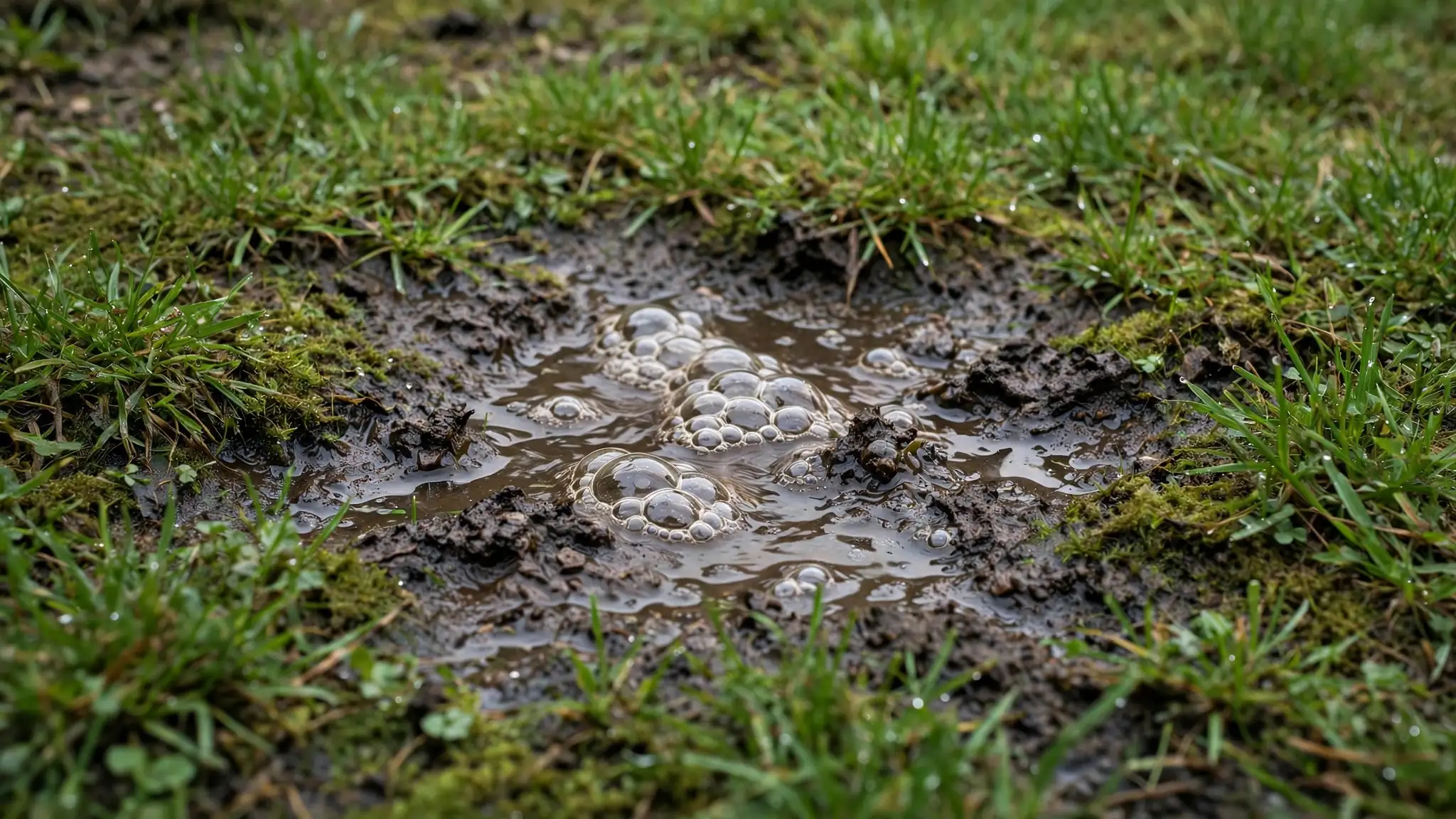
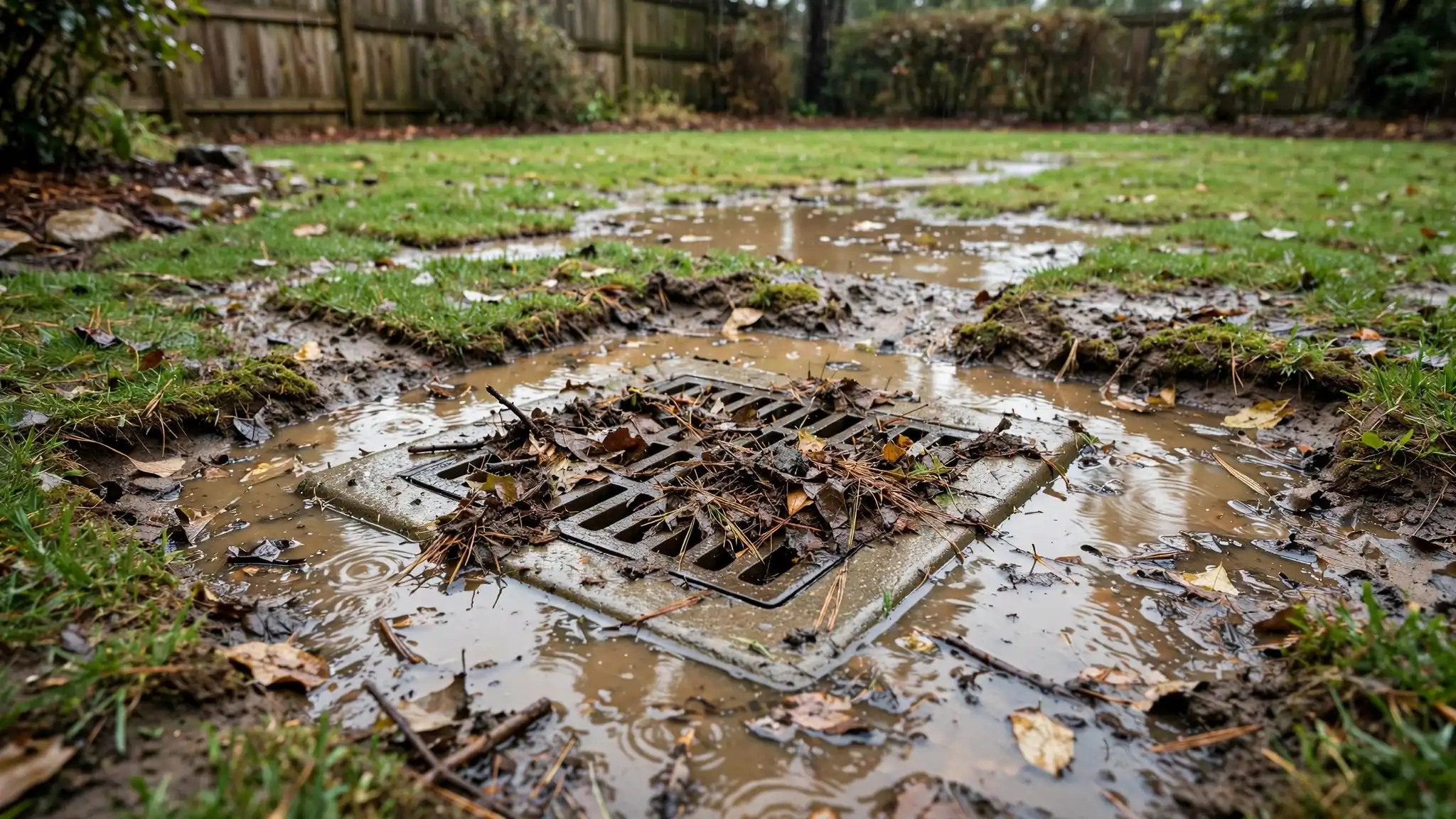
- Ponding after rain — water standing where it used to drain; the most direct sign.
- Overflowing gutters — often the downspout line below is blocked, not the gutter itself.
- Water against the foundation — the critical failure; drainage should direct water away.
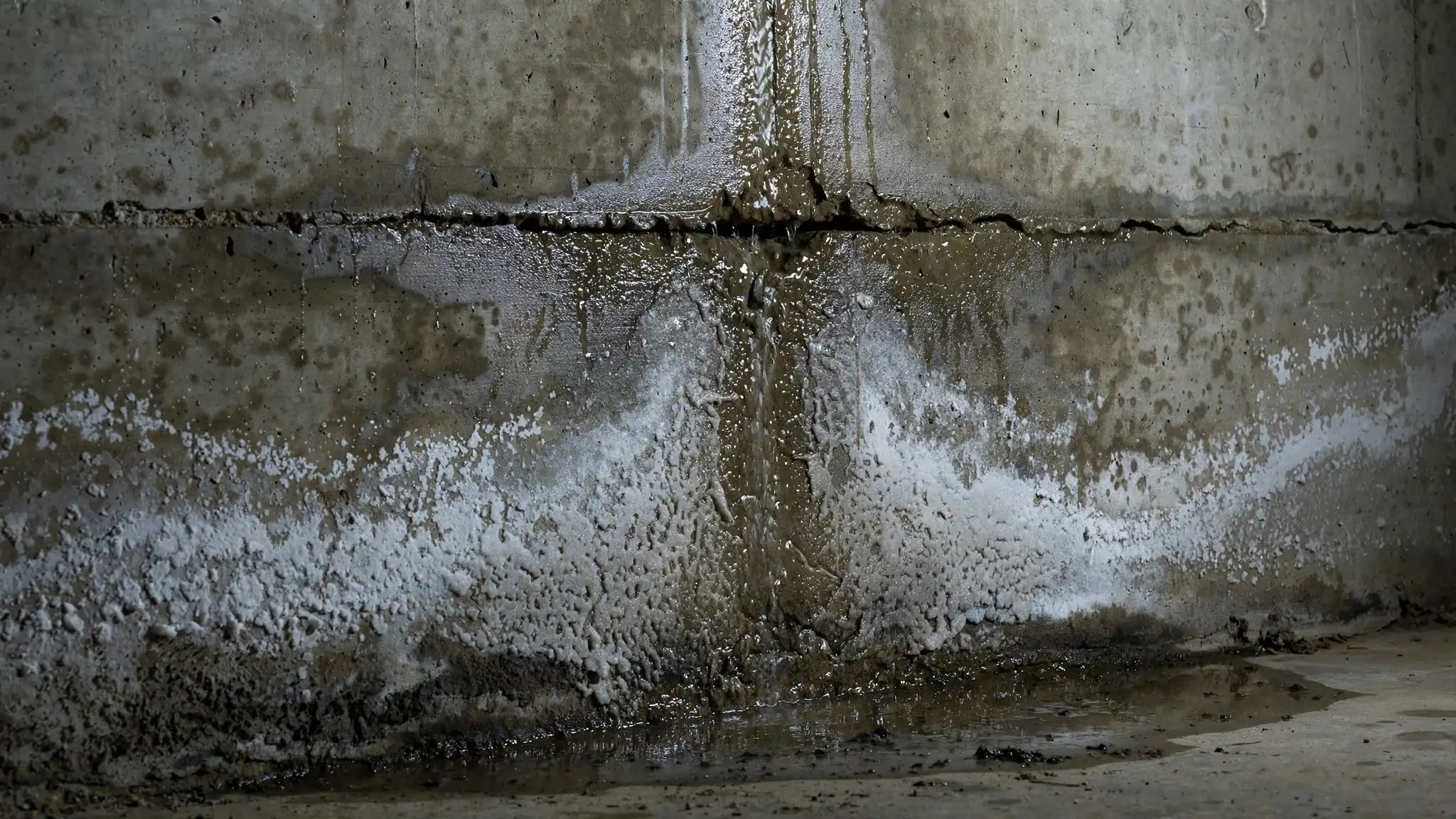
- Basement seepage after storms — frequently a yard drainage failure, not a plumbing leak.
- Erosion channels — water finding its own path where drains failed.
- Soggy areas persisting days after rain — the system is not moving water.
Water Against The Foundation Is Urgent
Ponding or flowing water against your foundation is not a cosmetic issue — it saturates the soil, increases hydrostatic pressure, and drives basement seepage. Address drainage failures directing water at the foundation promptly; the foundation's integrity depends on water management.
DIY Cleaning Guide
Catch Basins And Grates:
- Remove the grate and clear all leaves, trash, and debris by hand.
- Scoop sediment from the basin's sump (the deep section below the outlet).
- Flush with a garden hose — water should flow freely through the outlet.
- Replace the grate securely.
Channel Drains:
- Lift sections of the grate; remove accumulated debris along the channel.
- Flush the channel toward the outlet with a hose.
- Check the outlet — the channel is only as good as its discharge point.
Downspout Lines:
- Disconnect the downspout from the underground line.
- Flush the line with a hose from the top — observe the discharge point.
- Snake if needed — a plumber's snake clears leaf and sediment blockages.
- Reconnect securely.
When To Call A Professional
- Cleaning does not restore flow — the blockage is underground (crushed pipe, roots, bellies).
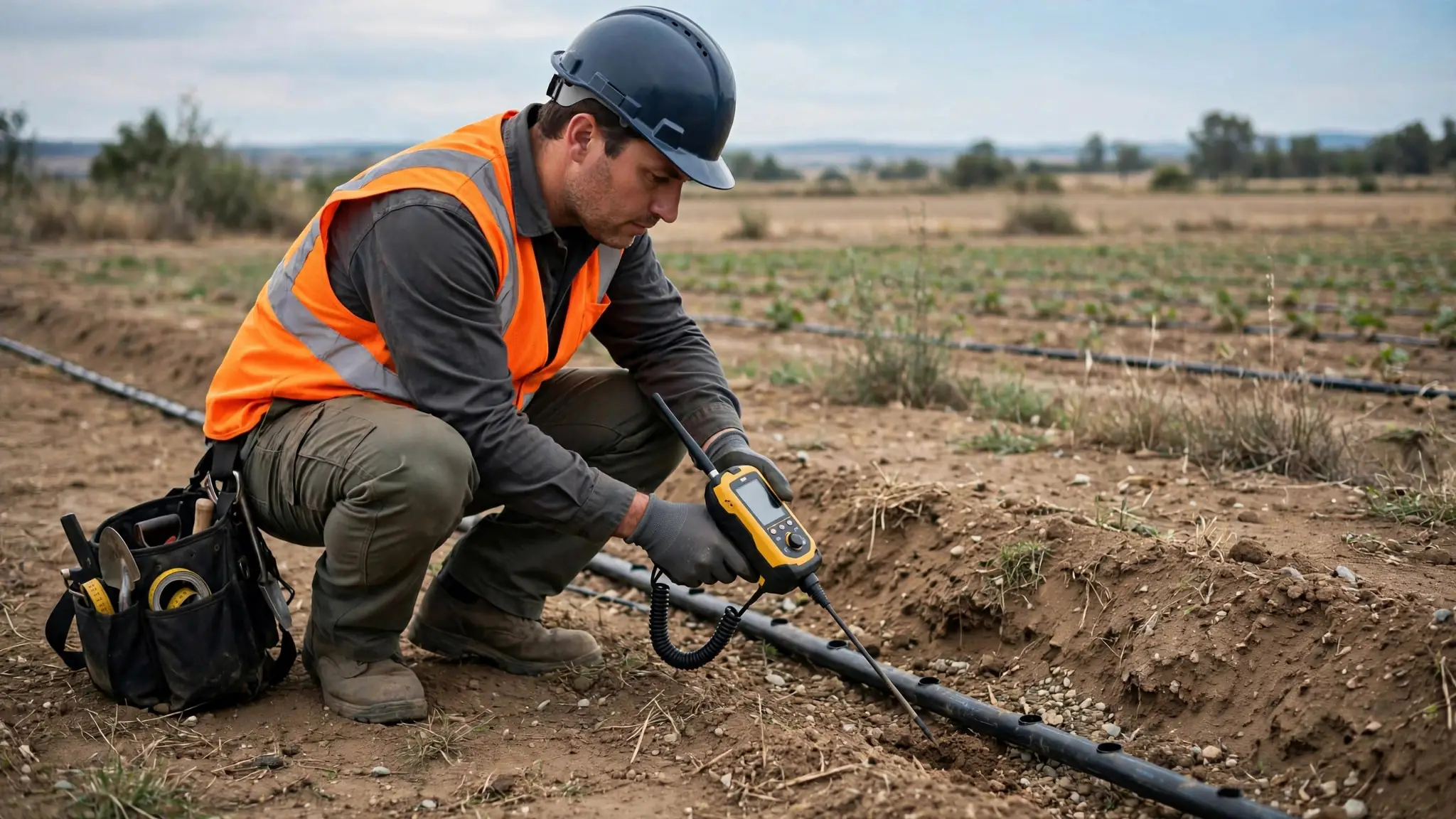
- Camera inspection needed — to see inside buried drainage lines.
- System redesign — the existing drainage is inadequate for the water volume (grading, additional drains).
- Foundation water issues — persistent seepage despite functional surface drainage needs professional assessment.
- Hydro jetting — for sediment-packed lines beyond hose flushing.
Drainage Design Basics: The Principles
- Grade away: soil should slope away from the foundation (minimum 6 inches over 10 feet).
- Discharge away: downspouts and drains must discharge well away from the foundation — not at its base.
- Low points need drains: every significant low spot needs a collection point; water does not drain uphill.
- Capacity matters: the system must handle peak storms, not average rain — undersized systems fail when most needed.
- Maintain the path: the entire route — from collection to discharge — must stay clear.
Walk Your Property In The Rain
The most informative drainage inspection happens during heavy rain — you see exactly where water collects, where it flows, and where the system fails. A 10-minute rainy-day walk reveals what dry-weather inspection cannot.
Seasonal Maintenance Schedule
| Season | Tasks | Why |
|---|---|---|
| Fall | Clear all grates; flush basins; verify downspouts | Leaf drop is the #1 clog source |
| Winter | Monitor for ice blockages; clear snow from grates | Ice dams affect drainage too |
| Spring | Post-winter inspection; flush winter sediment; check for damage | Catch freeze damage early |
| Summer | Mid-season grate check; verify after major storms | Storm debris accumulates |
For soggy lawn diagnosis (distinguishing drainage from pipe leaks) and spring moisture management, see our companion guides.
French Drains: The Subsurface Solution
French drains — gravel-filled trenches with perforated pipe — manage subsurface water:
- Function: intercept groundwater before it reaches the foundation; direct it to discharge.
- Placement: around the foundation perimeter (exterior) or inside the basement (interior).
- Maintenance: flush periodically; ensure the discharge point stays clear; inspect for sediment accumulation.
- Clogging: sediment and roots clog French drains over time — proper filter fabric during installation extends life.
Discharge Points: Where Water Goes
- Daylight: the ideal — gravity discharge to a lower elevation away from structures.
- Dry wells: dispersal into the ground; requires permeable soil and adequate capacity.
- Storm sewer: where permitted; check local regulations.
- Sump pump: for interior systems or where gravity discharge is impossible.
The discharge point is the system's most neglected component — a perfect collection system discharging against the foundation is worse than useless. Verify discharge with every maintenance cycle.
Discharge Determines Success: Every yard drainage component — basins, channels, French drains, downspout lines — is only as good as its discharge point. Water collected and then released against the foundation is a system working against itself. Always trace the full path to daylight.
Regrading: The Fundamental Fix
- The standard: 6 inches of fall over the first 10 feet from the foundation, minimum.
- Common problems: settled soil, mulch buildup raising grade against siding, and landscaping creating dams.
- The fix: add soil (not against siding — maintain clearance), re-establish slope, and compact.
- When to call a professional: significant regrading, drainage swales, or retaining needs.
Winter Drainage Considerations
- Frozen discharge: sump and drain discharge lines freeze — extend discharge well away and consider freeze-resistant terminations.
- Snowmelt management: clear snow from grates and wells before the thaw; frozen ground cannot absorb meltwater.
- Spring inspection: post-winter assessment catches freeze damage before spring rains.
For soggy lawn diagnosis and spring moisture management, see our companion guides.
Professional Drain Services Explained
| Service | What It Does | When Needed |
|---|---|---|
| Grates and basin cleaning | Debris and sediment removal | Routine maintenance |
| Hydro jetting | High-pressure line cleaning | Sediment-packed lines |
| Camera inspection | Visual diagnosis of buried lines | When cleaning does not restore flow |
| Regrading | Correcting slope toward foundation | Negative grade issues |
| System installation | New drains and discharge | Inadequate existing drainage |
HOA And Municipal Considerations
- HOA rules: drainage modifications may need approval — check before regrading or installing.
- Municipal stormwater: discharge regulations vary; some areas restrict where stormwater may go.
- Shared drainage: in dense developments, drainage affects neighbors — coordinate improvements.
Troubleshooting Drainage Problems
| Symptom | Likely Cause | Action |
|---|---|---|
| Ponding at one spot | Clogged local drain or grading issue | Clean drain; check grading |
| Water against foundation | Grading or discharge failure | Urgent — regrade or redirect |
| Basement seepage after rain | Drainage failure or hydrostatic | Assess drainage first |
| Erosion channels | Concentrated flow; inadequate drainage | Disperse flow; add drainage |
| Soggy lawn persists | High water table or failed drainage | Professional assessment |
Native Plants And Drainage
- Deep roots: native plants with deep root systems improve soil absorption.
- Rain gardens: designed depressions capturing and infiltrating runoff — beautiful and functional.
- Reduced runoff: landscaping choices significantly affect how much water reaches your drains.
For distinguishing drainage from pipe leaks, see our companion guide. Professional yard drain service for cleaning and repair.
The Key Takeaway
Yard drainage is unglamorous but critical — the system that keeps stormwater away from your foundation works silently until it does not. Seasonal maintenance (grate clearing, basin flushing, discharge verification) prevents the vast majority of drainage failures. When maintenance does not restore flow, professional diagnosis finds the underground cause. And always remember: walk your property in the rain — the storm shows you what dry weather hides.
For spring moisture management, see our companion guide.
Finally, document your drainage system — photograph drain locations, note the discharge points, and keep maintenance records. When you sell the property, this documentation is valuable; when you need professional service, it accelerates the diagnosis; and when you are troubleshooting, it reminds you what is where. A sketched drainage map takes 15 minutes and pays dividends for years.
Your yard drainage system is infrastructure — as essential as your roof or foundation, and equally deserving of maintenance attention. The homeowners who treat it that way rarely face drainage emergencies; those who ignore it meet their drains during the worst storm of the year. Choose the former.