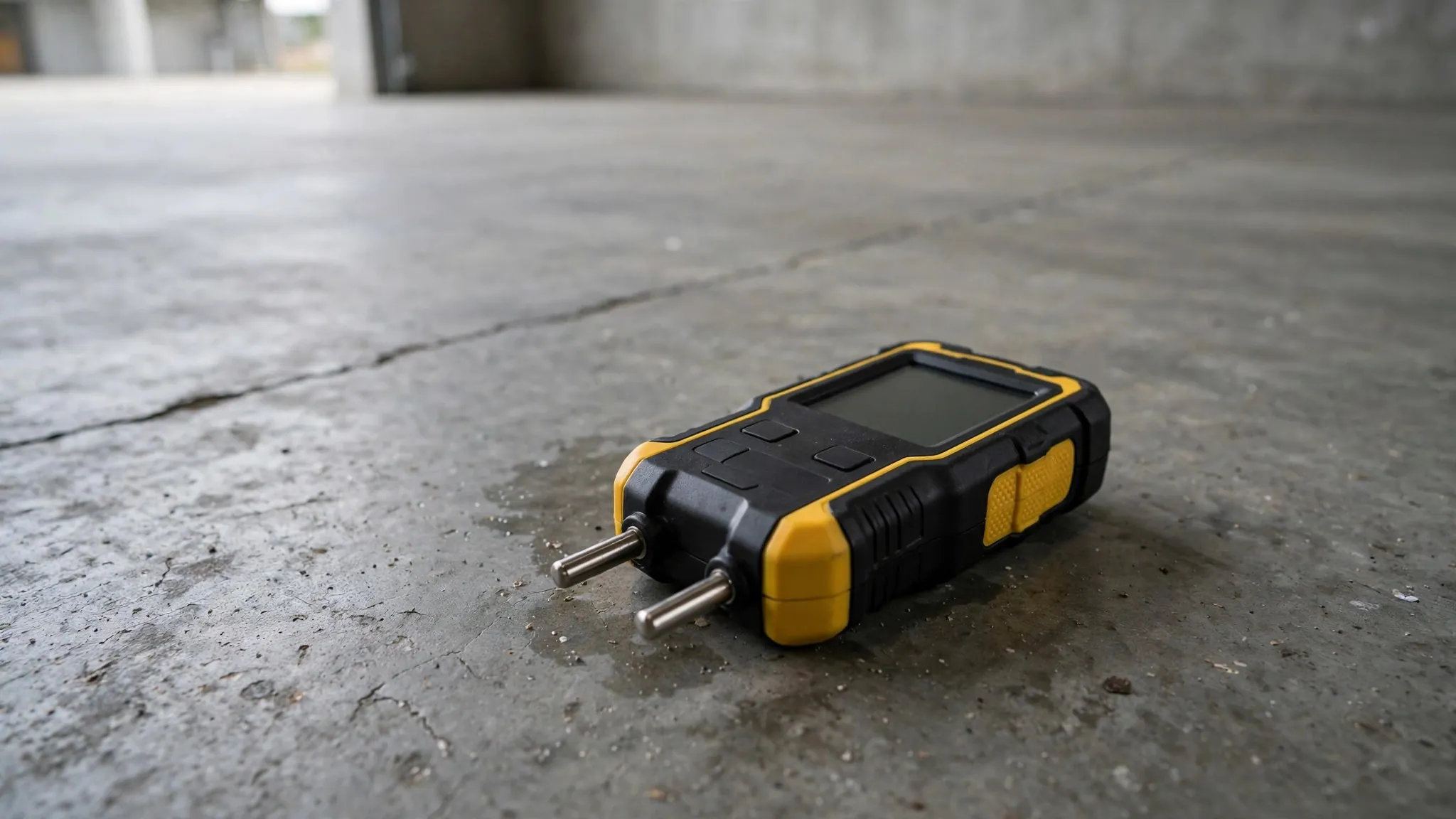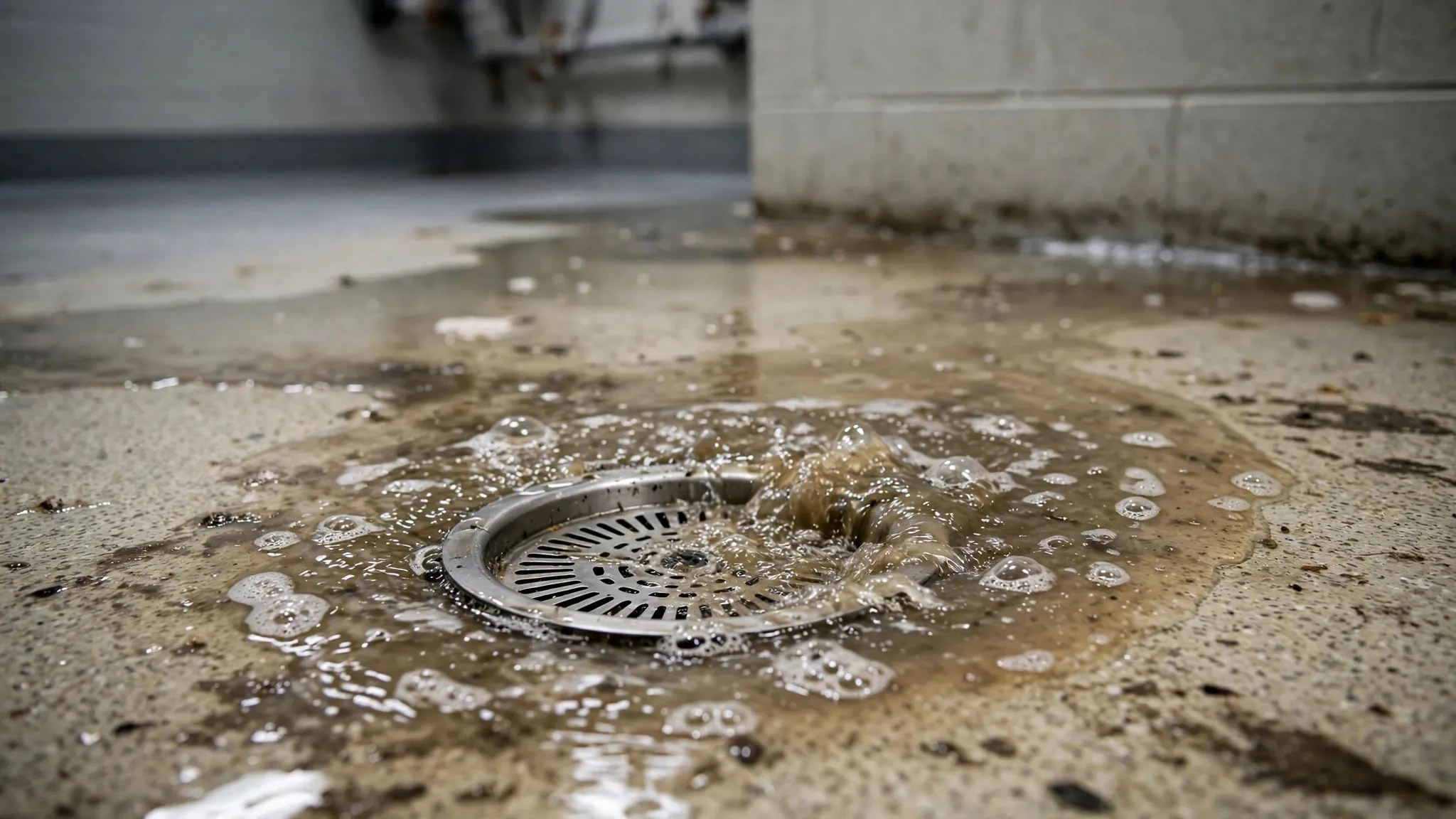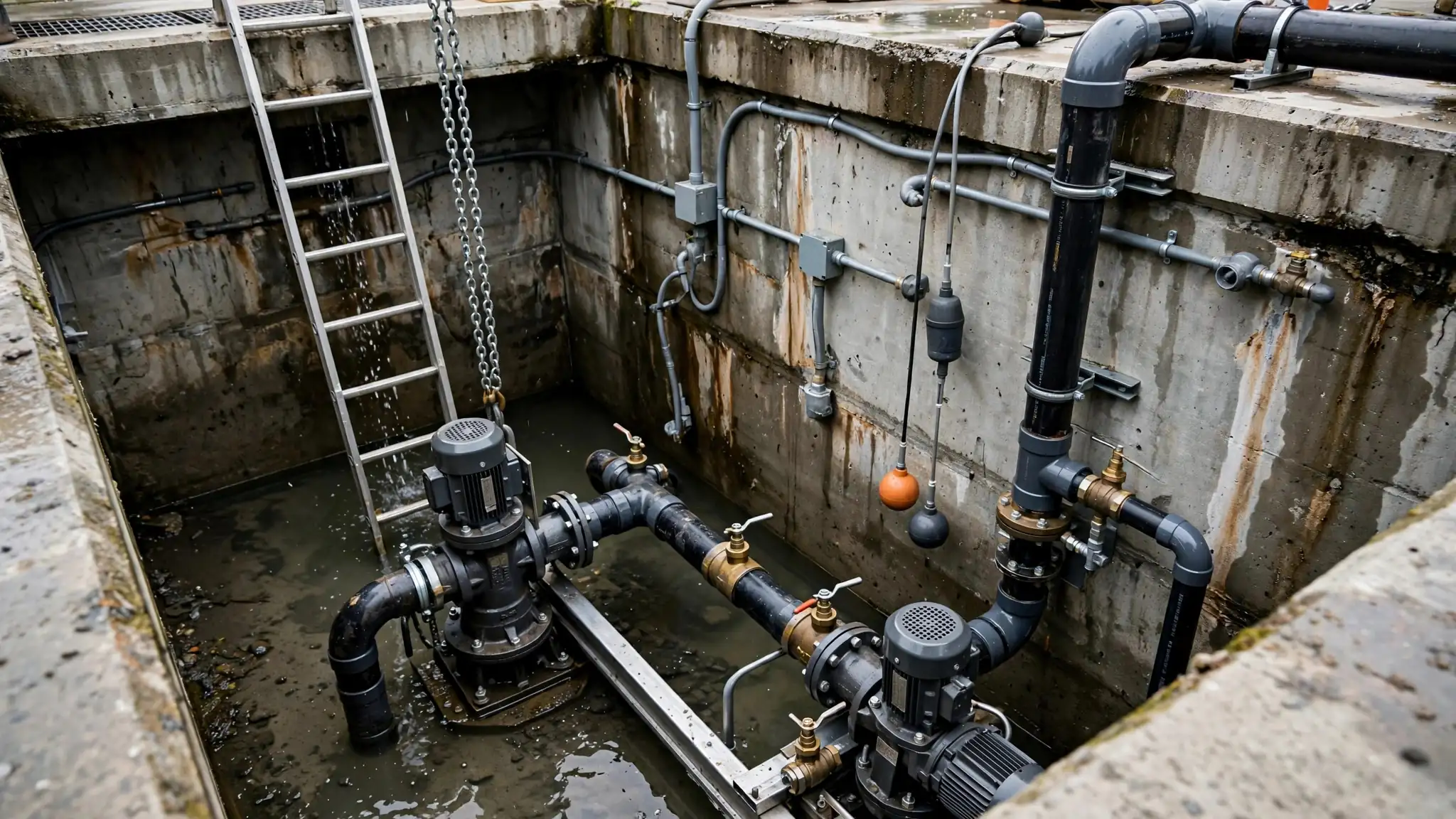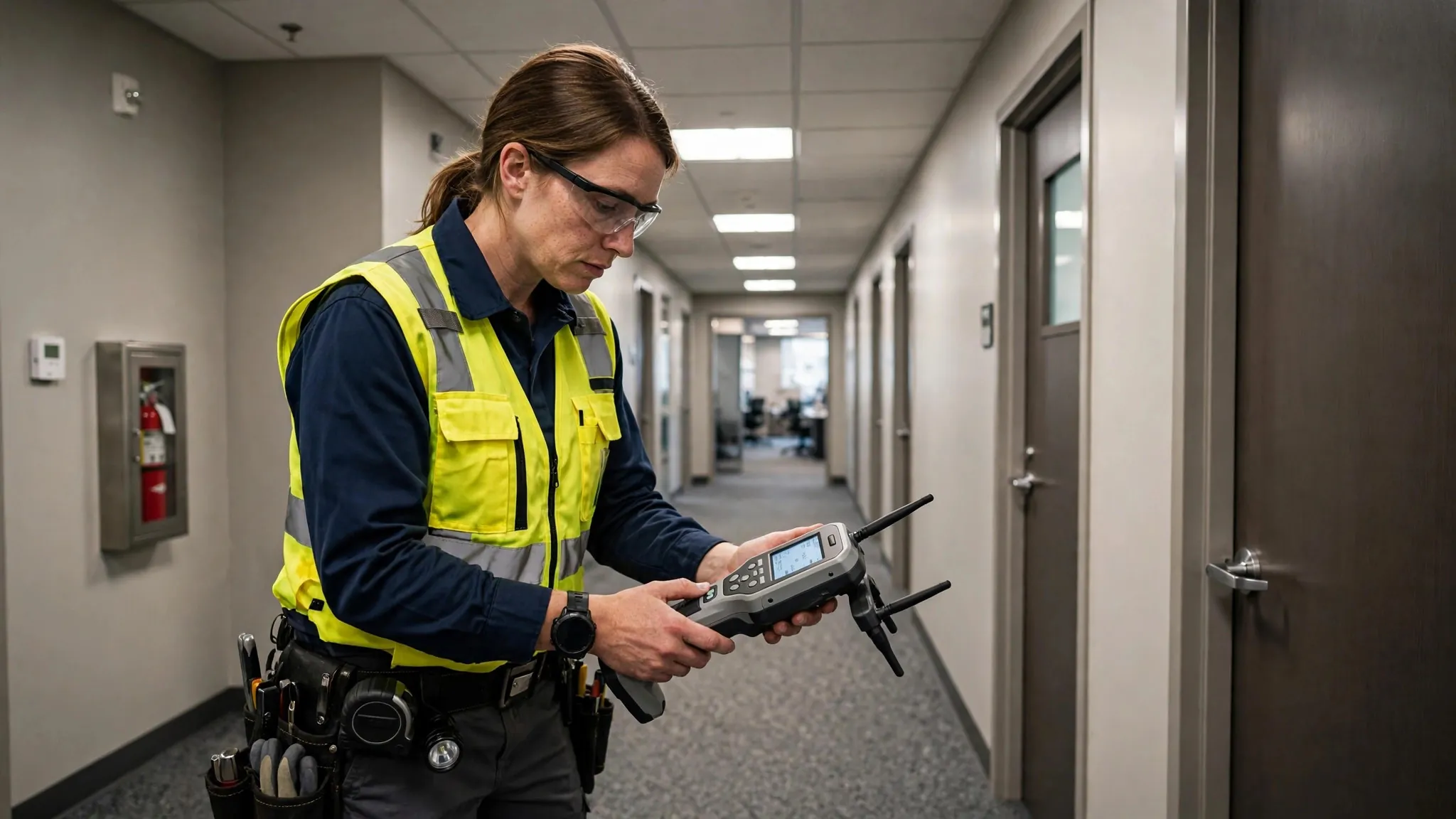
Commercial leak detection locates hidden water leaks in offices, retail, restaurants, warehouses, and mixed-use buildings — with methods adapted for larger systems, complex plumbing, and the critical requirement of minimal business disruption. Commercial buildings face distinct risks: more extensive piping (longer runs, more joints), higher occupancy impact (leaks affect operations, inventory, and customers), complex systems (restrooms, kitchens, HVAC, fire suppression), and larger financial exposure (downtime costs dwarf repair costs). Professional commercial detection uses the same acoustic, thermal, and tracer-gas technologies as residential — deployed at commercial scale, on commercial schedules.
Quick Answer
Commercial leak detection adapts residential technologies (acoustic, thermal, tracer gas, moisture mapping) for larger buildings, complex systems, and zero-downtime requirements. Key differences: surveys cover more area, work schedules around operations (often off-hours), documentation serves insurance and compliance needs, and the cost calculus centers on downtime prevention rather than just repair cost. Early detection protects revenue, not just real estate.
How Commercial Detection Differs From Residential
| Factor | Residential | Commercial |
|---|---|---|
| System scale | Single-family piping | Extensive runs, multiple zones, risers |
| Scheduling | Homeowner availability | Around operations; often off-hours/nights |
| Disruption tolerance | Moderate | Near-zero — business must continue |
| Documentation | Homeowner records | Insurance, compliance, multi-stakeholder |
| Decision makers | Homeowner | Owners, managers, tenants — coordination needed |
| Cost driver | Repair cost | Downtime cost (often orders larger) |
Commercial Leak Risks: What Is At Stake
- Operational disruption — a leak closing a kitchen, restroom, or sales floor directly reduces revenue.
- Inventory and equipment damage — water destroys stock, electronics, and specialized equipment.
- Tenant and customer impact — leaks affect occupant safety, comfort, and experience; liability follows.
- Regulatory exposure — health codes (restaurants), safety codes, and lease obligations create compliance risk.
- Reputational damage — visible water issues erode customer confidence disproportionately.
- Structural scale — larger buildings mean larger potential damage areas and costs.
Downtime Dwarfs Repair
In commercial settings, the leak's repair cost is often the smallest number — lost revenue, spoiled inventory, and tenant disruption dominate. This inverts the residential calculus: detection speed matters more than detection cost.
Systems Surveyed In Commercial Buildings
- Domestic water systems — restrooms, kitchens, break rooms; the highest fixture density.
- HVAC condensate and hydronic systems — rooftop units, chilled water lines, condensate drains.
- Fire suppression — sprinkler systems (pressurized; leaks trigger alarms and require specialist handling).
- Slab and foundation systems — under-slab leaks in ground-floor commercial spaces.
- Roof drainage — internal drains and scuppers; ponding and overflow.
- Specialty systems — commercial kitchens (grease + water), laundries, process water — each with distinct failure modes.
Working Around Operations: The Scheduling Discipline
- Off-hours surveys — nights, early mornings, weekends; acoustic detection actually benefits from quiet buildings.
- Phased work — surveying zone by zone, keeping operational areas untouched.
- Coordination — with facility managers, tenants, and operations staff; no surprises.
- Rapid reporting — findings delivered promptly for business decision-making, not just technical records.
Specify your operational constraints when engaging detection — the schedule is designed around them, not despite them.
Documentation For Insurance And Compliance
Commercial detection reports serve multiple stakeholders:
- Insurance claims — professional reports with methodology, findings, and photographs support commercial property claims.
- Lease obligations — documenting leak source determines owner vs. tenant responsibility.
- Regulatory compliance — health and safety documentation for regulated occupancies.
- Capital planning — pipe condition assessments inform maintenance budgets and replacement scheduling.
- Due diligence — pre-purchase or pre-lease assessments revealing hidden water issues.
The Downtime Calculus
Evaluate commercial leak response by total cost, not repair cost:
- Detection cost — the professional survey (usually the smallest number).
- Repair cost — the plumbing work itself.
- Downtime cost — lost revenue per hour/day of disruption (often the largest number).
- Collateral cost — inventory loss, tenant concessions, reputational impact.
This calculus justifies rapid professional detection over delayed or DIY approaches — every day of undiagnosed leaking accrues downtime-scale costs. It also justifies preventive surveys for high-value or high-risk properties.
What To Do: For Facility Managers And Owners
- Establish a leak response protocol — who is called, in what order, with what authority.
- Know your systems — as-builts, shutoff locations, and system maps accessible to responders.
- Monitor proactively — smart water monitors on mains; routine inspections of high-risk areas.
- Engage specialists early — commercial leak detection at the first sign, not after damage spreads.
- Document everything — for insurance, compliance, and capital planning.
For specific commercial concerns, see floor drain backups, lift station pumps, and under-slab commercial leaks. Our emergency commercial service responds 24/7 with business-continuity priority.
Building A Commercial Leak Response Protocol
Every commercial property should have a written leak response protocol — the commercial equivalent of a fire drill:
- Detection: who monitors (smart sensors, bill review, routine inspections) and what triggers response.
- Assessment: who evaluates severity — facility manager with a defined escalation matrix.
- Engagement: pre-selected detection contractor (decided in advance, not during the crisis); emergency contact numbers posted.
- Coordination: tenant notification procedures; operational continuity plans per zone.
- Documentation: photo and written logging from discovery; insurance notification thresholds.
The protocol's value is speed — pre-decided actions execute in minutes; improvised responses take hours or days. Downtime costs accrue by the hour.
Monitoring Technology For Commercial Properties
| Technology | What It Does | Best For |
|---|---|---|
| Smart water meters | Continuous flow analytics; leak alerts | Whole-building monitoring |
| Point leak sensors | Detect water at specific locations | High-risk areas (mechanical rooms, kitchens) |
| Automatic shutoff valves | Close on abnormal flow | Unoccupied periods; high-value properties |
| Pressure monitoring | Detect pressure anomalies | Large distribution systems |
| Thermal screening | Periodic infrared surveys | Preventive maintenance programs |
Monitoring technology shifts detection from reactive to proactive — the leak is caught by data before it becomes visible. For high-value or high-occupancy properties, the investment is straightforward.
Monitor The Unoccupied Hours
The highest-value monitoring window is when the building is empty — nights and weekends. Any flow during unoccupied hours is, by definition, abnormal. Smart meters configured with occupancy schedules catch leaks that daytime observation never would.
Commercial Leak Scenarios
Restaurant kitchen: a slow supply leak behind the line saturates the wall over weeks — discovered when tile loosens. Detection locates it acoustically during closed hours; repair is scheduled overnight; the restaurant opens normally. Total downtime: zero.
Office building: rising water bills with no visible symptoms. Smart meter data shows continuous overnight flow. Detection traces it to a restroom supply line on an unoccupied floor. Caught by data before damage.
Retail: water staining appears on the sales floor ceiling. Detection traces it to HVAC condensate above during operating hours (thermal) — the repair is phased to avoid the sales area during business hours. Revenue protected.
Selecting A Commercial Detection Provider
- Commercial experience: residential skills do not automatically scale — ask for commercial references.
- Scheduling flexibility: off-hours capability is non-negotiable for operational properties.
- Documentation quality: reports must serve insurance, compliance, and multi-stakeholder needs.
- Coordination ability: working with facility managers, tenants, and other contractors.
- Response time: emergency commercial response with business-continuity priority.
For under-slab commercial detection and drain backup response, see our companion guides.
Lease Language: Leak Responsibility
Commercial leases should explicitly address water leaks — ambiguity creates disputes:
- Define responsibility — who detects, who repairs, who pays, for which systems.
- Set response timelines — maximum hours from report to action, by severity.
- Require notification — tenants must report promptly; owners must respond promptly.
- Address access — owner/manager access rights for leak investigation and repair.
- Insurance coordination — whose policy covers what; documentation requirements.
Review existing leases for leak provisions before a leak — the time to discover ambiguity is not during an emergency.
The ROI Of Commercial Leak Prevention
| Investment | Cost Scale | What It Prevents |
|---|---|---|
| Smart water monitoring | Modest | Undetected leaks; the highest-ROI prevention |
| Annual professional survey | Moderate | Developing issues before symptoms |
| Response protocol development | Minimal | Delayed response; the cheapest improvement |
| Pressure regulation | Moderate | Stress-related failures across the system |
| Staff training | Minimal | Unreported symptoms; the human sensor network |
For lift station management and under-slab detection, see our companion guides.
Commercial Leak Emergency Plan Template
Adapt this template for your property:
- Emergency contacts: detection provider, plumber, facility manager, owner — with after-hours numbers.
- Shutoff locations: main shutoff, zone shutoffs, irrigation main — mapped and labeled.
- Severity levels: Level 1 (monitor), Level 2 (prompt professional), Level 3 (emergency response) — with criteria for each.
- Tenant notification: who notifies, how, and what information is shared.
- Documentation protocol: photo and written logging from discovery; insurance notification thresholds.
- Business continuity: which operations can continue during which repair types; backup plans for critical functions.
Review and drill the plan annually — an unpracticed plan is only slightly better than no plan. The drill reveals gaps (outdated numbers, unknown shutoffs, unclear authority) before a real leak does.
Laminate The Shutoff Map
A laminated shutoff location map posted in the mechanical room and manager's office is the highest-value emergency preparation — it turns a panicked search into a direct walk during the critical first minutes of a leak.