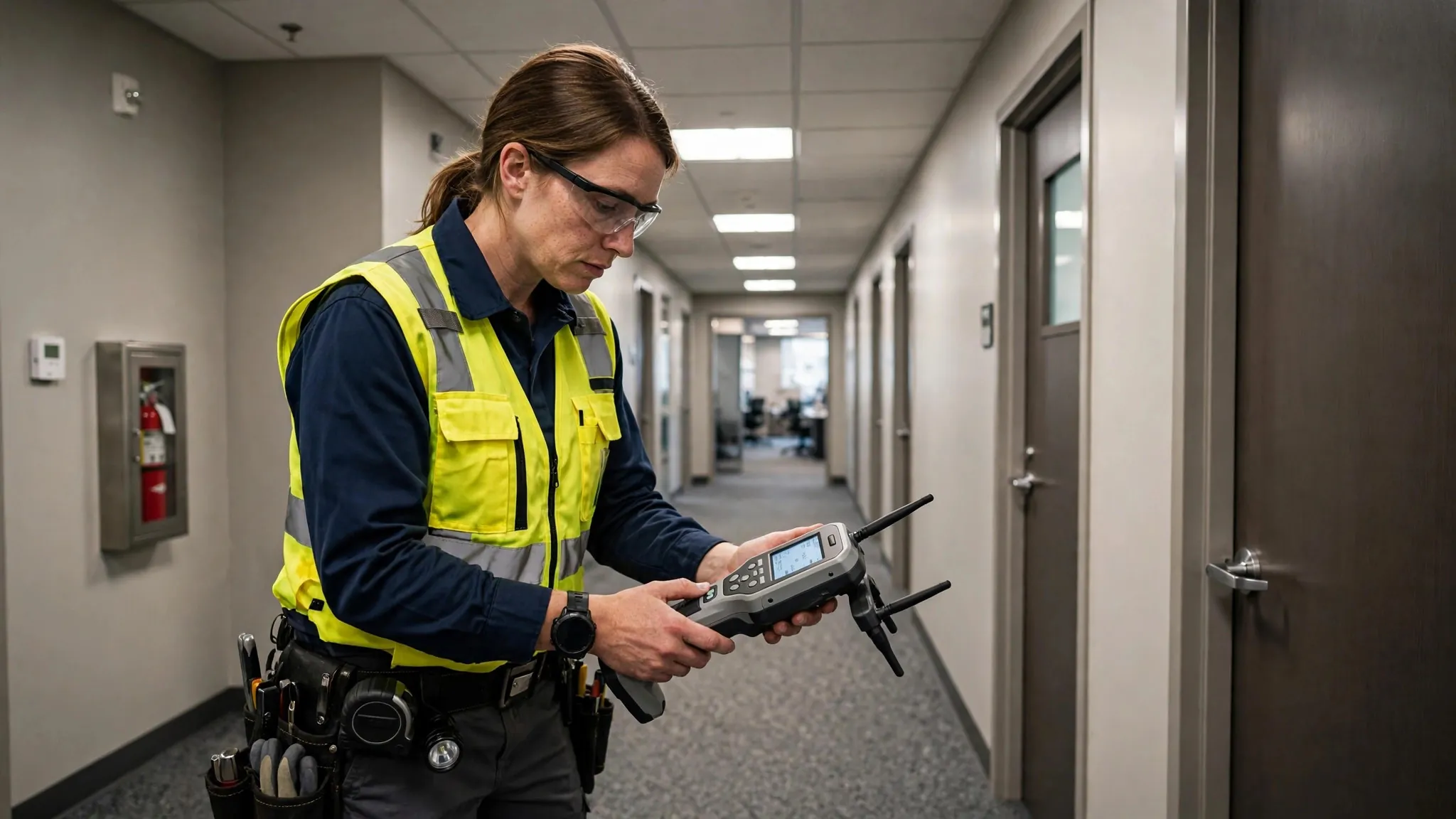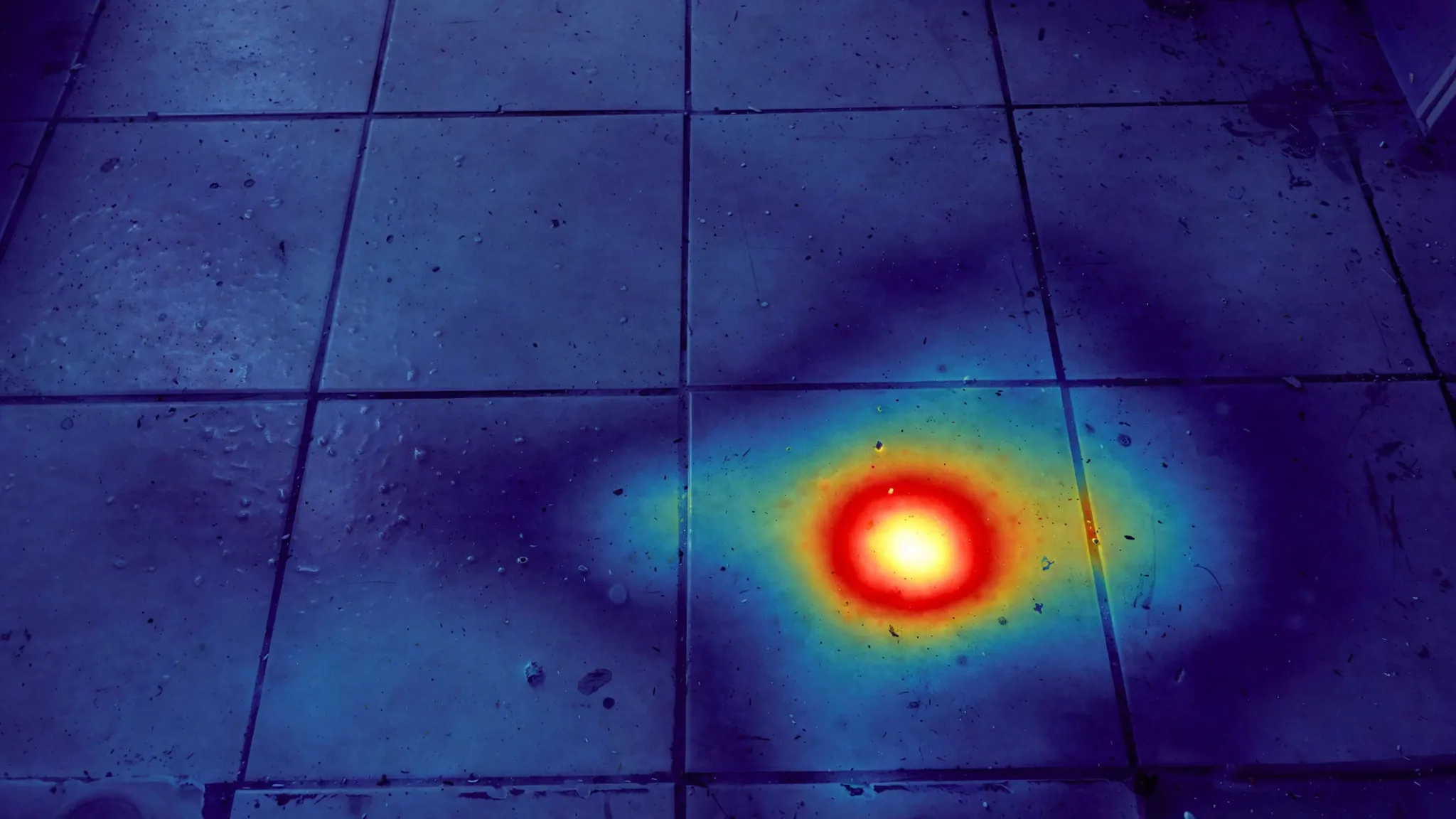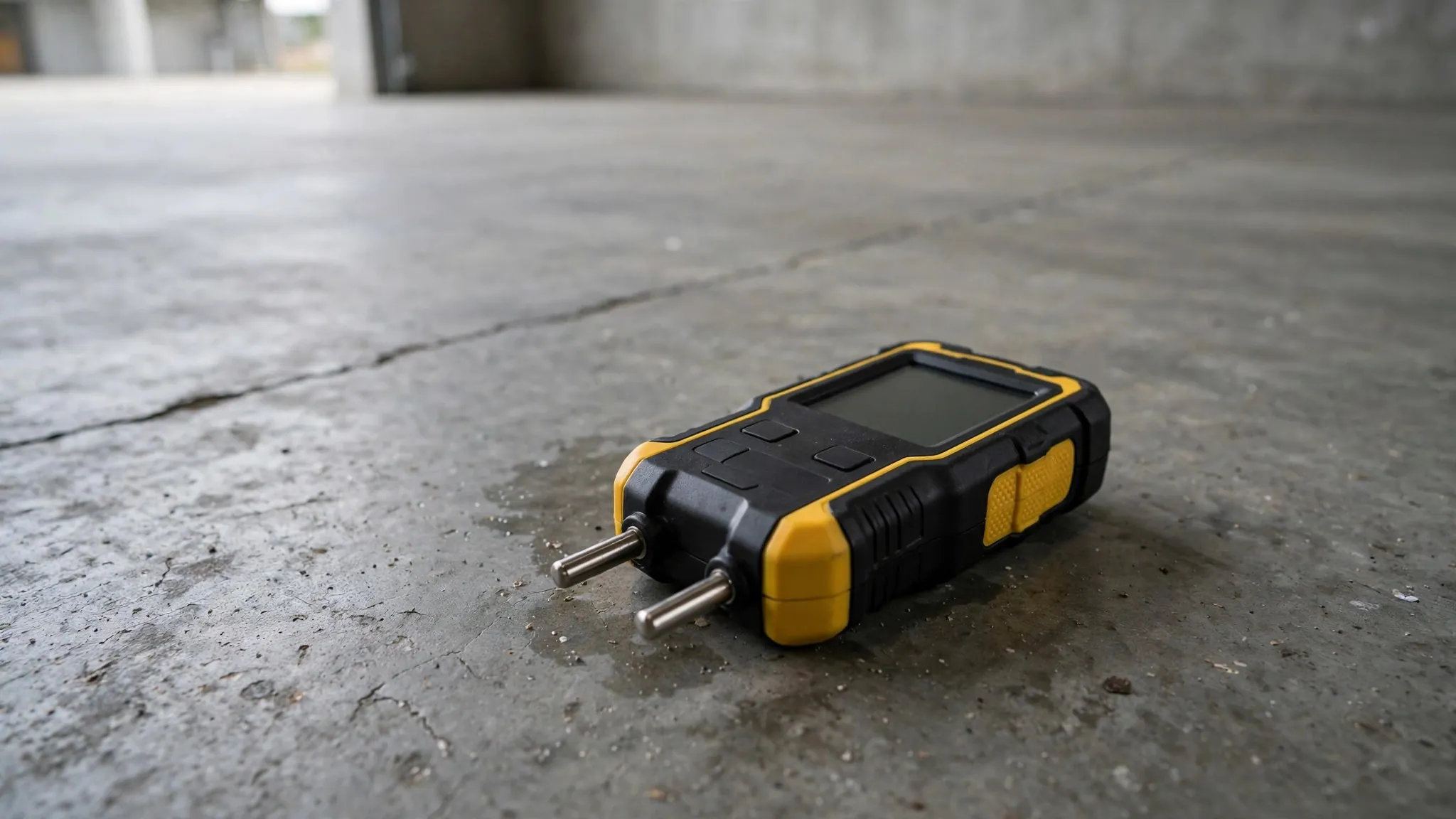
A water leak under a commercial concrete floor — a pressurized break beneath the slab — threatens operations, inventory, and the building itself, but detection does not require shutting down. Acoustic listening, thermal imaging, and tracer gas locate the break non-invasively, often during off-hours, marking the precise point for a targeted repair scheduled around operations. Signs include unexplained water bills, warm floor zones, sounds beneath the slab, damp flooring, and new cracks. Commercial slab leak detection is engineered for zero-downtime diagnosis.
Quick Answer
Commercial under-slab leaks are detected with the same non-invasive technologies as residential — acoustic, thermal, tracer gas — but deployed on commercial schedules (nights, weekends, phased zones) to avoid operational disruption. Signs: high water bills, warm floor areas, running-water sounds, damp flooring, cracks. Detection marks the break for a surgical repair planned around your operations. Do not wait: under-slab water erodes soil, threatens the slab's structural support, and the meter bills every gallon.
What To Do Right Now
- Confirm the symptoms. Map warm zones, note sounds, check the water meter for hidden flow — meter reading basics apply at commercial scale.
- Assess urgency. Active damage (spreading warmth, sounds, cracks, water surfacing) = urgent; stable symptoms = prompt scheduling.
- Protect operations. Move inventory/equipment from affected zones; document conditions with photos.
- Engage detection. Commercial leak detection — specify your operational constraints; the survey is scheduled around them.
- Plan the repair window. Detection's marked location lets the repair be scheduled precisely — nights, weekends, or phased.
Need Help Right Now?
Spreading warm zones, audible flow, new cracks, or water surfacing through the slab? That is an active break — call now, 24/7.
Call (617) 380-4912Signs Of An Under-Slab Commercial Leak
- Unexplained water bill increases — often the first sign; compare against historical usage.
- Warm floor zones — hot-water line breaks; walk the floor or use thermal screening.
- Running-water sounds beneath the slab during quiet hours — the break's turbulence signature.
- Damp flooring or efflorescence — moisture wicking through the slab; white mineral deposits.
- New cracks in the slab or walls — soil erosion beneath removing support.
- Equipment or inventory moisture — unexplained dampness at floor level.
- Meter flow during off-hours — the definitive test: flow with the building unoccupied means a leak.
What Is At Stake: Beyond The Pipe
- Structural: soil erosion beneath the slab creates voids; the slab settles, cracks, and in severe cases fails — a structural emergency, not just a plumbing issue.
- Operational: repair work in active commercial space disrupts revenue; unplanned emergency work disrupts more than planned work.
- Inventory and equipment: floor-level stock, machinery, and finishes absorb migrating moisture.
- Health and safety: mold in saturated materials; slip hazards from surfacing water; potential electrical contact.
- Financial: water bills for the lost volume; the repair; the downtime — in that order of surprise.
The Slab Is Structural
Commercial slabs often support racking, machinery, and heavy loads — soil erosion beneath is a structural concern, not just a plumbing one. New cracks or settlement with leak symptoms warrant structural assessment alongside leak detection.
Detection Without Downtime: The Methods
The same three technologies as residential slab detection, adapted for commercial scale:
- Acoustic listening — ground microphones survey the slab; quieter off-hours actually improve results. Large areas are surveyed systematically in zones.
- Thermal imaging — infrared scanning maps hot-water anomalies across large floor areas quickly; works around equipment and racking.
- Tracer gas — safe hydrogen-nitrogen introduced into the isolated line; the surface detector pinpoints the breach. Confirms the marked location before any concrete work.
- Moisture mapping — defines saturation extent for structural assessment and repair planning.
All methods are non-invasive and non-disruptive — no demolition, no dust, no operational impact during the survey itself.
Scheduling Around Operations
- Off-hours surveys: nights, early mornings, weekends — when the building is quiet (better acoustics) and empty (no disruption).
- Phased zones: large facilities surveyed section by section; operational areas remain untouched.
- Coordination: with facility management on access, alarm systems, and operational constraints.
- Rapid reporting: marked locations and written reports delivered promptly for repair scheduling.
Repair Options For Commercial Slabs
| Option | Disruption | Best For |
|---|---|---|
| Spot repair at the marked break | Localized; scheduled off-hours | Single break, sound pipe, accessible location |
| Rerouting overhead | Moderate; new pipe run | Aging system; inaccessible break location |
| Epoxy lining | Minimal; trenchless | Qualifying pipe; minimal-disruption priority |
The repair is scheduled, not emergent — detection's precision allows planning around operations, often completing the slab work in a single off-hours window. Repair options compared in detail.
Prevention For Commercial Slabs
- Smart water monitoring on the main — continuous flow analytics catching leaks before symptoms.
- Routine bill review — monthly usage trending; anomalies trigger investigation.
- Periodic thermal screening — annual infrared surveys of large slabs as preventive maintenance.
- Pressure regulation — commercial PRVs protecting extensive piping systems.
- Response protocol — who is called, in what order, when symptoms appear.
For commercial leak protection strategy and slab leak signs (the residential guide with applicable symptom detail), see our companion articles.
Structural Assessment: Beyond The Pipe
Under-slab leaks in commercial buildings warrant structural awareness alongside plumbing repair:
- Soil erosion mapping: moisture mapping defines the saturated zone; severe or prolonged leaks create voids as soil washes away.
- Slab support evaluation: new cracks, settlement, or deflection indicate support loss — a structural engineer's assessment, not just a plumber's.
- Load considerations: racking, machinery, and vehicle loads concentrate stress on potentially undermined slab sections.
- Void filling: significant voids may need compaction grouting or foam injection to restore support — coordinated with the pipe repair.
The leak repair fixes the water source; structural remediation fixes the damage it caused. Both belong in the project scope.
Insurance And Documentation For Commercial Slab Leaks
- Document from discovery: dated photos, meter readings, professional detection reports.
- Sudden vs. gradual: commercial policies, like residential, favor sudden events — prompt professional detection supports the characterization.
- Business interruption: if operations are affected, business-interruption coverage may apply — document the impact meticulously.
- Mitigation duty: policies require reasonable mitigation — prompt detection and repair demonstrate compliance.
The Detection Report Is An Insurance Asset
A professional detection report — with methodology, marked locations, moisture maps, and photographs — is purpose-built documentation for insurance claims. It establishes the leak's location, the response's professionalism, and the timeline. Request it formatted for claims use.
Commercial Slab Scenarios
Warehouse: forklift operators report a warm strip in one aisle. Thermal screening confirms a hot-water anomaly; acoustic pinpoints the break; tracer gas verifies. Repair is scheduled over a weekend — racking stays, operations resume Monday.
Restaurant: water bills climb steadily; no visible symptoms. Off-hours acoustic survey finds a cold-water break under the dining room. The repair is phased — one section per night, dining continues.
Office: ground-floor carpet damp near the core. Moisture mapping defines the extent; detection traces it to a restroom supply line. Surgical slab opening, targeted repair, minimal tenant impact.
Selecting Commercial Slab Detection
- All three methods available: acoustic, thermal, and tracer gas — cross-verification before concrete work.
- Commercial scheduling: off-hours and phased capability.
- Structural awareness: moisture mapping for erosion assessment, not just leak location.
- Repair coordination: working with your contractor or recommending qualified repair teams.
For commercial leak protection strategy and detection methods explained, see our companion guides.
Phased Repair: Keeping Operations Running
Commercial slab repairs are planned around operations — the phasing strategies:
| Strategy | How It Works | Best For |
|---|---|---|
| Off-hours blitz | Complete repair in nights/weekends | Single-break spot repairs |
| Zoned phasing | One area at a time; operations shift | Large facilities with flexible layouts |
| Reroute first | New overhead line activated; slab repair later | Critical operations that cannot pause |
| Temporary bypass | Temporary water routing during repair | Essential water needs during work |
Post-Repair Verification
- Pressure test the repaired section before closing the slab.
- Moisture verification — the saturated zone must dry; monitor with meters.
- Structural sign-off — if voids were filled or cracks addressed, verify completion.
- Bill monitoring — confirm consumption returns to baseline; the meter validates the repair.
For repair options compared and commercial strategy, see our companion guides.
Long-Term Monitoring After Repair
Post-repair monitoring validates the fix and catches any recurrence:
- Bill trending: monthly consumption should return to baseline and stay there — the meter is the ongoing validator.
- Thermal spot-checks: periodic infrared scans of the repaired area (quarterly for the first year).
- Visual inspection: the repair area and surrounding slab for new cracks or moisture.
- Smart monitoring: continuous flow analytics providing automatic alerting — the set-and-forget validation.
Document the post-repair baseline (meter readings, thermal images, photos) — future comparisons need a reference point, and the baseline proves the repair's effectiveness.
Lessons From Commercial Slab Failures
Post-incident reviews of commercial slab leaks reveal consistent patterns — and preventable ones:
- The bill was the first signal — in most cases, consumption data showed the leak weeks or months before physical symptoms. Monthly bill review would have caught it.
- No monitoring was in place — properties with smart water monitoring caught leaks at inception; those without discovered them through damage.
- Response was delayed — the gap between symptom and professional engagement averaged weeks; each week compounded the damage and the water loss.
- The repair was straightforward — once located, most commercial slab leaks repair simply. The cost was in the delay, not the repair.
The lesson is uniform: monitor continuously, respond promptly, and let detection guide repair. The properties that do this experience slab leaks as minor maintenance events; those that do not experience them as emergencies. The difference is entirely procedural — and entirely within your control.