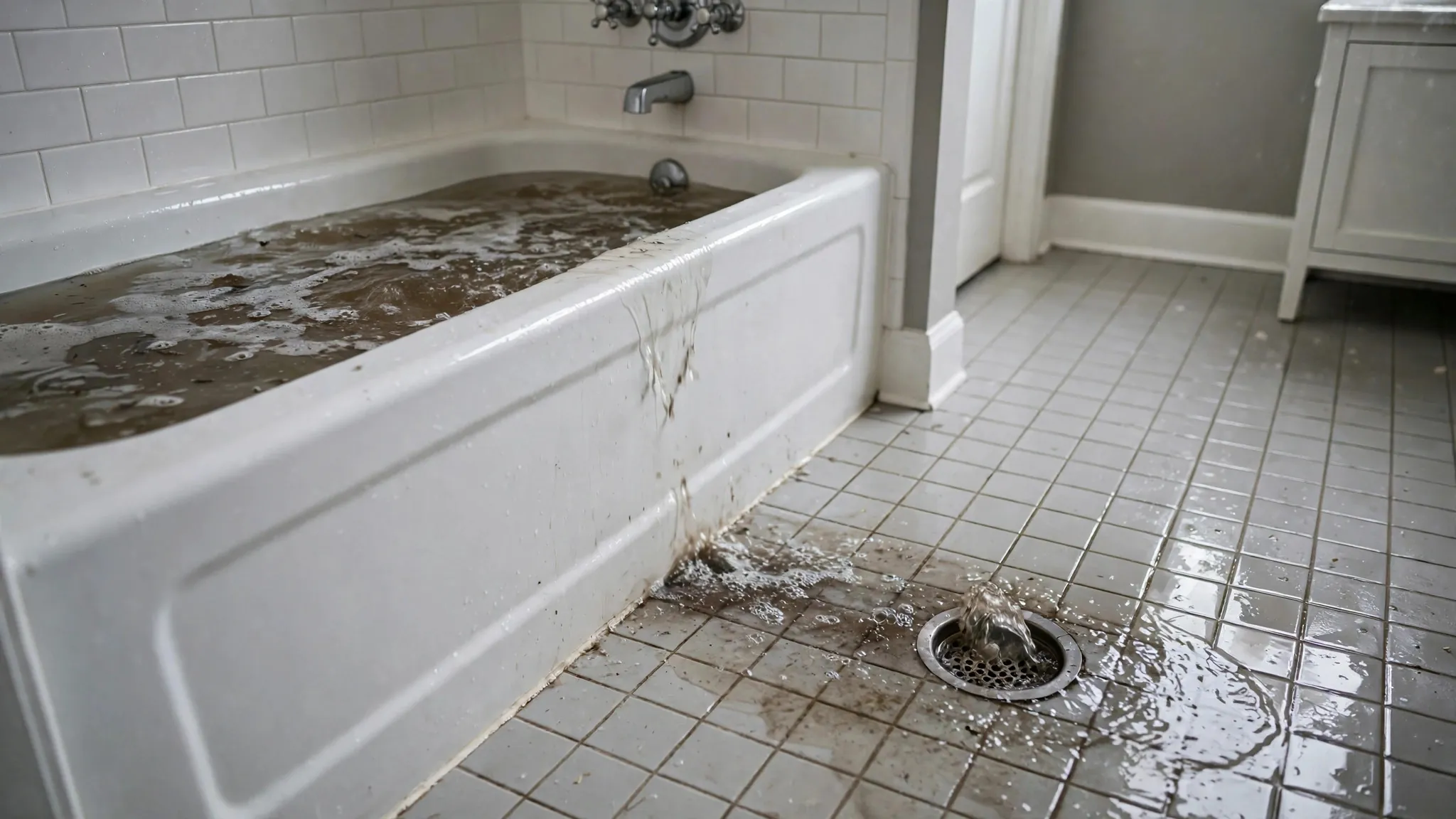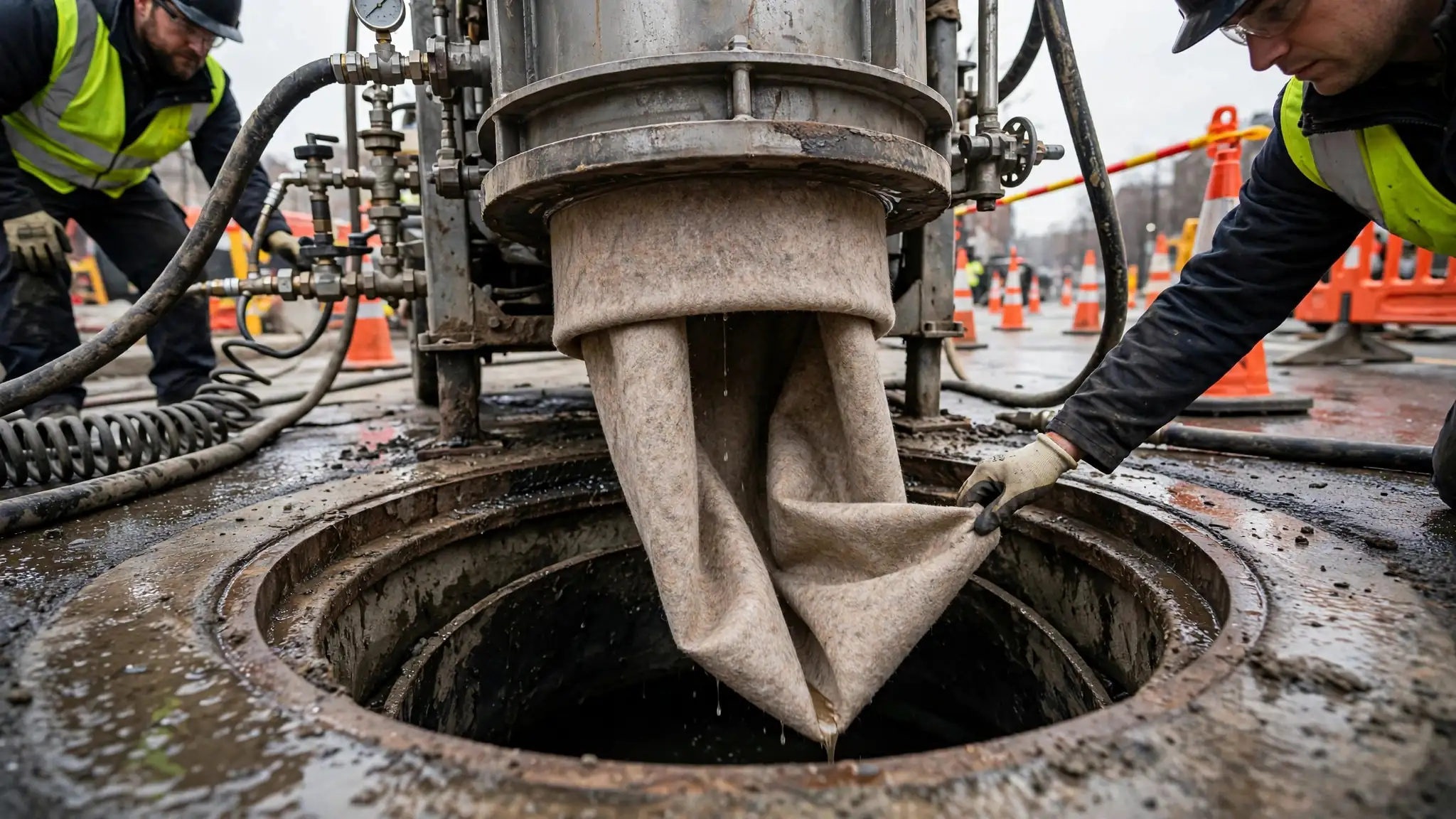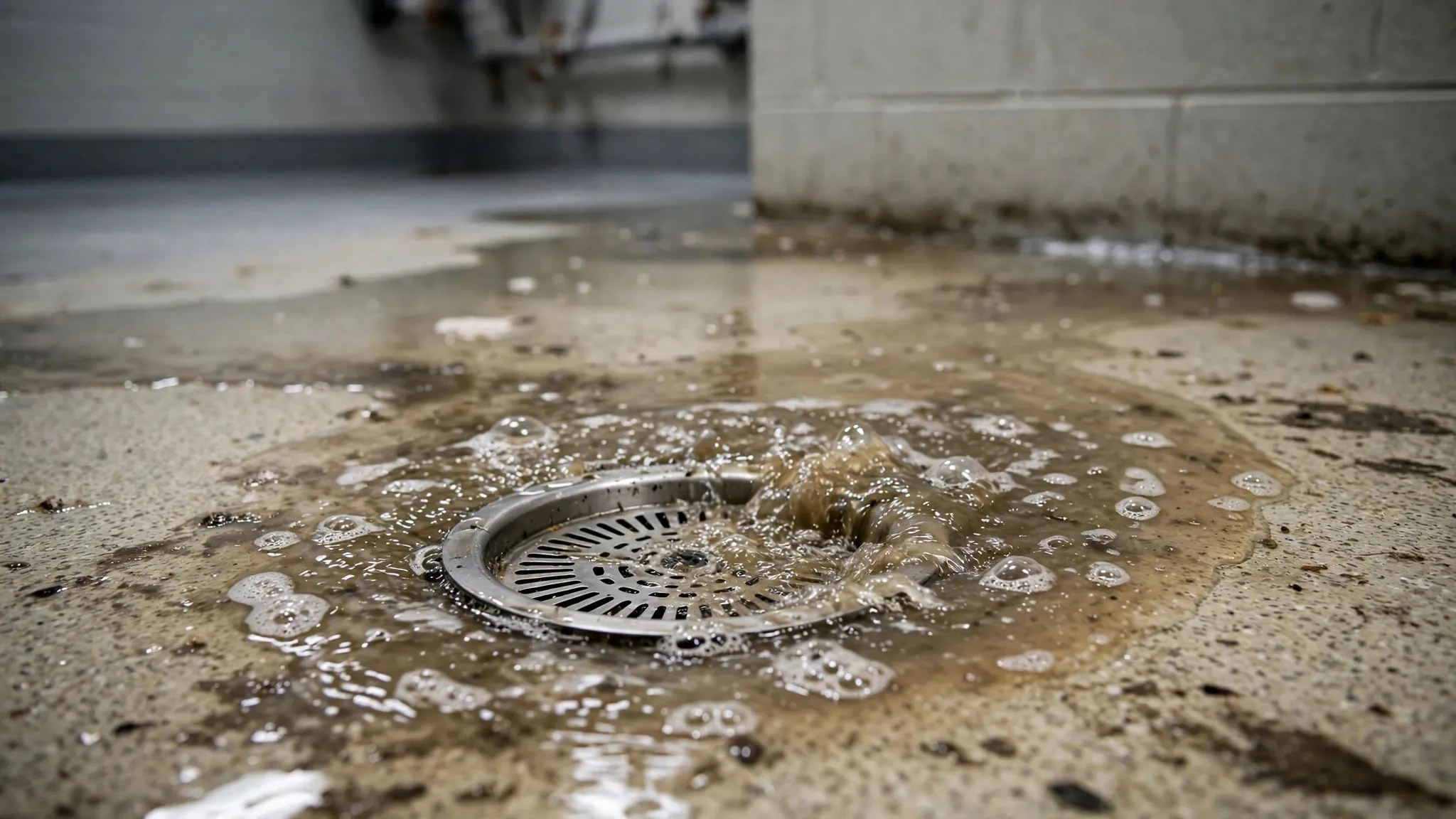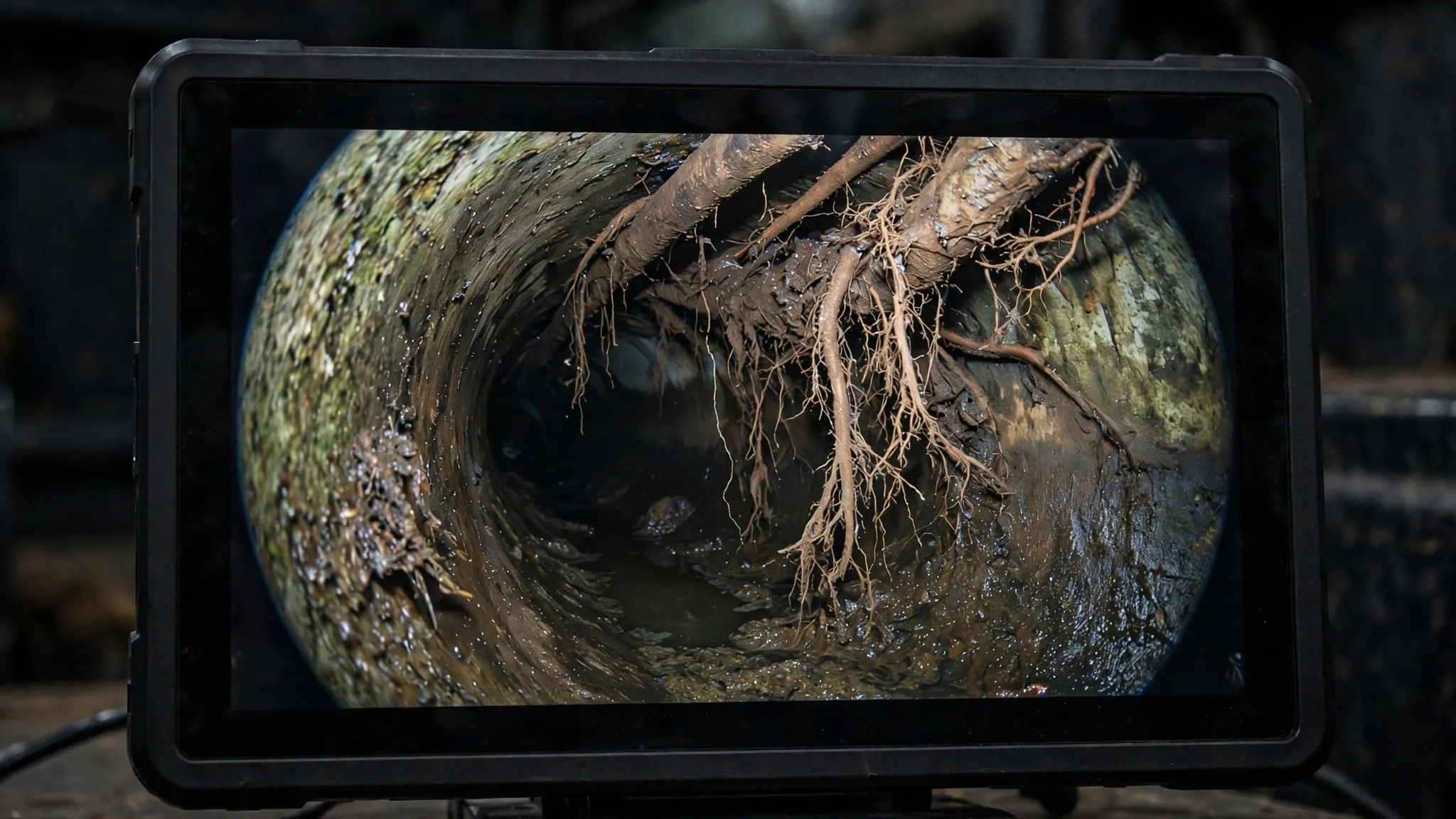
When multiple drains slow or back up simultaneously, the cause is either a main line clog (blockage — grease, roots, debris, or objects obstructing flow) or a main line break (structural failure — collapse, crack, offset joint, or belly). The distinction is critical: clogs are cleared (augering, jetting); breaks must be repaired (spot repair, lining, or replacement). Clearing a broken pipe is futile; excavating for a simple clog is wasteful. The symptoms differ in pattern: clogs often come and go (worse with heavy use); breaks persist and progress (structural, unchanging or worsening). Camera inspection is the definitive differentiator. Professional main line service diagnoses before treating.
Quick Answer
A main line clog causes intermittent symptoms (worse with heavy water use, sometimes clearing) and responds to clearing; a main line break causes persistent, progressive symptoms (constant slow drainage, recurring backups at the same spot, soggy ground above the line, foundation issues) and does not improve with clearing. The camera inspection is definitive: it shows blockage (clearable) vs. structural damage (repairable). Never authorize excavation without camera confirmation of a break.
Main Line Clog: The Signs
- Intermittent symptoms — drains slow during heavy use (laundry + showers) but recover; the blockage is partial.
- Gurgling — air trapped by the blockage; often the earliest sign.
- One fixture affects another — flushing the toilet backs up the shower; the main is constricted.
- Responds to clearing — professional augering or jetting restores flow (temporarily or permanently).
- No exterior symptoms — the ground above the line is normal; no soggy patches, no settlement.
- Sudden onset — often triggered by a specific event (grease dump, object flushed, root growth spurt).
Main Line Break: The Signs
- Persistent symptoms — constant slow drainage regardless of usage; the structure is compromised.
- Recurring backups at the same location — cleared, then backs up again; the structure, not the blockage, is the problem.
- Soggy ground above the line — wastewater escaping through the break saturates the soil.
- Sewage odors outdoors — the break vents to the surface.
- Foundation or slab issues — soil erosion from the break undermines structures.
- Gradual progression — symptoms worsen steadily over months; structural failures do not improve.
- Lush vegetation stripe — the leak fertilizes a green line above the pipe.
Recurring Means Structural
The single most important differentiator: a main line that backs up, gets cleared, and backs up again has a structural problem. Each clearing without camera inspection wastes money and lets the break worsen. The third backup is the signal — get a camera.
Side-By-Side Comparison
| Feature | Main Line Clog | Main Line Break |
|---|---|---|
| Symptom pattern | Intermittent; usage-dependent | Persistent; progressive |
| Response to clearing | Improves (temporarily or permanently) | No lasting improvement |
| Exterior signs | None | Soggy ground, odors, lush stripe, settlement |
| Onset | Often sudden | Usually gradual |
| Diagnosis | Often evident; camera confirms | Camera required |
| Treatment | Augering, jetting, root cutting | Spot repair, lining, replacement |
| Urgency | Moderate — functional impairment | High — structural + environmental |
The Camera Inspection: The Definitive Test
A sewer camera — pushed through a cleanout or pulled toilet — shows the line's interior directly:
- Clog: visible blockage (grease mass, root ball, debris, object) with intact pipe walls around it.
- Break: collapsed section, crack, offset joint, belly, or separated pipe — structural damage visible on screen.
- Location and depth — the camera's transmitter marks the exact position for targeted repair.
- Video file — request it; it is your record for second opinions and insurance.
Never authorize excavation for a suspected break without camera confirmation — the camera is the difference between a $300 diagnostic and a $10,000 mistake.
What To Do For Each
For A Clog:
- Reduce water use — minimize flow through the constricted line.
- Call for clearing — professional augering or hydro jetting (not chemical cleaners).
- Camera after clearing — verify the line is clear AND structurally sound (clearing can reveal underlying breaks).
- Address the cause — grease discipline, root treatment, or whatever created the blockage.
For A Break:
- Camera inspection first — confirm the break's nature, location, and extent.
- Get repair options — spot repair, trenchless lining, or full replacement, with the camera evidence.
- Minimize use — reduce flow through the broken line until repaired (environmental and structural risk).
- Address promptly — breaks worsen; soil erosion and contamination compound with time.
Cost Implications: Why The Distinction Matters
| Scenario | Correct Action | Cost Pattern |
|---|---|---|
| Clog treated as clog | Clearing | Lowest — the right fix |
| Clog treated as break | Unnecessary excavation | Massively overpaid |
| Break treated as clog | Repeated clearing | Compounding — clearing costs plus worsening damage |
| Break treated as break | Targeted repair | Correct — the necessary investment |
The camera inspection — a modest diagnostic — is what keeps every scenario in the correct column. For multiple drain backups and trenchless repair options, see our companion guides.
Using History To Diagnose
The line's history predicts its failure mode:
| History | Likely Issue | Investigate |
|---|---|---|
| Prior root clearing | Root regrowth or structural damage at the root site | Camera at the prior location |
| Recent construction nearby | Crushed or disturbed pipe | Camera along the construction zone |
| Aging pipe (50+ years) | Structural deterioration | Full camera baseline |
| Grease-heavy usage | Accumulated blockage | Jetting + camera verification |
| No prior issues, sudden onset | Object blockage or sudden break | Camera for definitive diagnosis |
Cleanouts: Your Diagnostic Window
The main cleanout — the accessible entry to your sewer lateral — is the diagnostic window:
- Location: typically near the foundation, in the basement, or in the yard along the lateral's path.
- The standing-water test: remove the cap carefully; standing water or sewage means a downstream blockage.
- Professional access: augering and camera inspection both enter through the cleanout.
- If you do not have one: a plumber can install a cleanout — it transforms future diagnostics from invasive to routine.
Know Your Cleanout Location
Locate your main cleanout before an emergency — during a backup is the wrong time to search. Mark it, photograph it, and ensure it is accessible. This single piece of knowledge accelerates every future drain event.
When To Get A Second Opinion
- Excavation recommended without camera: always get camera confirmation (and a second opinion) before authorizing digging.
- Full replacement recommended: for a single backup event, question whether spot repair or lining suffices — get the camera video and a second assessment.
- Wildly different quotes: if one contractor says jetting and another says replacement, the camera video (which you should have) arbitrates — get a third review of the footage.
Main Line Records
- Camera videos: keep every inspection video — the baseline for future comparisons.
- Service history: dates, methods, and results of every clearing and repair.
- Pipe material and age: from building records or professional assessment.
- Cleanout location: mapped and photographed.
For main line symptoms and trenchless repair, see our companion guides.
Pipe Materials And Failure Modes
| Material | Common Failures | Lifespan Notes |
|---|---|---|
| Clay tile | Root intrusion at joints; cracking | Very old; joints are the weakness |
| Cast iron | Corrosion; scale; cracking | 50+ years; corrosion is progressive |
| Orangeburg | Collapse; deformation | Failed material; replacement recommended |
| PVC | Joint separation; cracking from stress | Long-lived when properly installed |
| ABS | Similar to PVC | Common in newer installations |
Knowing your pipe material (from building records or camera inspection) predicts the likely failure mode — and guides the repair approach. Trenchless lining suits certain materials and conditions; others need replacement.
Warranties On Main Line Work
- Clearing: typically short-term (30-90 days) — clearing addresses the symptom, not always the cause.
- Repairs: workmanship warranties (1-5 years typical) plus material warranties.
- Lining: decades for materials; get the terms in writing.
- Full replacement: comprehensive warranties on the new installation.
Trenchless Options For Main Lines
When camera inspection reveals structural damage, trenchless methods often apply:
- Epoxy lining (CIPP): for cracked or root-damaged pipe with intact shape — full guide.
- Pipe bursting: for collapsed or undersized pipe — new pipe pulled through, fracturing the old.
- Spot repair: for single isolated failures — targeted excavation, not full trenching.
The camera determines candidacy — never authorize trenchless work without camera confirmation that the pipe qualifies.
Main Line Maintenance Schedule
| Task | Frequency | Purpose |
|---|---|---|
| Grease discipline | Daily | Prevent the #1 clog cause |
| Proper flushing | Always | Prevent object blockages |
| Camera inspection | Every 3-5 years (aging lines) | Catch developing issues |
| Root treatment | As needed (treed properties) | Manage intrusion |
| Cleanout accessibility | Verify annually | Ensure diagnostic access |
Main Line Emergency Kit
- Plumber's emergency number — saved, not searched during the crisis.
- Cleanout location — marked and accessible.
- Water shutoff knowledge — minimizing flow during backups.
- Utility emergency line — for suspected municipal issues.
The Key Takeaway
When multiple drains misbehave, think main line first — and let the camera decide between clog and break. The diagnostic costs a fraction of the wrong treatment, and it transforms guessing into knowing. Every main line story that ends well begins with someone looking inside the pipe before deciding what to do about it.