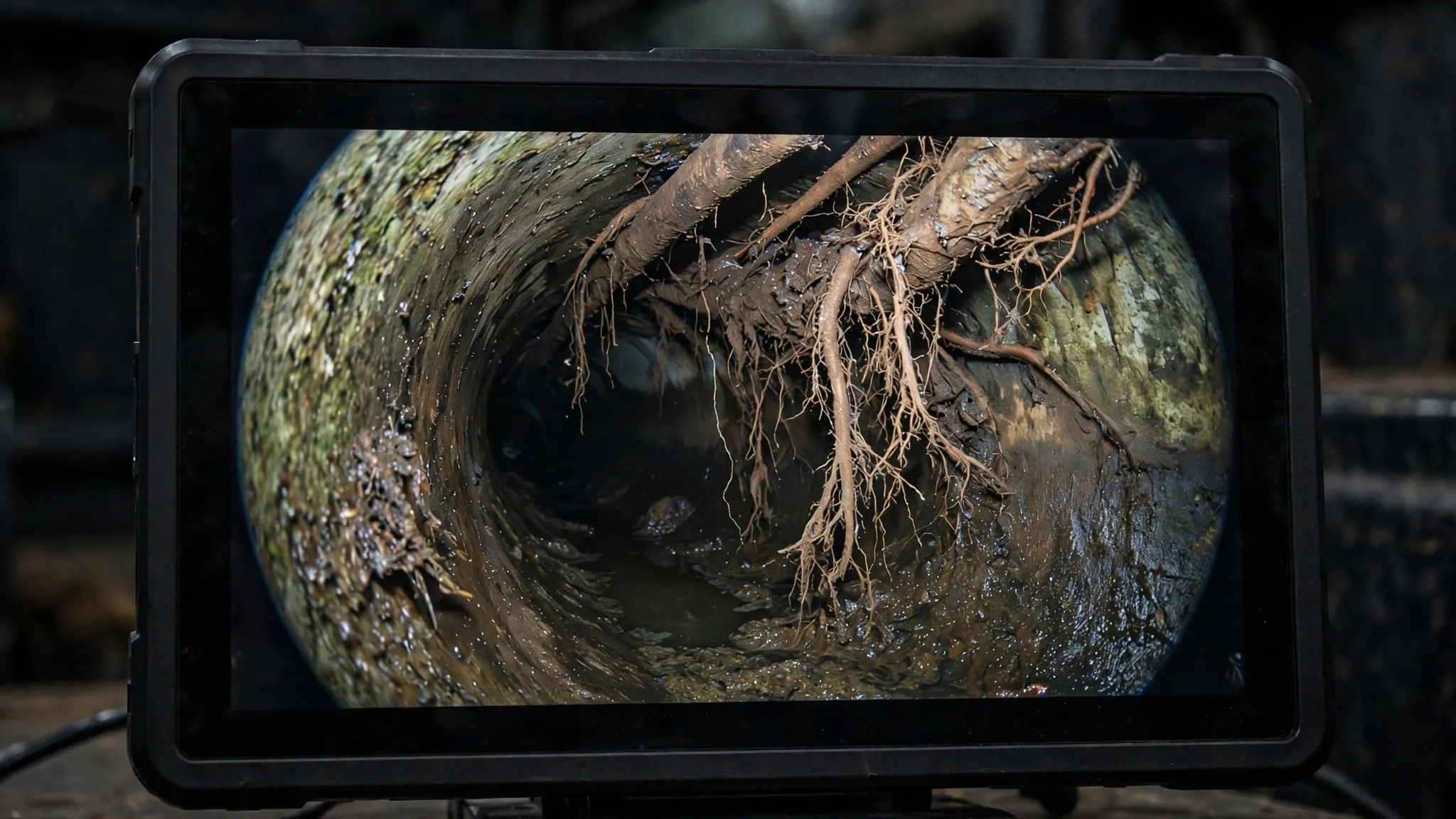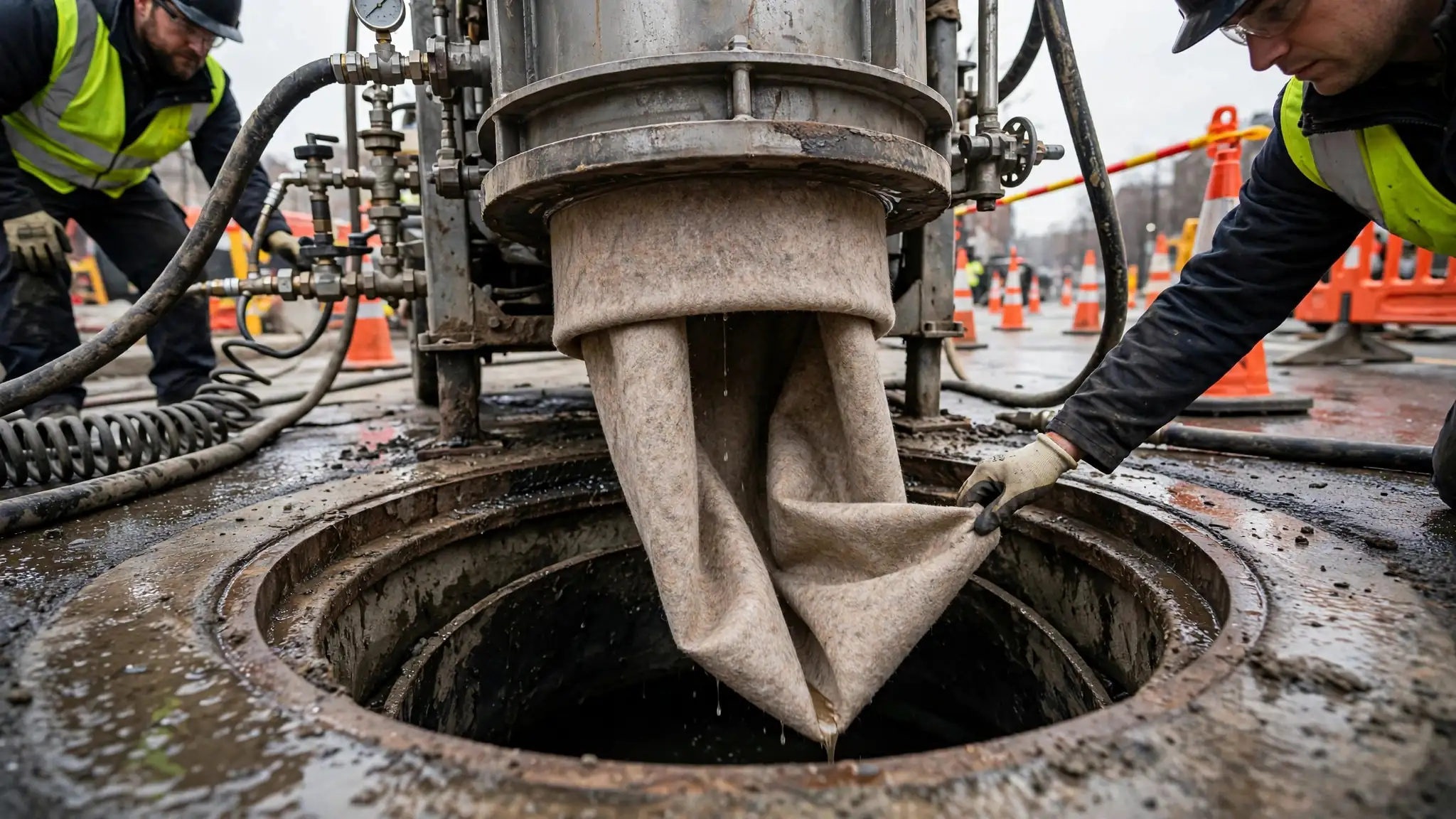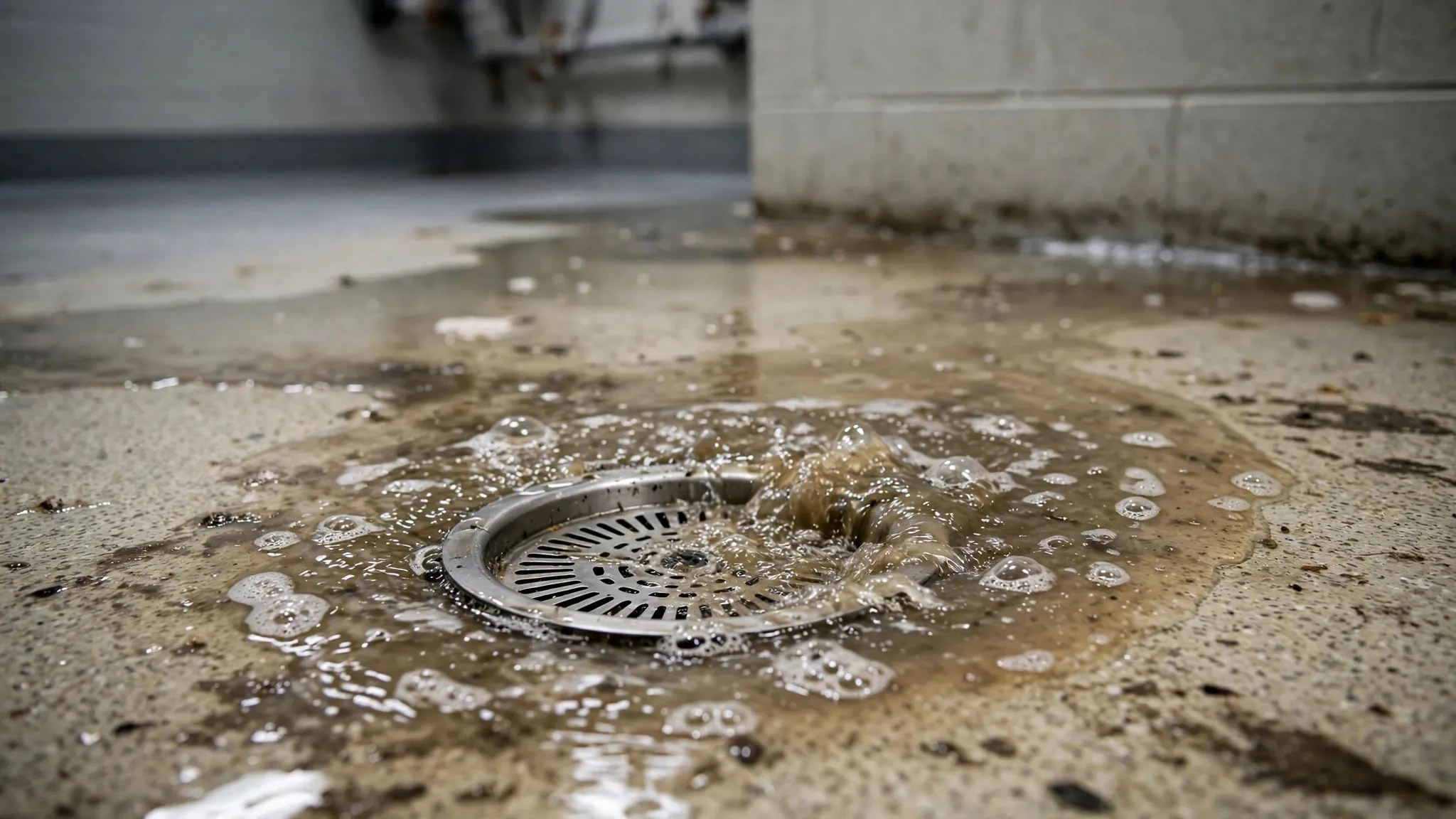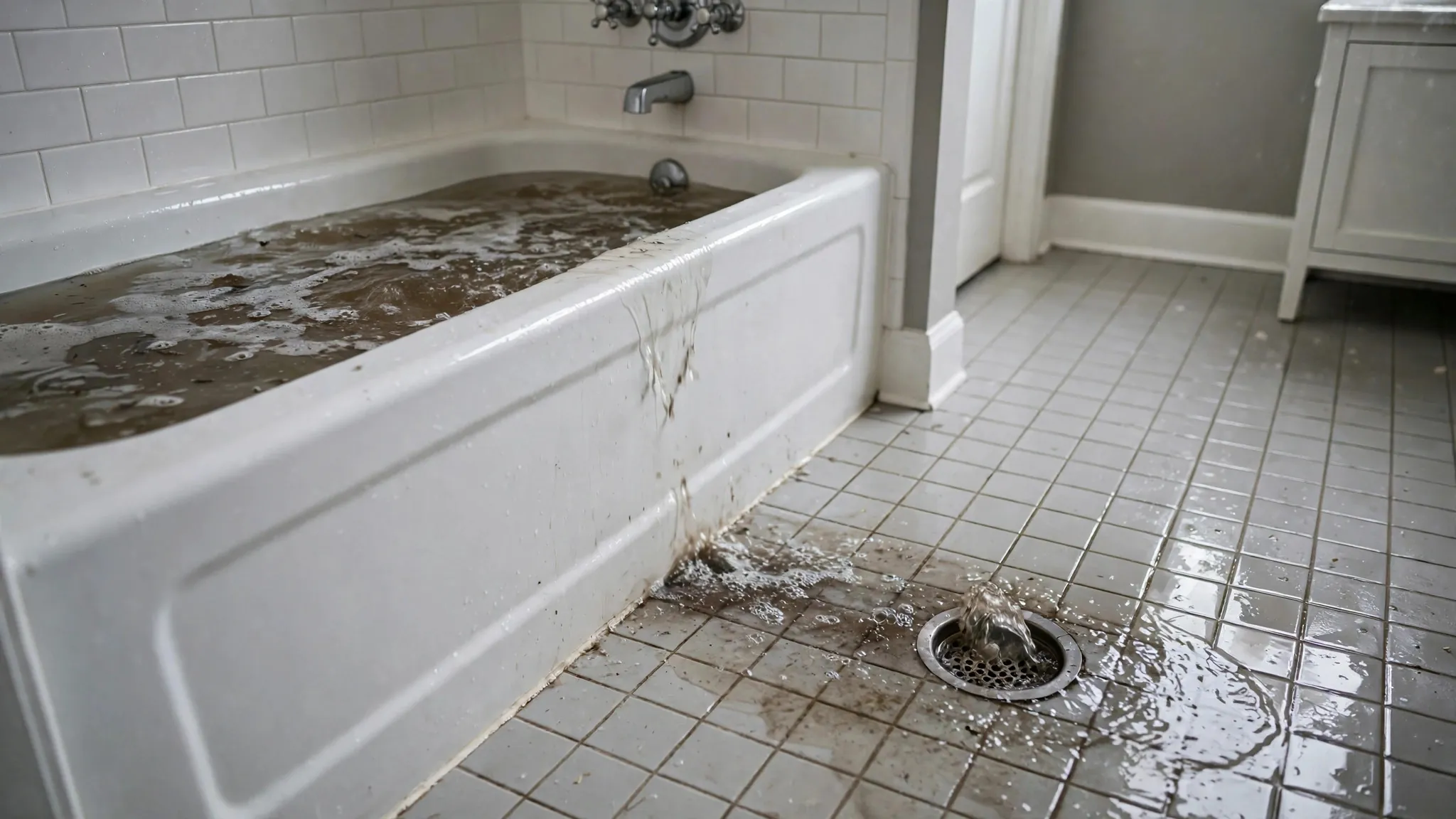
Multiple drains backing up simultaneously — toilets gurgling when the shower runs, sinks backing up when the washer drains, sewage in the lowest fixtures — indicates a main line problem: a blockage or break in the main sewer lateral serving the entire building. Individual fixture clogs affect one drain; main line problems affect many at once, with the lowest fixtures (basement floor drains, ground-floor toilets) showing symptoms first. This is urgent — wastewater has nowhere to go, and continued use worsens the backup. Professional main line service with camera inspection diagnoses the specific cause.
Quick Answer
If multiple fixtures back up together — especially the lowest ones — it is the main line, not individual clogs. Stop using water immediately (every flush adds to the backup), check whether neighbors are affected (municipal main vs. your lateral), and call for professional service with camera inspection. Do not use chemical cleaners; do not keep flushing 'to test.' The camera determines whether it is a clog (clearable) or a break (repairable).
What To Do Right Now
- Stop using water. Every flush, shower, and laundry load adds to the backup. Minimize all water use immediately.
- Check the lowest fixtures. Basement floor drains, ground-floor toilets — sewage here confirms the main line.
- Check with neighbors. If they are affected too, it may be the municipal main — call the utility.
- Do not use chemical cleaners. They do not clear main lines and create hazards for professionals.
- Call for service. Professional main line service — specify multiple-fixture symptoms; request camera inspection.
Need Help Right Now?
Sewage backing up into living spaces? That is a health hazard — stop water use, restrict access, and call now.
Call (617) 380-4912The 7 Signs Of A Main Line Problem
1. Multiple Fixtures Affected Simultaneously
The defining sign: toilets, showers, and sinks misbehaving together. Individual clogs are solitary; main line problems are systemic.
2. Lowest Fixtures Worst
Backups appear first and worst at the lowest drainage points — basement floor drains, ground-floor toilets and tubs. Gravity delivers the backup to the lowest exit.
3. Gurgling Across Fixtures
Gurgling toilets when other fixtures drain — air displaced by the blockage. Widespread gurgling means a central obstruction.
4. One Fixture Affects Another
Flushing causes shower backup; running the washer backs up sinks. Cross-fixture effects prove a shared downstream problem.
5. Sewage Odors
Sewer gas from multiple drains — the blockage disrupts normal venting and trapping.
6. Slow Drainage Building-Wide
Every drain slightly slow — the partial main line blockage constricting the whole system.
7. Water Backing Up In Unexpected Places
Shower fills when the toilet flushes; the washing machine drain overflows — wastewater seeking any available exit.
Confirming It Is The Main Line (Not Individual Clogs)
| Test | Main Line Problem | Individual Clogs |
|---|---|---|
| Multiple fixtures affected | Yes — the hallmark | No — one fixture only |
| Lowest fixtures worst | Yes | No pattern by elevation |
| Cross-fixture effects | Yes | No |
| Plunging one fixture helps others | No — the blockage is downstream | Sometimes |
| Cleanout inspection | Standing water visible | Normal |
The cleanout test: locate your main cleanout (usually near the foundation); remove the cap carefully — standing water or sewage visible in the cleanout confirms a downstream main line blockage. (Have towels ready; open slowly.)
Yours Or The City's? The Critical Question
- Check with neighbors — if adjacent properties have simultaneous issues, suspect the municipal main.
- Call the utility — they verify their main; if it is theirs, they repair at their cost.
- Your lateral — if only your building is affected, the problem is in your sewer lateral (your responsibility, like water service lines).
- Do not assume — the neighbor check takes minutes and determines who pays.
The Neighbor Check Saves Thousands
Before calling a plumber for a suspected main line issue, ask your immediate neighbors if they are experiencing problems. A municipal main blockage is the utility's repair — discovering this after paying for private service is an expensive lesson in checking first.
Common Causes Of Main Line Problems
| Cause | Pattern | Resolution |
|---|---|---|
| Grease accumulation | Gradual; food-service or heavy kitchen use | Hydro jetting; grease discipline |
| Root intrusion | Seasonal recurrence; near mature trees | Root cutting; consider lining/replacement |
| Flushed objects | Sudden; after inappropriate flushing | Augering; retrieval |
| Pipe collapse | Persistent; aging pipe | Repair or replacement |
| Bellied pipe | Recurring at the same spot | Regrading or replacement |
| Scale buildup | Gradual; old cast iron | Jetting or descaling; eventual replacement |
What Happens If You Wait
- Backups worsen — continued use adds wastewater with nowhere to go; the backup rises.
- Health hazard grows — sewage exposure risks increase with volume and time.
- Property damage spreads — sewage damages flooring, walls, and belongings; remediation costs escalate.
- Structural risk — if the cause is a break, soil erosion and contamination compound.
Main line problems do not resolve themselves — every hour of continued use worsens the outcome. The response should be measured in hours, not days.
Professional Response: What To Expect
- Assessment: symptom pattern, cleanout check, neighbor/utility status.
- Clearing attempt (if clog suspected): professional augering from the cleanout.
- Camera inspection: definitive diagnosis — clog vs. break, location, extent.
- Targeted resolution: clearing, jetting, or structural repair per the camera findings.
- Verification: post-service flow test and camera confirmation.
For clog vs. break diagnosis and trenchless repair, see our companion guides.
Basement Backups: The Special Case
Basement floor drain backups deserve specific attention:
- Lowest point: the basement floor drain is the system's lowest exit — backups appear here first.
- Standpipe solution: a temporary standpipe in the floor drain can prevent basement flooding during minor backups (not a fix, a stopgap).
- Backwater valve: the permanent solution for municipal-surcharge backups — installed in the lateral, preventing city-side water from entering.
- Cleanup protocol: sewage in basements requires professional cleanup (not just mopping) — porous materials (carpet, drywall) often need removal.
Sewage Cleanup Is Not DIY Mopping
Sewage backups require professional remediation — the contamination extends beyond visible water into porous materials. Household cleaning does not sanitize sewage exposure. Restrict access, ventilate, and engage professionals for anything beyond minor greywater.
The Washing Machine Connection
Washing machines are the most common trigger revealing main line problems:
- High discharge rate: washers pump large volumes quickly — overwhelming a partially blocked main.
- The test: if running the washer backs up other fixtures, the main is constricted (even if daily use seems normal).
- Lint contribution: washer lint accumulates in mains over time — lint filters on discharge hoses help.
Preventing Main Line Problems
| Prevention | What It Does | Priority |
|---|---|---|
| Grease discipline | Prevents the #1 clog cause | Highest — daily habit |
| Proper flushing only | Prevents object blockages | Highest — household rule |
| Root management | Prevents intrusion at vulnerable joints | High for treed properties |
| Backwater valve | Prevents municipal surcharge backups | High for flood-prone areas |
| Periodic camera inspection | Catches developing issues | High for aging lines |
| Lint filters | Reduces washer lint accumulation | Moderate — easy win |
Renters And Main Line Issues
- Report immediately in writing — main line backups are habitability issues; documented notice triggers owner obligations.
- Minimize water use — protect your belongings and the unit while awaiting response.
- Document damage — photos of backup and affected belongings for the record.
- Know your rights — local tenant protections address habitability and owner response timelines.
For clog vs. break diagnosis and commercial drain issues, see our companion guides.
Commercial Main Line Issues
- Higher stakes: backups disrupt operations, not just convenience — the urgency is commercial-grade.
- Grease dominance: food-service establishments face grease as the primary main line threat.
- Capacity: commercial flows are larger; partial blockages manifest sooner.
- Compliance: health codes may require immediate professional response for sewage events.
For commercial drain backups, see our detailed guide.
Insurance For Main Line Events
- Sewer backup endorsement: inexpensive add-on covering backup damage — strongly recommended for every property.
- Service line coverage: for the lateral itself (breaks, not just clogs).
- Documentation: camera video, professional reports, and dated photos support every claim type.
- Mitigation: prompt professional response demonstrates the reasonable care policies require.
Health And Safety During Backups
Sewage Is A Health Hazard
Sewage backups expose occupants to bacteria, viruses, and parasites. Restrict access to affected areas, avoid contact, ventilate, and engage professional cleanup for anything beyond minor greywater. Children, elderly, and immunocompromised individuals should avoid affected areas entirely.
- Restrict access — keep people and pets from affected areas.
- Ventilate — open windows; use fans to exhaust air (not recirculate).
- Protective equipment — gloves, boots, and masks for any necessary contact.
- Professional cleanup — for sewage (not just water); porous materials often require removal.
Landlord Responsibilities
- Habitability: main line backups affecting plumbing function are habitability issues requiring prompt response.
- Timeline: emergency response (hours, not days) for active sewage backups.
- Remediation: professional cleanup, not just drain clearing — the contamination must be addressed.
- Prevention: periodic inspection and maintenance of building sewer laterals.
For diagnosing the cause, see our companion guide.