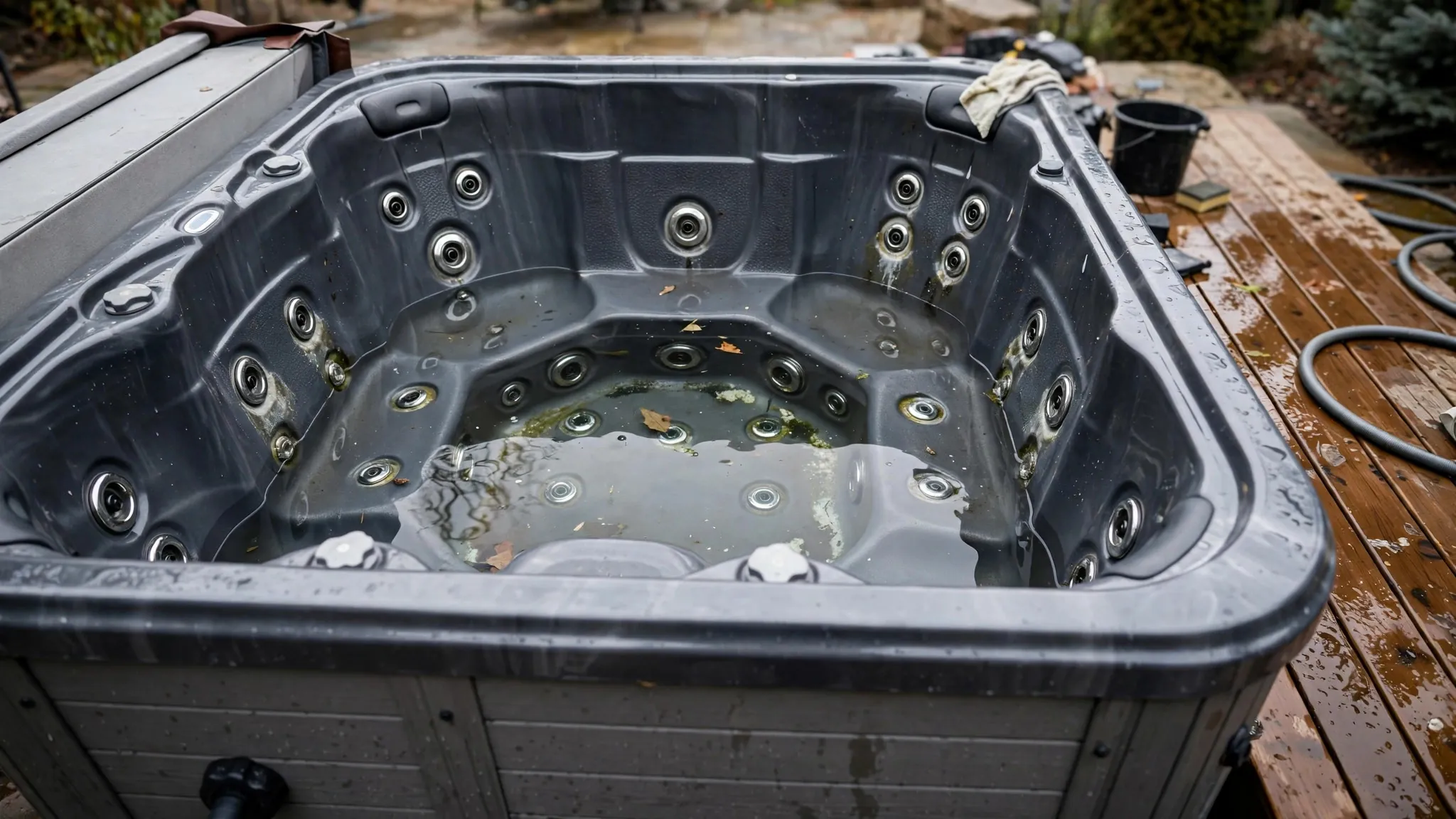
A spa losing water faster than evaporation explains needs investigation — and spas make it easier than pools because small volumes show loss quickly. Normal spa water loss: evaporation (accelerated by heat, jets, and wind — a few inches weekly is normal for uncovered heated spas) and splash-out (heavy use displaces water). Abnormal loss — steady dropping with the cover on and no use — indicates a leak: at jets (gaskets and plumbing), the pump and heater (seals and housings), plumbing lines (freeze damage, age), or the shell (cracks). The bucket test (same principle as pools) confirms; location testing finds where. Professional spa leak detection pinpoints the source.
Quick Answer
First rule out normal loss: cover on, no use, 24 hours — measure the drop. Normal evaporation with heat and jets is real but modest; steady loss with the cover on means a leak. Check the equipment area for drips (pump seals, heater, plumbing joints), inspect jets for gasket failure, and look for wet ground under/around the spa. The leak's location determines the fix — gaskets and seals are simple; shell cracks and buried plumbing need professionals.
What To Do Right Now
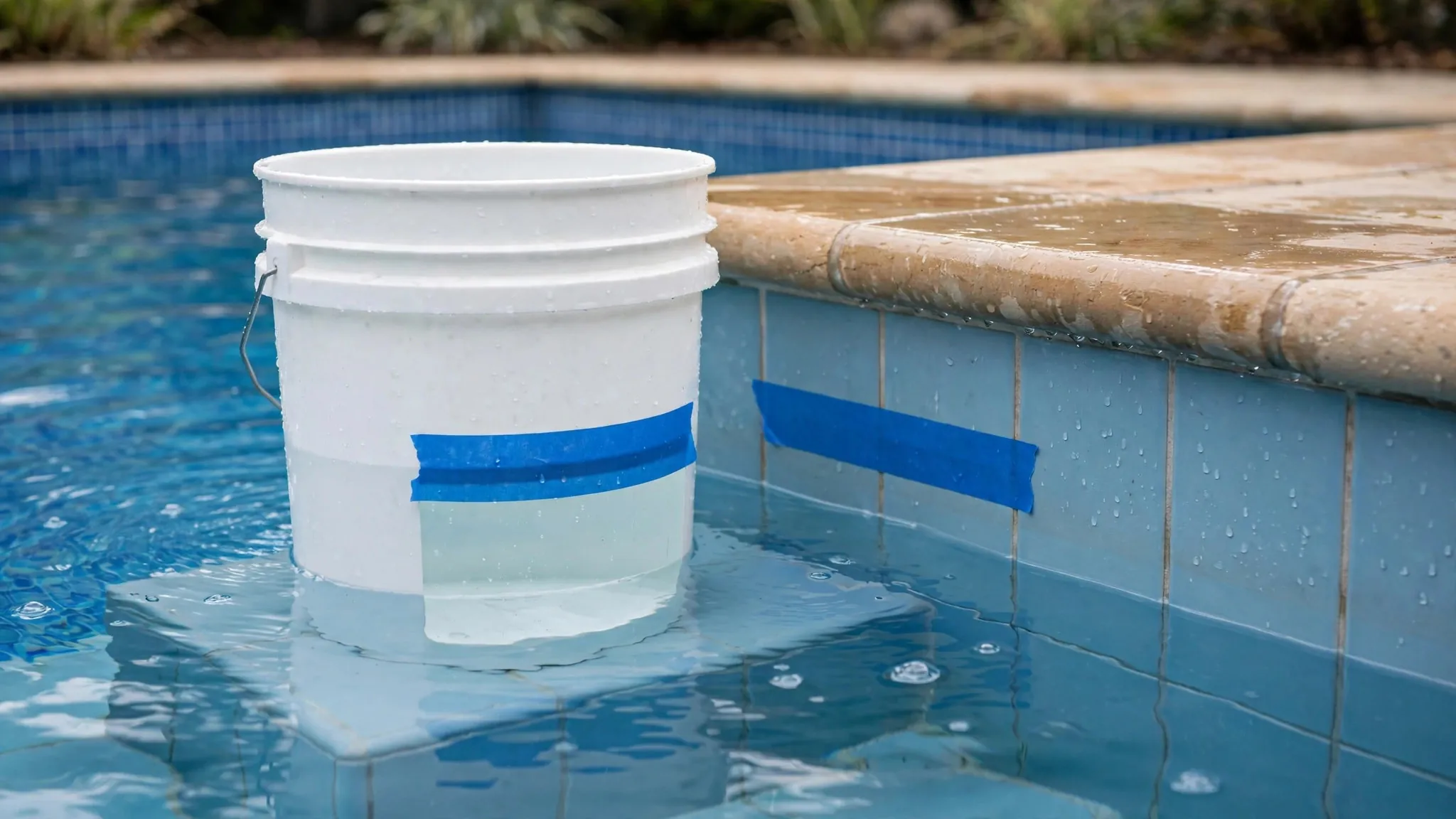
- Cover and wait. Cover on, no use, 24 hours — measure the drop precisely. This is the spa bucket test.
- Inspect the equipment area. Open the equipment access; look for drips, wetness, and mineral deposits at the pump, heater, and joints.
- Check around the spa. Wet ground, soggy pavers, or water stains beneath indicate the leak's general area.
- Note the level. Where does the drop stabilize? At a jet line means jets; continuing down means deeper.
- Call if confirmed. Spa leak detection for confirmed leaks beyond simple gasket issues.
Need Help Right Now?
Water dropping rapidly, equipment area flooding, or electrical components wet? Shut off power at the breaker and call now.
Call (617) 380-4912Normal Loss Vs Leak: The Distinction
| Water Loss | Normal If | Leak If |
|---|---|---|
| Few inches weekly, uncovered, heated, jets used | Yes — evaporation + splash-out | — |
| Steady drop, cover on, no use | — | Yes — leak confirmed |
| Drop after heavy use | Yes — splash-out displaces water | — |
| Drop stabilizes at a jet line | — | Yes — leak at that elevation |
| Wet equipment area | — | Yes — equipment leak |
| Soggy ground around spa | — | Yes — plumbing or shell leak |
Spas evaporate proportionally more than pools (high temperature, aeration from jets, small volume) — but a cover eliminates most evaporation. The cover-on test is therefore highly diagnostic: covered + unused + dropping = leak, with little ambiguity.
Jets And Fittings: The Most Accessible Leaks
- Jet gaskets: the seals between jet bodies and the shell harden and fail — the most common spa leak. Signs: waterline stabilizing at jet elevation; dampness behind the jet.
- Jet plumbing: the small lines feeding each jet crack from freeze damage or age; multiple jets on one line implicate the manifold.
- Suction fittings: main suction covers and their gaskets; safety-critical (entrapment) as well as leak-relevant.
- DIY scope: jet gasket replacement is owner-feasible (drain below the jet, replace gasket, reseal); plumbing behind the shell is professional.
Pump, Heater, And Equipment: The Usual Suspects
- Pump seals: the shaft seal is a wear item — drips at the pump body indicate seal failure; replaceable.
- Pump housings: freeze cracks in the volute; visible splitting.
- Heater: manifold and element housing leaks; often show as mineral-stained drips.
- Unions and joints: the threaded connections throughout the equipment area; hand-tighten, then wrench-snug — over-tightening cracks them.
- O-rings: filter housings, pump lids — dried o-rings weep; lubricate or replace.
Equipment-area leaks are the best-case scenario — visible, accessible, and usually fixed with seals, gaskets, or minor parts. Inspect here first, always.
Equipment First, Always
Before suspecting shell cracks or buried plumbing, spend ten minutes in the equipment area with a flashlight. The majority of spa leaks are equipment-side — visible, accessible, and inexpensive. The exotic causes get attention only after the obvious is cleared.
Plumbing Lines: Freeze Damage And Age
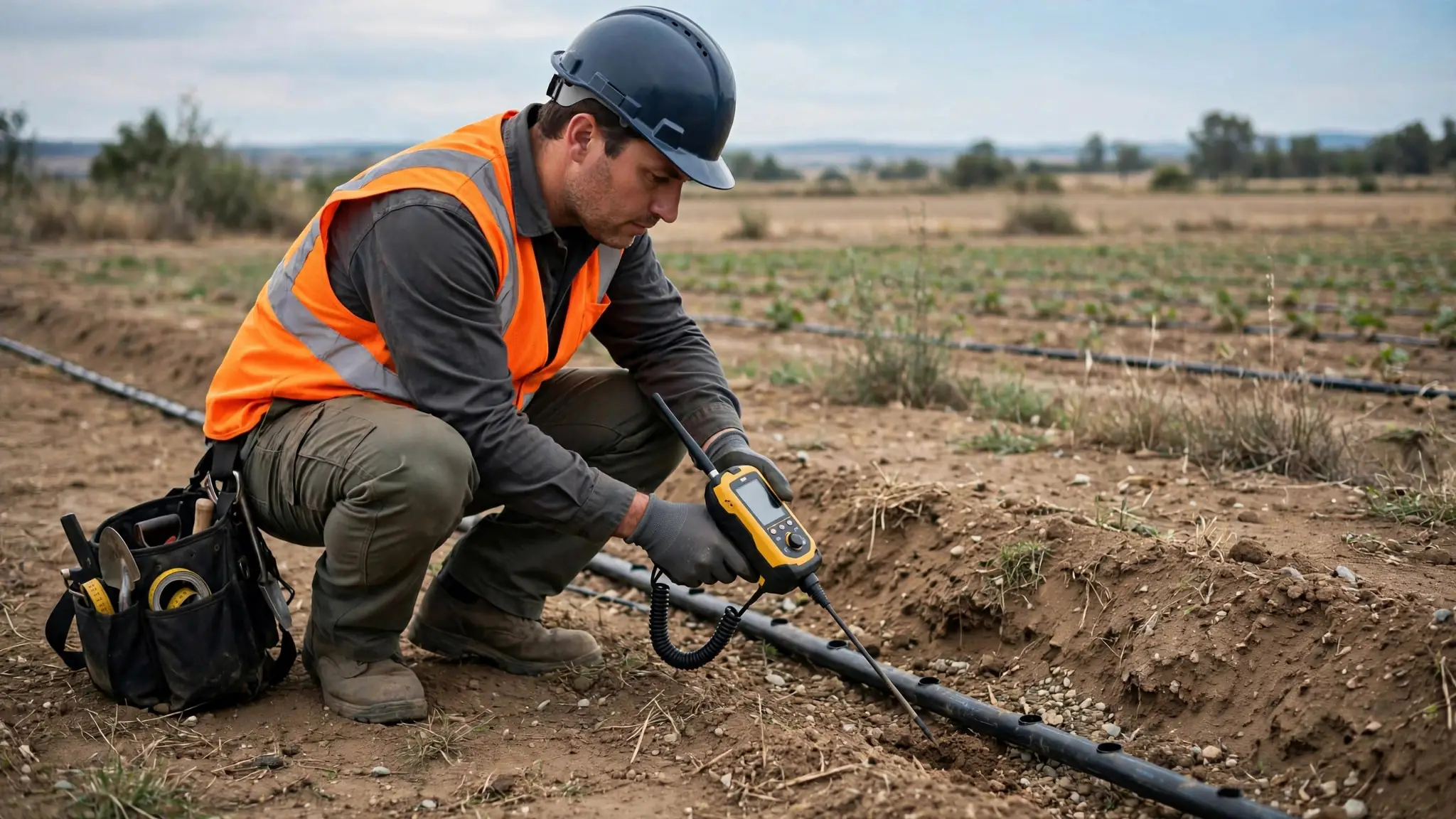
Spa plumbing — the network of small flexible lines behind the shell — fails from freeze damage (water left in lines over winter), age-related brittleness, and ground movement (for partially buried runs). Signs: wet ground around the spa, level dropping past jets toward the plumbing elevation, no equipment-area drips (ruling out the easy causes).
Plumbing leaks need professional location — pressure testing individual lines (as with pools) identifies the failed run; repair involves accessing the line (removing panels, sometimes excavating around the spa).
Shell Cracks: The Serious Cause
- Acrylic shells: crack from impact, ground movement, or manufacturing defects; often repairable with acrylic-specific methods.
- Rotomolded shells: more impact-resistant; cracks suggest significant force or defect.
- Wooden shells: stave separation from drying or age; rehydration and banding sometimes resolve.
- Signs: visible crack with moisture; level dropping to the crack's elevation and stabilizing.
Shell repairs range from DIY-feasible (surface acrylic repair kits for minor cracks) to professional (structural cracks, through-wall failures).
The Spa Bucket Test (Cover-On Method)
- Fill to normal level; mark precisely.
- Cover on, no use, 24 hours. (The cover eliminates evaporation as a variable.)
- Measure the drop. Minimal drop = normal; measurable steady drop = leak.
- Note the stabilization level if it stops dropping — the leak's elevation.
For pump-on/pump-off differentiation (as with pools), run the test with jets running vs. system off — leaks appearing only under pressure indicate plumbing-side failure.
Repair Approaches By Location
| Location | Typical Fix | DIY Or Pro |
|---|---|---|
| Jet gaskets | Gasket replacement | DIY-feasible |
| Pump seals, o-rings | Seal/o-ring replacement | DIY-feasible |
| Equipment joints | Re-seal or replace fitting | DIY for accessible; pro for complex |
| Plumbing lines | Locate via pressure test; repair/replace line | Professional |
| Shell cracks (minor) | Acrylic repair kit | DIY-feasible |
| Shell cracks (structural) | Professional structural repair | Professional |
Professional spa leak detection handles the non-obvious cases — plumbing lines, structural shells, and multi-point failures. For pool bucket testing and pool leak locations, see our companion guides.
Winter Spa Care: Preventing Freeze Damage
Spas are especially vulnerable to freeze damage — small plumbing lines freeze fast:
- Keep it running: a heated, circulating spa resists freezing; the danger is power outages and shutdowns.
- Winterize if closing: full drain, line blowing, antifreeze per manufacturer — incomplete winterization cracks manifolds and jets.
- Power outage protocol: during outages in freezing weather, the spa needs attention within hours, not days.
- Cover integrity: a damaged cover loses heat rapidly, stressing the heater and risking freeze.
Most spa plumbing leaks trace to freeze events — the prevention is winter discipline.
Chemical Damage: The Slow Destroyer
- Chronic over-chlorination degrades gaskets, o-rings, and seals prematurely.
- Low pH corrodes metal components (heaters, pump parts).
- High pH scales equipment, stressing seals and reducing efficiency.
- Balanced chemistry is leak prevention — the equipment lasts its designed life instead of failing early.
Chemistry Is Maintenance
Spa owners focused on leak repair sometimes overlook that imbalanced chemistry caused the seal failures. Fix the leak and balance the water — or the new seals will fail on the same accelerated schedule.
Cover's Role In Leak Diagnosis
The spa cover is a diagnostic tool as well as equipment:
- Cover on + dropping = leak (evaporation eliminated as a variable).
- Cover off + dropping faster = evaporation component confirmed alongside any leak.
- Waterlogged cover (heavy, sagging) indicates cover failure — replace it; a failed cover invalidates the diagnostic.
Buying A Used Spa: Leak Inspection
- Fill and observe for 24-48 hours — level behavior reveals leaks.
- Inspect the equipment area — mineral stains indicate chronic drips.
- Check jet gaskets — dried, cracked gaskets need replacement.
- Ask about winterization history — freeze damage is the hidden risk.
- Run all jets — pressure-side leaks manifest under operation.
For pool bucket testing and pool leak locations, see our companion guides.
Portable vs. In-Ground Spas: Leak Differences
| Feature | Portable Spa | In-Ground Spa |
|---|---|---|
| Plumbing access | Removable panels; good access | Buried; excavation may be needed |
| Shell type | Acrylic (repairable) | Varies; often gunite (professional repair) |
| Equipment | Integrated pack; accessible | Separate pad; pool-like equipment |
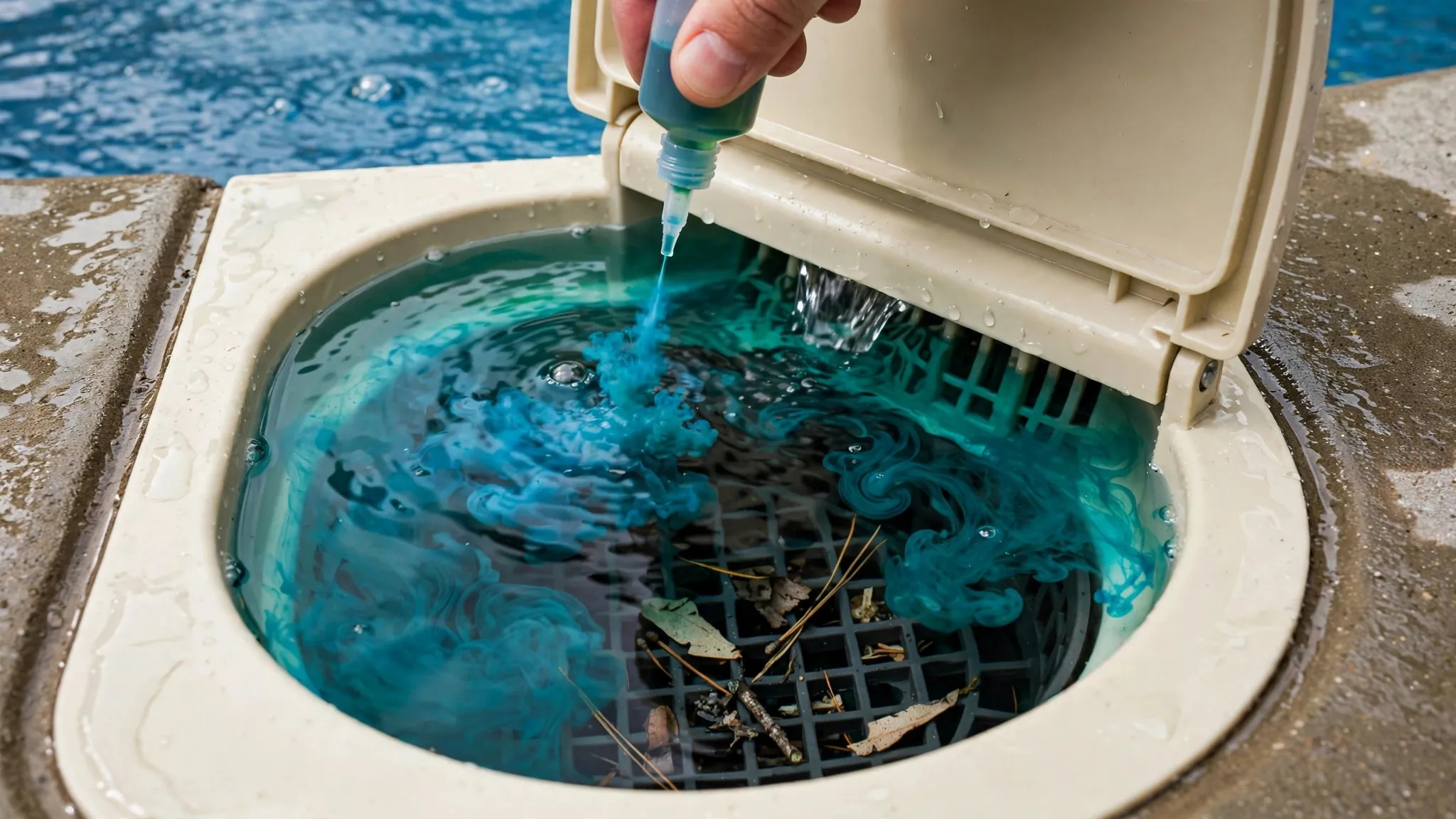
| Leak detection | Visual + pressure testing | Pool-style: dye + pressure testing |
Leak Sealants: Honest Assessment
- What they are: products poured into the water that seek out and plug small leaks.
- What they fix: very small seepage leaks (weeping gaskets, hairline cracks) — sometimes.
- What they do not fix: equipment leaks, significant plumbing breaks, structural cracks.
- The risk: sealant in the wrong places (heater cores, filter media) causes new problems.
- The verdict: a temporary measure for tiny seeps while planning proper repair — not a solution for confirmed leaks.
For pool testing and pool locations, see our companion guides.
Energy And Water: The Efficiency Angle
Spa leaks waste energy as well as water:
- Heating replacement water — every gallon lost is a gallon heated from tap temperature.
- Cover discipline — a good cover reduces both evaporation and heat loss; a failed cover wastes both.
- Leak repair as efficiency — fixing a leak is an energy upgrade with immediate payback.
The combined water + energy + chemical cost of a spa leak makes prompt repair one of the highest-ROI maintenance actions — the payback is measured in weeks, not years.